No images available
A set of four German turned ivory pricket candlesticks
Southern Germany, probably Augsburg, circa 1650
Each finely turned in ivory, with a broad circular drip pan centered by a pricket above a baluster and reel-turned stem, consisting of several parts screwing together.
Diam. 10 x H. 18.5 cm (each)
Provenance:
Private collection, the Netherlands
The virtuoso lathe-turning of ivory (Elfenbeindrechseln) was a courtly art in South Germany from the early 17th century onwards, reaching a particular intensity at the Munich Residenz under Maximilian I of Bavaria. Maximilian cultivated turning as both an aristocratic pastime and a pointed demonstration of geometrical mastery and virtù; his own signed turned-ivory canister of 1610 stands as an emblematic survival of this culture of princely making. In 1607 he established a private Kammergalerie adjacent to his apartments, a setting conceived for the display of (especially) works from his personal collection. Within such collector’s environments, turned ivories were valued for their luminous material, mechanical exactitude, and controlled symmetry. Indeed they still are the most sought after ‘artificialia’ among holders of a kunstkammer.
Each finely turned in ivory, with a broad circular drip pan centered by a pricket above a baluster and reel-turned stem, consisting of several parts screwing together.
Diam. 10 x H. 18.5 cm (each)
Provenance:
Private collection, the Netherlands
The virtuoso lathe-turning of ivory (Elfenbeindrechseln) was a courtly art in South Germany from the early 17th century onwards, reaching a particular intensity at the Munich Residenz under Maximilian I of Bavaria. Maximilian cultivated turning as both an aristocratic pastime and a pointed demonstration of geometrical mastery and virtù; his own signed turned-ivory canister of 1610 stands as an emblematic survival of this culture of princely making. In 1607 he established a private Kammergalerie adjacent to his apartments, a setting conceived for the display of (especially) works from his personal collection. Within such collector’s environments, turned ivories were valued for their luminous material, mechanical exactitude, and controlled symmetry. Indeed they still are the most sought after ‘artificialia’ among holders of a kunstkammer.
Part of the Europe collection.
Related objects
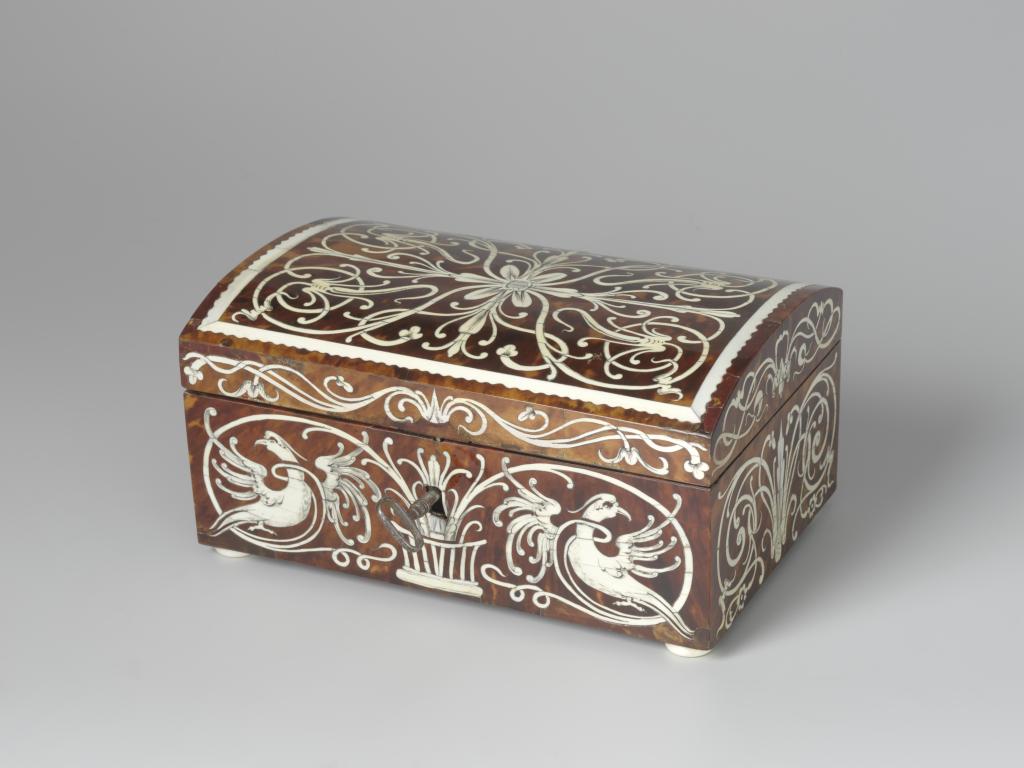
An ivory and tortoiseshell marquetry box attributed to Willem de Rots (act. 1640-1660)
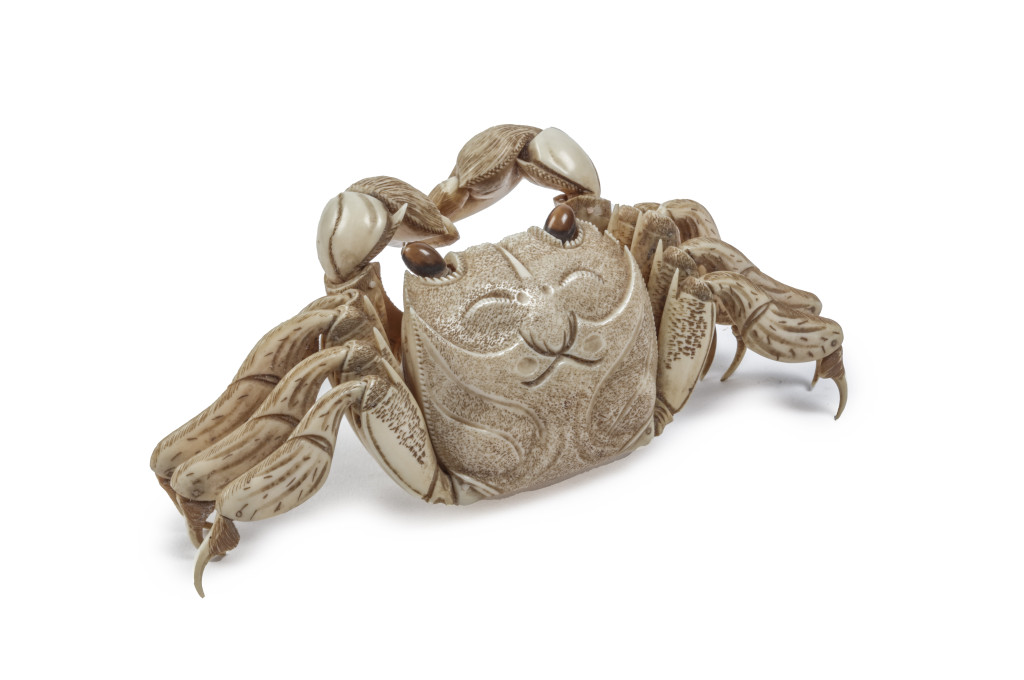
A Japanese fully articulated ivory okimono of a crab by Dai Kyoun
_Meiji-period, 19th century_ _L. 16 cm_ Signed Dai KYOUN underneath in a red- lacquered rectangular cartouche
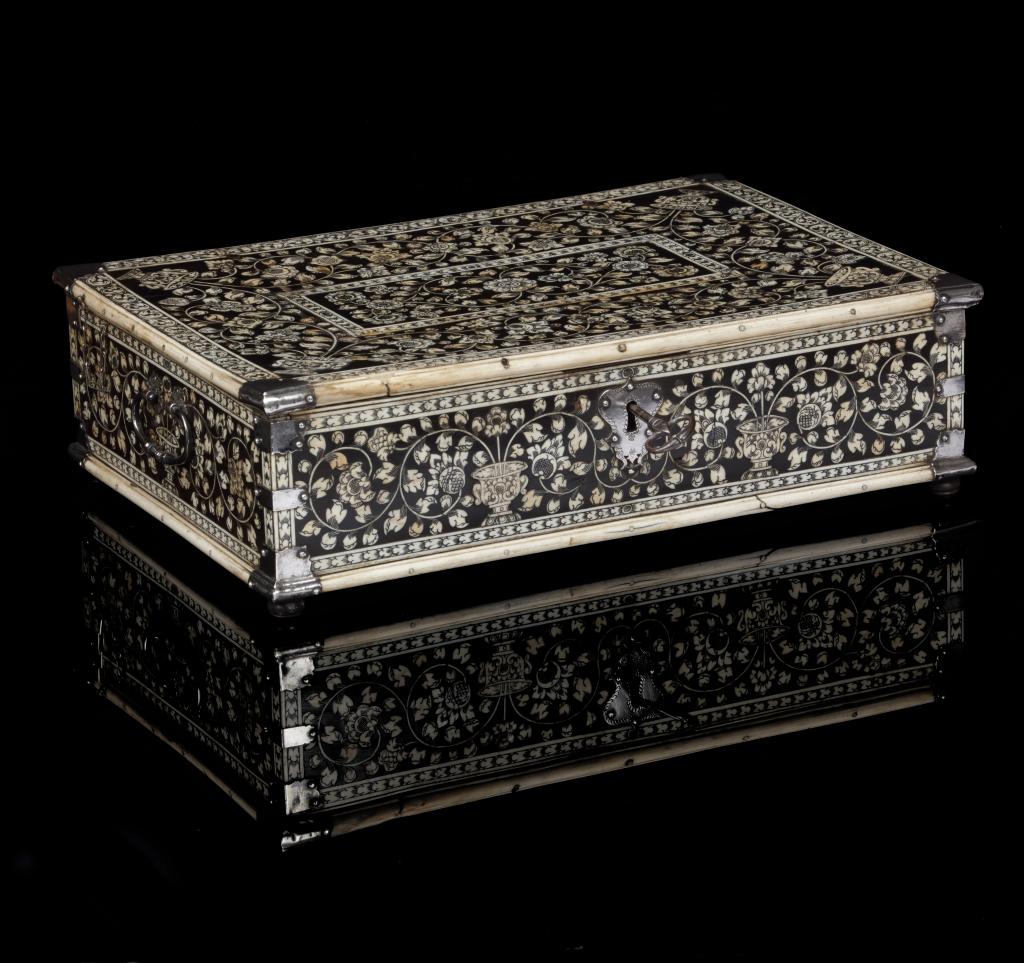
An Indian colonial 'Vizagapatam' bone-inlaid ebony document box with silver mounts
_Visakhapatnam, circa 1710-1720_ _H. 13 x W. 47 x D. 32.5 cm._ Provenance: Private collection, The Netherlands