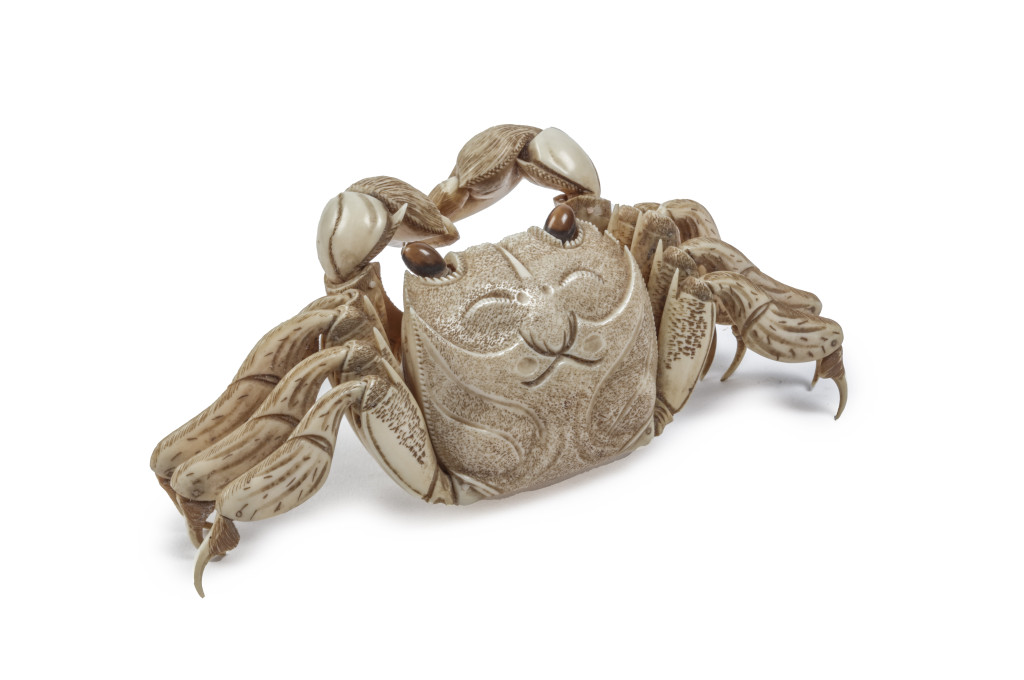
A Japanese fully articulated ivory okimono of a crab by Dai Kyoun
L. 16 cm
In 2018, to commemorate 150 years of Meiji period, several exhibitions, focusing on the skilfull
art of Meiji craftsmen, were held in the Kyoto National Museum (March 2018), the Kyoto Sannen Zaka Museum (Febuary 2018) and in the Osaka Abenoharukasu Museum (Febuary 2018). In these exhibitions also sculptures signed by Yamazaki Nankai and Dai Kyoun were shown. However, no further information on these two artists is available.
Related objects
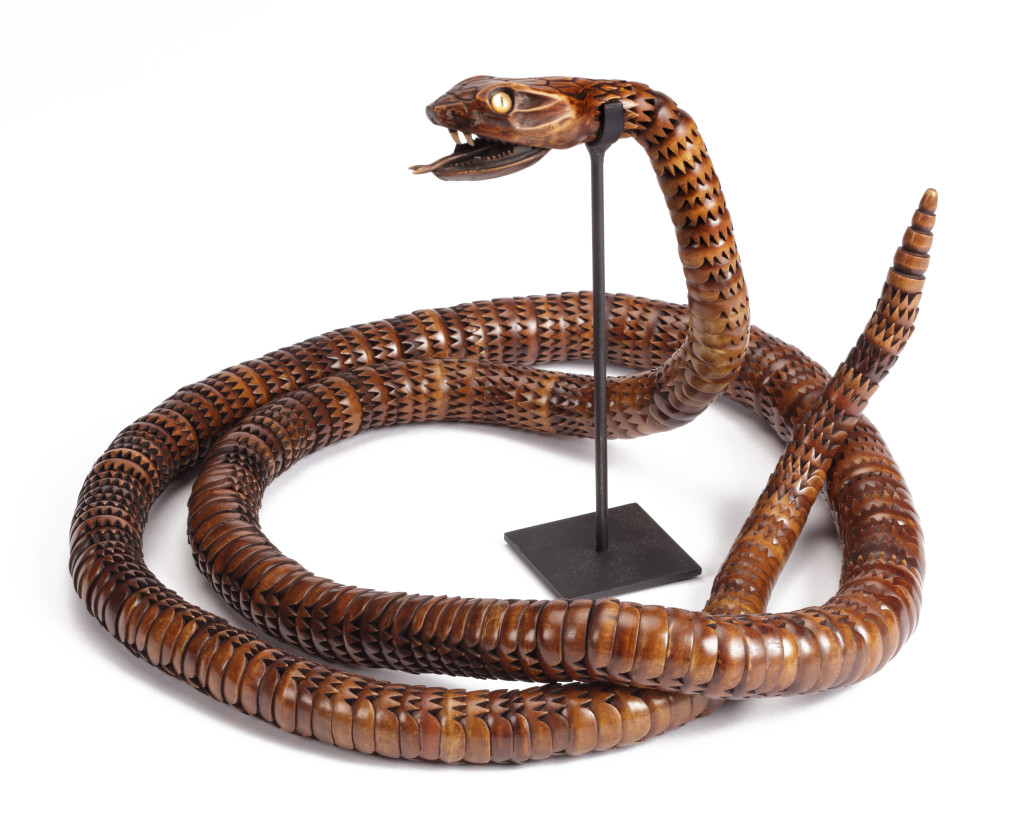
A Japanese articulated wood jizai okimono of a rattle snake by Masakazu
The fully articulated body of the reptile realistically rendered, with a movable lower jaw, fangs and tongue and with eyes cleverly inlaid in yellow horn. The surface of the wooden scales has a warm golden brown patina. It is signed Masakazu in an oblong mother-of-pearl reserve underneath the jaw.
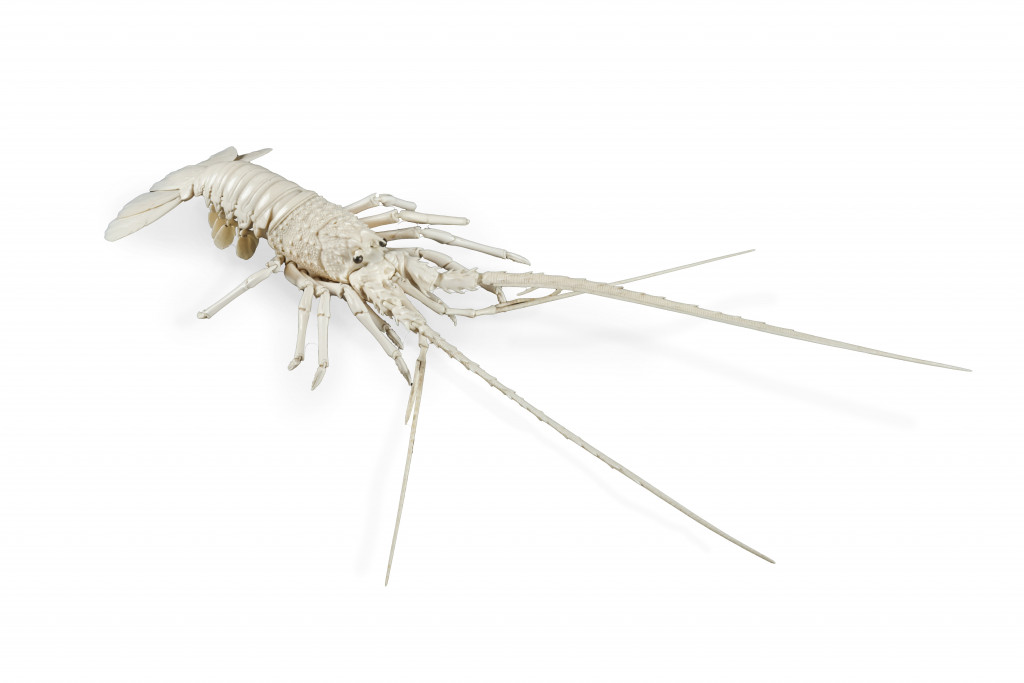
An extremely fine Japanese fully articulated ivory okimono of a spiny lobster, ebi, by Yamazaki Nankai
The highly naturalistic carved lobster has long spiny antennae, ten legs, mandibles, a segmented body and a fan-shaped tail. Even when touching the okimono, the sound it makes resembles the crawling of the lobster on the seabed. Every single joint is moveable and attached by a tiny ivory pin, which shows the absolute craftsmanship of the maker.
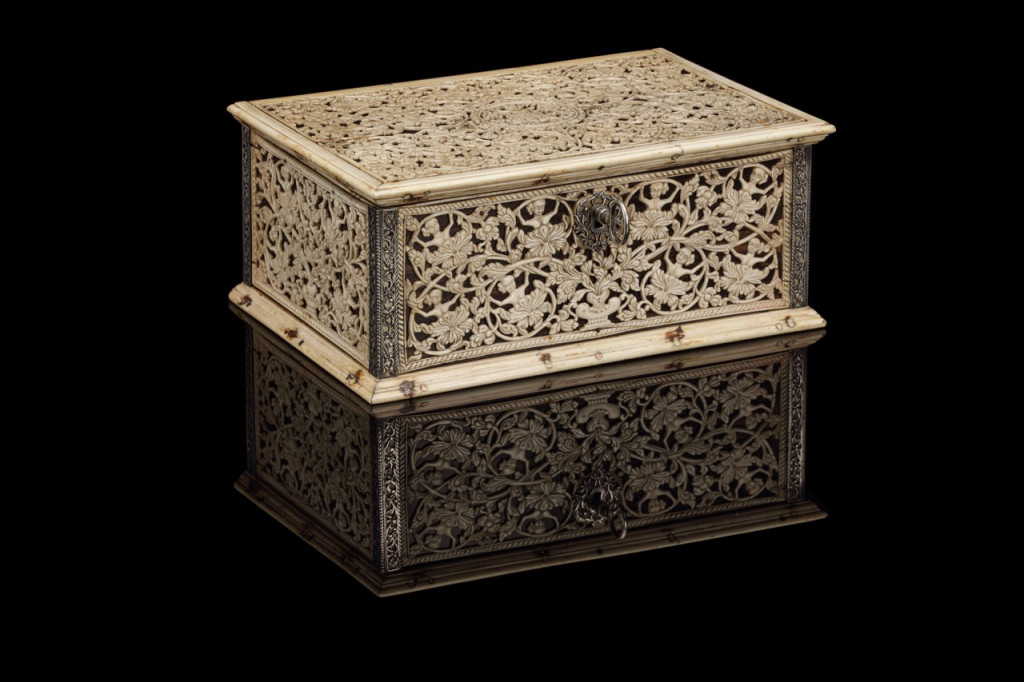
A rare Portuguese-Sinhalese openwork ivory and ebony casket with silver mounts
_Sri Lanka, 1st half 17th century_ _H. 10 x W. 23.2 x D. 16 cm_ A similar box in the collection of the National Museum of Colombo is illustrated in Portugal e Ceilão, Pedro Dias, Lisboa 2006, p.179.