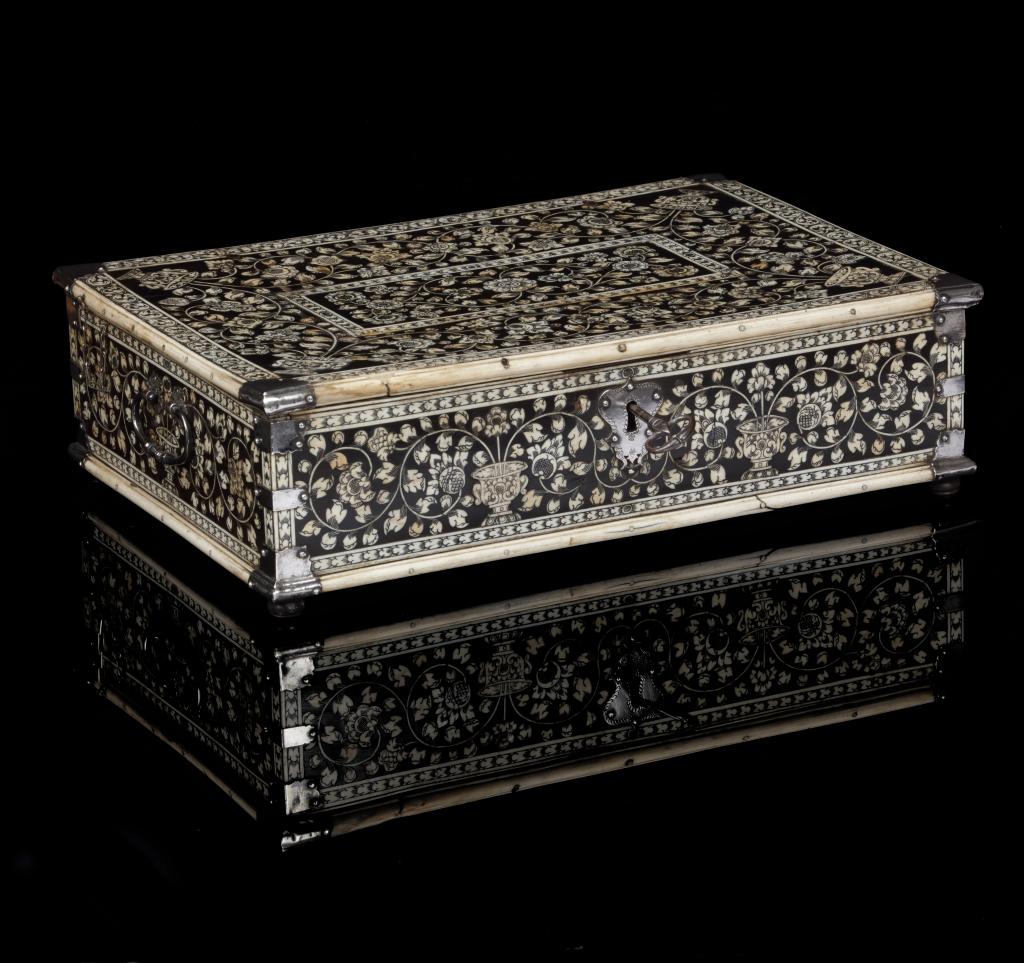
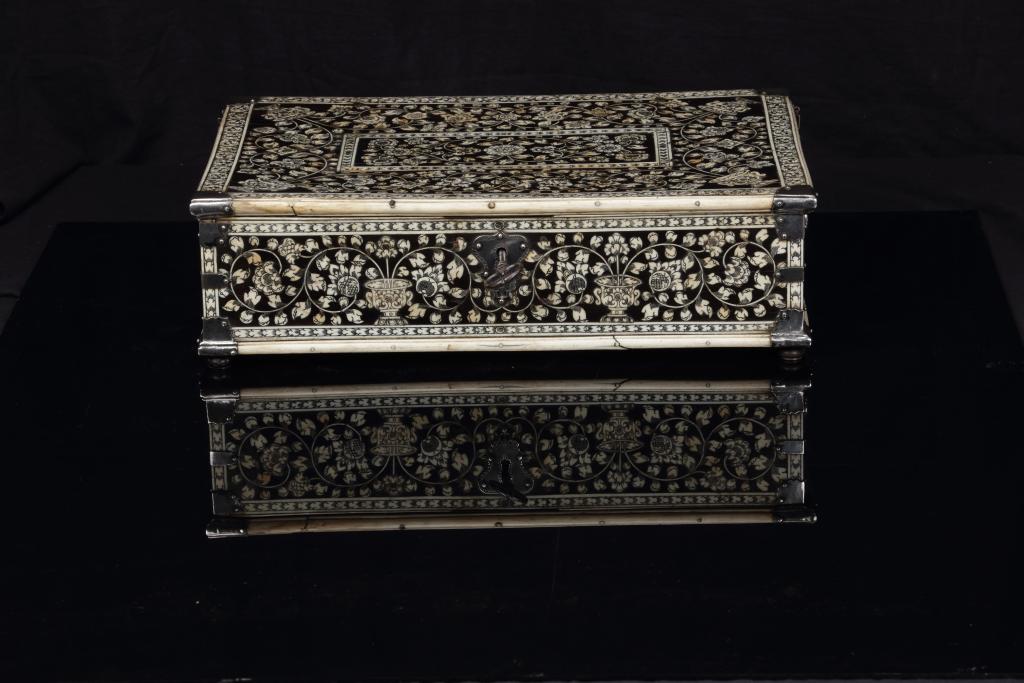
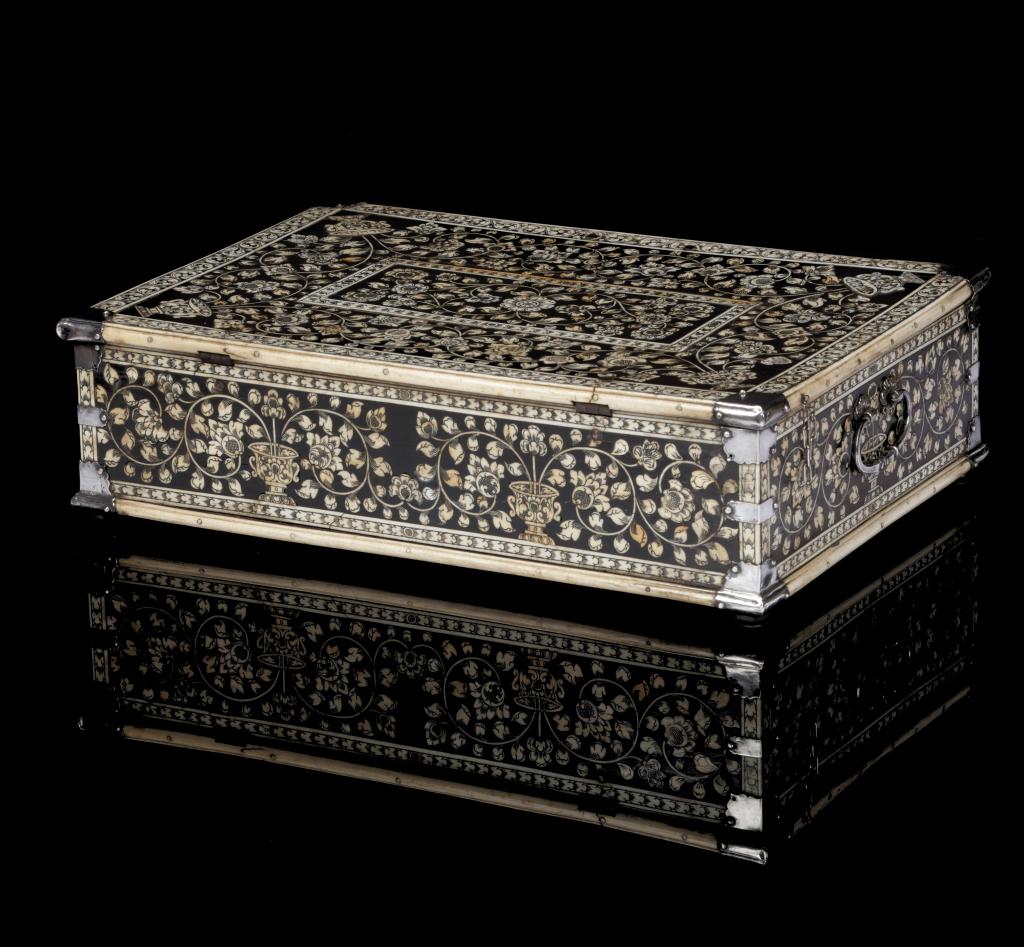
An Indian colonial 'Vizagapatam' bone-inlaid ebony document box with silver mounts
Visakhapatnam, circa 1710-1720
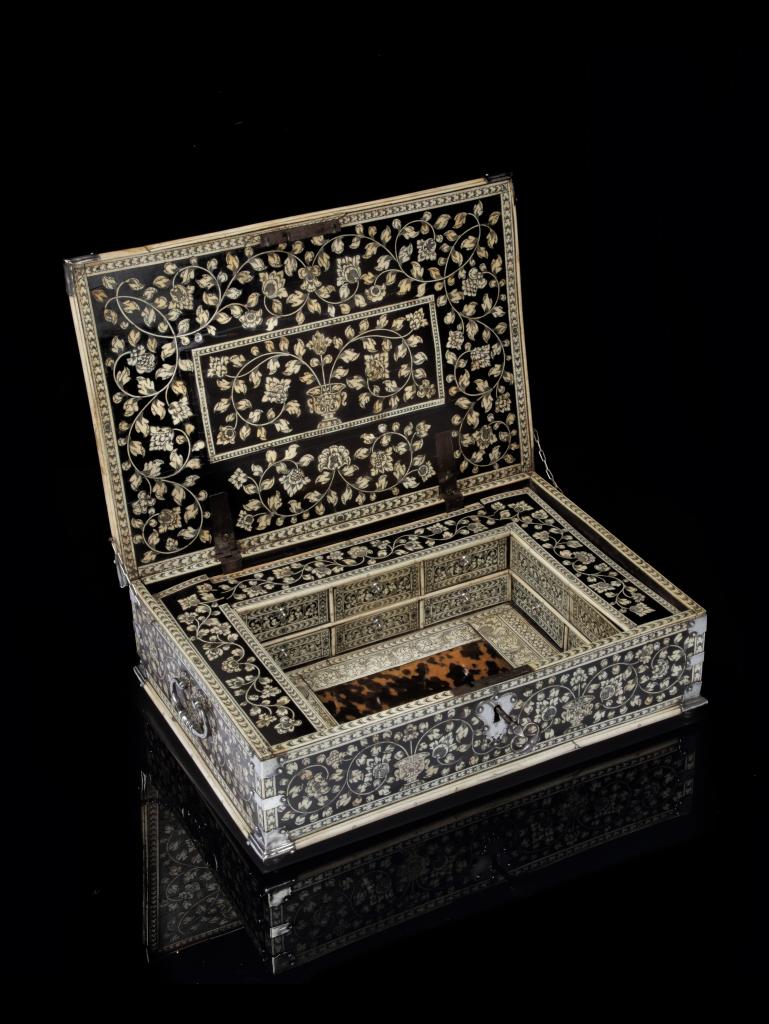
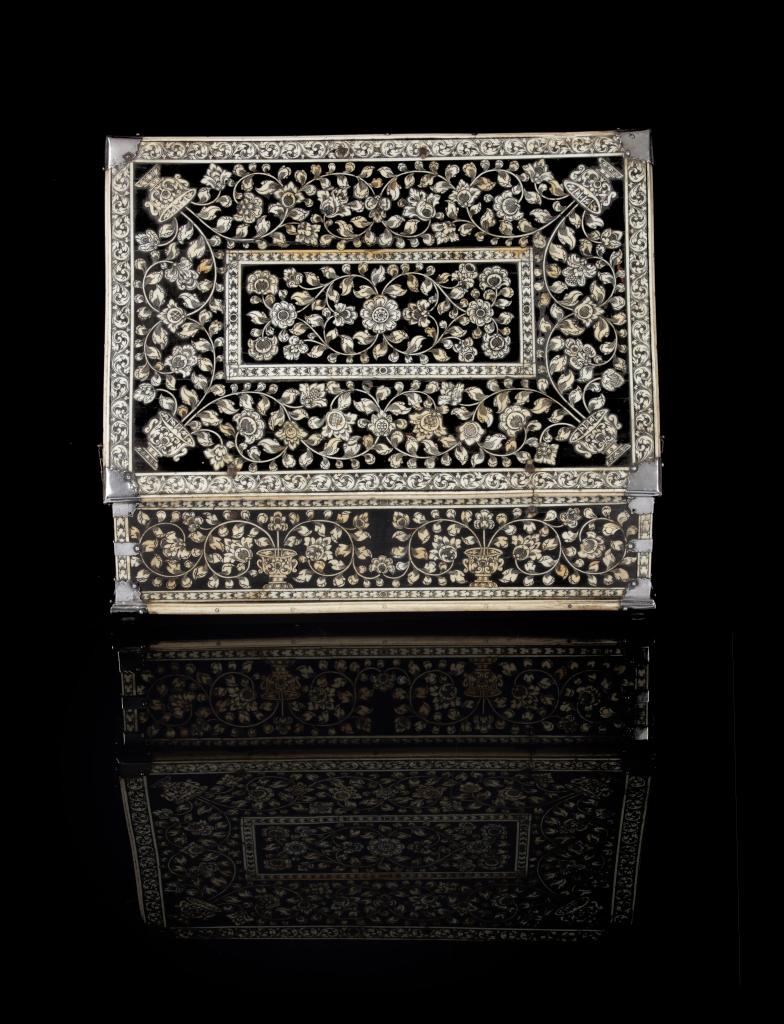
The exterior and interior of the box overall decorated with pen-engraved bone-inlay, in scrolling-vine motives. The interior, with a tortoiseshell bottom, has ten drawers and two hinged compartments.
H. 13 x W. 47 x D. 32.5 cm.
Provenance:
Private collection, The Netherlands
For European traders overseas it was always important to have access to paper and writing materials, and so writing boxes were made in various shapes and sizes and differing degrees of opulent refinement to meet this need. Visakhapatnam in India, historically named Vizagapatam, renowned for its ivory inlay work, was an important centre of production. The most common Visakhapatnam boxes are those with broad floral borders along the edges on a rosewood background. They date from the mid-eighteenth century. This box, however, is an example of a far rarer and earlier type in which the sprays of flowers extend over the entire surface. The execution of these tendrils was extremely successful. On the lid they fan out very evenly over the surface from four European vases in the corners and from two different vases in the middle of the long sides, leaving an oval medallion in the centre free. There are other vase shapes to be found on the sides of the box. The extreme luxury of this piece is also evident from the full decoration of the interior, where both tortoiseshell and ivory have been used.Flower motifs frequently occur on seventeenth- and eighteenth-century Indian decorative art. They are a fascinating blend of domestic motifs and the large flowers which dominated western decorative art at the end of the seventeenth century – on Dutch silver for example. These western flowers often served as examples for Indian cotton painters and wood and ivory carvers. The narcissus-like chalices on this box are unusual and make it even more interesting.
Two examples of the same kind of boxes with a tortoiseshell-interior are in the collection of the Rijksmuseum in Amsterdam (Object no. BK-2012-1) and the collection of the Metropolitan Museum of Art in new-York (Object no. 2016.115).
Literature:
A. Jaffer, Furniture from British India and Ceylon, Salem 2001
J. Veenendaal, Furniture from Indonesia, Sri Lanka and India during the Dutch Period, Delft 1985
The exterior and interior of the box overall decorated with pen-engraved bone-inlay, in scrolling-vine motives. The interior, with a tortoiseshell bottom, has ten drawers and two hinged compartments.
H. 13 x W. 47 x D. 32.5 cm.
Provenance:
Private collection, The Netherlands
For European traders overseas it was always important to have access to paper and writing materials, and so writing boxes were made in various shapes and sizes and differing degrees of opulent refinement to meet this need. Visakhapatnam in India, historically named Vizagapatam, renowned for its ivory inlay work, was an important centre of production. The most common Visakhapatnam boxes are those with broad floral borders along the edges on a rosewood background. They date from the mid-eighteenth century. This box, however, is an example of a far rarer and earlier type in which the sprays of flowers extend over the entire surface. The execution of these tendrils was extremely successful. On the lid they fan out very evenly over the surface from four European vases in the corners and from two different vases in the middle of the long sides, leaving an oval medallion in the centre free. There are other vase shapes to be found on the sides of the box. The extreme luxury of this piece is also evident from the full decoration of the interior, where both tortoiseshell and ivory have been used.Flower motifs frequently occur on seventeenth- and eighteenth-century Indian decorative art. They are a fascinating blend of domestic motifs and the large flowers which dominated western decorative art at the end of the seventeenth century – on Dutch silver for example. These western flowers often served as examples for Indian cotton painters and wood and ivory carvers. The narcissus-like chalices on this box are unusual and make it even more interesting.
Two examples of the same kind of boxes with a tortoiseshell-interior are in the collection of the Rijksmuseum in Amsterdam (Object no. BK-2012-1) and the collection of the Metropolitan Museum of Art in new-York (Object no. 2016.115).
Literature:
A. Jaffer, Furniture from British India and Ceylon, Salem 2001
J. Veenendaal, Furniture from Indonesia, Sri Lanka and India during the Dutch Period, Delft 1985
Part of the Indian Ocean collection.
Related objects
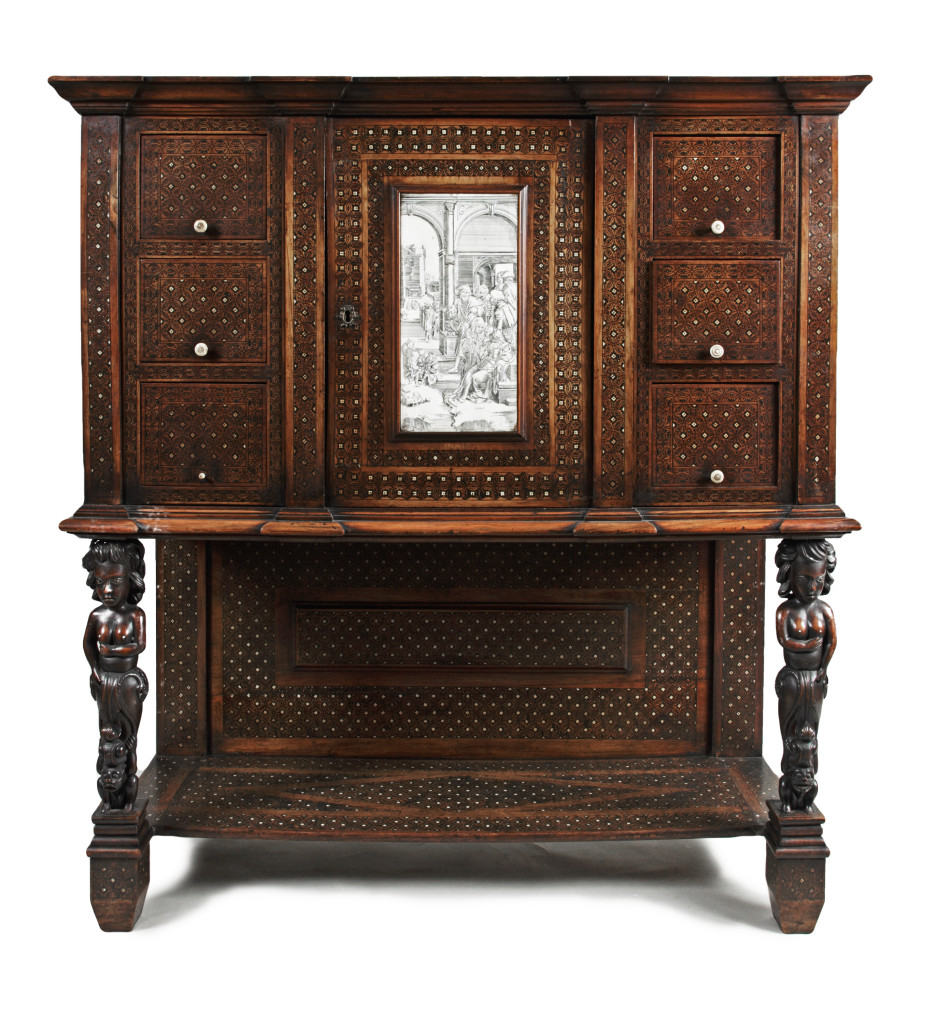
An extremely rare ebony and ivory-inlaid Indo-Portuguese Contador with European subject decoration
Indo-Portuguese Colonial Contador
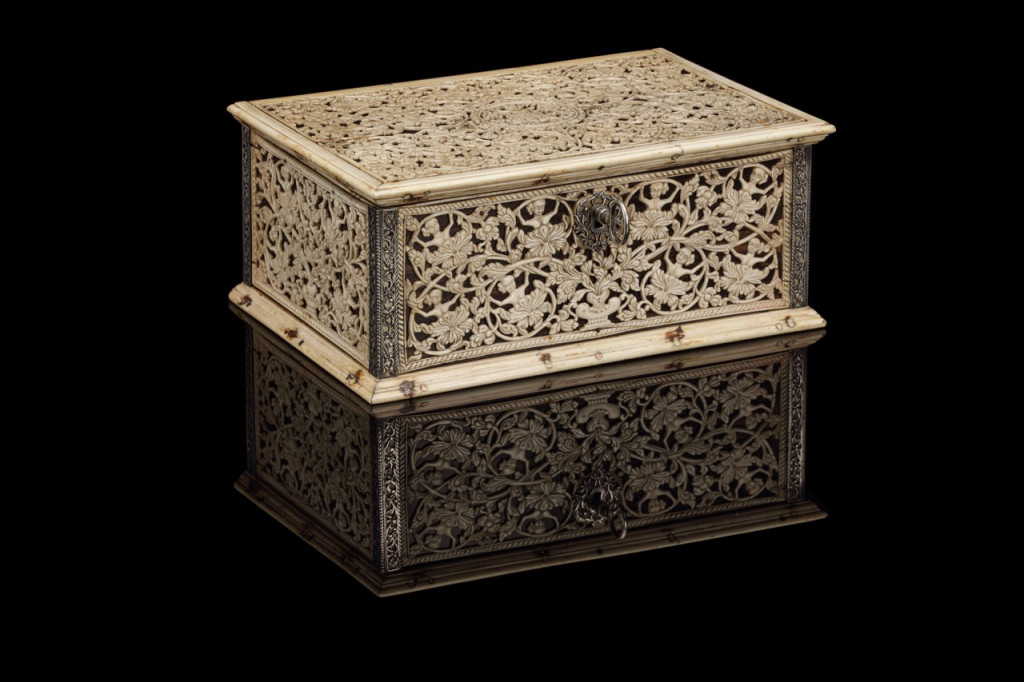
A rare Portuguese-Sinhalese openwork ivory and ebony casket with silver mounts
_Sri Lanka, 1st half 17th century_ _H. 10 x W. 23.2 x D. 16 cm_ A similar box in the collection of the National Museum of Colombo is illustrated in Portugal e Ceilão, Pedro Dias, Lisboa 2006, p.179.
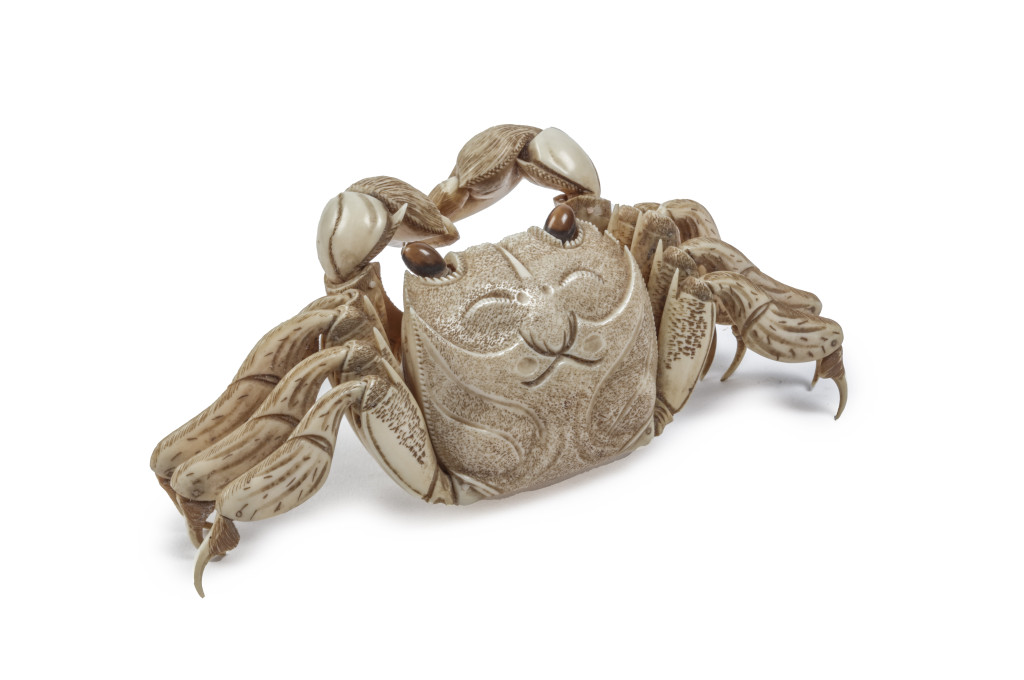
A Japanese fully articulated ivory okimono of a crab by Dai Kyoun
_Meiji-period, 19th century_ _L. 16 cm_ Signed Dai KYOUN underneath in a red- lacquered rectangular cartouche