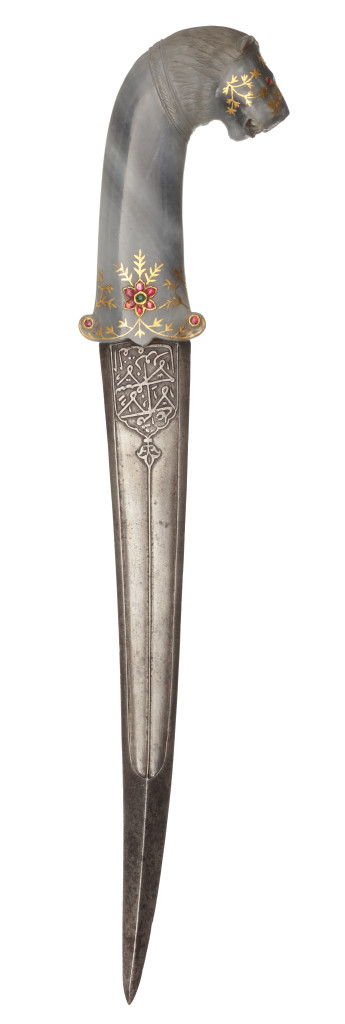
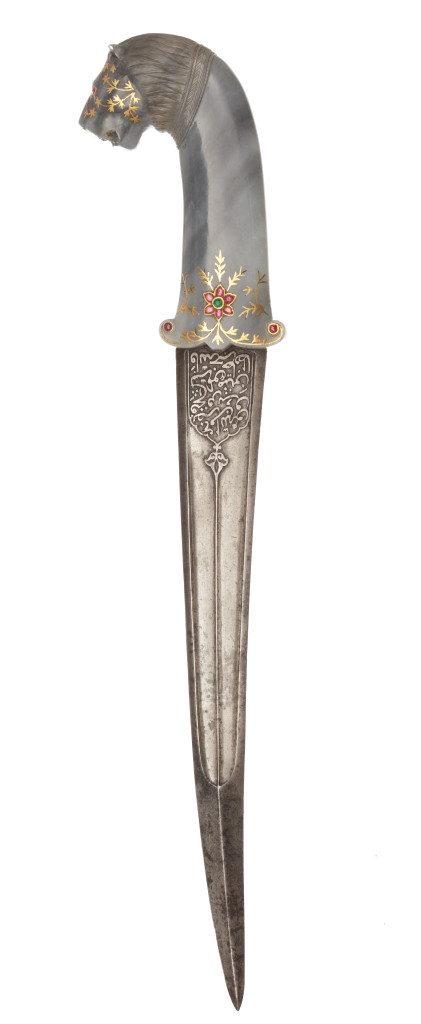
A Mughal gem-set jade-hilted dagger with a lion head pommel
India, late 17th/early 18th century, gold inlays possibly later
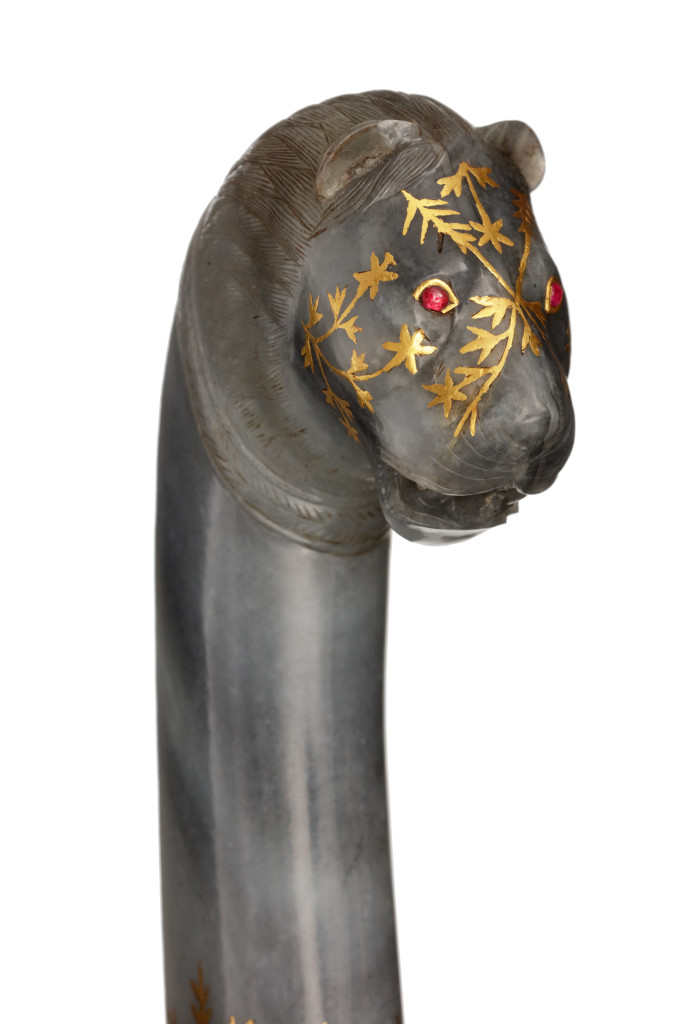
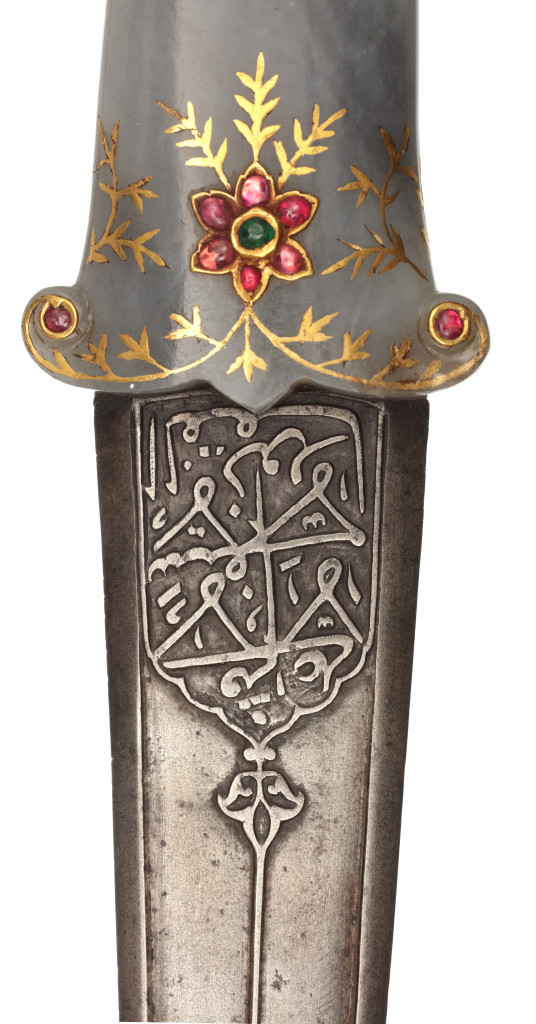
The blue-grey jade is inlaid with gold floral spray. It has ruby eyes and rubies also decorate the base of the hilt. The watered steel blade is chiselled with Islamic inscriptions.
L. approx. 34 cm
Provenance:
Robert Hales, London (acquired in the 1970s)
Hales has only ever seen three of these lion hilts during 50 years of dealing and collecting. One, possibly the dagger presented, a copy from an old sepia photo so rather unclear, is illustrated in his book. The other is in the National Museum of Delhi, and if the one in the book is not the present dagger, this is the third one.
Only seldomly daggers in this grey shade banded jade turn up, seemingly all from the same workshop or hand. The jade is extremely rare and possibly only encountered in the late 17th century, hence the one batch of hilts that have been carved from it.
Literature:
Robert Hales, Oriental Arms and Armour: A Lifetime’s Passion, London, 2013, p. 28, no. 70
The blue-grey jade is inlaid with gold floral spray. It has ruby eyes and rubies also decorate the base of the hilt. The watered steel blade is chiselled with Islamic inscriptions.
L. approx. 34 cm
Provenance:
Robert Hales, London (acquired in the 1970s)
Hales has only ever seen three of these lion hilts during 50 years of dealing and collecting. One, possibly the dagger presented, a copy from an old sepia photo so rather unclear, is illustrated in his book. The other is in the National Museum of Delhi, and if the one in the book is not the present dagger, this is the third one.
Only seldomly daggers in this grey shade banded jade turn up, seemingly all from the same workshop or hand. The jade is extremely rare and possibly only encountered in the late 17th century, hence the one batch of hilts that have been carved from it.
Literature:
Robert Hales, Oriental Arms and Armour: A Lifetime’s Passion, London, 2013, p. 28, no. 70
Related objects

A splendid Mughal talwar with blade dated 1693
A fine talwar blade with a shape that gently widens from base to tip. It has two prominent grooves that meet in the tip section. The upper groove starts wide and gracefully narrows to accommodate a sharp back edge, with the edge itself slightly hollow-ground due to sharpening techniques involving emery-covered wheels in India.
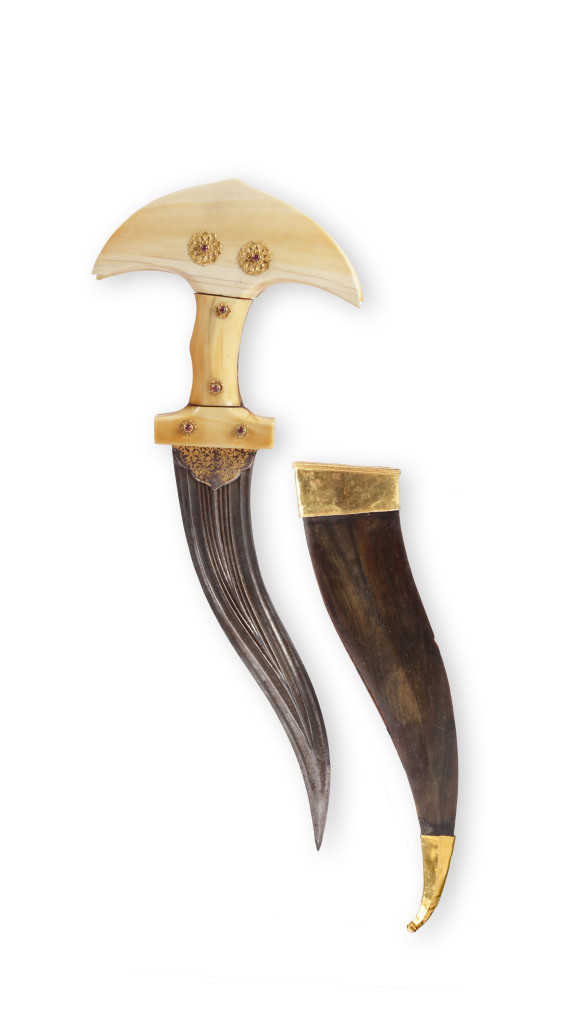
A fine Indian khandjarli dagger with a gold and gem-set ivory hilt
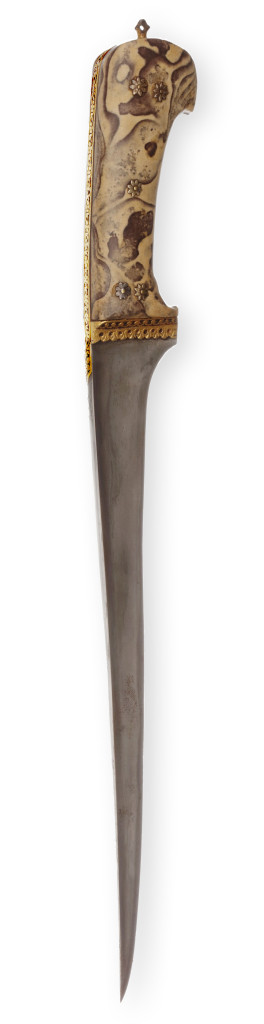
A beautiful Indian pesh kabz dagger with an agate hilt
The plain blade of elegant form, the hilt carved from a fabulous piece of banded agate or tiger-eye, set with floral pins.