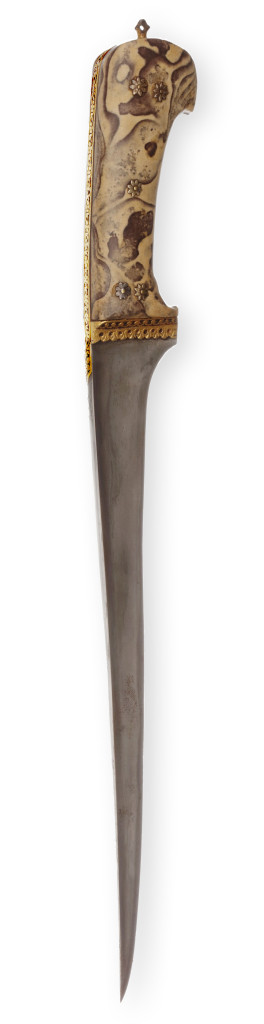
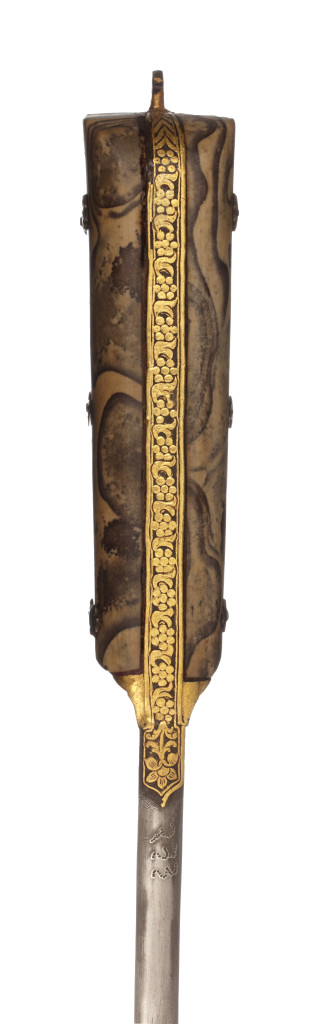
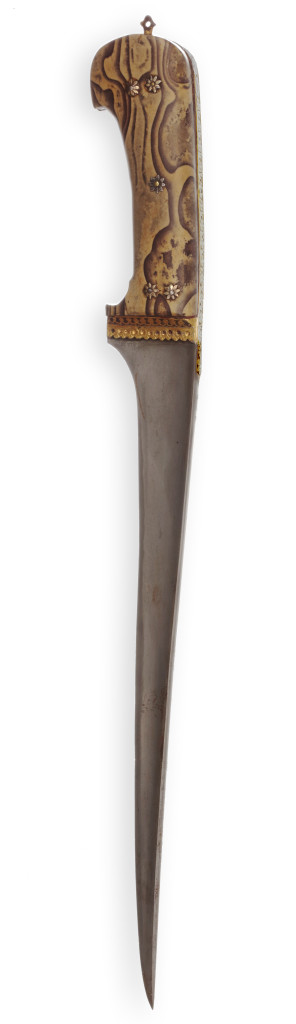
A beautiful Indian pesh kabz dagger with an agate hilt
The plain blade of elegant form, the hilt carved from a fabulous piece of banded agate or tiger-eye, set with floral pins.
L. approx. 37 cm
Provenance:
Private collection, Brussels
Related objects

A banded agate Indian Pesh Kabz dagger
Banded Agate Indian Pesh Kabz
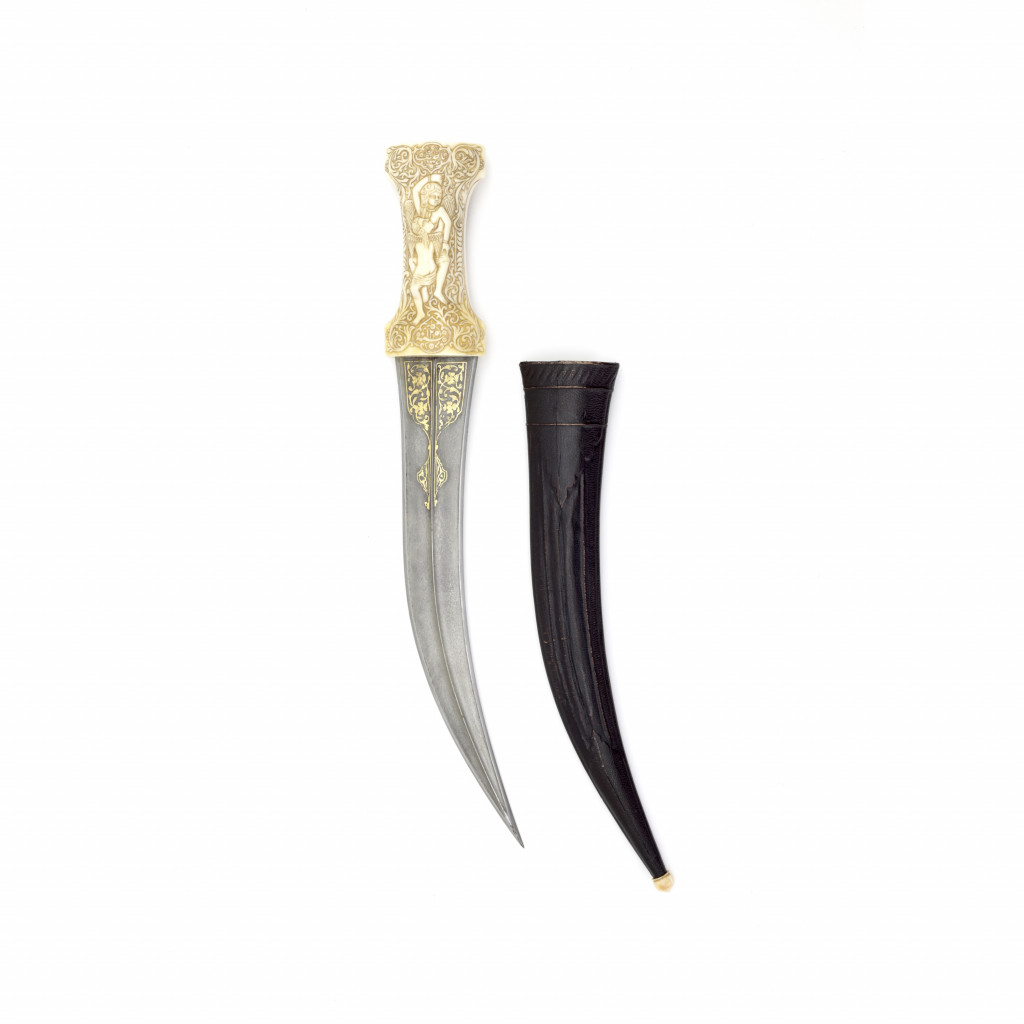
An erotic Islamic Persian dagger with walrus ivory hilt
The erotic scene at the reverse may perhaps be interpreted as the girl's daydream. It shows two female angels, heavenly beings that are normally repulsed by mankind's desire of sexual pleasure, engaged in lesbian affection. Affection between two women in the Persia of the 19th century was fairly common and well documented. They could even formalize their relations in an act called khahar khandegi (sisterhood-by-oath). Angels in Islam were thought to depart from people as soon as these people engaged in impure actions, which included, among others, sex, nudity, and also telling lies. In an angel's absence, the bad deeds were still noted, but the good deeds are no longer recorded for God. That is until this person ritually purified themselves. Another interesting layer is that Islamic scholarship generally sees angels are messengers of God without free will, and thus incapable of diverging from God's will.