No images available
An oval miniature portrait depicting an African boy in oriental dress
French School
French, 18th century
Oil on copper, H. 9.7 x W. 7.7 cm
This miniature encapsulates the complex intersection of race, servitude, and portraiture in early modern Europe. While the boy is depicted with evident care and individuality, his presence in this context speaks to the realities of colonialism and the commodification of human lives. As both a work of art and a historical document, it offers a poignant glimpse into the contradictions of privilege and subjugation within the aristocratic world of the 17th and 18th centuries.
Painted on copper, it depicts a young black boy in luxurious “Oriental” attire, likely from the late 17th or 18th century. The intimate format suggests it was a treasured object, possibly commissioned by a member of the European aristocracy who regarded the boy with affection or esteem. Copper was mainly used when a painting was supposed to travel with the owner or was intended for an overseas destination, further attesting to the intimacy of the portrait. His fine clothing and the meticulous rendering of his features indicate that he was more than a mere servant—perhaps a page or an attendant of high status within a noble household.
The boy’s elaborate dress, with a turban, pearl earring, and red coat with prominent buttons, reflects the European fascination with the “exotic” in portraiture. From the late Renaissance onwards, Ottoman and Eastern styles were frequently adopted in aristocratic circles, either as fashion statements or to signify cosmopolitanism. The turban, in particular, was often worn in portraiture by both sitters and their attendants to evoke an air of luxury and worldliness.
During this period, black children were often present in elite households, serving as pages or attendants. Their presence in portraiture was frequently symbolic—conveying wealth, power, and international connections rather than personal identity. However, in this case, the intimate scale of the painting suggests a degree of personal attachment. The boy’s expression is animated and individualized, rather than generic or purely decorative. His direct gaze and the positioning of his hands, one resting on a surface while the other gestures outward, create a sense of liveliness and personality unusual in such depictions.
This boy was likely brought to Europe through colonial trade routes, either as an enslaved servant or an indentured page. While some Black attendants in noble households gained favor and a degree of status, they remained bound to a system that treated them as possessions. The commissioning of this portrait implies that he held a distinct place within his patron’s life, perhaps as a favored companion or as a display of wealth and refinement. The portrait, therefore, is a testament of the objectification of humans during the period when slavery was deemed normal.
French, 18th century
Oil on copper, H. 9.7 x W. 7.7 cm
This miniature encapsulates the complex intersection of race, servitude, and portraiture in early modern Europe. While the boy is depicted with evident care and individuality, his presence in this context speaks to the realities of colonialism and the commodification of human lives. As both a work of art and a historical document, it offers a poignant glimpse into the contradictions of privilege and subjugation within the aristocratic world of the 17th and 18th centuries.
Painted on copper, it depicts a young black boy in luxurious “Oriental” attire, likely from the late 17th or 18th century. The intimate format suggests it was a treasured object, possibly commissioned by a member of the European aristocracy who regarded the boy with affection or esteem. Copper was mainly used when a painting was supposed to travel with the owner or was intended for an overseas destination, further attesting to the intimacy of the portrait. His fine clothing and the meticulous rendering of his features indicate that he was more than a mere servant—perhaps a page or an attendant of high status within a noble household.
The boy’s elaborate dress, with a turban, pearl earring, and red coat with prominent buttons, reflects the European fascination with the “exotic” in portraiture. From the late Renaissance onwards, Ottoman and Eastern styles were frequently adopted in aristocratic circles, either as fashion statements or to signify cosmopolitanism. The turban, in particular, was often worn in portraiture by both sitters and their attendants to evoke an air of luxury and worldliness.
During this period, black children were often present in elite households, serving as pages or attendants. Their presence in portraiture was frequently symbolic—conveying wealth, power, and international connections rather than personal identity. However, in this case, the intimate scale of the painting suggests a degree of personal attachment. The boy’s expression is animated and individualized, rather than generic or purely decorative. His direct gaze and the positioning of his hands, one resting on a surface while the other gestures outward, create a sense of liveliness and personality unusual in such depictions.
This boy was likely brought to Europe through colonial trade routes, either as an enslaved servant or an indentured page. While some Black attendants in noble households gained favor and a degree of status, they remained bound to a system that treated them as possessions. The commissioning of this portrait implies that he held a distinct place within his patron’s life, perhaps as a favored companion or as a display of wealth and refinement. The portrait, therefore, is a testament of the objectification of humans during the period when slavery was deemed normal.
Part of the Europe collection.
Related objects
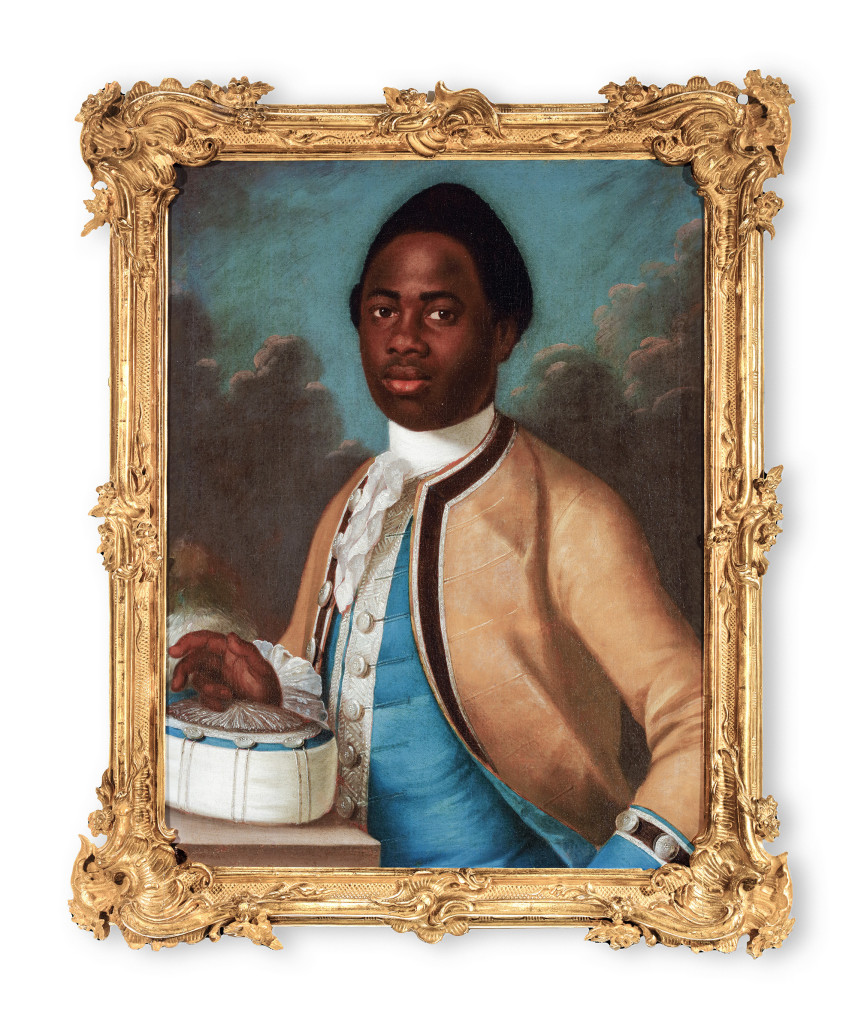
A portrait of Fredrik Adolf Ludvig Gustav Albrecht ‘Badin’ Couschi (1750-1822)
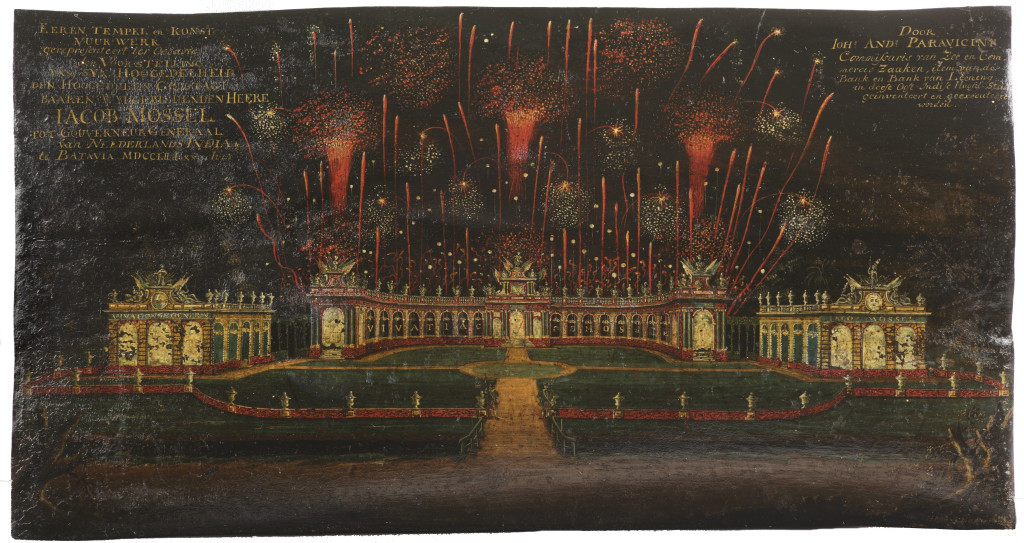
An extremely rare painting depicting the celebrations in honour of the inauguration of Governor-General Jacob Mossel (1704-1761) of the Dutch East Indies on the 24th of July in 1752
Temple and fireworks presented for the inauguration of the highly esteemed Jacob Mossel as Governor-General of the Dutch East Indies in Batavia 1752, 24 July. Invented and executed by Johannes Andreas Paravicini, Commissioner of Sea and Trade and of the Bank of the Capital of East India.