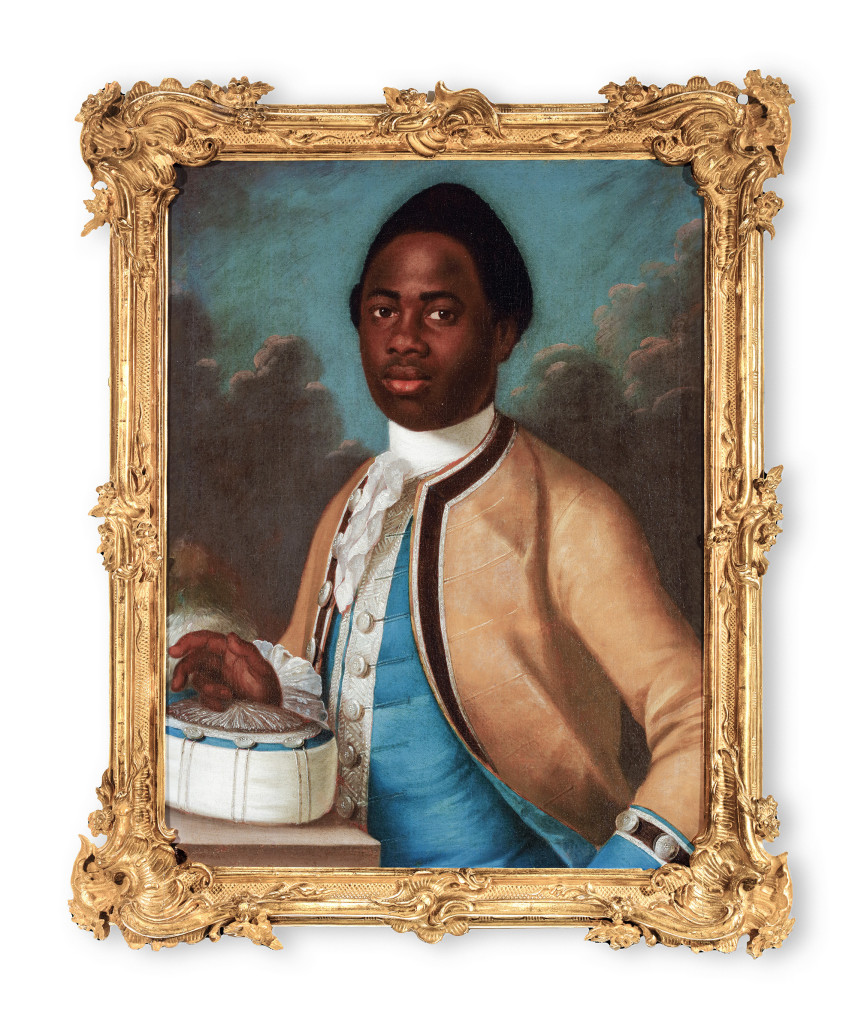
A portrait of Fredrik Adolf Ludvig Gustav Albrecht ‘Badin’ Couschi (1750-1822)
Fredrik Adolf Ludvig Gustav Albrecht ‘Badin’ Couschi
Dated 1776 Januar[i?] on the reverse
Oil on canvas, H. 77 x W. 57.5 cm
Provenance:
- Collection of Queen Louisa Ulrika of Prussia, Queen of Sweden, Drottningholm Palace (since 1776); thence by descent
- Collection of Princess Sophia Albertina, inherited in 1782, and on display in Arvfurstens Palast, Stockholm (after 1793) Recorded in Princess Sophia’s 1829 post-mortem inventory, fol. 110, no. 79 (in French): ‘Portrait de Mr Badin, appraised for 20 Swedish riksdaler’;thence by descent
- Noble collection, South Germany (before 1981 to the mid-1980s)
- Private collection, South Germany (untill 2023)
Exhibitions:
Berlin-Museum, Le Musée Sentimentale De Prusse: Aus grosser Zeit!, Berlin, 16 August - 15 November 1981
Literature:
Marie-Louise Plessen & Daniel Spoerri ed., Le Musée Sentimentale De Prusse: Aus grosser Zeit!, exhibition catalogue, Verl. Frölich u. Kaufmann, Berlin, 1981, pp. 158-159 (ill.) (as attributed to the French painter Antoine Pesne (1683- 1757), active at the Prussian court in Berlin, the sitter identified as a ‘Moorish’ boy)
This painting is an unsigned portrait replica of a lost pastel portrait by Gustav Lundberg (1695- 1786), dating from 1776. Björk is known to have worked solely as a copyist in Lundberg’s studio. Many of his portraits are known and highly recognisable in style and colouring, of which some still retain their original version in pastel by Lundberg.
This original mid-eighteenth-century gilded limewood frame was hand-carved in Stockholm in a Rococo style favoured by the court of Queen Louisa Ulrika of Prussia and her son Gustav III (r. 1771-1792). Influenced by Louis XV boiserie carving, popular in France, the Rococo favoured elaborate curves, delicate flowers, flyaway scrolls, and extravagant asymmetry. This was the age of the virtuoso master carver, who created luxurious, richly carved, ornamental frames, respected today as sculptures in their own right. Carvers in France and Sweden collaborated with the répareur, who carved details into the gesso and coated the mouldings before gilding. Afterwards, the doreur or gilder added punchwork or engraved decorative features, deploying varying shades of gold with either matt or burnished finishes.1
This frame comprises curved, scrolling lines embellished with delicate, almost three-dimensional flowers. The four projecting outer edges are typical of the period, with ornate cartouches shaped like S-curves reminiscent of seashells interspersed with scrolls in the centre (above and below) and on both sides. The straight rectilinear lines are punched with delicate diamond patterns. Gustav Lundberg closely collaborated with leading wood carvers and gilders in Stockholm, including the master carver Gustaf Johan Fast (1794-?). It is an exquisite, high-quality frame closely following French prototypes, commissioned from a master carver, perhaps even from Gustav Fast, soon after the portrait’s completion.
Read the article by Dr. Annemarie Jordan Gschwend here:
[The Discovery of a Lost Masterpiece: An African Boy at the Swedish Court in the Eighteenth Century](https://zebregsroell.com/view-catalog/portrait-painting-gustav-badin-annemarie-jordan)
Part of the Europe collection.
Related objects
An oval miniature portrait depicting an African boy in oriental dress
_France, 18th century_ _H. 9.7 x W. 7.7 cm_
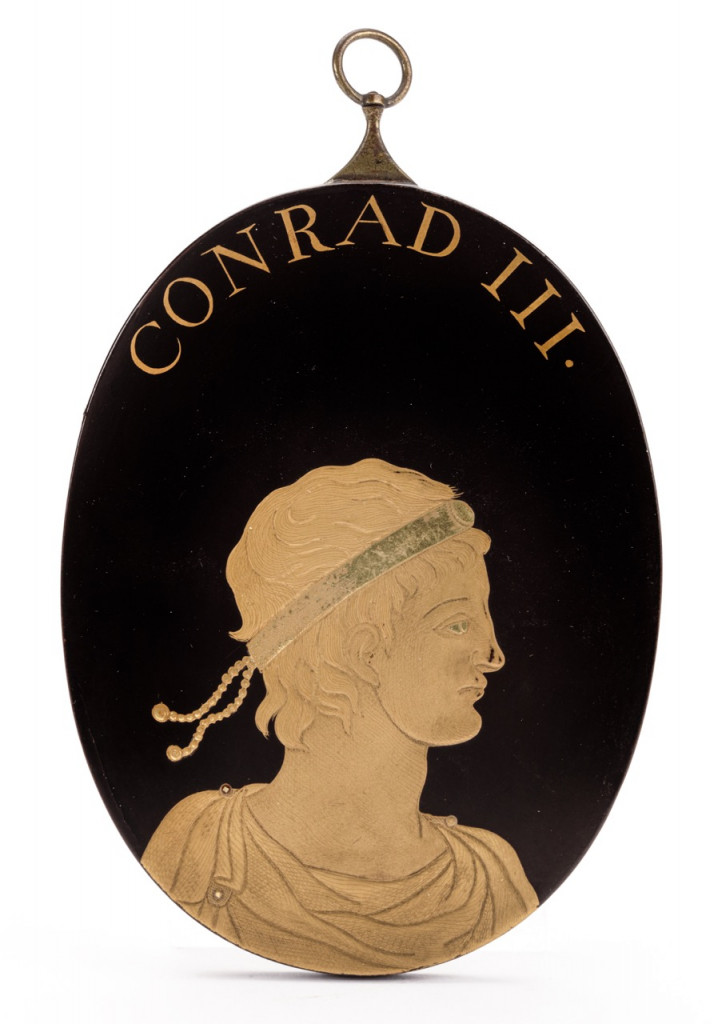
A collection of nine Japanese export lacquer portrait medaillons
A vogue for collecting portrait medallions of famous historical figures developed in the late eighteenth century. In England, in the 1770s Josiah Wedgwood exploited this with the production of ceramic medallions in both blue jasper and black basalt. Possibly in response to this fashion portrait medallions in black and gold lacquer on copper were produced in Japan from around 1780
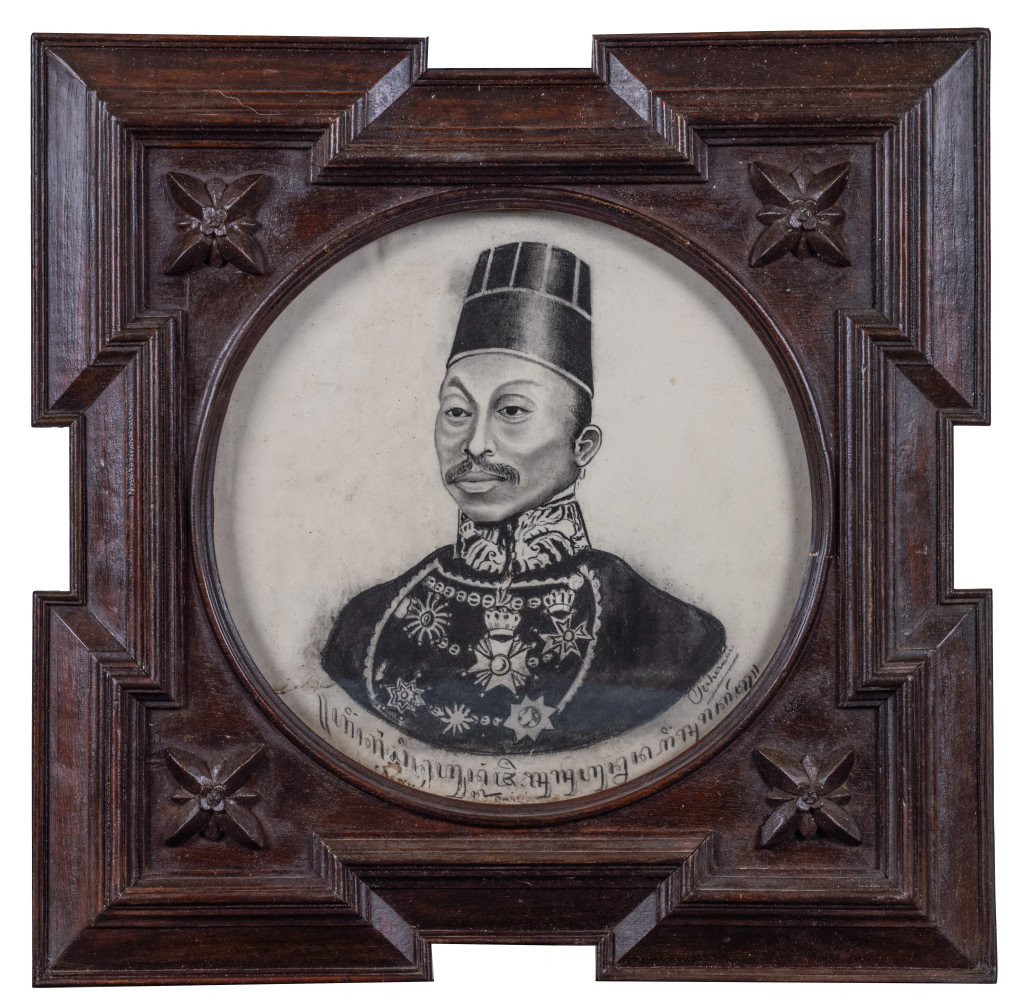
A portrait of Susuhunan Pakubuwono IX of Surakarta (1830-1893)
Pakubuwono IX, ruler of Surakarta then known as Solo, was the second son of Pakubuwono VI and reigned from 1861 till his death in 1893. He was born as Gusti Raden Mas Duksina and was still in the womb when his father was exiled to Ambon by the Dutch for supporting Prince Diponegoro's rebellion. After reaching adulthood, Raden Mas Duksina got the title Kangjeng Gusti Pangeran Haryo Prabuwijaya. As Pakubuwono IX, he ascended the throne to replace Pakubuwono VIII (his father's uncle) on December 30, 1861. The great Javanese poet Ranggawarsita (1802- 1873) described his reign in many of his literary works, for example, in Serat Kalatida.