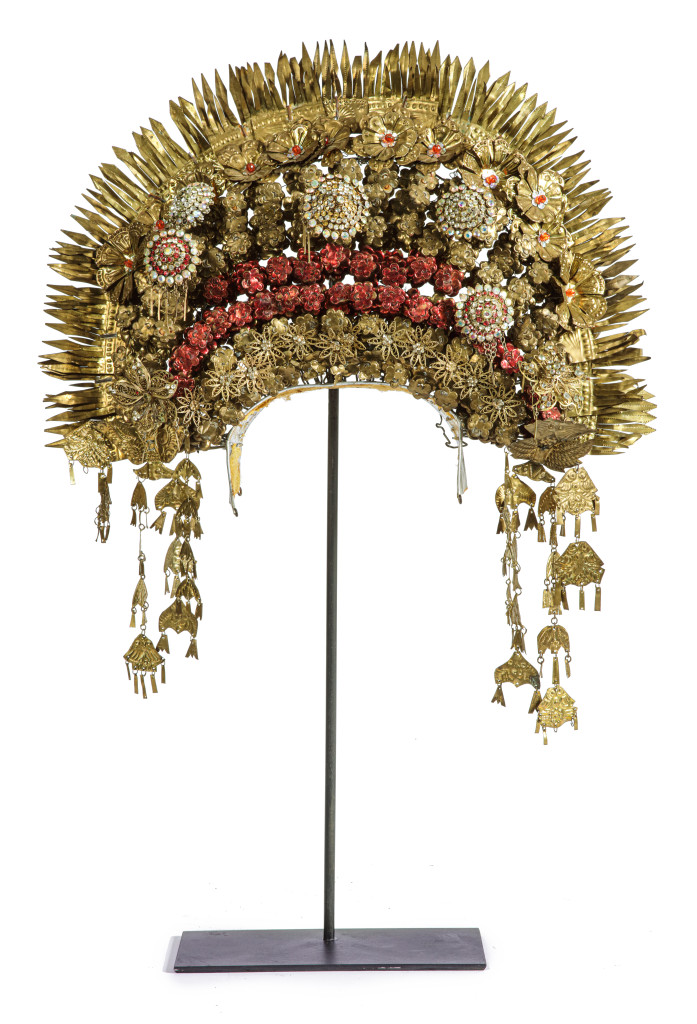
An elaborate Minangkabau gem-set brass floral wedding crown or 'Suntiang'
H. 66.5 cm (incl. stand)
Provenance:
Private collection, the Netherlands
The Suntiang: Crowning the bride
In the Minangkabau culture, wedding crowns hold great cultural importance and symbolism. The Minangkabau people in West Sumatra, Indonesia, are well recognized for their unique matrilineal social structure and abundant cultural heritage. One of their most visually captivating traditions is the usage of intricate bridal crowns, referred to as suntiang, worn by brides throughout traditional wedding rituals. The suntiang serves as more than a mere decorative head embellishment; it represents cultural heritage, societal principles, and the esteemed status of women in Minangkabau culture.
Design
The suntiang is an imposing headpiece, usually made from several layers of gold-plated metal or imitation gold, adorned with floral patterns, mainly chrysanthemum forms, carefully distributed throughout the tiers. Based on the social standing of the bride and the specific style of the location, a suntiang can vary in thickness from 3 to 11 layers, with certain intricate variations extending to 20 layers. The weight of the crown, which may surpass several kilogrammes, serves as an indicator of status and endurance, representing the fortitude and tenacity anticipated from the bride.
The design of the suntiang is profoundly emblematic. According to tradition, the floral decorations orientated upwards symbolize purity, fertility, and prosperity. The predominant material, gold, represents not just affluence but also divine protection and spiritual purity, said to shield the bride from adverse influences. Each stratum of the crown contributes additional levels of significance, as higher tiers symbolise more sagacity and obligations as the bride assumes her duties as a spouse and parent.
Social and cultural meaning
Within the Minangkabau culture, characterized by a pronounced matrilineal structure, women have a crucial role in preserving the family's lineage and customs. The suntiang functions as a potent visual manifestation of this function, underscoring the significance of women in society. The crown symbolizes the profound concepts of reverence, dignity, and accountability that are firmly embedded in Minangkabau culture.
By donning the suntiang at the wedding ceremony, the bride demonstrates her readiness to assume her new obligations while also highlighting the family's pride and commitment to customs. The weight of the crown, commonly perceived as a load, symbolizes the responsibilities that the bride would bear in her married life, emphasizing the need for perseverance and fortitude in carrying out these tasks appropriately.
Regional variations
Although the suntiang is well acknowledged throughout the Minangkabau region, its style and design can differ greatly based on the local customs. Crowns in coastal regions often exhibit a greater degree of fragility and complexity, which can be attributed to the impact of commerce and foreign cultural exchanges. Conversely, the highland areas display a preference for more sturdy and intricate patterns, frequently including supplementary decorations and hues that symbolize the local culture.
Within modern Minangkabau culture, there have been modifications made to the traditional suntiang. Contemporary brides may choose lighter fabrics, which afford them enhanced comfort without compromising the magnificence and importance of the original design. Despite these modifications, the suntiang remains an essential element of Minangkabau identity, preserving its role as a representation of the continuity between historical customs and current rituals.
Related objects
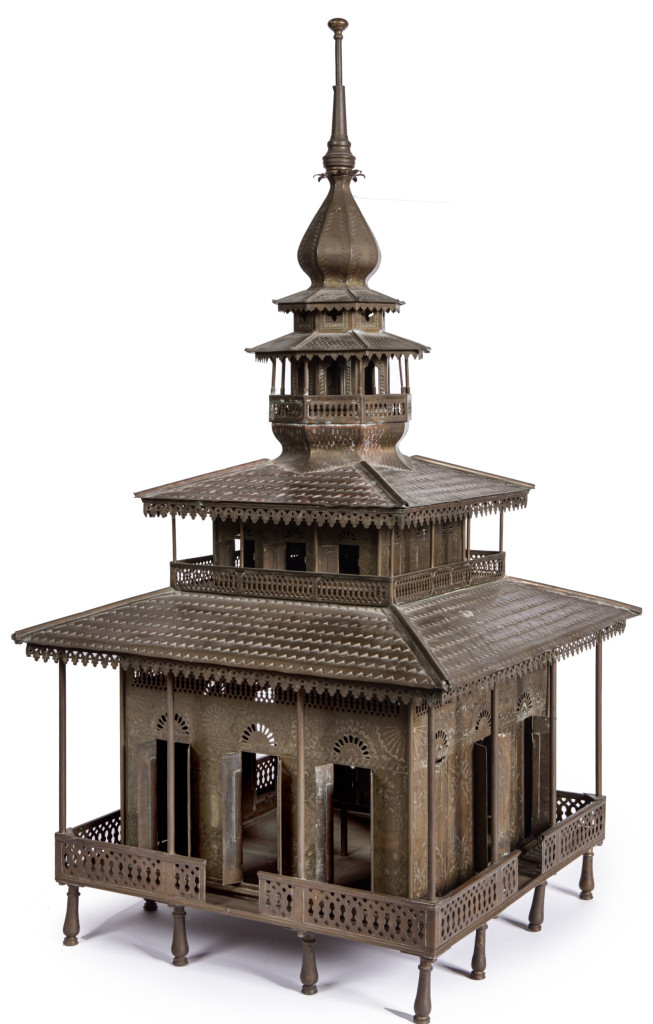
A Charming Indonesian brass and copper Indonesian miniature Mosque
Indonesian Miniature Mosque
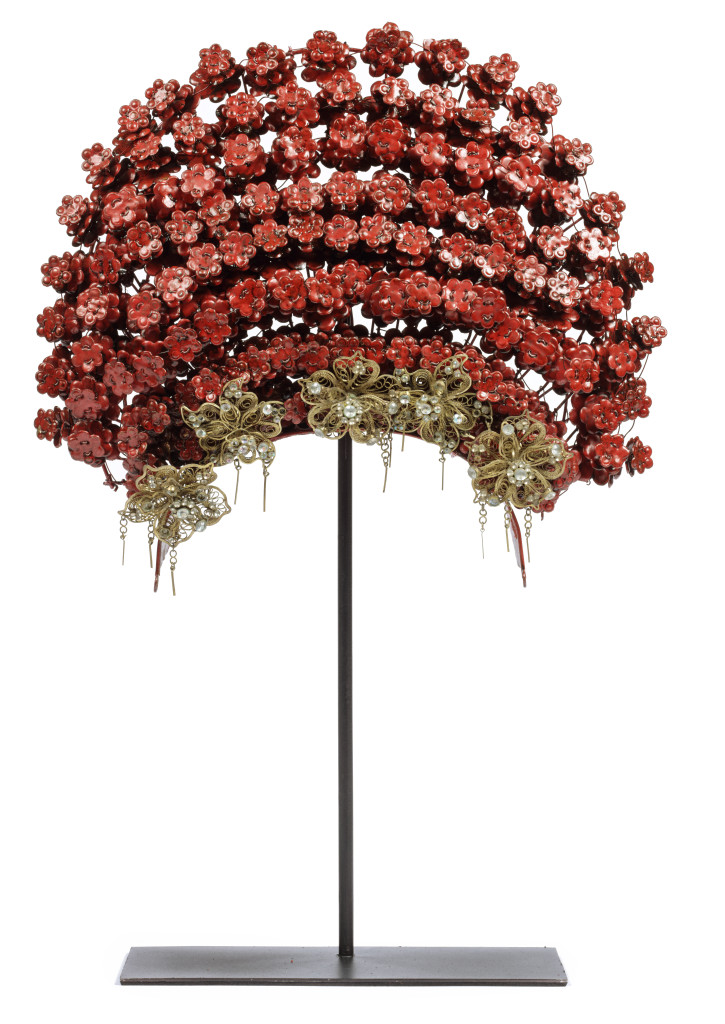
A Minangkabau red-enamelled and brass wedding crown or 'Suntiang'
In the Minangkabau culture, wedding crowns hold great cultural significance and symbolism. The Minangkabau people in West Sumatra, Indonesia, are well recognised for their very unique matrilineal social structure and abundant cultural heritage. One of their most visually captivating traditions is the usage of intricate bridal crowns, referred to as suntiang, worn by brides throughout traditional wedding rituals. The suntiang serves as more than a mere decorative head embellishment; it represents cultural heritage, societal principles, and the esteemed status of women in Minangkabau culture.
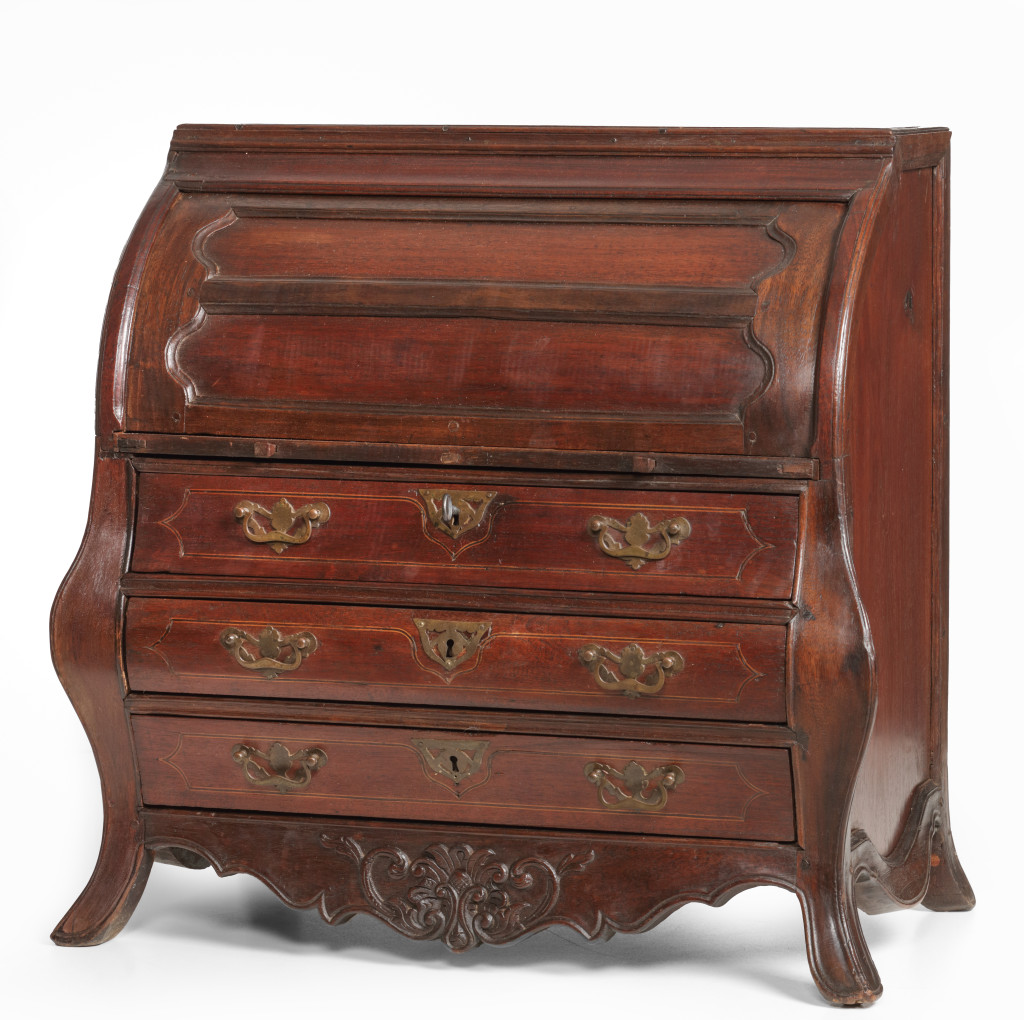
A Dutch-colonial Indonesian sapan and tamarind wood miniature tambour desk with brass mounts
The tambour desk or *bureau à cilindre* came into fashion in the Netherlands and former Dutch East Indies in the second half of the 18th century. The taste for French designs came to prevail, replacing the earlier English Georgian models of desks with plain sloping fronts. Miniature furniture, exact copies after full-size examples such as the tambour desk in the Rijksmuseum Amsterdam, were very popular among the Indo-Dutch ladies in the Dutch East Indies in the 18th century.