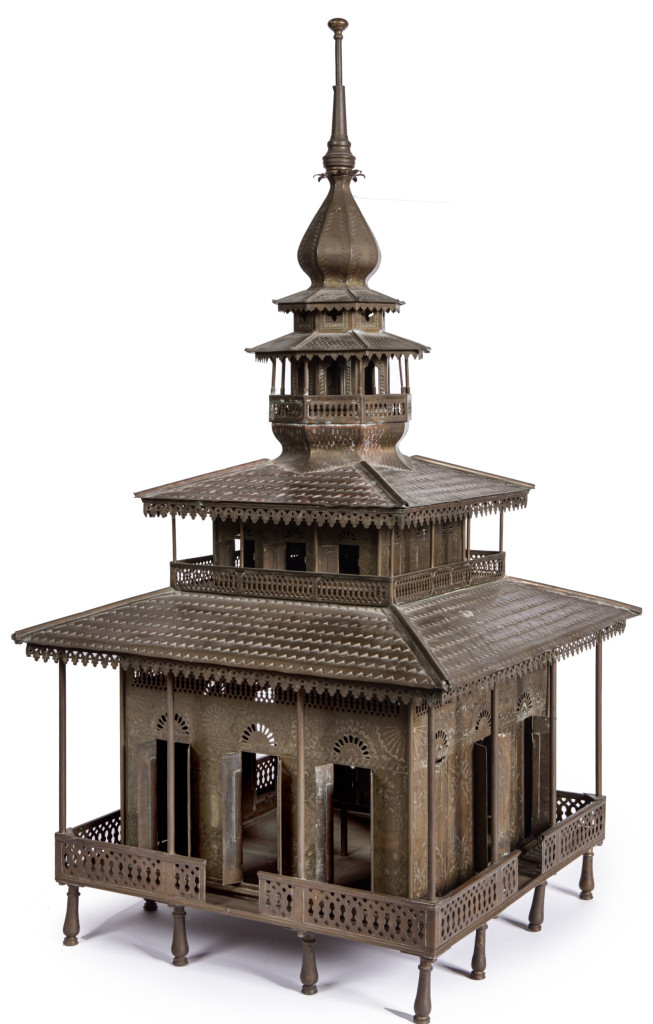
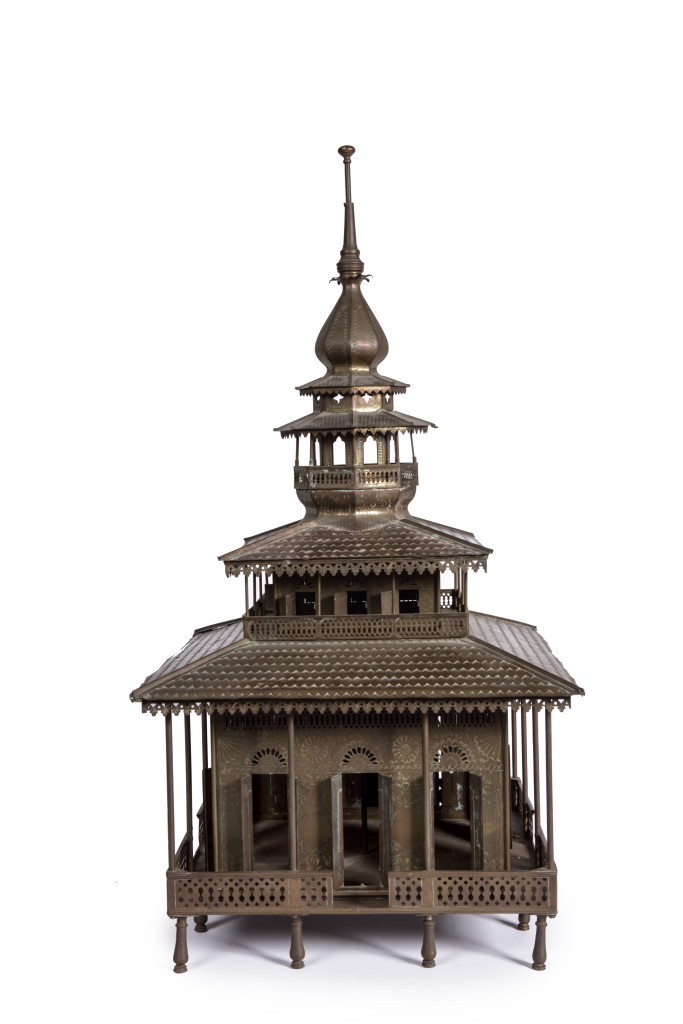
A Charming Indonesian brass and copper Indonesian miniature Mosque
The building with three layers above the central praying-room, a minarett on top, all doors and windows fully functioning.
H. approx. 100 cm
Related objects
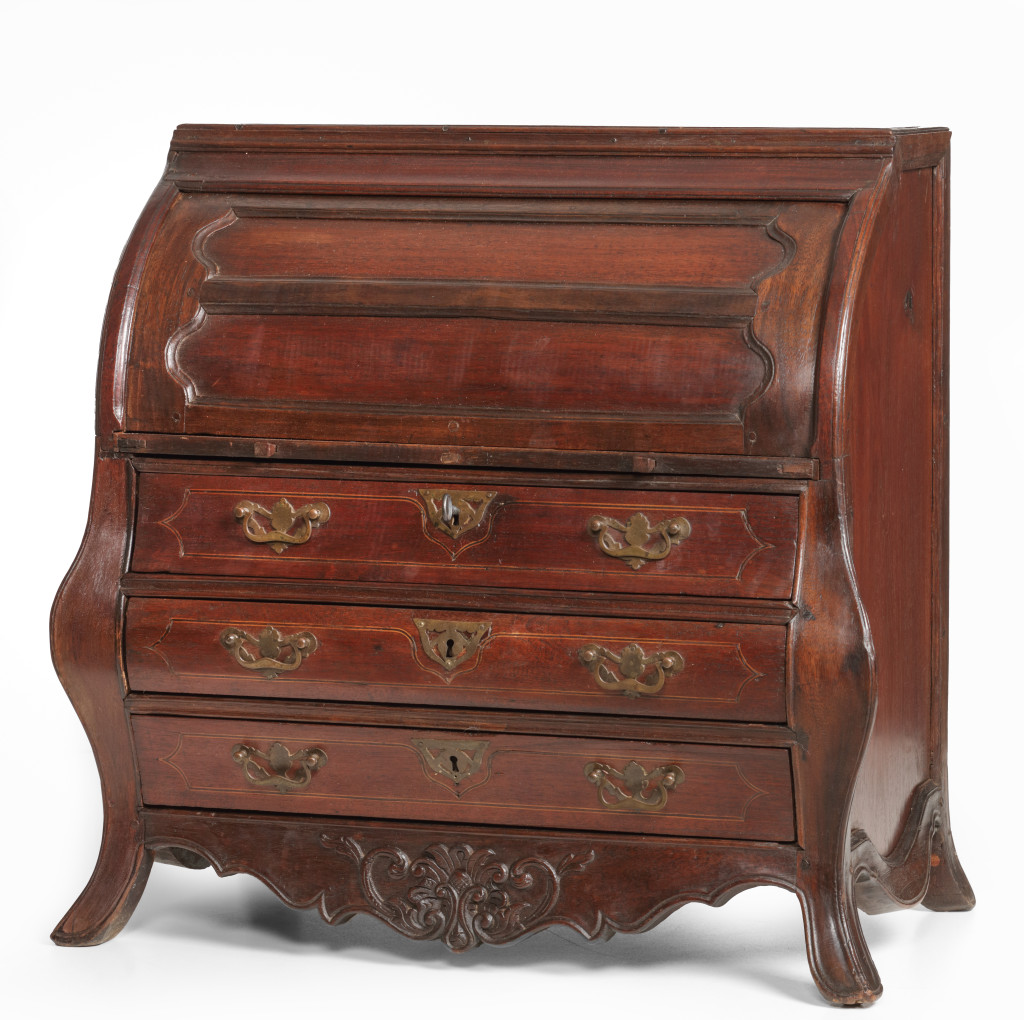
A Dutch-colonial Indonesian sapan and tamarind wood miniature tambour desk with brass mounts
The tambour desk or *bureau à cilindre* came into fashion in the Netherlands and former Dutch East Indies in the second half of the 18th century. The taste for French designs came to prevail, replacing the earlier English Georgian models of desks with plain sloping fronts. Miniature furniture, exact copies after full-size examples such as the tambour desk in the Rijksmuseum Amsterdam, were very popular among the Indo-Dutch ladies in the Dutch East Indies in the 18th century.
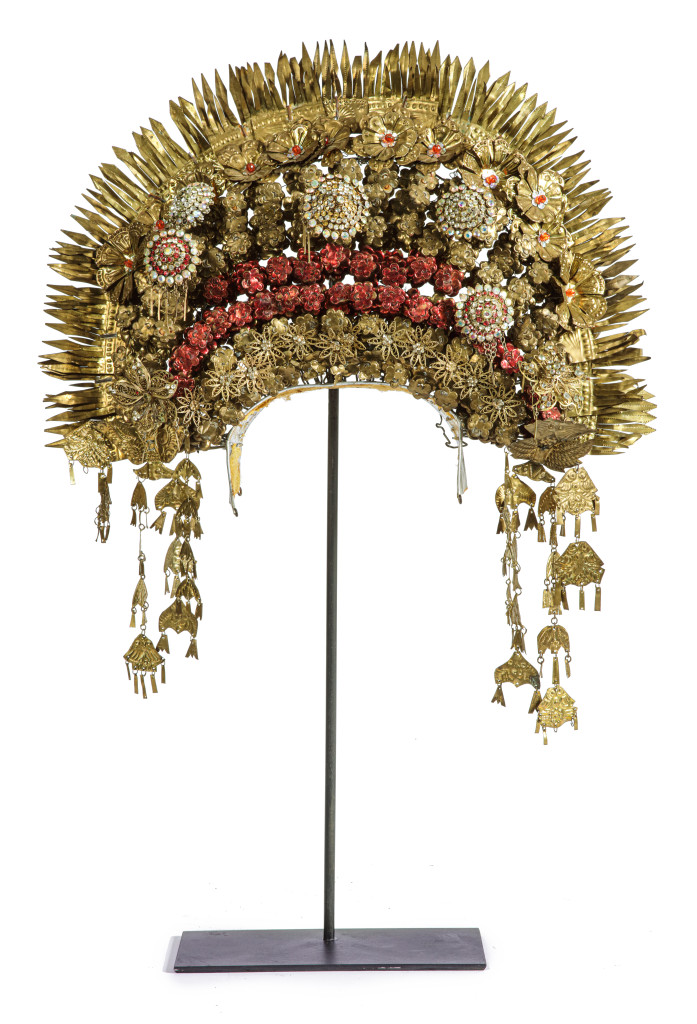
An elaborate Minangkabau gem-set brass floral wedding crown or 'Suntiang'
In the Minangkabau culture, wedding crowns hold great cultural significance and symbolism. The Minangkabau people in West Sumatra, Indonesia, are well recognised for their very unique matrilineal social structure and abundant cultural heritage. One of their most visually captivating traditions is the usage of intricate bridal crowns, referred to as suntiang, worn by brides throughout traditional wedding rituals. The suntiang serves as more than a mere decorative head embellishment; it represents cultural heritage, societal principles, and the esteemed status of women in Minangkabau culture.
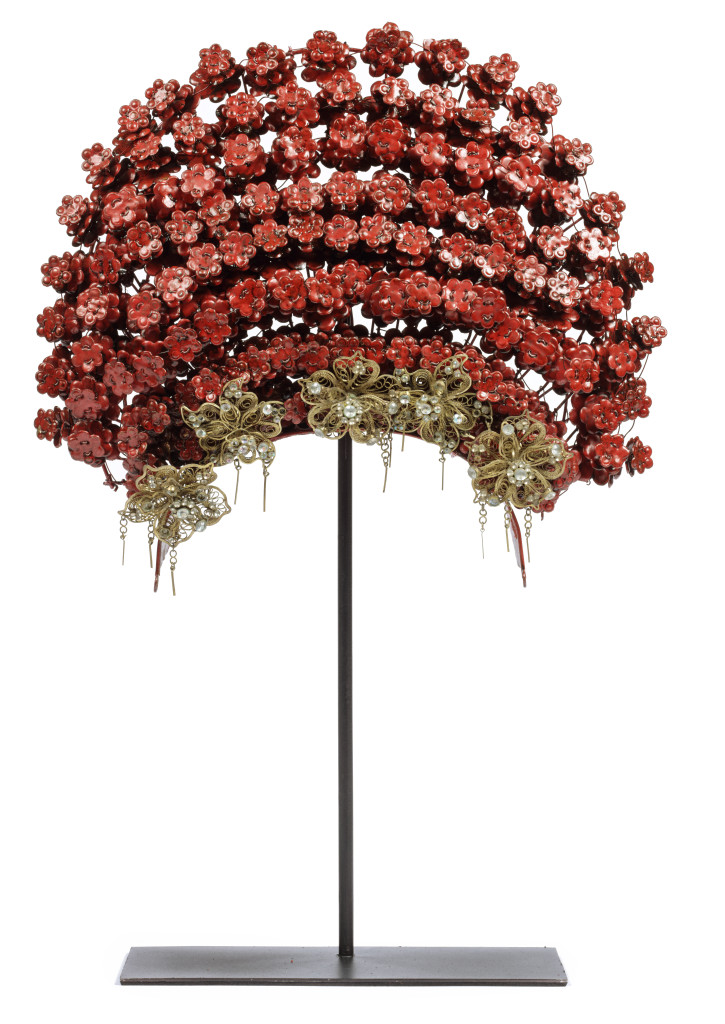
A Minangkabau red-enamelled and brass wedding crown or 'Suntiang'
In the Minangkabau culture, wedding crowns hold great cultural significance and symbolism. The Minangkabau people in West Sumatra, Indonesia, are well recognised for their very unique matrilineal social structure and abundant cultural heritage. One of their most visually captivating traditions is the usage of intricate bridal crowns, referred to as suntiang, worn by brides throughout traditional wedding rituals. The suntiang serves as more than a mere decorative head embellishment; it represents cultural heritage, societal principles, and the esteemed status of women in Minangkabau culture.