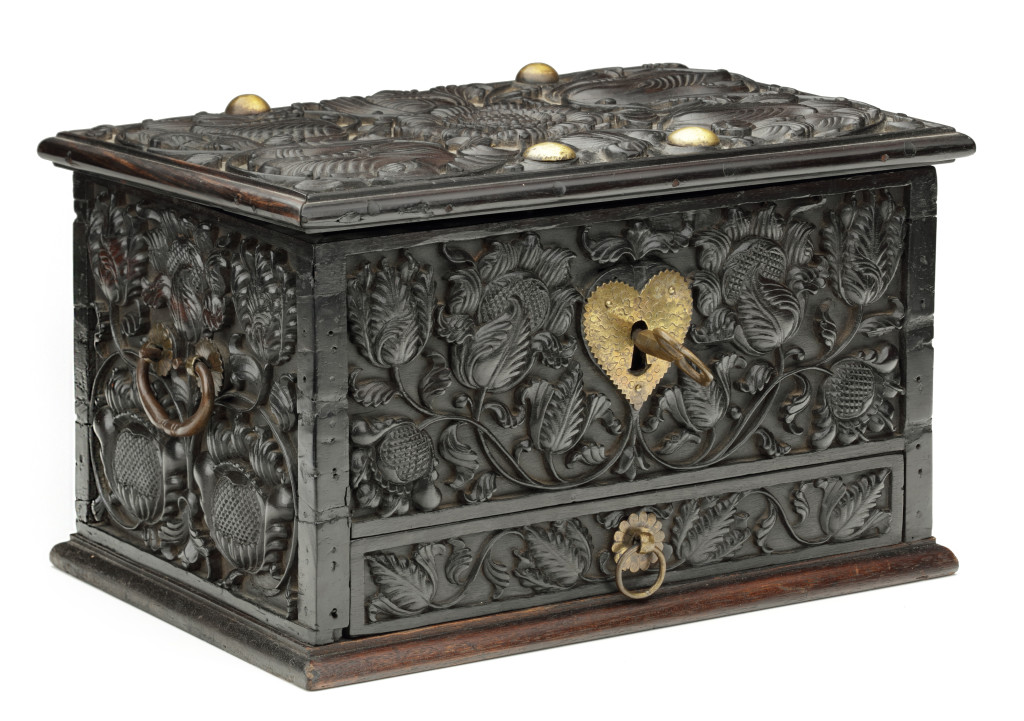
An Indonesian carved ebony box with drawer and brass mounts
Elaborately carved with scrolling flower pattern, with a drawer below a lid, with brass mounts and heart-shaped lockplate.
H. 23 x W. 37.5 x D. 26.2 cm
Provenance:
- Jan Habbema (Ambon 1885 – after October 1940), started his in studies in law in Leiden in 1904, became Resident of Rembang, of Blora, Djocja and Bodjonegoro in Indonesia between 1930 and 1936, moved to the Hague in 1937 where he still lived in 1940 at the outbreak of the war. The box remained in Jan Habbema’s family until the present day. Jan Habbema had a large and very important collection of antique Dutch colonial furniture (see a photograph of the interior of his house in 1935 in Jan Veenendaal, Wonen op de Kaap en in Batavia, pg. 44).
The beautiful high-relief type III carving in this box (see Jan Veenendaal in Wonen op de Kaap en in Batavia, editor Titus M. Eliëns, p. 31) relates closely to the carving in an ebony box with silver mounts with the town mark of Batavia, in the collection of het Gemeentemuseum Den Haag (S.M. Voskuil-Groenewegen e.a. Zilver uit de tijd van de Verenigde Oostindische Compagnie, p. 165). }Therefore this box probably also is from Batavia but done by Indian Tamil slaves working in Batavia. The high-relief carving in this box is not only characteristic of the decoration found in ebony cabinets, beds, chairs and settees produced for the Dutch in Batavia at the end of the 17th century, but also colonial silver made during the same period in Batavia was decorated with similar floral motifs.
Related objects
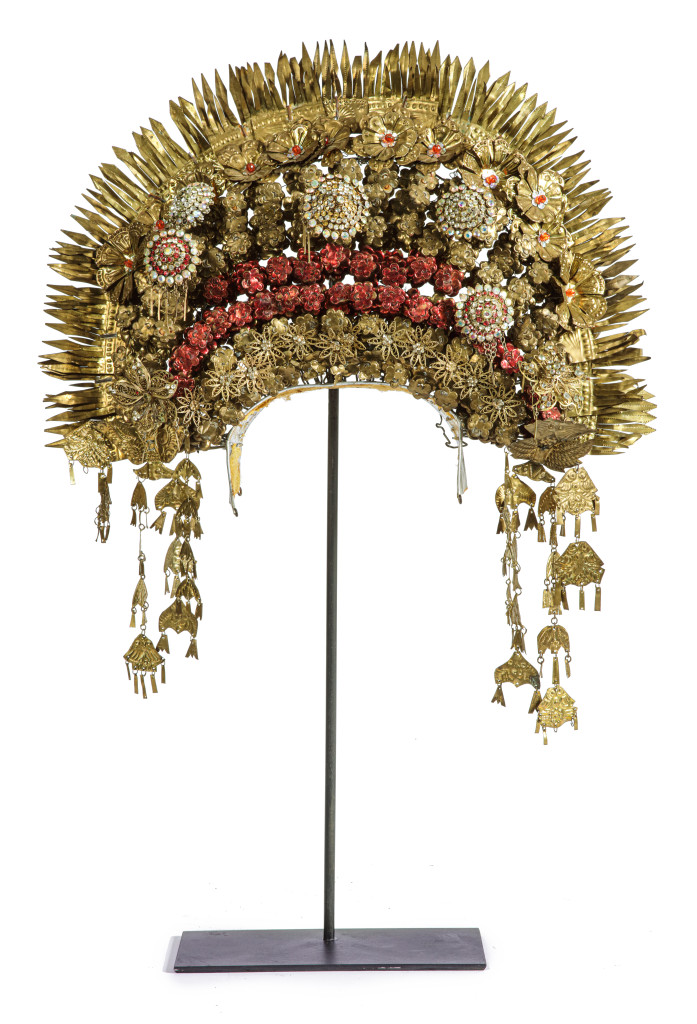
An elaborate Minangkabau gem-set brass floral wedding crown or 'Suntiang'
In the Minangkabau culture, wedding crowns hold great cultural significance and symbolism. The Minangkabau people in West Sumatra, Indonesia, are well recognised for their very unique matrilineal social structure and abundant cultural heritage. One of their most visually captivating traditions is the usage of intricate bridal crowns, referred to as suntiang, worn by brides throughout traditional wedding rituals. The suntiang serves as more than a mere decorative head embellishment; it represents cultural heritage, societal principles, and the esteemed status of women in Minangkabau culture.
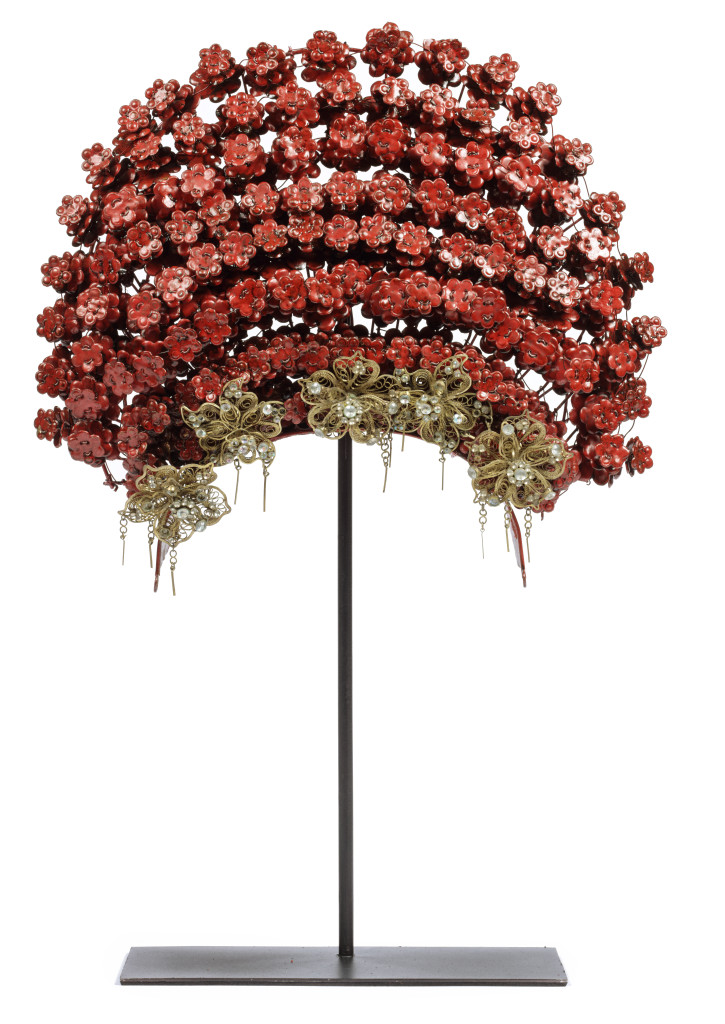
A Minangkabau red-enamelled and brass wedding crown or 'Suntiang'
In the Minangkabau culture, wedding crowns hold great cultural significance and symbolism. The Minangkabau people in West Sumatra, Indonesia, are well recognised for their very unique matrilineal social structure and abundant cultural heritage. One of their most visually captivating traditions is the usage of intricate bridal crowns, referred to as suntiang, worn by brides throughout traditional wedding rituals. The suntiang serves as more than a mere decorative head embellishment; it represents cultural heritage, societal principles, and the esteemed status of women in Minangkabau culture.
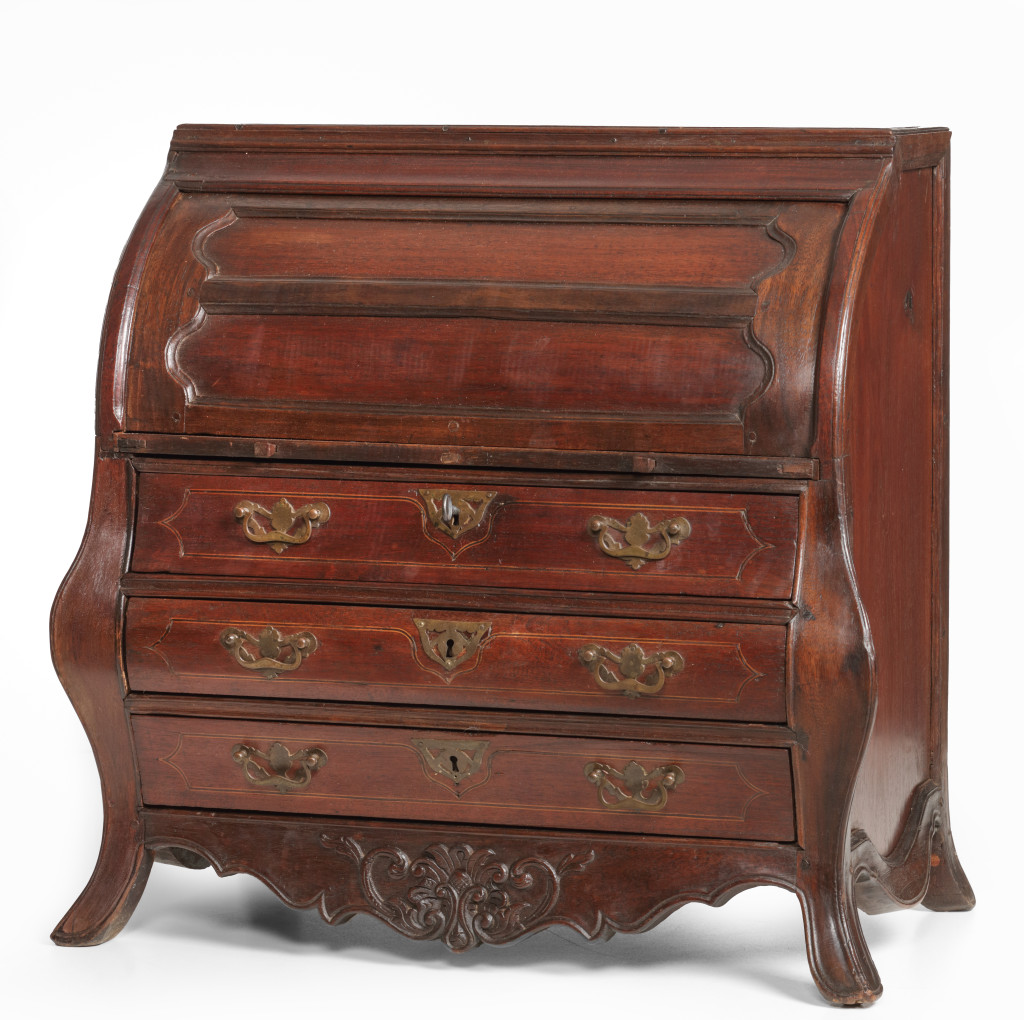
A Dutch-colonial Indonesian sapan and tamarind wood miniature tambour desk with brass mounts
The tambour desk or *bureau à cilindre* came into fashion in the Netherlands and former Dutch East Indies in the second half of the 18th century. The taste for French designs came to prevail, replacing the earlier English Georgian models of desks with plain sloping fronts. Miniature furniture, exact copies after full-size examples such as the tambour desk in the Rijksmuseum Amsterdam, were very popular among the Indo-Dutch ladies in the Dutch East Indies in the 18th century.