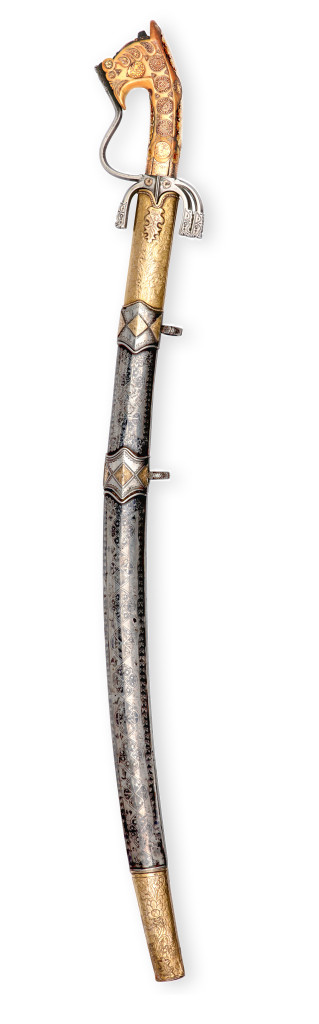
A superb part-niello silver and gold inlaid 'nimcha' sword, probably belonging to an Arab vizier or a merchant king
Eastern African coastline, Zanzibar, Pemba, Comoros or Lamu, Omani work, early 19th century
Fitted with a unique silver scabbard elaborately decorated with niello work depicting flowers trees, buildings, and with several small inscriptions. The scabbard has a gold locket and chape. The niello work was almost certainly produced in Iraq.
L. 87 cm (incl. scabbard)
Provenance:
Robert Hales, London
These swords have been variously described as coming from Morocco, North Africa, Arabia, and the Middle East. They are in fact made by Omani craftsmen but were produced and wore on the islands of Zanzibar, Pemba, Comoros, and East African coastal towns such as Lamu, by Arab tradesmen. However, this example is so fine, it must have been worn by a exuberantly wealthy ‘merchant king’ who became rich from slavery and piracy rather than legit mercantilism.
A 19th century photograph shows Souali Monaned the Vizier of the Comoros islands, wearing a normal Oman shamshir, but his two seated attendants are each holding an ivory hilted nimcha. Sayid Said (ruled 1806-1856) established Zanzibar as joint capital with Muscat, and in the late 19% century the Omani Empire was spit into two Sultanates, namely Zanzibar, and Muscat and Oman. The Sultan of Muscat remained nominally the ruler of both. Souali Mohamed was Vizier of Said All bin Said Omar, see no. 689, which shows him wearing a shamshir, an Al Bu Said style jambiya, and a small pistol.
Fitted with a unique silver scabbard elaborately decorated with niello work depicting flowers trees, buildings, and with several small inscriptions. The scabbard has a gold locket and chape. The niello work was almost certainly produced in Iraq.
L. 87 cm (incl. scabbard)
Provenance:
Robert Hales, London
These swords have been variously described as coming from Morocco, North Africa, Arabia, and the Middle East. They are in fact made by Omani craftsmen but were produced and wore on the islands of Zanzibar, Pemba, Comoros, and East African coastal towns such as Lamu, by Arab tradesmen. However, this example is so fine, it must have been worn by a exuberantly wealthy ‘merchant king’ who became rich from slavery and piracy rather than legit mercantilism.
A 19th century photograph shows Souali Monaned the Vizier of the Comoros islands, wearing a normal Oman shamshir, but his two seated attendants are each holding an ivory hilted nimcha. Sayid Said (ruled 1806-1856) established Zanzibar as joint capital with Muscat, and in the late 19% century the Omani Empire was spit into two Sultanates, namely Zanzibar, and Muscat and Oman. The Sultan of Muscat remained nominally the ruler of both. Souali Mohamed was Vizier of Said All bin Said Omar, see no. 689, which shows him wearing a shamshir, an Al Bu Said style jambiya, and a small pistol.
Related objects
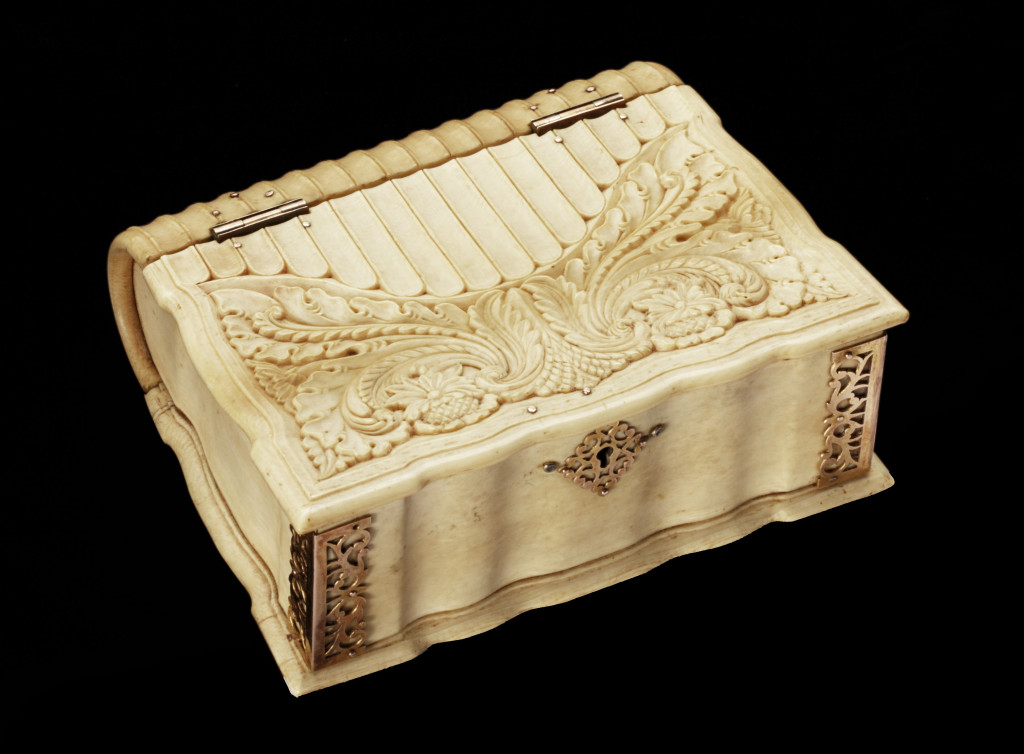
A very fine Sri Lankan ivory and gold bible box
Fine Sri Lankan Ivory and Gold Bible box
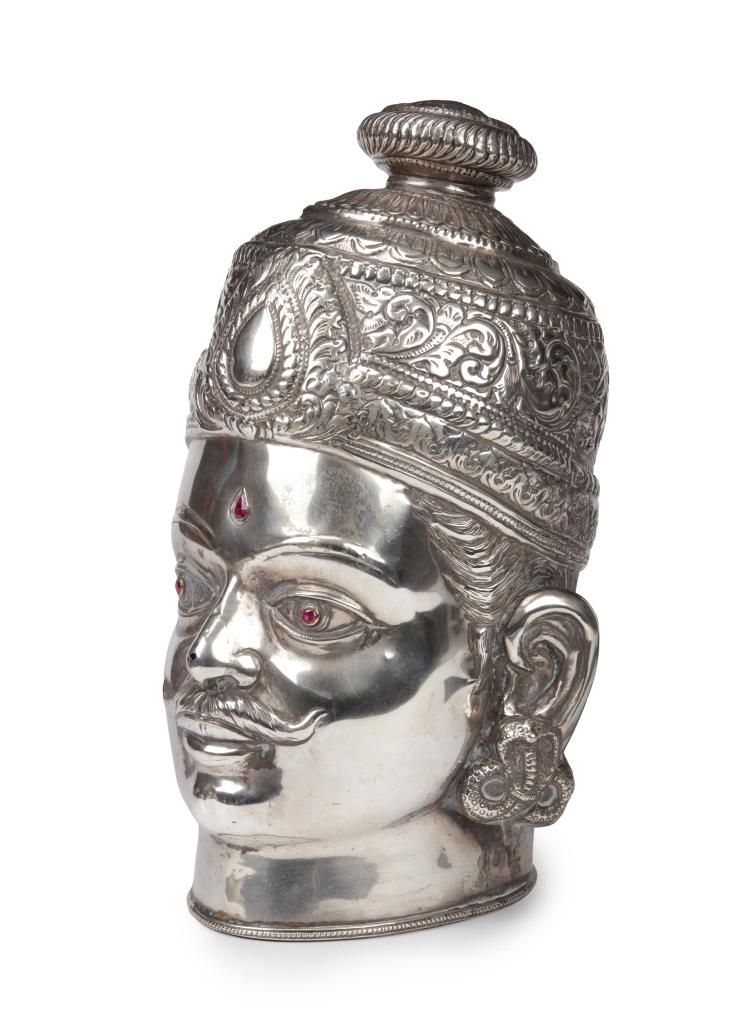
A large silver Shiva head
_India, late 19th century_ _H. 33.5 cm; Weight: 1.34 kg_ At over thirty centimeters high, this example is shrine-scaled, its mirror-bright surface designed to animate offerings, movement, and flame.
No image
An Indian gem-set and enamelled gold throne for a deity
_Probably Rajasthan, 19th century_ _H. approx. 11 cm_ Provenance: Private collection, Switzerland (since the 1960s) A comparable gold throne for an idol from Gujarat or Maharashtra is illustrated in: M.E. Aitken, _When Gold Blossoms: Indian Jewelry from the Susan L. Beningson Collection_, London, Asia Society & Philip Wilson Publishers, 2004, p. 57.