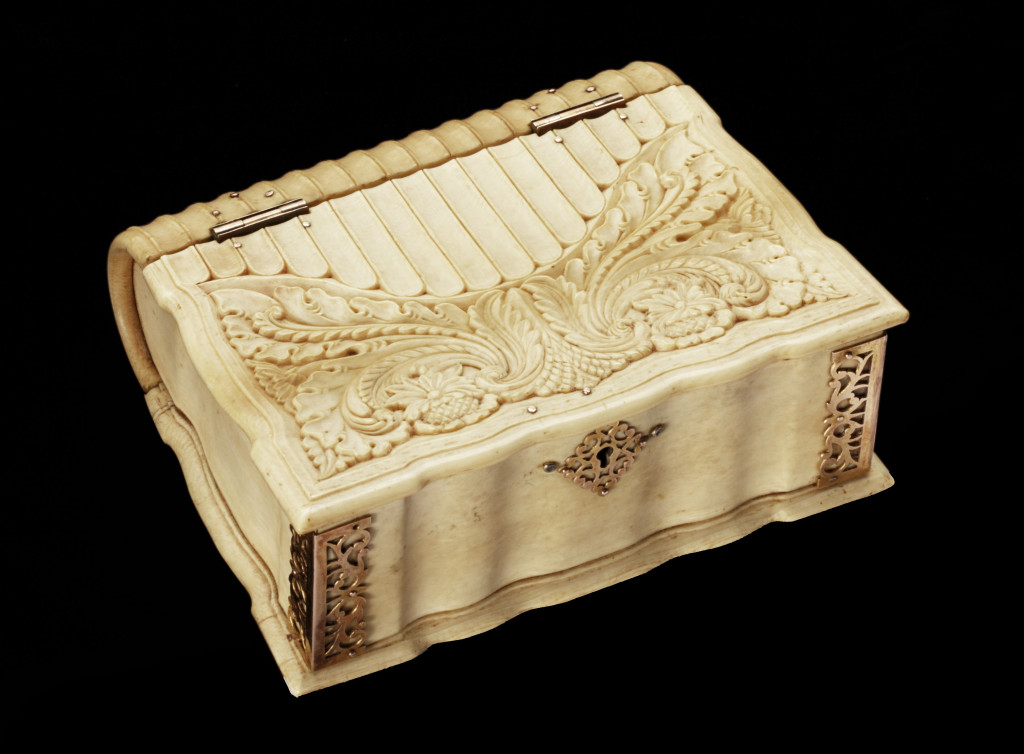
A very fine Sri Lankan ivory and gold bible box
Carved on the lid with leaves and flowers, with openwork gold mounts.
H. 4.7 x W. 12.7 x D. 9.9 cm
On their way to church, the Dutch or Indo-Dutch ladies were followed by a slave girl carrying a precious little bible box. To show off their wealth these boxes were made of gold, silver, ivory or at least very expensive woods. In 1753 Governor-General Jacob Mossel apparently esteemed it necessary to curb this ostentatious display of wealth. In his 'Regulation against pomp and splendour' it was decreed, among other things, that only the wives or widows of the highest-ranking VOC officials were allowed to be seen publicly with gold or silver boxes. This ivory and gold bible box may not have been for one of the very highest-ranking ladies but it certainly was for one of the higher-ranking.
Related objects
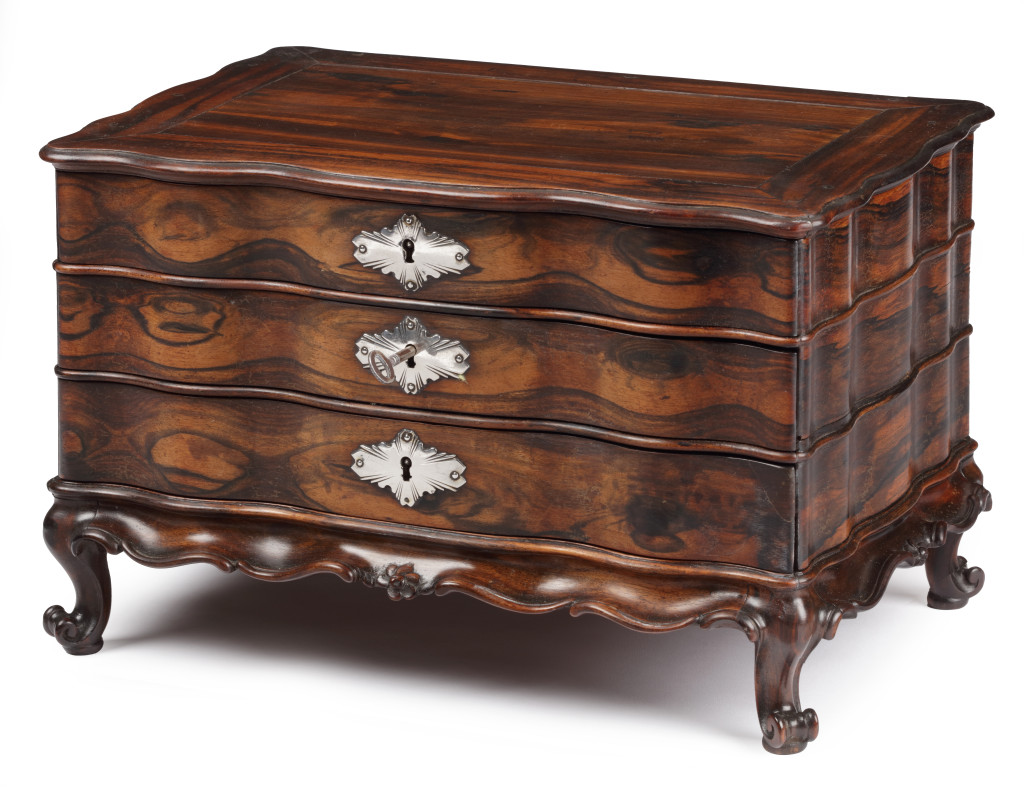
A Dutch-colonial Sri Lankan coromandel miniature chest of drawers with silver mounts
This chest-of-drawers has three drawers, the top one with partitions for writing materials, such as pens, inkpots, paper, etc. Document boxes, miniature table cabinets, chests and chests-of-drawers are often mentioned in eighteenth-century household and office inventories. For employees of the Dutch East India Company, who were regularly moved from one outpost to another, document boxes and also apparently miniature furniture was not only very useful for storage of writing materials or small valuable items but also as possibly status symbols. For a similar chest of drawers with a writing slope on top, see Uit Verre Streken, June 2012, no. 7.
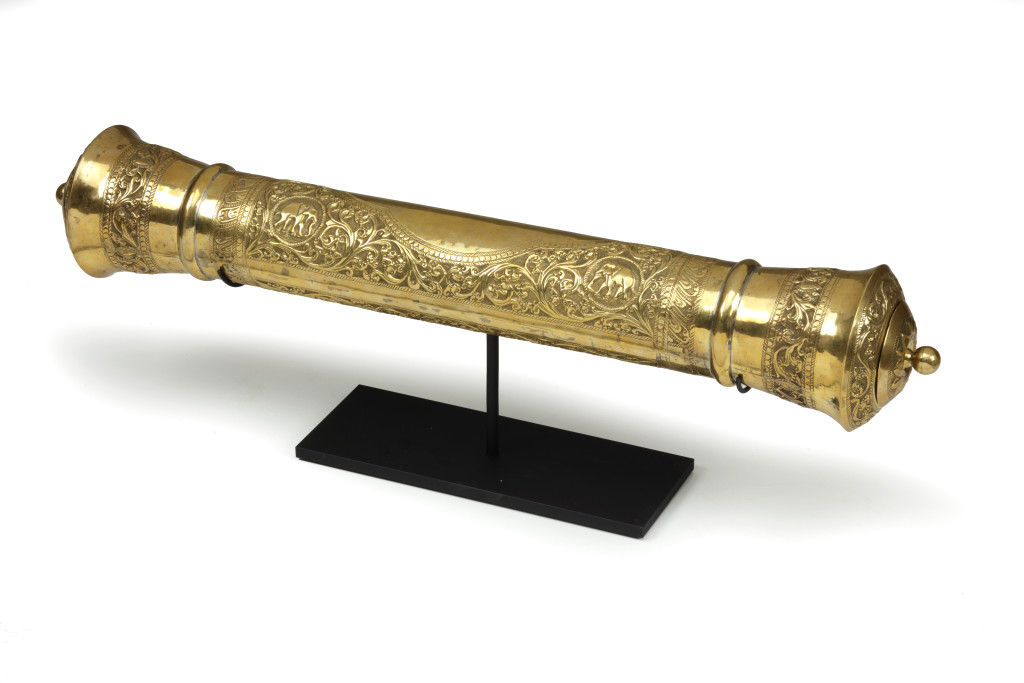
A gilt-silver Sri Lankan document scroll container
Sri Lankan Document Scroll Container
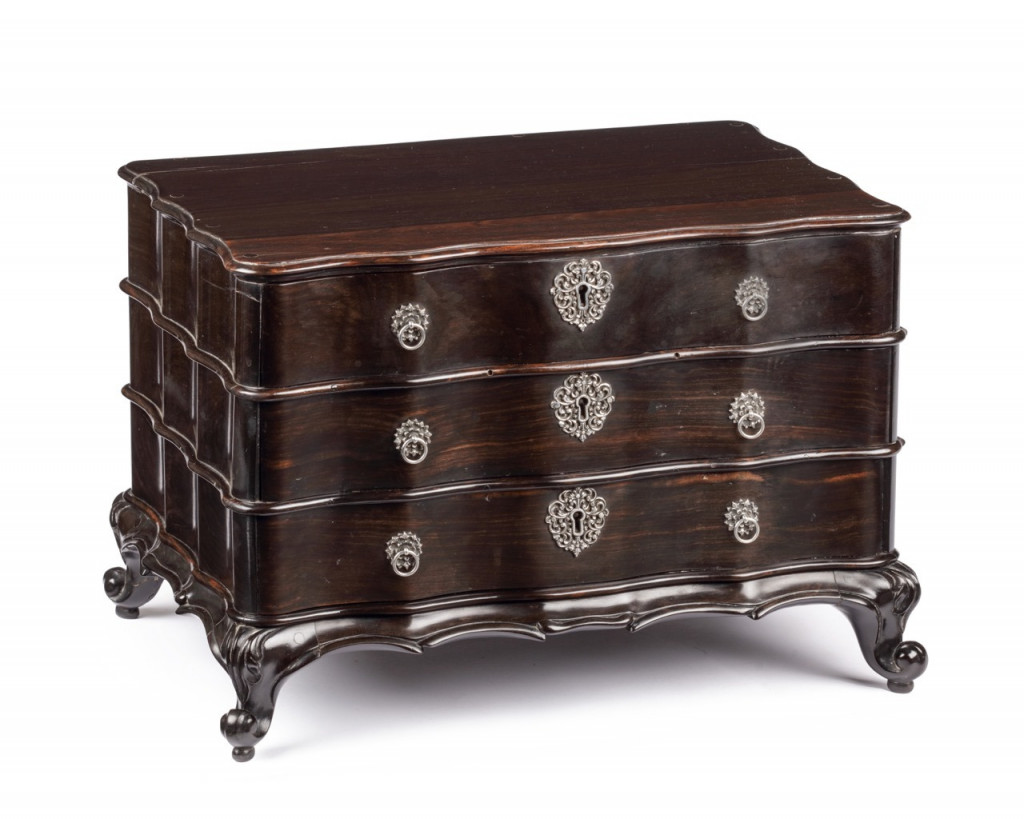
A Dutch-colonial Sri Lankan nedun wood and Indian padouk miniature chest of drawers with silver mounts
Apart from being a highly decorative object and a status symbol, these miniature pieces of furniture also functioned as collector’s items. Just like the dollhouses were for rich women in Amsterdam, but for rich women of Dutch or mixed descent in the colonies. They could store all kind of small precious things in such miniature furniture, but also use it to play with or show of with during teatime. Arguably also men used them, but as document boxes, since some of these miniature chests of drawers in the top drawer have partitions for writing materials, such as pens, inkpots, paper, and other utensils.