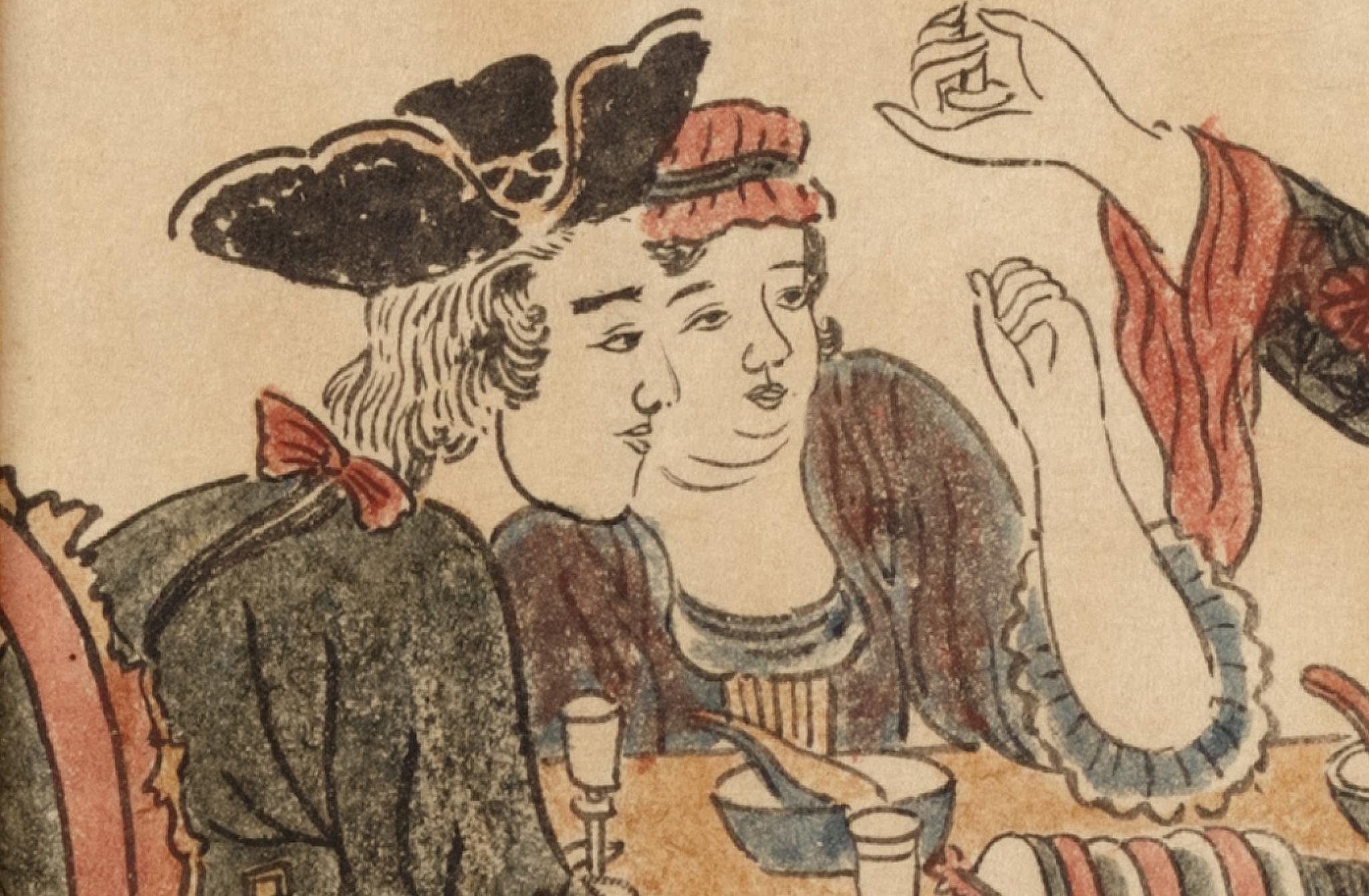
Joseph Savart: Four Creole women - Quatre femmes Creoles
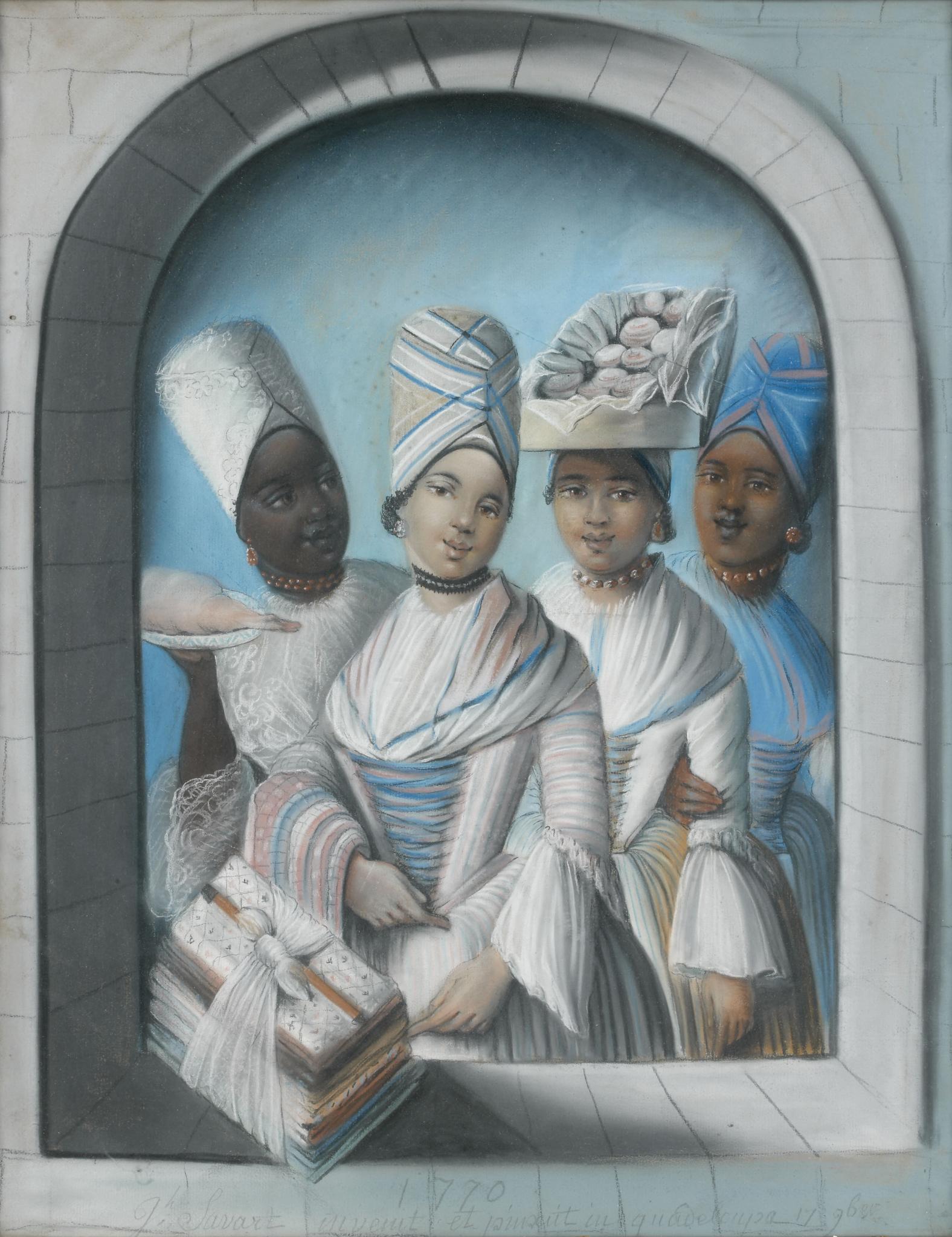
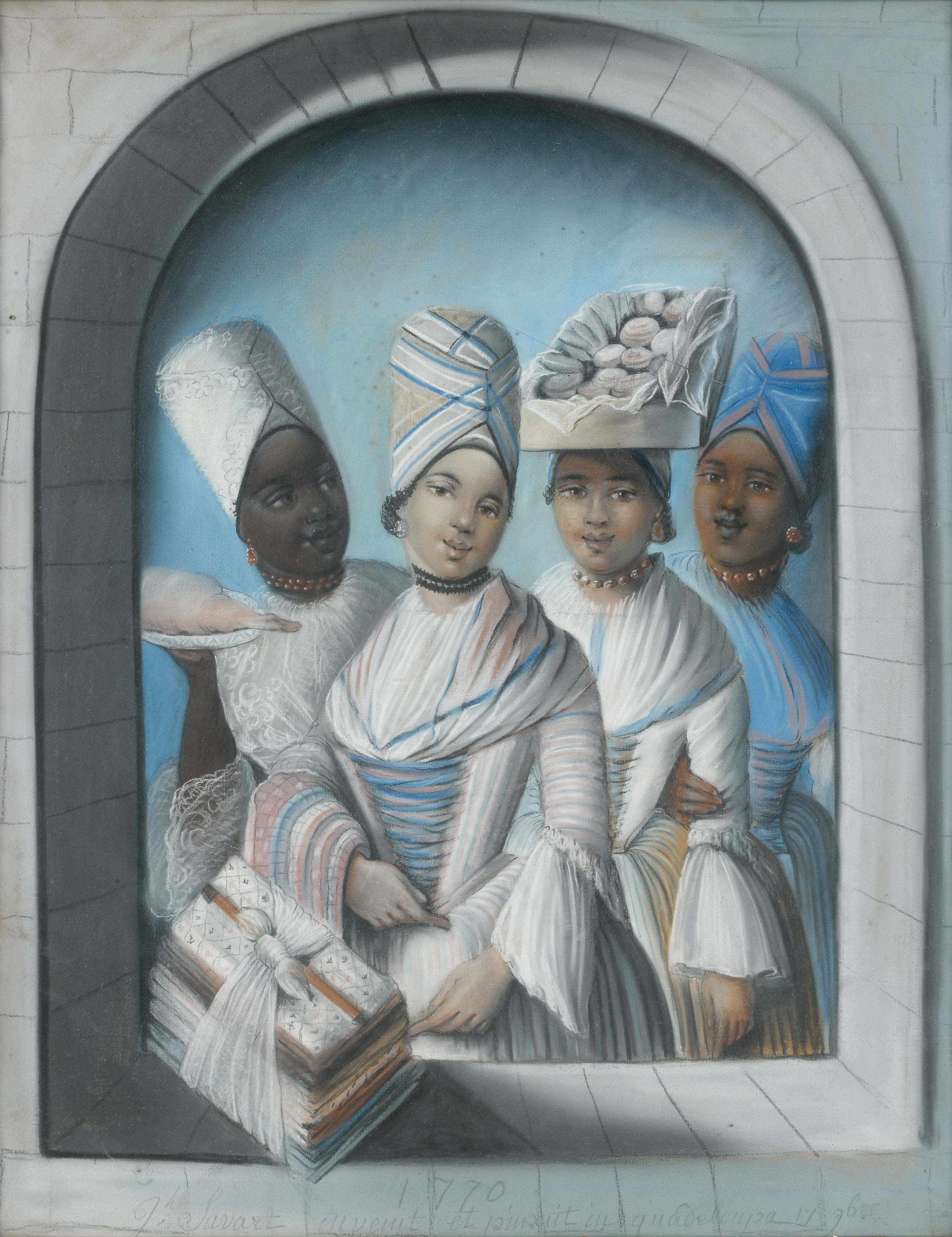 Fig. 1 - Joseph Savart (1735-1801)- Quatre femmes créoles (1770), Collection Musée Schoelcher, Pointe-à-Pitre, Guadeloupe
 Article by Séverine Laborie
Conservatrice des monuments historiques à la Direction régionale des affaires culturelles de la Nouvelle Aquitaine
(translation by Dickie Zebregs)
The recent appearance on the art market of four new pastels signed by the French painter Joseph Savart (Reims 1735 - Saint-Pierre, Martinique 1801) renews an unprecedented event that occurred in 2009 when a first pastel came up for sale in Paris. Signed and dated, the “Quatre femmes créoles” were made in Guadeloupe in 1770 (Fig. 1). The Schoelcher Museum in Pointe-à-Pitre (Guadeloupe) was able to acquire it, thus offering the people of Guadeloupe the opportunity to contemplate a unique work. It sheds light on a forgotten and unknown painting produced by an adventurous artist who went to the French colonies of the West Indies in the 18th century to seek his fortune. These four new works from the corpus of Joseph Savart, executed in Guadeloupe and predating the Schoelcher drawing by a few months, contribute to a better understanding of the artist and his interests and confirm previous hypotheses regarding the meaning of these representations.(1)
Rare and unique works of art
While collectors have long been interested in the art produced in the former French and English colonies of the Americas, the study of 18th-century French painting in the West Indies is still recent and thus suffers from a limited corpus and fragmentary archives.(2) In the context of early colonisation, neither local elites nor the colonial administration encouraged the development of artistic life, and it is very rare to find in the archives any trace of the existence of career artists who settled permanently. At the very end of the 18th century and during the 19th century, after the colonial system of the Ancien Régime had been shaken up for the first time, small advertisements in the press attest to the existence of an art market in the West Indies. Sales of supplies for artists, framers’ advertisements, or sales of paintings constitute so many indirect traces of activity and of an interest in the pictorial arts that must have existed previously but of which we have very few examples.(3)
Indeed, this important movable heritage was destroyed at various points in time. In the French West Indies or French Caribbean, many properties were burnt down during revolutionary unrest and during the constant wars between the French and the British; others were lost during natural or accidental disasters. The works that escaped such a dire fate, being fragile by nature, may simply have succumbed to the ravages of insects and mould that thrive in tropical climates. Thus, most of the works that have reached us are those that travelled from the colonies where they were produced back to the countries of origin or residence of their first owners. This is likely to have been the path taken by the four pastels of Joseph Savart, which bear a label from the house of Denis-Charles Buldet, a framer and print dealer on the Rue de Gesvres in Paris, which proves that they were framed there shortly after their creation.(4)
Officers, colonial administrators and officials, wealthy colonial landowners who in the second half of the 18th century preferred to entrust the management of their estates to a manager rather than reside there, brought back these works to the mainland as souvenirs at a moment in the history of taste that favoured exoticism. But what do these works tell us about these distant lands and their social and economic fabric? As it turns out, Joseph Savart’s depiction of Creole women is far more significant and militant than it might appear at first glance.
From Champagne to the West Indies
The reasons that drove this son of a bourgeois family to seek adventure in the French Caribbean, first in Guadeloupe, then in Martinique, are unknown.5 He was born in 1735 in Reims, Champagne. By 1765, he had settled in Basse-Terre, the capital of the Guadeloupe colony, where he married the widow of a weaver, Miss Christine Elisabeth Rison. In the baptismal certificate of their eldest son, Marie-Antoine, in 1768, Joseph Savart is described as a “maître peintre” or master painter. This title, at a time when artists and craftsmen were still organised in guilds, identifies him as an experienced painter, practising his profession full-time and likely taking on students. It is difficult to evaluate the volume of activity in his workshop, and he probably had other sources of income. Nevertheless, the fact that Savart chose godparents for his children among the colony’s notables suggests a level of financial ease and social recognition.(6)
It is also significant that out of the five works identified to date, Savart always signed and added the note ‘inv’ for invenit after his signature. This Latin term, often followed by et pinxit, highlights the artist’s creative input and the intellectual dimension of his work. By claiming to have invented these drawings, Joseph Savart emphasises the importance he places on his work as an artist and on the originality of his compositions. Furthermore, the quality of his portraits of these Creole women suggests that he specialised in portraiture. This more lucrative activity would have allowed him to mingle with the elite. The 18th century represented a golden age for portraiture, particularly for portraits drawn in pastel. Indeed, it is because Savart chose to depict these four Creole women in portrait form that he sets himself apart from his contemporaries like Augustin Brunias, who painted lively scenes with a focus on the landscape, resorting to all the clichés of exoticism.
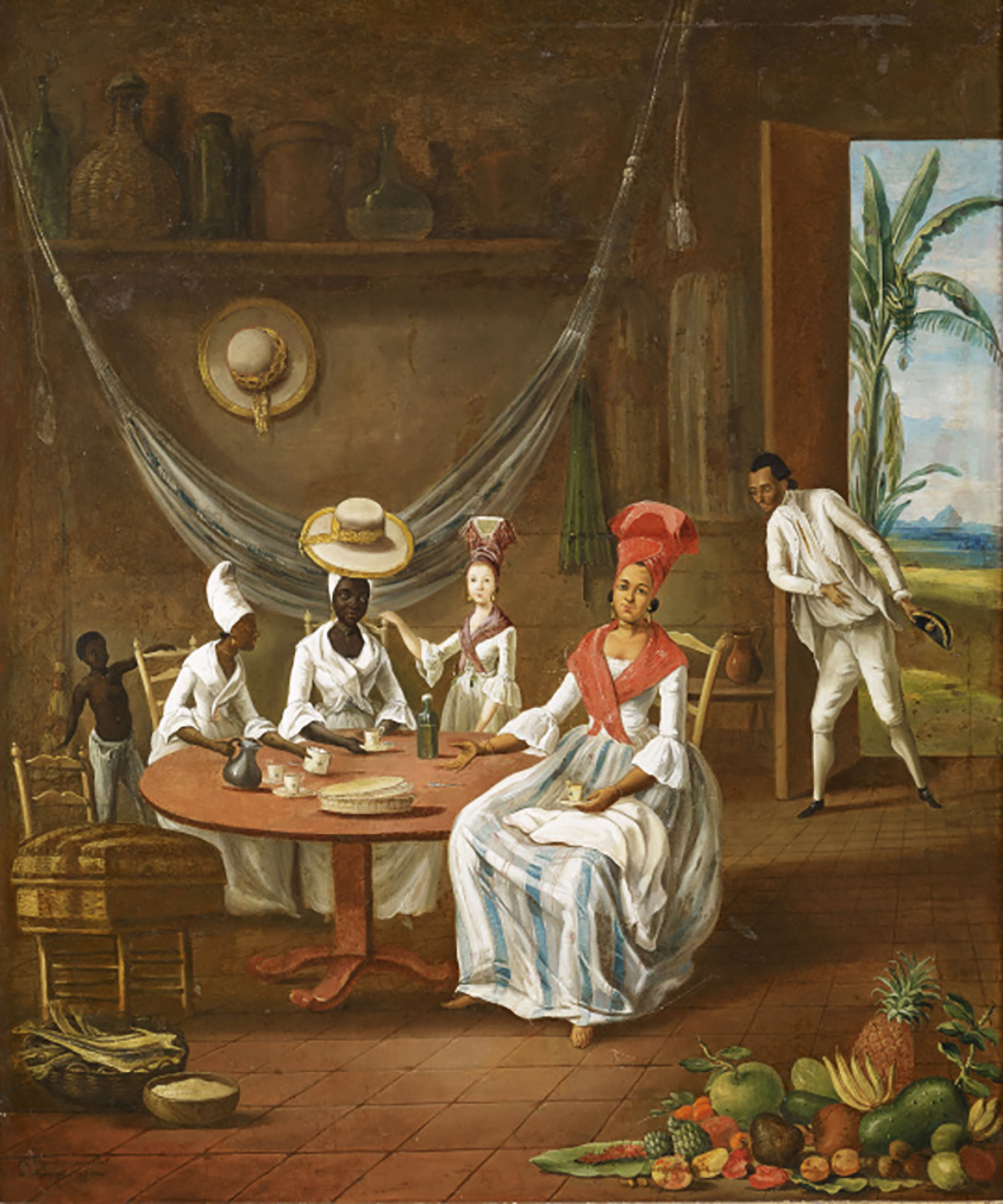 Fig. 2 - Marius-Pierre Le Masurier (1735-1801) ‘Famille de mulâtres’ (1775), Collection Musée du quai Branly (inv.no. 75.1557 IA)
Women’s wear: a symbol of vanity and a social marker
Each of the four women is portrayed en buste, with a close framing, their smiling gaze turned towards the viewer. Their headdresses and light-coloured clothing stand out sharply against a dark blue-black background. They bear an obvious resemblance to the four young women in the pastel from the Schoelcher Museum (Fig. 1), who are depicted standing in a trompe-l’oeil window frame, huddled together in a similarly friendly and engaging attitude. They dazzle the viewer with their beauty and the discreet coquetry of their light cotton and lace costumes, as well as with their elaborate headdresses and jewellery. Each of them stands out due to the detail of her attire and her skin colour, in a notable variation from light to dark. Joseph Savart’s mastery of the pastel technique manifests in a very soft, almost vaporous sketch. He brilliantly captured the materials and textures of fabrics and ornaments, placing as much emphasis on these details as on the figures’ faces. However, the pastel from the Schoelcher Museum is complex and more narrating. Three young women each bear an accessory, an attribute of their professions: the servant holds a meat dish, the seamstress or haberdasher poses with her fabric swatches and ruler in the foreground, and behind her, a street vendor carries a tray of small pies on her head. Without a landscape in the background, the illusion of depth stems from the architectural trompe- l’oeil set against a very bright blue background and the arrangement of the figures. The pastel from the Schoelcher museum bears the inscription “1770. Joseph Savart invenit et pinxit in Guadeloupa 17 November”.
The four pastels acquired by Zebregs&Röell, which were drawn twenty months earlier, seem to be a preparatory version ahead of the larger composition. The two works share the importance given to the representation of clothing and the nuances in skin tone reflective of Creole society. Finally, they bear an inscription by the same hand that asserts they were made in Guadeloupe and when. Each of the four pastels bears the same formula: ‘In Guadeloupe Savart invt 3 March 1769’, with a different adjective each time, sic: ‘la Cabresse’, ‘la Mulatresse’, ‘la Mestisse’ and ‘la Négresse’. This highly codified terminology illustrates how colonial society was structured around the prejudice of colour.(7)
In the pastel from the Schoelcher Museum, the composition, which seems to waver between a portrait and a genre scene, is quite atypical. The artist appears to deviate from the usual codes of exoticism in art and places great importance on the depiction of costumes. As it so happens, this particular interest in costumes provides precious information in order to understand the deeper meaning of this work. Clothing was indeed a very important social marker in colonial society, as can be seen in the accounts of travellers who visited the Caribbean in the 18th century. The garments worn by Joseph Savart’s young women perfectly match the descriptions given by the chroniclers and artists of the time. The headwear, which occupies significant space in the composition of the Zebregs&Röell close-up bust portraits, is one of the female accessories that struck travellers the most. Here, all the women wear the bamboche, adorned with pins and flowers. This type of headwear is a powerful marker: its height and the quality of its fabrics defined the wearer’s social status. Besides, the young women have enhanced their outfits with necklaces and earrings bearing typical Creole motifs. Jewellery made in the Caribbean in the 18th century was an essential component of one’s appearance and wealth. Made of gold, they constituted savings, patiently accumulated, bead by bead, to form these grain-d’or necklaces, which, worn in multiple rows, testified to a woman’s enrichment or sentimental ties.
In the colonial context of the 1760s-1780s, however, clothing was not just a matter of fashion. It was also a tool, or even a weapon, of social dominance. The clothes and accessories worn by the four young women are very significant from this point of view. The taste for luxury attributed to ‘mulattoes’ is a constant theme in accounts of the time, particularly those written by Médéric Louis Elie Moreau de Saint-Méry (1750-1819). Hailing from a notable Creole family of Martinique, he represented the colonial elite in action on both sides of the Atlantic. In 1796, he published a ‘Topographical, Physical, Civil, Political, and Historical Description of the French part of Saint-Domingue’ (Description topographique, physique, civile, politique et historique de la partie française de Saint- Domingue), in which he dwells at length on the lifestyle of the free people of colour and in particular on the luxury favoured by the “mulattoes” and the fashion trends they inspire:(8)
“The luxury of the mulattoes is taken to the extreme, and since 1770, it has made progress that seems incredible to those who have been able to compare the two periods. It is always in the cities that one must observe it to form an exact idea. This luxury consists almost entirely of one object, clothing. [...] Everything that India produces of the most beautiful, the most precious in muslins, handkerchiefs, fabrics, and linens, takes on the forms of fashion to embellish this coloured sex. Rich laces, jewellery the multiplicity of which, rather than the genre, increases the value, are used profusely [...]”(9)
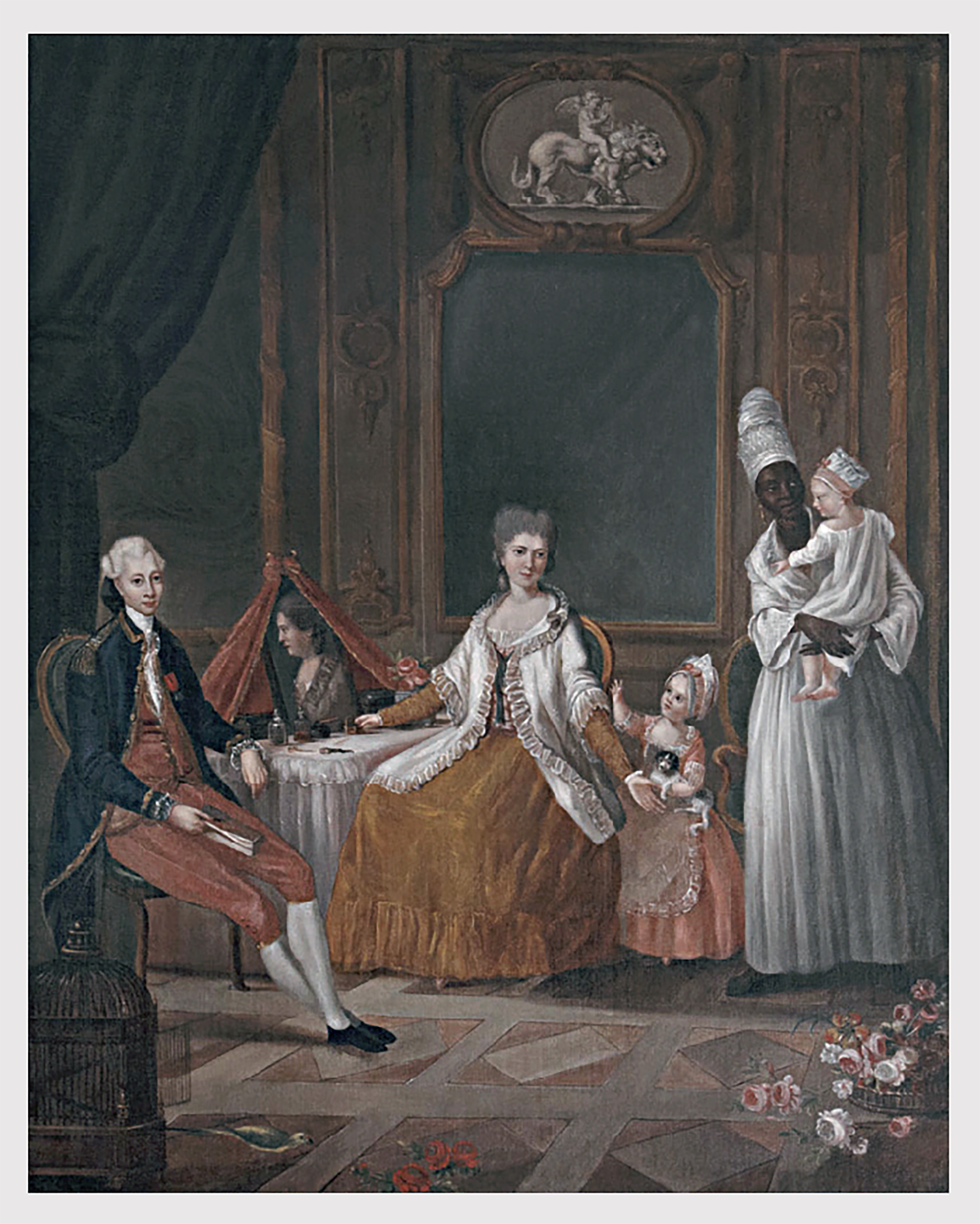 Fig. 3 - Marius-Pierre Le Masurier (1735-1801), Portrait de la famille Maximilien Claude Joseph de Choiseul Meuse (1736-1816), à la Martinique, accompagné d’une nourrice tenant un enfant dans ses bras (1775), Musée d’Aquitaine, Bordeaux
A reaction against colour prejudice
This taste for clothing, which seems to be characteristic of people of mixed descent in the colony, is not just vanity. It reveals the violence inherent in a society where slavery was very much present, with the appearance and spread of colour prejudice in the French colonies of America in the 18th century. “Noirs”, “blancs”, “métisses” and “hommes libres de couleur” (free people of colour): in the French Caribbean, on the eve of the Revolution, men and women were designated by their skin colour, which defined their legal status. The white population, statistically in the minority, was now rivalled by the larger group of free people of colour. Therefore, the white elites sought to confine the people of colour to an inferior
place by extending racial segregation. Colour prejudice, which should not be confused with the later notion of ‘biological racism’, is the use of skin colour differences as a legitimisation of a social order and hierarchy.
It was in this light that Moreau de Saint-Méry, the spokesperson for the white colonial slavers, who perceived themselves as belonging to an ‘aristocracy of the epidermis’, theorised colour prejudice. To calculate the proportion of ‘black’ blood in an individual, he created one-hundred- and-twenty-eight possible combinations of black-white ‘miscegenation’, hierarchised into nine categories: sacatra, griffe, marabout, mulatto, quarteron, mestizo, mamelouk, quarteronné, and sang-melé. For the mixed-descent population, this classification was very important. On the one hand, it was recorded in civil registers and notarial deeds; on the other hand, it established a hierarchy within which it was possible, from generation to generation, to rise, but without ever being able to cross the ‘colour line’. Indeed, “opinion [...] demands [...] that a line extended all the way to infinity must always separate the white descent from the other [...]”. It is in this context that we must place the inscriptions on the back of the four pastels of Zebregs&Röell’s ‘la Capresse’, ‘la Mulâtresse’, ‘la Métis’ and ‘la Négresse’ (as transcribed in modern French). Since colour was marked with a presumption of servitude, it results, as J.-L. Bonniol emphasises, that “the fight against the ‘false free’ compels people of colour to have to prove their freedom constantly”.(10) The sartorial excess observed among the freed and, in general, the development of all outward signs of wealth thus may have been the only way to mitigate the perverse effects of one’s status inherited from birth.
By showing us richly dressed women adorned with jewellery, the iconography of Savart’s pastels thus tends to represent free individuals. However, the language of clothing is not always so easy to interpret. For example, Marius-Pierre Le Masurier, a French painter active in Martinique around 1775, depicts in the foreground of his ‘Family of Mulattoes’ (Fig. 2) a richly adorned and well-dressed woman, undoubtedly free, who nevertheless receives guests barefoot. In his ‘Portrait of the Duke of Choiseul-Meuse and His Family’ (Fig. 3), Le Masurier depicts an enslaved African woman (a ‘house-slave’) barefoot but very neatly dressed, with a bamboche and adorned with jewellery, which, in another context, could indicate her status as a free woman. Thus, the interpretation of these dress codes is not straightforward. On the subject of ‘house-slaves’, Charles de l’Yver also remarks: “[...] the young, or those who are comfortable, the maids, those who serve inside the house, those in short who know how to make small profits, compete in elegance with the free or kept women, who show them their superiority by wearing shoes.”(11)
A policital artwork
The distinctiveness of Savart’s pastels lies in his way of depicting these young women. They appear to us as unique individuals, following the codes of portraiture, whereas Savart’s contemporaries, like Augustin Brunias, favour
the more generic setting of the genre scene. In the British islands of the Caribbean, Brunias painted the successes of his patron, the administrator of Dominica, and worked for the white planters, for whom he created small genre scenes depicting colonial society in a flattering light. Brunias was committed to representing different phenotypes, but unlike Savart, he illustrated a social hierarchy. Thus, in the painting from the Thyssen collection (Fig. 4), the woman with the ‘darkest’ skin tone is in service, while the woman with the ‘lightest’ skin tone is the most richly dressed, and the woman of mixed descent occupies an intermediate position. For Brunias, it was important to show the differences, to lift the ambiguities, whereas in the reality of colonial life, dress was used to blur the lines.
However, throughout the 18th century, colonial authorities tried to re-establish this hierarchy of fashion and clothing by regulating their use with sumptuary laws. An initial
text from 1720 thus forbade free people of colour from wearing certain fabrics, notably lace, and gold jewellery. As it was difficult to implement, it was then bolstered by three ordinances in 1754, 1765, and 1809. The ordinance of July 30, 1765, almost contemporary with Savart’s pastels, stipulates in its article 3:
“That all mulattos, Indians or freed Negroes or others, free by birth, of any sex, may dress in gingham cloth, cotton, calico or other equivalent fabrics of little value, with similar garments on top, without silk, gilding, or lace, hats, shoes and simple hairstyles, under penalty of prison and confiscation of their clothes [...]”.(12)
The accounts of chroniclers, like Savart’s pastels, demonstrate the inefficiency of these laws. But Savart went even further by having the woman with the darkest skin wear the most precious clothing adorned with rich lace and the finest gold jewellery. Considering the law at the time, this was a real provocation. Another significant feature of Savart’s pastels is that they represent these women for themselves, as who they were. No painterly artifice distracts us: the backgrounds are neutral, and all the focus is on these individuals. In the Schoelcher Museum pastel, the young women are depicted with the attributes of their activities. Although modest, these small traits celebrated the success of a new social class, that of free interpreneurs of colour, and even more so that of women. Whether they were, as in Savart’s work, a haberdasher or street vendor or at the head of a small business producing sugar or coffee, colonial society allowed these free women of colour the possibility to exist and live independently of men.(13)
Clothing and racial classification thus played a role in ethical and political dynamics, and they fed the arguments exchanged between opponents and supporters of the racist legal order based on slavery. In Savart’s era, these debates stirred colonial society and laid the ideological foundations leading to the revolutionary legislation that abolished slavery and segregation. By drawing these Creole women, Joseph Savart participated in this debate. This commitment was also reflected in his life as a man and as a citizen. In 1792, Savart, now settled in Martinique, exiled himself and his family to Dominica, then French. Like other residents of Saint Pierre (the so-called patriot Pierrotins), he fled the domination of counterrevolutionaries who rebelled against the central power in Martinique and Guadeloupe.(14) Along with other exiled Republicans, he took part in the election of the deputies of the Windward Islands to the National Convention. “Savart father, Savart son [and] Savart junior” thus participated in the first male universal suffrage vote in the history of France.15 His son Antoine, who embarked on a military career at the age of sixteen, shared the same ideas. As a lieutenant du Génie, he actively participated in the struggle that opposed the French revolutionary army to the British and the counterrevolutionaries.(16)
This Republican and abolitionist commitment of Joseph Savart and his sons, quite remarkable in the white Antillean society they belonged to, sheds light on the deeper meaning of these pastels of women of colour. Distinguishing himself from the pleasant genre scenes of his contemporaries such as Brunias and Le Masurier, Savart depicts these women of colour on an equal footing with white women. This was achieved by the depiction of elaborate costumes and the artifices of portraiture. The women are dignified, free, and independent - some fifteen years before the first abolition of slavery. Aware of their differences and simultaneously united as sisters, they embody an ideal, that of the union of free citizens and the promise of equality for all people.
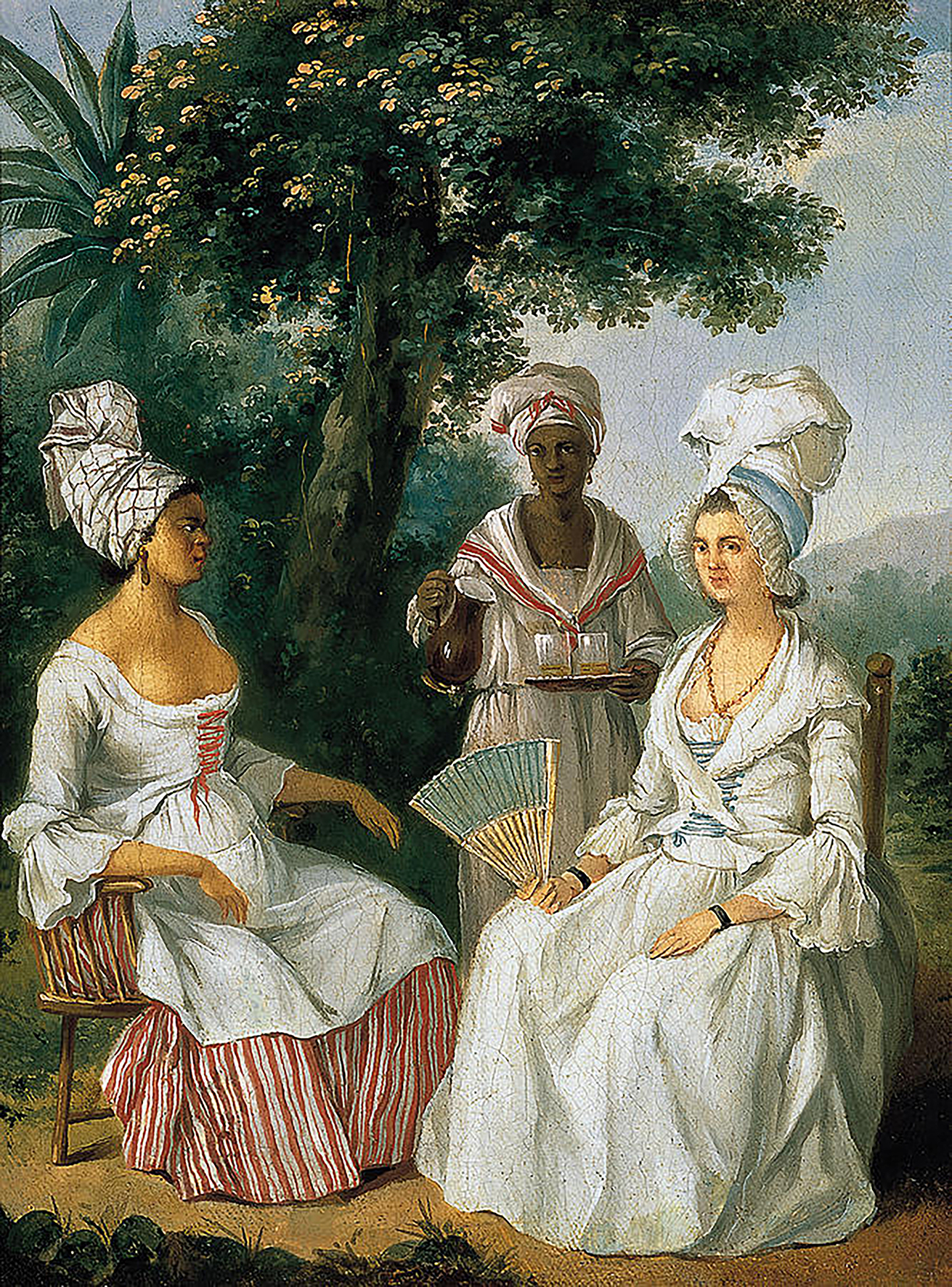 Fig. 4) Augustin Brunias (1730-1796), Women and a servant (c. 1770-1780), Museum Thyssen-Bornemisza, Madrid
(Ed.) In this essay, the term Creole is used for people of mixed descent, but always with white European ancestors.
1 Séverine Laborie, “Joseph Savart, maître peintre à Basse-Terre” in: Revue des Musées de France, February 2012-1; Séverine Laborie, “Joseph Savart (1735-1801), maître peintre à Basse-Terre” in: Bulletin de la Société d’histoire de la Guadeloupe, no. 163, September-December 2012, pp. 1-16; Séverine Laborie, “Les quatre femmes créoles de Joseph Savart: la représentation d’une société coloniale complexe” in: Un Monde créole, vivre aux Antilles au XVIIIe siècle, La Crèche, éditions La Geste, 2017, pp. 62-71
2 One must mention, for the University of the French Antilles and Guiana, the pioneering work conducted by Danielle Bégot, continued today by Christelle Lozère.
3 Danielle Bégot, “L’expression plastique dans les Antilles du XVIIIe siècle aux années 1870”, in: Anthologie de la peinture en Guadeloupe des origines à nos jours, Conseil régional de Guadeloupe / HC Editions, Paris, 2009, p. 40-53.
4 Denis-Charles Buldet’s shop, “Au grand coeur”, disappeared in 1777. (Saulnier Duchartre, Bénézit. - Dictionary of print publishers, occ. 1758)
5 A few genealogical details may be found in several articles of the Bulletin of the Genealogy and History Association of the Caribbean, dedicated more specifically to the life of Joseph Savart’s son, Antoine (see: Généalogie et Histoire de la Caraïbe, no. 40, pp. 620-621, 91- 68, p. 349, 91-97, p. 377, 92-2 p. 494).
6 The godfather, “Sir Antoine Pelletier de Lyancourt, knight, reformed captain of the bombardiers”, is the Lord of the viscounty of Villers- Hélon, an artillery officer and Knight of Saint-Louis. The godmother is “Lady Marie Jeanne Debury, wife of Sir Esquire Dutocq de Quesnel”.
7 (Ed.) These terms that aren’t in use anymore, but explained here, respectively: ‘capresse’ or ‘squadroon’ is someone who is of mixed (of which a quarter of black African) descent; ‘mulatto’ is someone of mixed European and black African descent; and ‘mestizo’ is someone of mixed indigenous and white European descent.
8 clear sign of the assertion of the Creole costume, its flexible and comfortable forms were adopted by white Creoles who wore a tied madras headscarf and even made their way to the mainland around 1778-1779, with the chemise dresses that Marie-Antoinette herself would promote at the Court of Versailles.
9 Louis-Élie Moreau de Saint-Méry (1750-1819), Description topographique, physique, civile, politique et historique de la partie française de l’isle Saint-Domingue..., ed. 2, vol. 1, Paris, T. Morgand, 1875. (Gallica http://catalogue.bnf.fr/ark:/12148/ cb36491843g)
10 Jean-Luc Bonniol, La couleur comme maléfice: une illustration créole de la généalogie des Blancs et des Noirs, Paris, 1992, p. 56
11 Lettres de Charles de l’Yver, op. cit.
12 Letters of Charles de l’Yver, op. cit.
13 Marie Hardy, “La Martinique des mornes” étdude sociale des caféiers au XVIIIe siècle” in: Un Monde Créole, vivre aux Antilles au XVIIIe siècle, La Crèche, La Geste, 2017, pp. 81-88
14 The reason why Joseph Savart and his family left Guadeloupe between 1771 and 1779 to live in Saint-Pierre in Martinique is unknown.
15 285 “true Republicans” met in Roseau (Dominica) on October 28, 1792, “the fourth year of the French regeneration.” All declared having been “forced to leave their property and families because they refused to take up arms to repel the French station and to display the sign of revolt.” Believing themselves to be “the only ones faithful to the metropole,” they were, therefore, the only ones with the right to elect deputies to the Convention. These deliberations and votes were recorded at the Convention on September 15, 1793. (Source: Paris, National Archives no. AN C//181/86). See the remarkable article by Bernadette & Philippe Rossignol: “La Dominique refuge des pierrotins patriotes” in: Généalogie et Histoire de la Caraïbe, no. 226, June 2006, pp. 28- 29, as well as that of Pierre Bardin, “À la Dominique, 1792: Les électeurs des députés a la Convention” in: Généalogie et Histoire de la Caraïbe, no. 226, June 2006, Paris, pp. 31-37.
16 He participated as a lieutenant of the Engineers (lieutenant du Génie) in the two sieges of Martinique against the British, in 1793 and 1794. After a period of captivity, he continued his action in Guadeloupe alongside Victor Hugues, sent by the Convention to drive out the British and abolish slavery (Campagne de Brumaire, An III, October/November 1794).