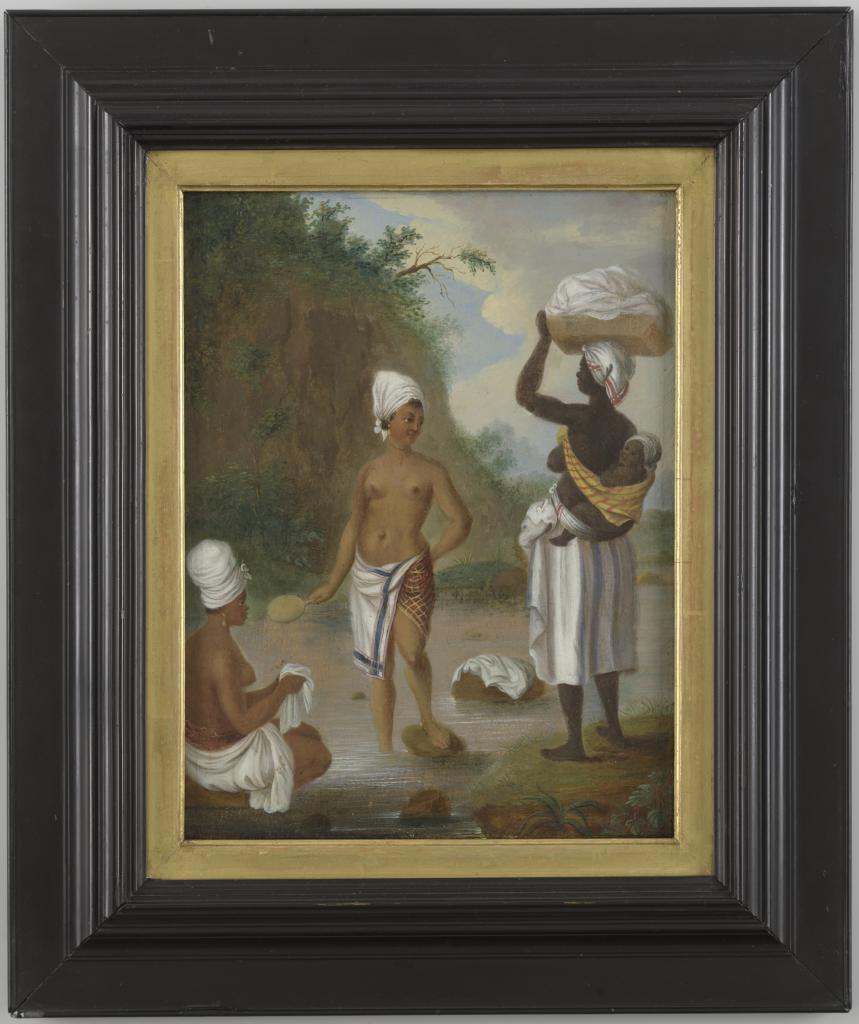
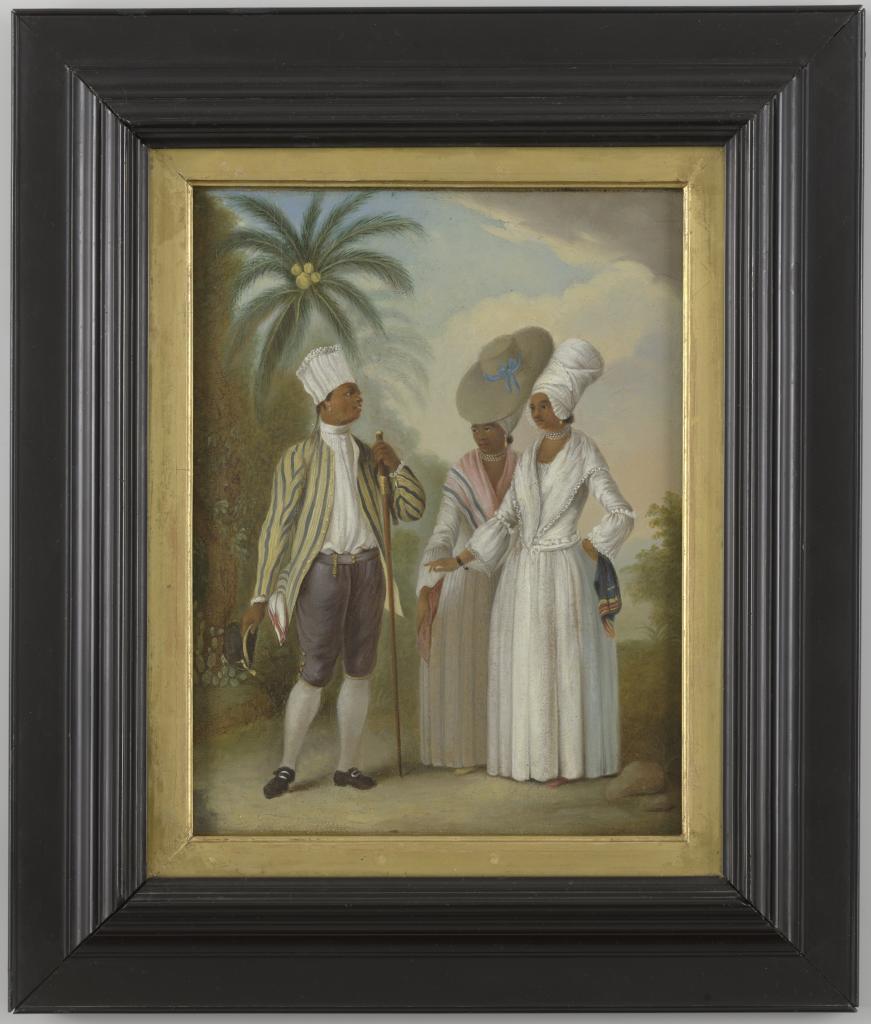
Augustino Brunias (1730-1796)
Oil on panel, H. 24 x W. 17.7 cm (each)
Provenance:
Descendants of a family owning plantations in the French Caribbean (by repute Saint-Dominique)
(2x)
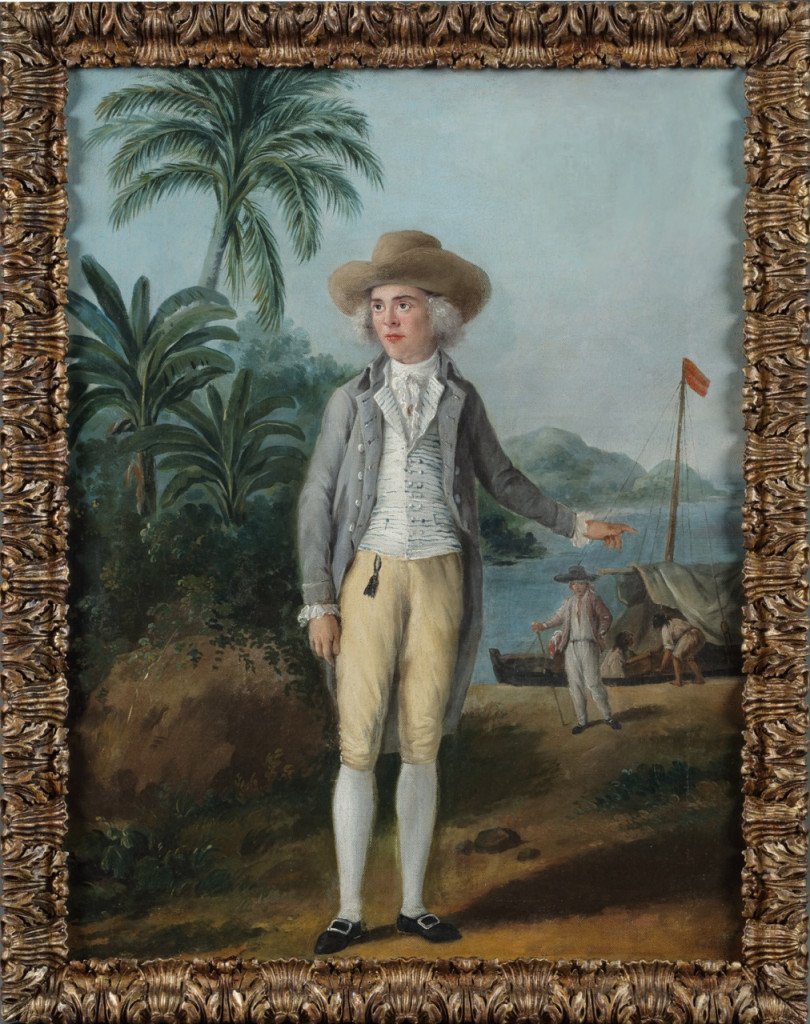
Born in Rome, Brunias spent most of his career in London and the Caribbean. In 1758, he followed Scottish architect Robert Adam in England, where he drew up plans to assist the architect. He then travelled to Dominica, a new British colony, between 1767 and 1770, as private painter to the colony's first the colony's first governor, Sir William Young. These paintings offer a glimpse of the reality of life in the colonies, a land of influences and exchanges between European, African and Caribbean cultures. After his return to England in 1773, he continued to depict the colonies, publishing a series of engravings and exhibiting at the Royal Academy.
Related objects
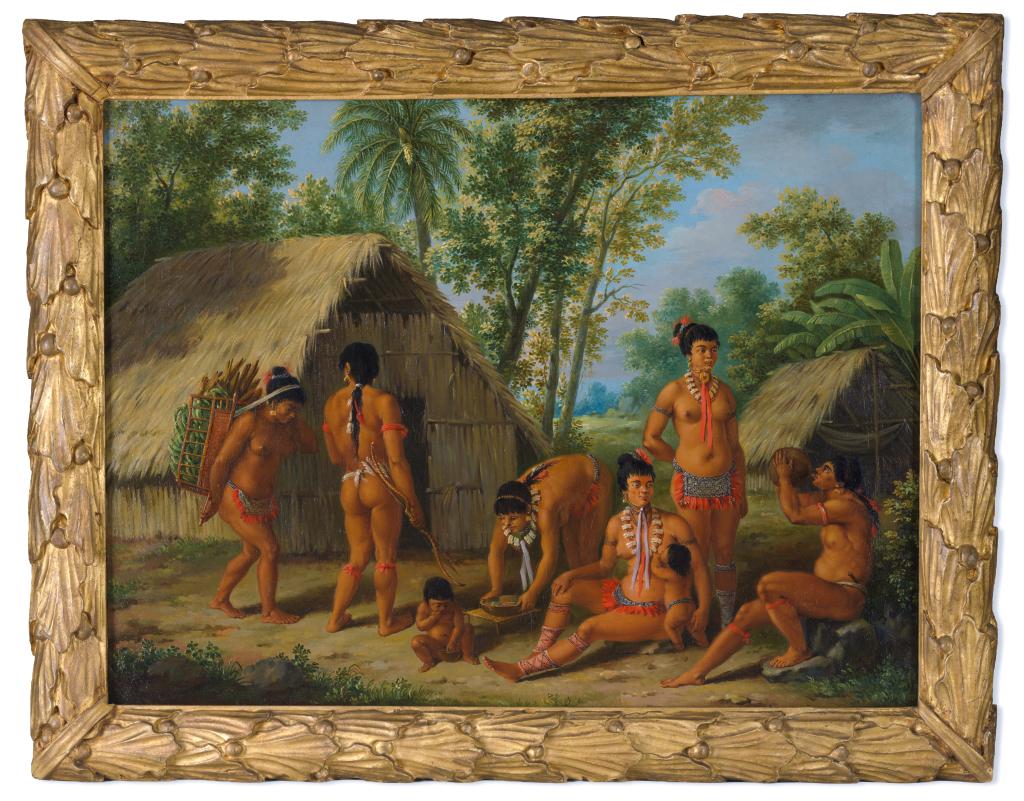
Agostino Brunias (1730-1796)
_'A family of Charaibes in the Island of St Vincent'_ _Oil on canvas, H. 56 x W. 61 cm_ Provenance: Commissioned by Sir William Young, 1st Bt (1725–1788), Governor of Dominica By descent to his son, Sir William Young, F.R.S. (1749–1815), Governor of Tobago Anonymous sale, Paris, Hotel Drouot, 9 March 1951, lot 74 (as one of a pair) Private collection, France Anonymous sale, London, Christie's, 25 September 2003, lot 425 (where titled ‘_Pacification of the Maroon Negros in the Island of Jamaica_’); where acquired by the mother of the previous owner Exhibited: New York, El Museo del Barrio, The Studio Museum in Harlem, and the Queens Museum of Art, _Caribbean: Art at the Crossroads of the World_, 12 June 2012 – 6 January 2013 London, Tate Britain, _Artist and Empire_, 25 November 2015 – 10 April 2016
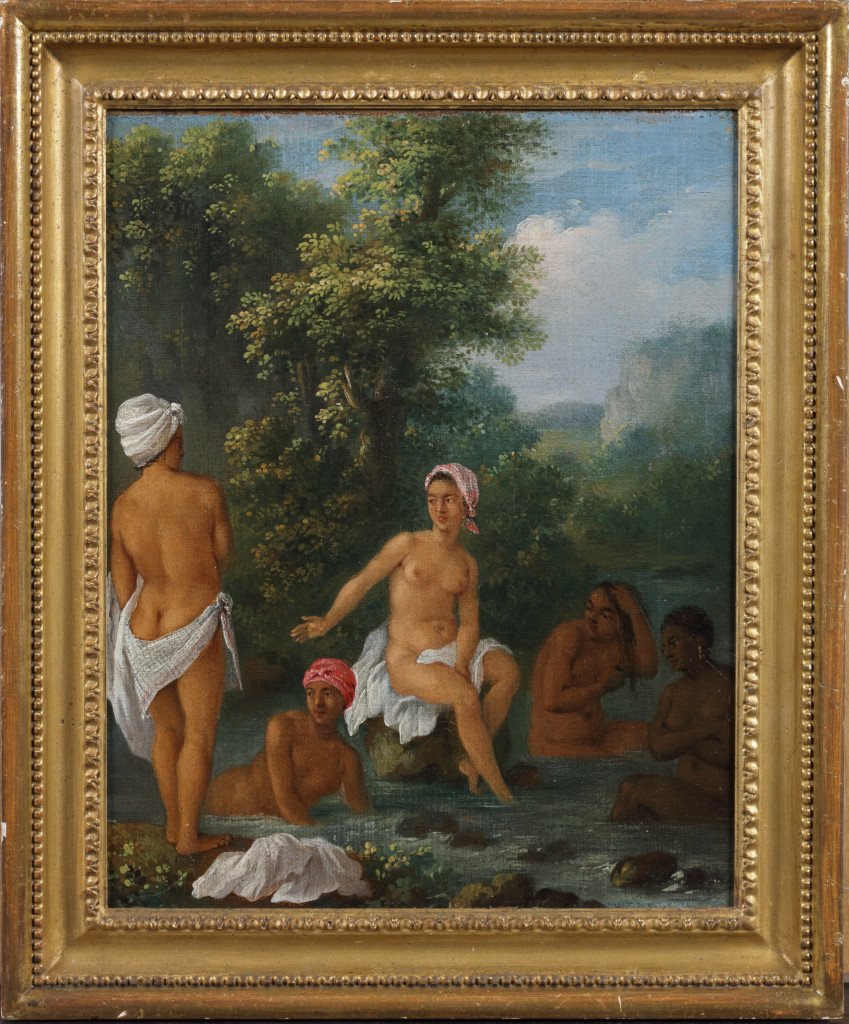
Augustin Brunias (c. 1730-1796)
'The painter of The West Indies'
Augustin Brunias (1730-1796)
Aesthetically pleasing, yet not without political intent, Brunias' paintings served as a form of propaganda. Promoting Young's imperialist mission, he promoted the West Indies as a 'thriving colonial economy', a place of opportunity where the generations of deported African peoples were not resisting their enslavement. By depicting an entirely new geographical setting unknown to British audiences, Brunias tapped into the nation's projected fantasies of the 'exotic', while portraying the ‘West Indies’ as a (largely fictionalised) tropical, harmonious land of abundance and prosperity.