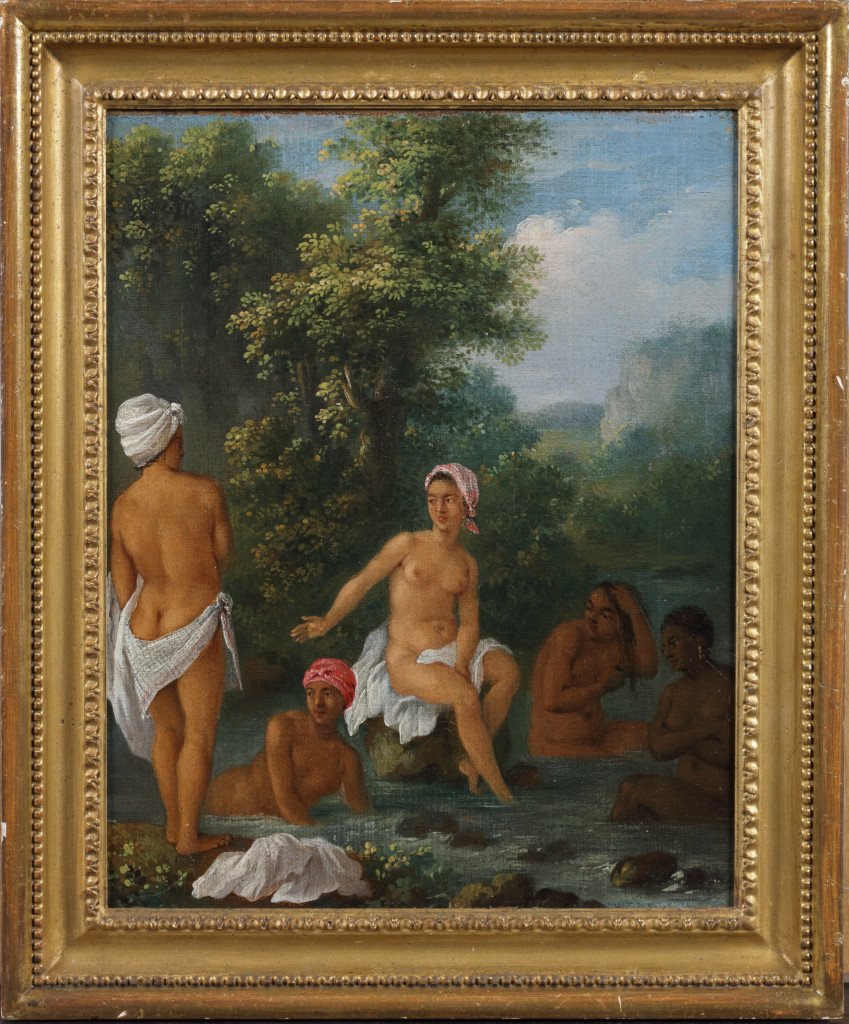
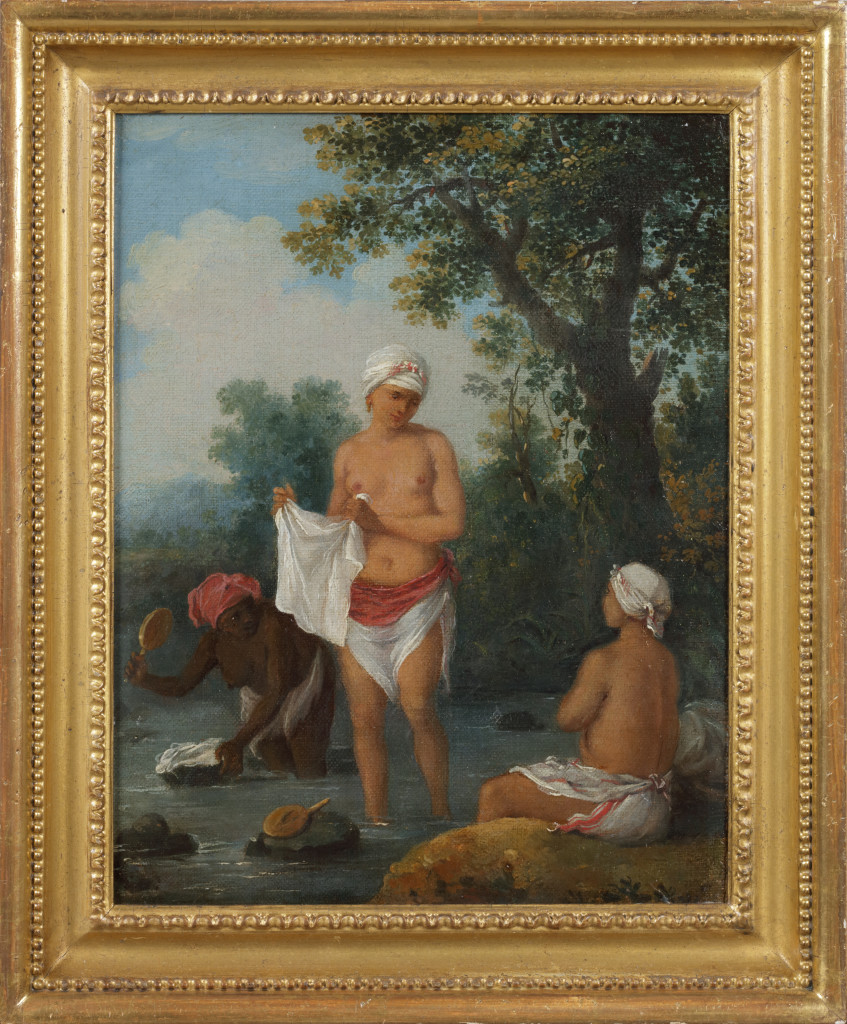
Augustin Brunias (c. 1730-1796)
Oil on canvas, H. 28.5 x W. 22.2 cm
Provenance:
- Mr. Dudly Wood, New York
- Auction Christie’s, 31 March 1978, lot 12
- William Lewis Bell, CMG, MBE, Founding Head of the British Development Division in the Caribbean
- Rafael Valls Ltd, London
Women of Dominica bathing in a stream
Oil on canvas, H. 31 x W. 25.4 cm
Provenance:
- William Lewis Bell, CMG, MBE, Founding Head of the British Development Division in the Caribbean, ODA, 1966-72
- Rafael Valls Ltd, London.
'The Painter of The West Indies'
The Roman Brunias, after his studies, accompanied Sir William Young to Barbados in 1764 on the first of six ‘West Indian’ or Caribbean voyages made by Sir William. Sir William Young had been appointed President of the Commission for the Sale of Lands in the Ceded Islands of Dominica, St Vincent, Grenada, and Tobago, the Southern Caribbean islands, captured by the English in 1764, and was appointed the first British Governor of Dominica in 1770. Brunias’ work from this time concentrates on subjects in the Caribbean, in particular Dominica and St Vincent, where Young had purchased land, and Saint Christopher and Barbados, painting for his patron.
He also worked for the numerous white oligarchs, slave traders and plantation owners who ran estates on the islands, such as Sir Patrick Blake and Sir Ralph Payne, Captain-General and Governor-in-Chief of the Leeward Islands, essentially living on the profits of slavery. By establishing himself as a 'colonial painter' in the tropical archipelago of the Caribbean in the 1770s, Brunias romanticised the slave labour and leisurely activities of a multicultural, creolised society under the British Empire. Yet he also painted black and mixed-race subjects with a kind of dignity and reverence rarely seen before in European art history.
Aesthetically pleasing, yet not without political intent, Brunias' paintings served as a form of propaganda. Promoting Young's imperialist mission, he promoted the West Indies as a 'thriving colonial economy', a place of opportunity where the generations of deported African peoples were not resisting their enslavement. By depicting an entirely new geographical setting unknown to British audiences, Brunias tapped into the nation's projected fantasies of the 'exotic', while portraying the ‘West Indies’ as a (largely fictionalised) tropical, harmonious land of abundance and prosperity.
Brunias returned to England in 1773 and was resident in Soho when he exhibited his Dominican subjects at the Royal Academy in 1777 and 1779. First editions of engravings after his Caribbean pictures were ‘Published by the Proprietor, No. 7 Broad Street, Soho’ (the address from which he submitted his two Royal Academy exhibits) in 1779-80. He returned to work in the Caribbean in the early 1780s and settled there in Roseau, Dominica, until his death in April 1796.
Sir William Young’s office as Receiver and Governor closed on October 1774 and he returned to England. On his death in 1788 his son William inherited the baronetcy and estates in Tobago (where he was appointed Governor), Betsy’s Hope in Antigua, and Calliqua and Pembroke in St Vincent.
Related objects
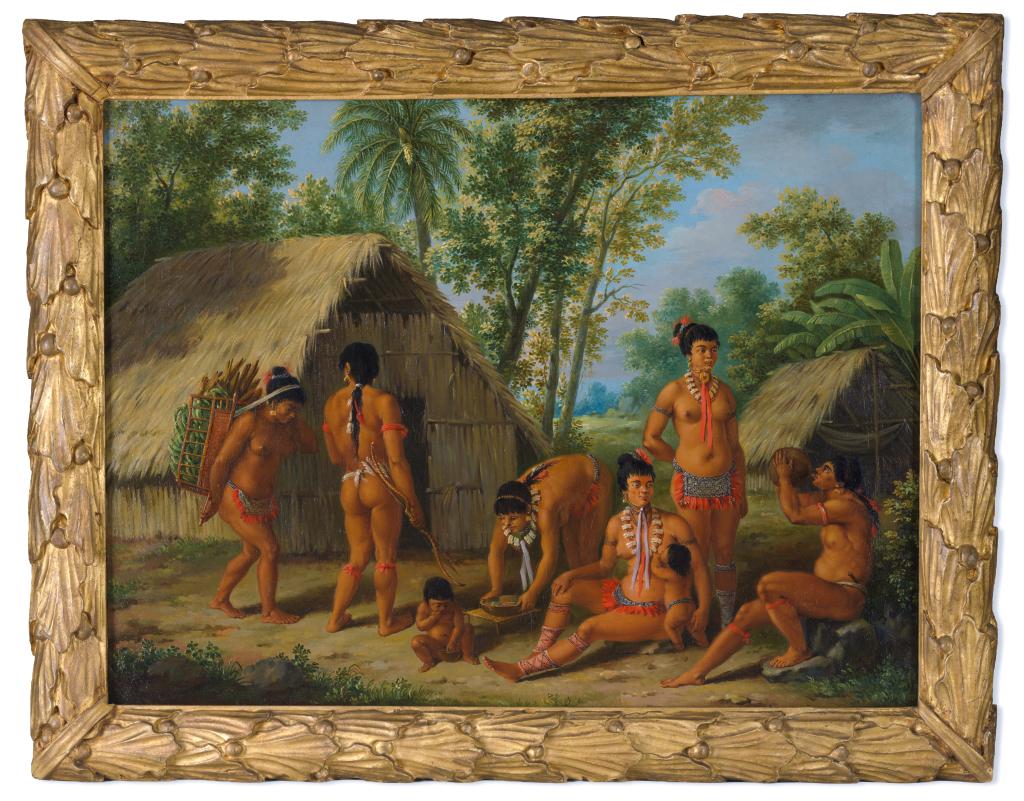
Agostino Brunias (1730-1796)
_'A family of Charaibes in the Island of St Vincent'_ _Oil on canvas, H. 56 x W. 61 cm_ Provenance: Commissioned by Sir William Young, 1st Bt (1725–1788), Governor of Dominica By descent to his son, Sir William Young, F.R.S. (1749–1815), Governor of Tobago Anonymous sale, Paris, Hotel Drouot, 9 March 1951, lot 74 (as one of a pair) Private collection, France Anonymous sale, London, Christie's, 25 September 2003, lot 425 (where titled ‘_Pacification of the Maroon Negros in the Island of Jamaica_’); where acquired by the mother of the previous owner Exhibited: New York, El Museo del Barrio, The Studio Museum in Harlem, and the Queens Museum of Art, _Caribbean: Art at the Crossroads of the World_, 12 June 2012 – 6 January 2013 London, Tate Britain, _Artist and Empire_, 25 November 2015 – 10 April 2016
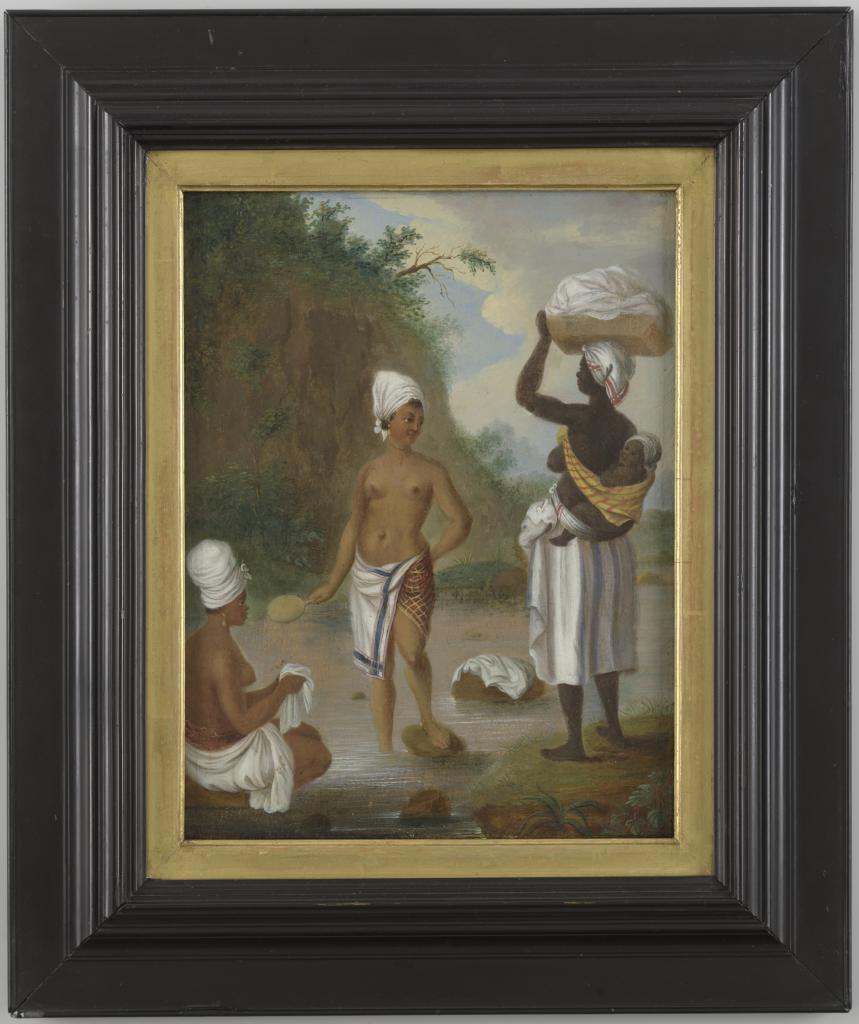
Augustino Brunias (1730-1796)
_’People of Saint Dominique’_ Oil on panel, _H. 24 x W. 17.7 cm (each)_ Provenance: Descendants of a family owning plantations in the French Caribbean (by repute Saint-Dominique)
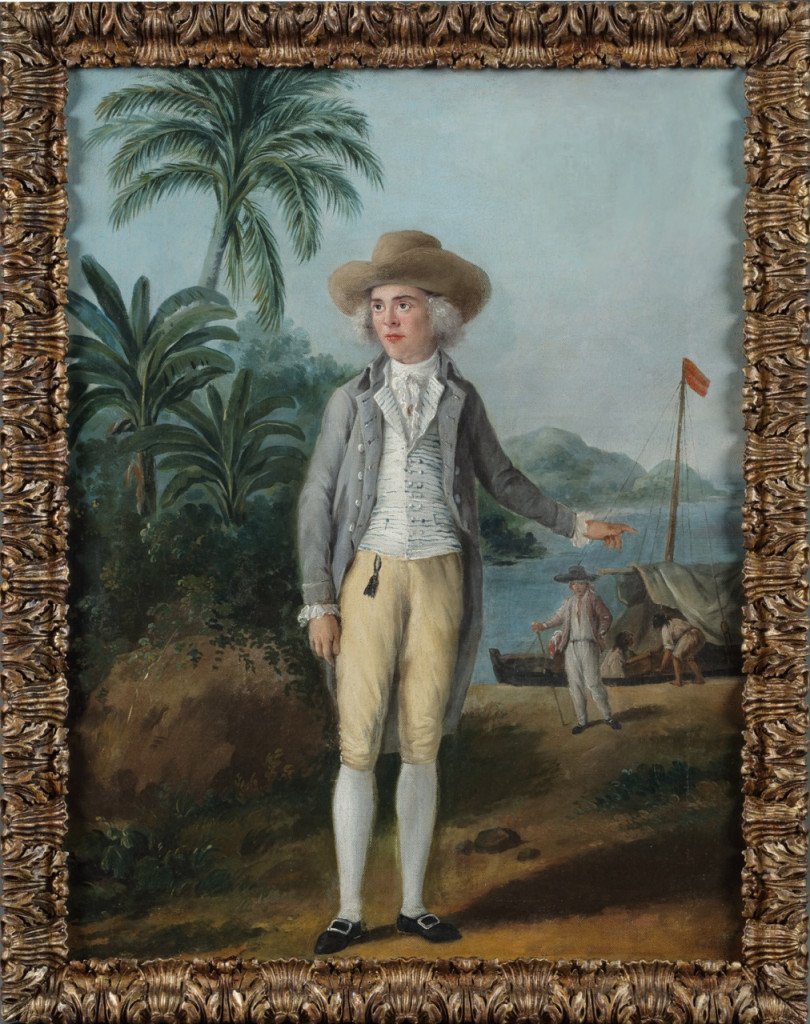
Augustin Brunias (1730-1796)
Aesthetically pleasing, yet not without political intent, Brunias' paintings served as a form of propaganda. Promoting Young's imperialist mission, he promoted the West Indies as a 'thriving colonial economy', a place of opportunity where the generations of deported African peoples were not resisting their enslavement. By depicting an entirely new geographical setting unknown to British audiences, Brunias tapped into the nation's projected fantasies of the 'exotic', while portraying the ‘West Indies’ as a (largely fictionalised) tropical, harmonious land of abundance and prosperity.