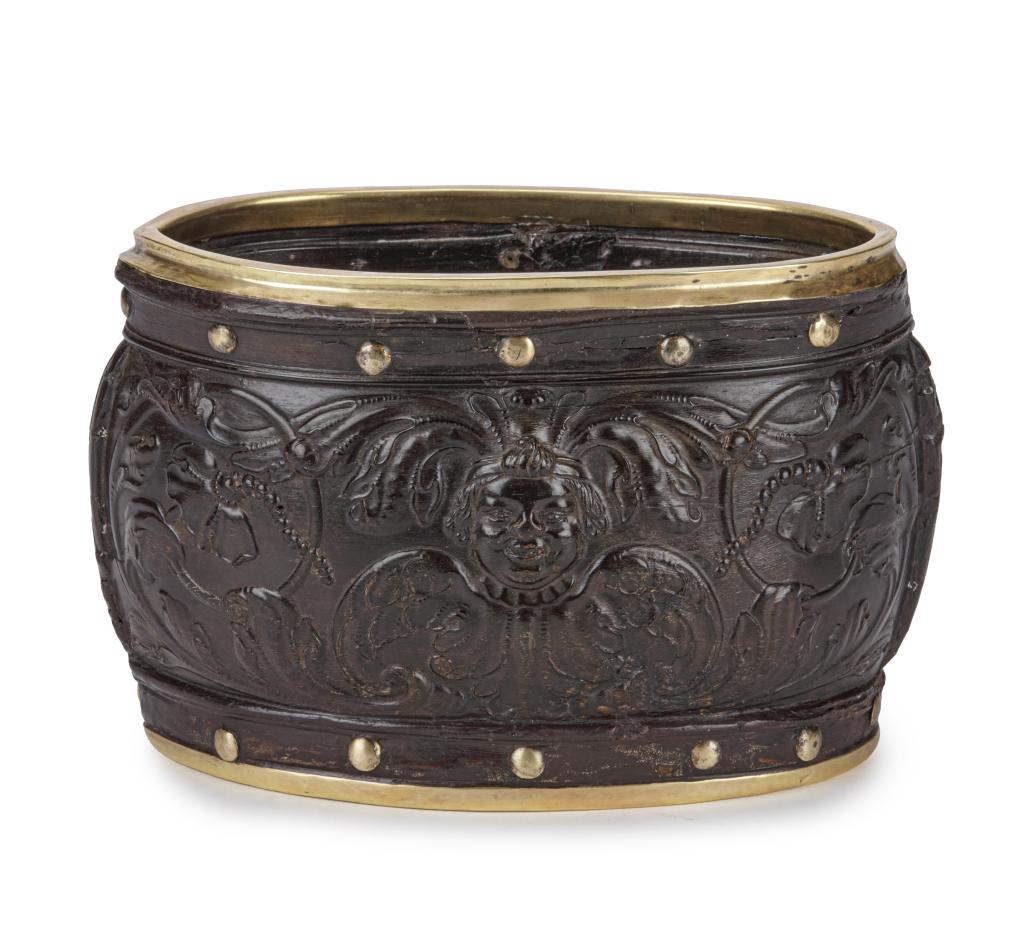
A Dutch brass-mounted pressed baleen casket by Herman Doomer (1595–1650)
Amsterdam, circa 1640
L. 20.7 x W. 13 x H. 14.3 cm
In 1641, Herman Doomer, ebony-worker and frame-maker in Amsterdam, applied for a patent (octrooi) for a method of pressing whale baleen (walvisbalein) into ornamental patterns. This technique allowed repeated, sharply detailed relief designs to be made from molds rather than carved each time anew. The pressed baleen could also be stained to imitate ebony, aligning with Doomer’s broader practice in luxury “black” surfaces and offering a materially inventive alternative to costly tropical hardwoods. Scholars argue that his surviving works underline both the serial precision of the technique and its visual ambitions, with pressed motifs sometimes explicitly discussed as print-derived designs translated into relief.
L. 20.7 x W. 13 x H. 14.3 cm
In 1641, Herman Doomer, ebony-worker and frame-maker in Amsterdam, applied for a patent (octrooi) for a method of pressing whale baleen (walvisbalein) into ornamental patterns. This technique allowed repeated, sharply detailed relief designs to be made from molds rather than carved each time anew. The pressed baleen could also be stained to imitate ebony, aligning with Doomer’s broader practice in luxury “black” surfaces and offering a materially inventive alternative to costly tropical hardwoods. Scholars argue that his surviving works underline both the serial precision of the technique and its visual ambitions, with pressed motifs sometimes explicitly discussed as print-derived designs translated into relief.
Part of the Europe collection.
Related objects
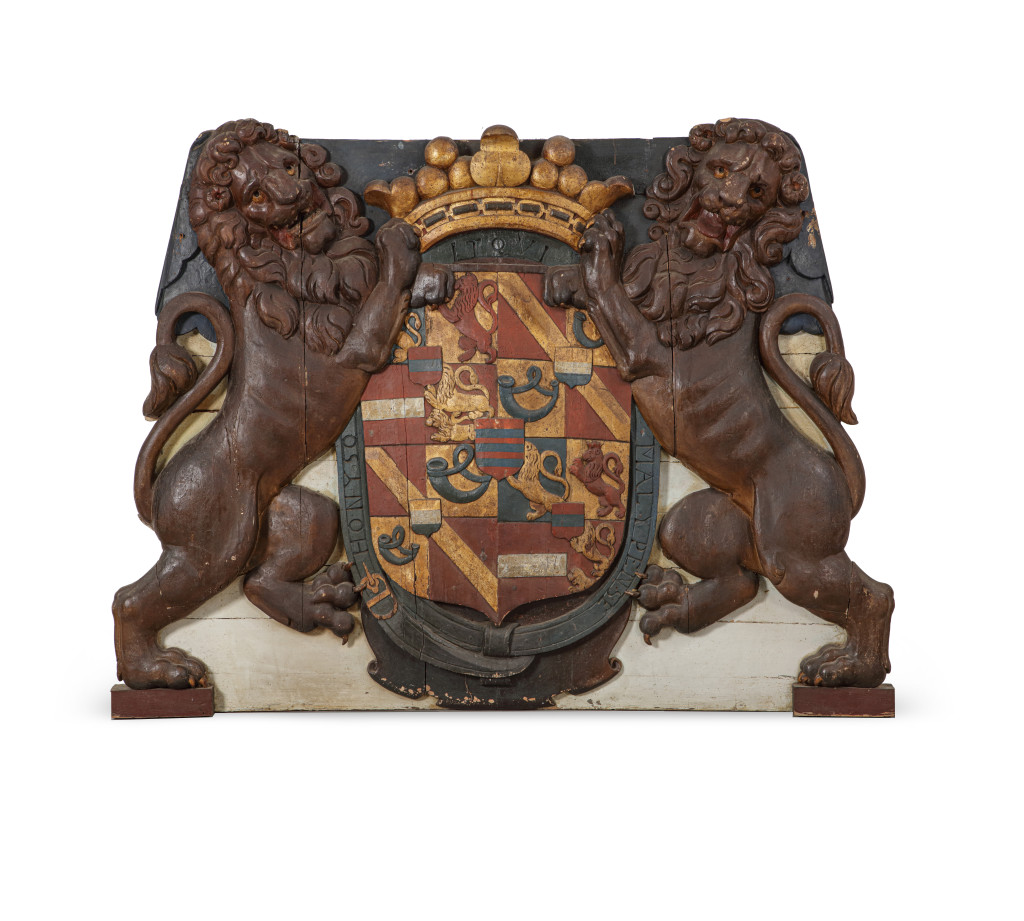
The tafferel stern decoration of the 17th century Dutch man-o-war "’T Prinssen Wapen"
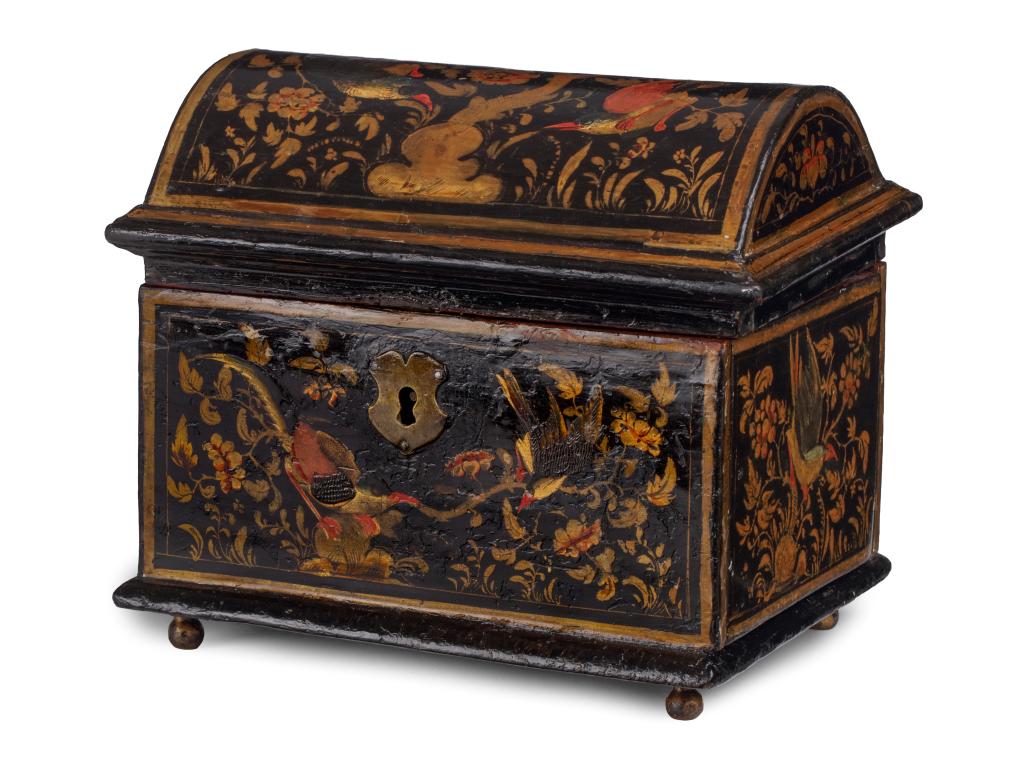
A Dutch chinoiserie lacquer casket by Willem Kick (1579-1647)
_Amsterdam, circa 1620-1625_ _H. 16 x W. 18.9 x D. 13 cm_ Provenance: Private collection, Portugal (since at least the late 19th century)
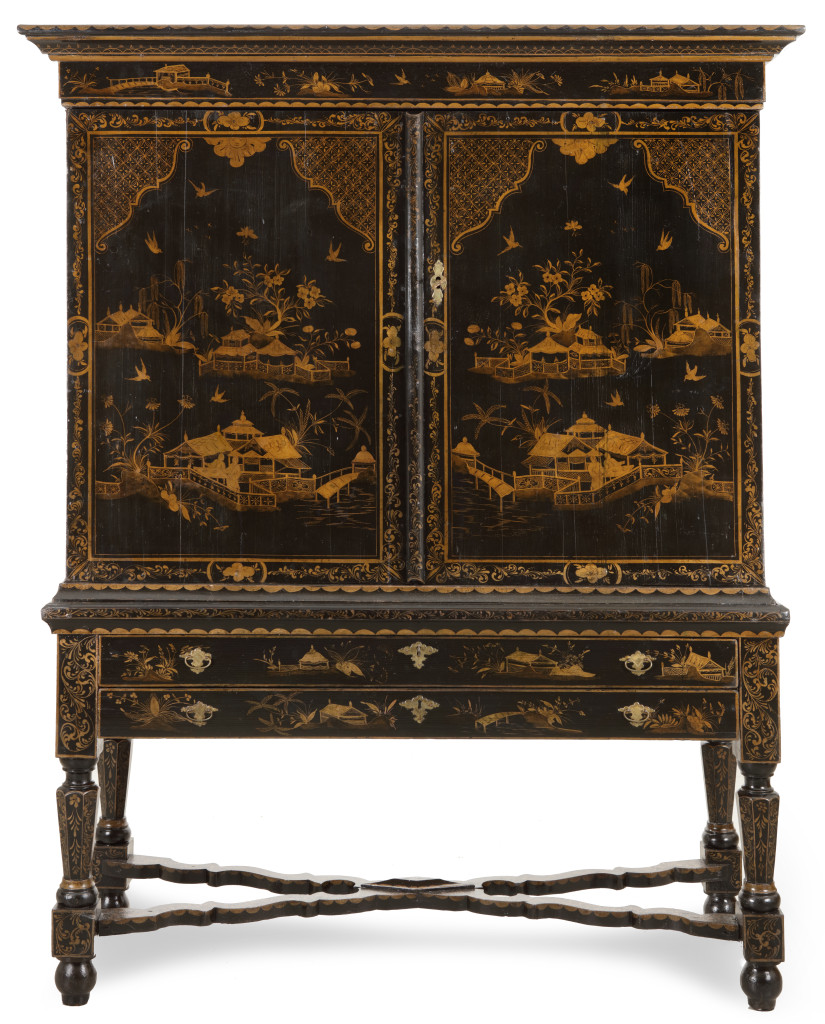
A Dutch lacquered cabinet on stand with chinoiserie decoration
Holland, late 17th century