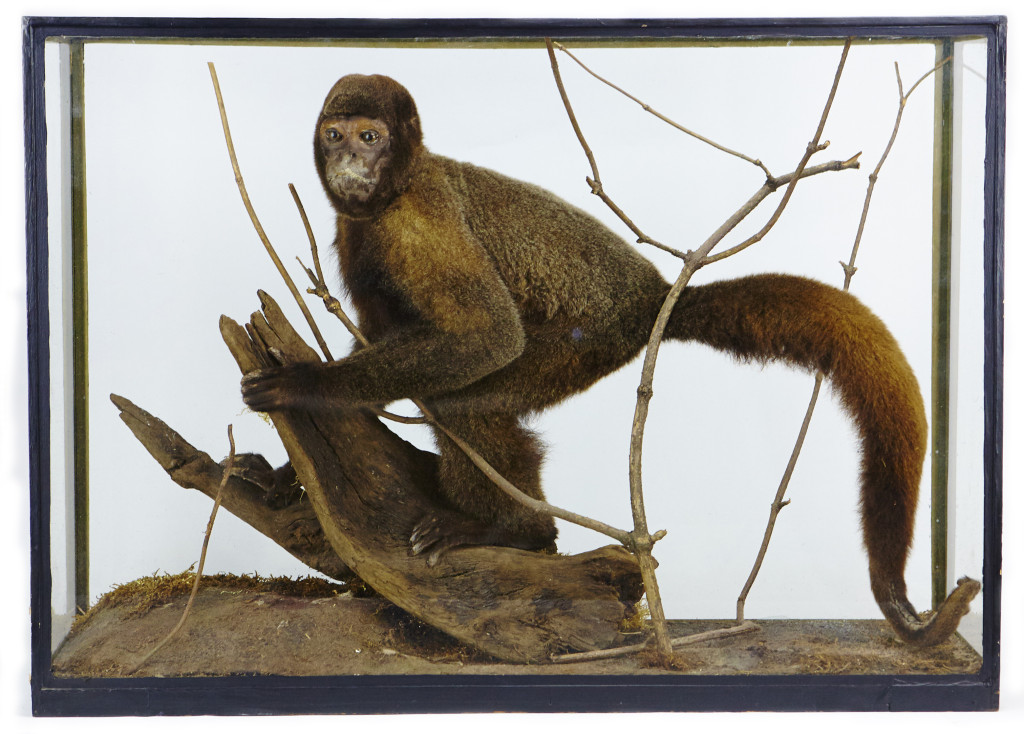
A fine cased taxidermy Woolly Monkey (Lagothrix Lagothrica, possibly poeppigii)
Naturalistically mounted on a wood branch, surrounded by foliage, in plain black wood and glass case.
H. 57 x W. 78 x D. 28 cm
Provenance:
- Private collection, Scotland
Woolly monkeys are found in the countries in the north of South-America, such as Bolivia, Brazil, Colombia, Ecuador, Venezuela and Peru. They usually reside in high-elevation cloud forests, seasonally flooded rainforests, and forests which are situated within Colombia's eastern plains region, although their ideal habitat is humid and mature tropical forests. The species lives in social groups ranging from 10 to 45 individuals. Foraging groups, however, tend to consist of two to six individuals which branch out from the main group, which is probably intended to reduce food competition between individuals. Woolly monkey diets consist of fruit with an addition of leaves, seeds, flowers, and invertebrates. Each group is governed and led by an alpha male, and the social organization within a larger group is organized by age, sex, and the reproductive status of females. Reproduction in these groups is characterized by promiscuity; one male (either the alpha or subordinate) mates with more than one female, just as females mate with more than one male. Shortly after the females reach maturity, they leave their natal groups to avoid any occurrence of inbreeding, while males tend to remain in their natal groups. Play not only serves as a bonding process to rekindle relationships among individuals but is also a way the species establishes a hierarchy or social pecking order, as well as passive food sharing, which is also considered a common routine in the species. Woolly monkeys have an elaborate system of vocalization and olfactory, visual, and tactile communication. These can be used to coordinate group activities, indicate aggression, affection, and marking, and establish territories.
H. 57 x W. 78 x D. 28 cm
Provenance:
- Private collection, Scotland
Woolly monkeys are found in the countries in the north of South-America, such as Bolivia, Brazil, Colombia, Ecuador, Venezuela and Peru. They usually reside in high-elevation cloud forests, seasonally flooded rainforests, and forests which are situated within Colombia's eastern plains region, although their ideal habitat is humid and mature tropical forests. The species lives in social groups ranging from 10 to 45 individuals. Foraging groups, however, tend to consist of two to six individuals which branch out from the main group, which is probably intended to reduce food competition between individuals. Woolly monkey diets consist of fruit with an addition of leaves, seeds, flowers, and invertebrates. Each group is governed and led by an alpha male, and the social organization within a larger group is organized by age, sex, and the reproductive status of females. Reproduction in these groups is characterized by promiscuity; one male (either the alpha or subordinate) mates with more than one female, just as females mate with more than one male. Shortly after the females reach maturity, they leave their natal groups to avoid any occurrence of inbreeding, while males tend to remain in their natal groups. Play not only serves as a bonding process to rekindle relationships among individuals but is also a way the species establishes a hierarchy or social pecking order, as well as passive food sharing, which is also considered a common routine in the species. Woolly monkeys have an elaborate system of vocalization and olfactory, visual, and tactile communication. These can be used to coordinate group activities, indicate aggression, affection, and marking, and establish territories.
Related objects
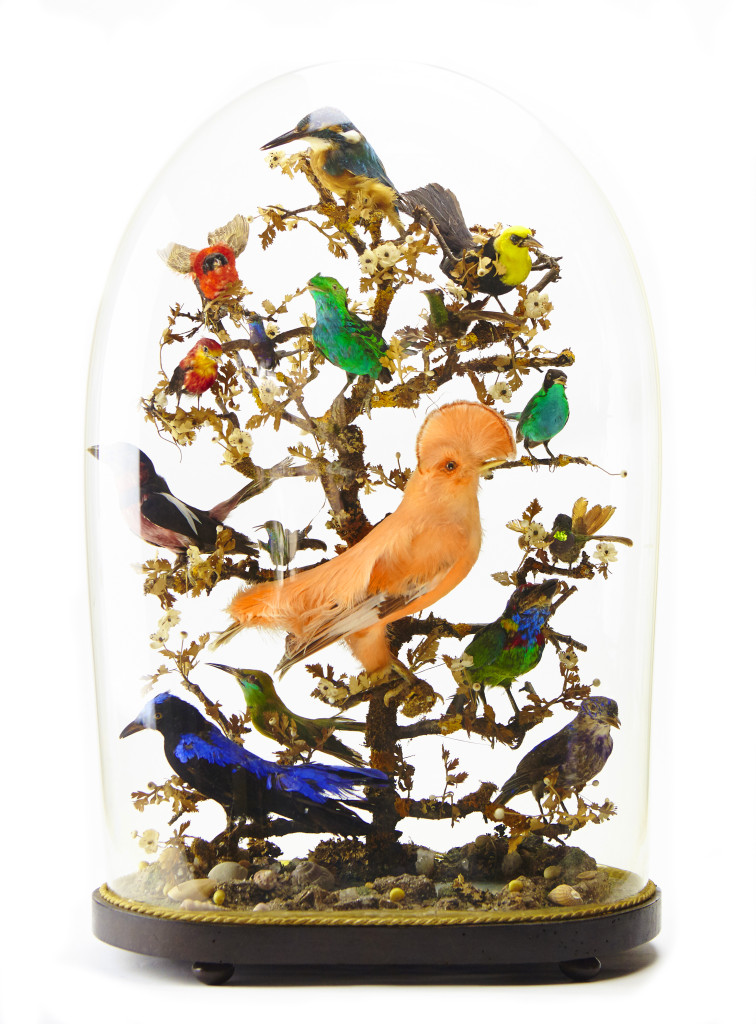
A large French glass dome with Taxidermy tropical birds, a.o. a Cock of the Rock and several Cotinga
A LARGE FRENCH GLASS DOME WITH TAXIDERMY TROPICAL BIRDS, A.O. A COCK OF THE ROCK AND SEVERAL COTINGA
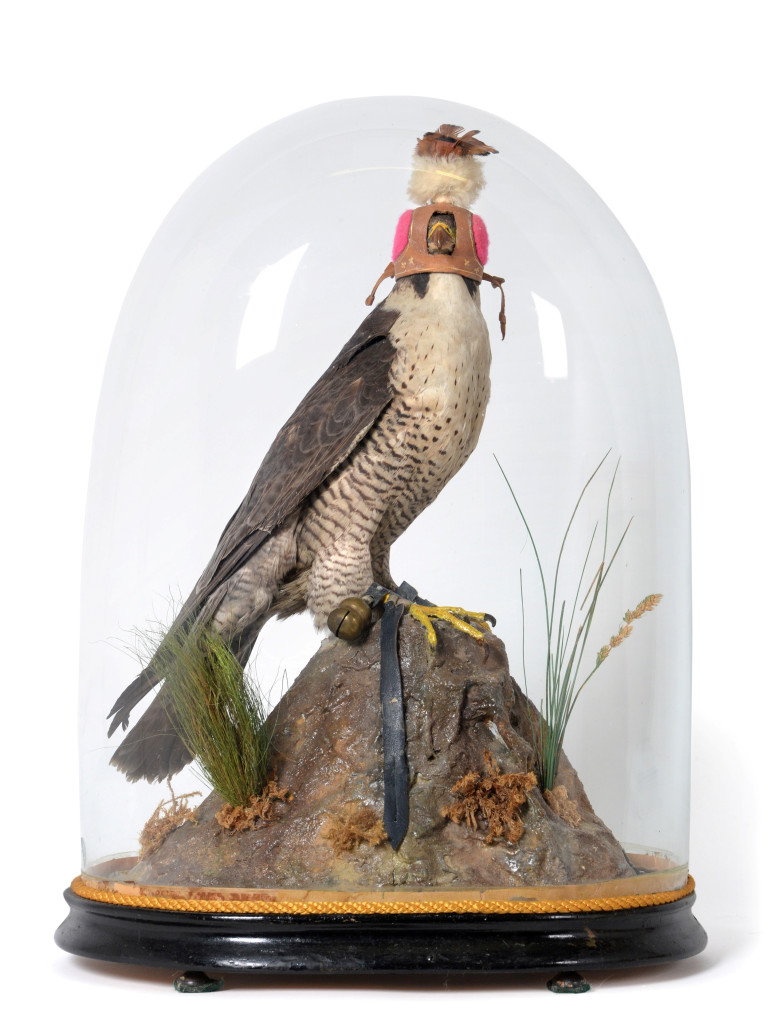
A Victorian Taxidermy hooded Peregrine Falcon
A RARE VICTORIAN TAXIDERMY HOODED PEREGRINE FALCON (FALCO PEREGRINUS)
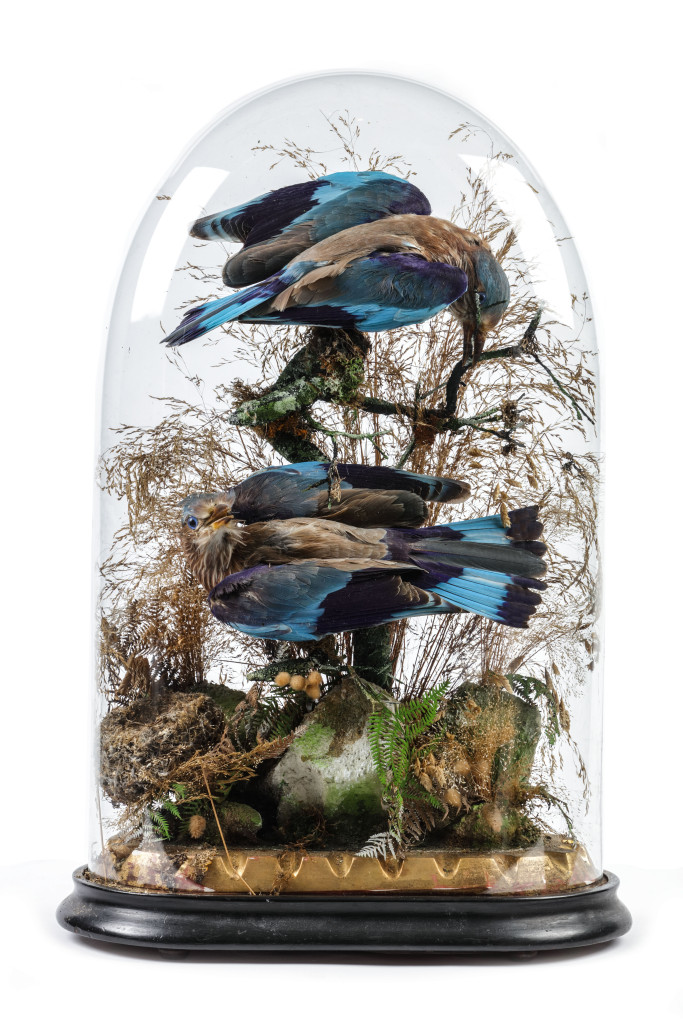
A Victorian taxidermy dome with Indian Roller birds (Coracias benghalensis)
Victorian taxidermy dome with Indian Roller birds (Coracias benghalensis)