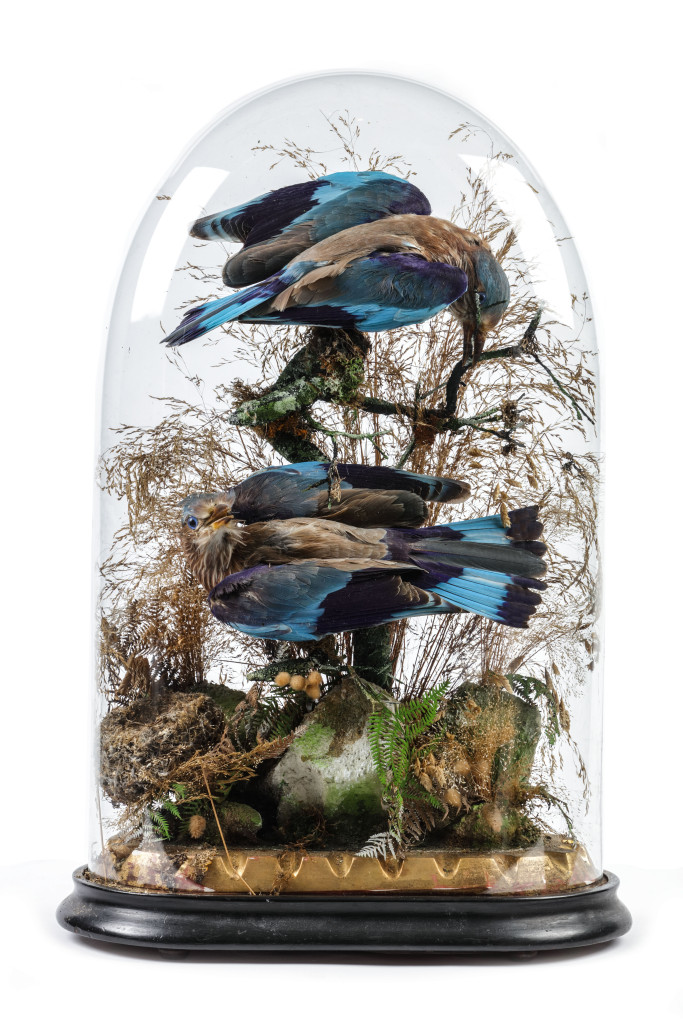
A Victorian taxidermy dome with Indian Roller birds (Coracias benghalensis)
England, 19th century
The birds courting around one another, with a nest to the left.
H. 68 cm
Provenance:
Collection of a Lady of title, England
the skill of preserving and arranging animals in lifelike poses.
preserve the beauty of life. These domes symbolized a desire to
These domes, emblematic of the era's fascination with both nature
and art, emerged as a popular way to display taxidermied animals
during the 19th century. This period, marked by a surge in
scientific interest and a deep curiosity about the natural world,
saw taxidermy evolve from a scientific endeavor to a form of
artistic expression.
The taxidermy within these domes was an art form, showcasing
These displays often included birds, small mammals, and
sometimes insects, arranged in naturalistic settings. The dome
itself, usually made of glass, served both as a protective cover and a lens through which the artistry of the taxidermist was magnified.
In Victorian society, where mortality was a prevalent theme due to
high death rates, taxidermy became a way to contemplate and
conquer death and capture a slice of the fleeting natural world.
They were also a status symbol, representing a family's wealth and
their commitment to culture and education.
No two taxidermy domes were exactly alike. They varied in size,
the species displayed, and the complexity of the scene. Some
featured elaborate backgrounds or intricate base materials, while
others were simpler, letting the animal take center stage.
Today, Victorian taxidermy domes are prized by collectors of
antiques and are seen as unique historical artifacts. They provide a
window into the Victorian psyche and are a testament to the era's
craftsmanship and aesthetic values.
In essence, Victorian taxidermy domes were more than just
decorative items; they were a fusion of art, science, and
philosophy, encapsulating a significant aspect of Victorian culture
and its relationship with the natural world.
The birds courting around one another, with a nest to the left.
H. 68 cm
Provenance:
Collection of a Lady of title, England
the skill of preserving and arranging animals in lifelike poses.
preserve the beauty of life. These domes symbolized a desire to
These domes, emblematic of the era's fascination with both nature
and art, emerged as a popular way to display taxidermied animals
during the 19th century. This period, marked by a surge in
scientific interest and a deep curiosity about the natural world,
saw taxidermy evolve from a scientific endeavor to a form of
artistic expression.
The taxidermy within these domes was an art form, showcasing
These displays often included birds, small mammals, and
sometimes insects, arranged in naturalistic settings. The dome
itself, usually made of glass, served both as a protective cover and a lens through which the artistry of the taxidermist was magnified.
In Victorian society, where mortality was a prevalent theme due to
high death rates, taxidermy became a way to contemplate and
conquer death and capture a slice of the fleeting natural world.
They were also a status symbol, representing a family's wealth and
their commitment to culture and education.
No two taxidermy domes were exactly alike. They varied in size,
the species displayed, and the complexity of the scene. Some
featured elaborate backgrounds or intricate base materials, while
others were simpler, letting the animal take center stage.
Today, Victorian taxidermy domes are prized by collectors of
antiques and are seen as unique historical artifacts. They provide a
window into the Victorian psyche and are a testament to the era's
craftsmanship and aesthetic values.
In essence, Victorian taxidermy domes were more than just
decorative items; they were a fusion of art, science, and
philosophy, encapsulating a significant aspect of Victorian culture
and its relationship with the natural world.
Related objects
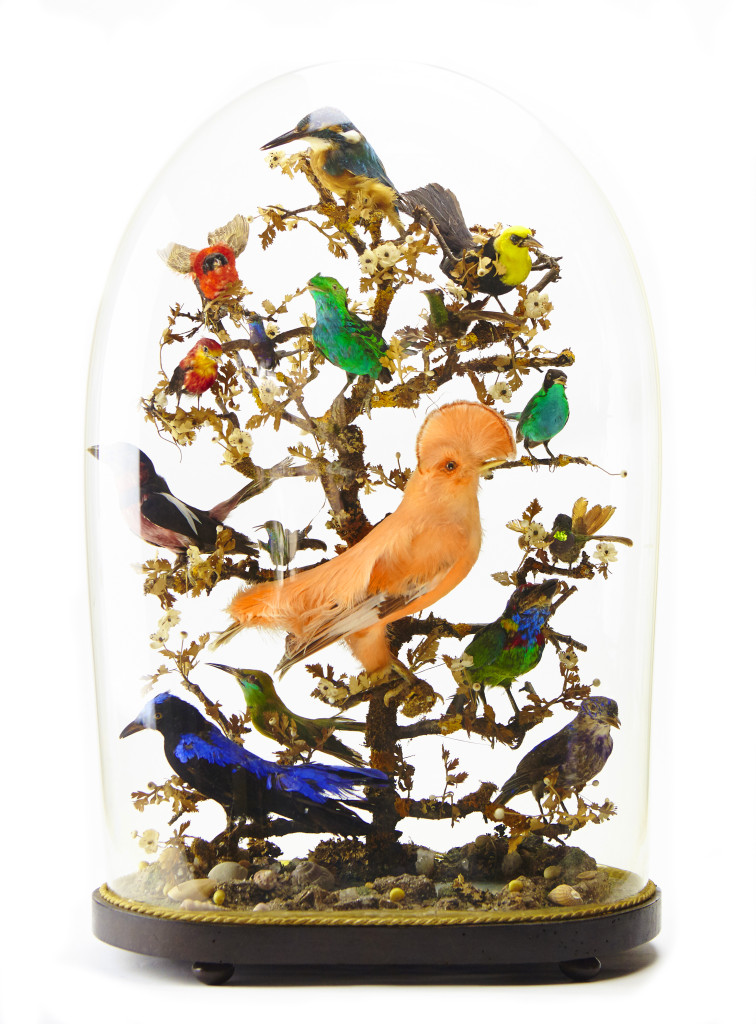
A large French glass dome with Taxidermy tropical birds, a.o. a Cock of the Rock and several Cotinga
A LARGE FRENCH GLASS DOME WITH TAXIDERMY TROPICAL BIRDS, A.O. A COCK OF THE ROCK AND SEVERAL COTINGA
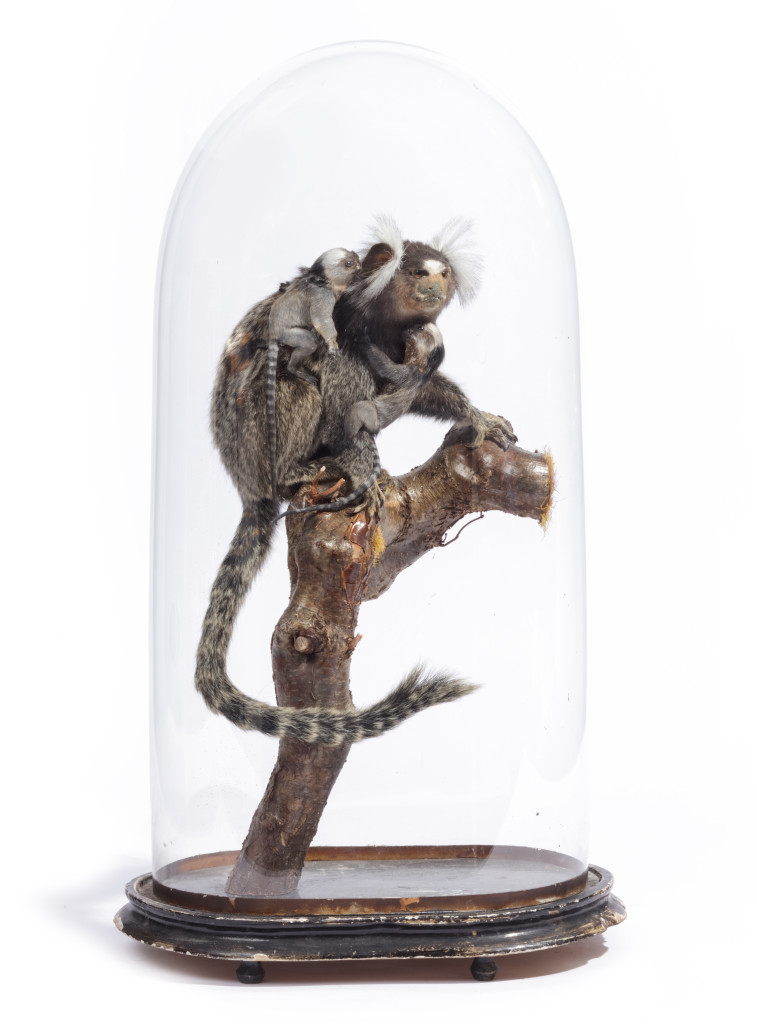
A Victorian dome with taxidermy cotton-eared Tamarind mother and babies
A VICTORIAN DOME WITH TAXIDERMY COTTON-EARED TAMARIND MOTHER AND BABIES
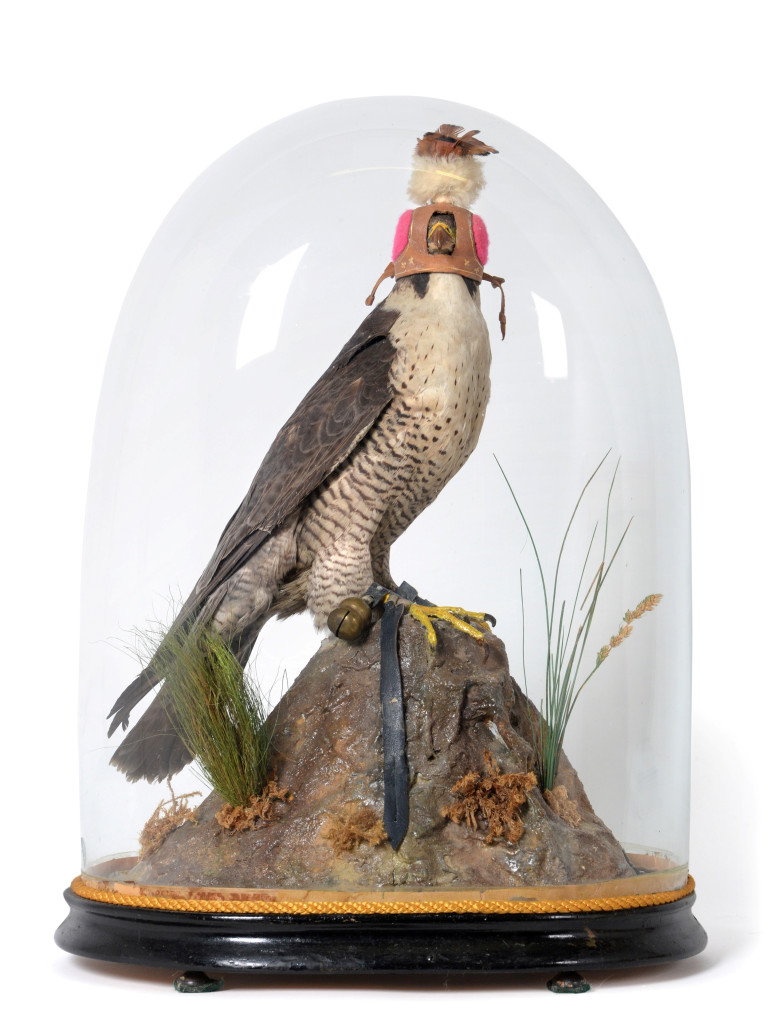
A Victorian Taxidermy hooded Peregrine Falcon
A RARE VICTORIAN TAXIDERMY HOODED PEREGRINE FALCON (FALCO PEREGRINUS)