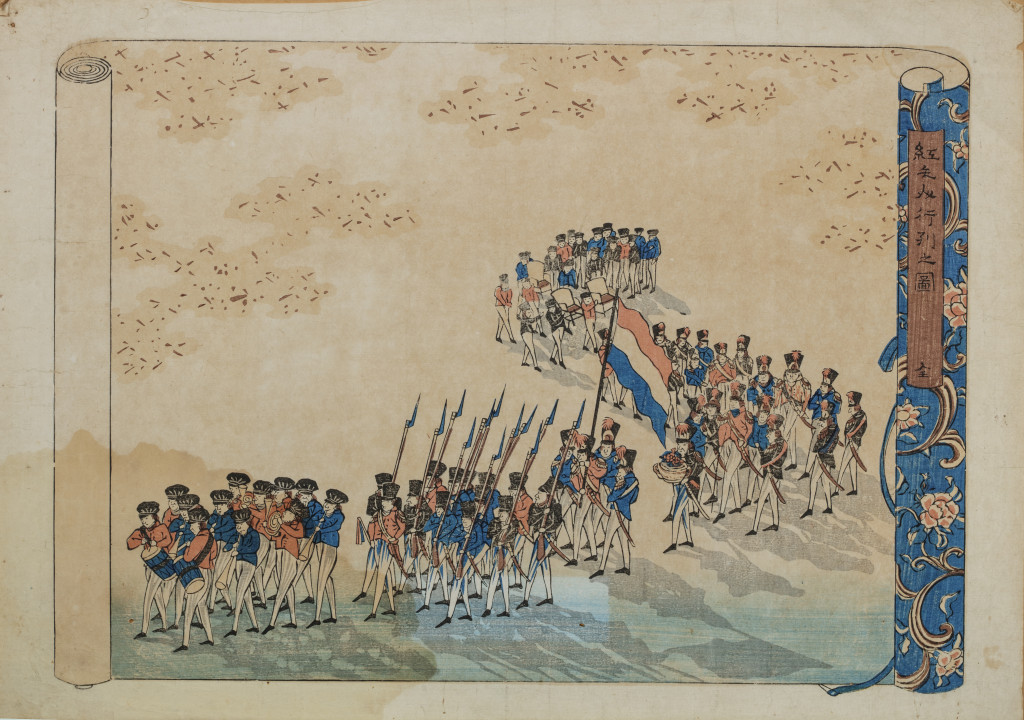
A Japanese colour woodblock print, makimono, titled 'Marching of the red-haired’
Circa 1844
H. 27.5 x W. 39.5 cm
During the Japanese policy of seclusion (sakoku) between 1641 and 1859, of the Western powers, only the Dutch were allowed to trade in Japan, but under very strict limitations; they were not allowed to leave their small trade post on Deshima Island without permission, no Dutch women, no overt practising of Christianity and no Dutch military were permitted in Japan.
However, the outcome of the Opium War (1840-1842) which forced the Chinese Empire to open some of its ports to Western trade, led to much concern in Japan and a short break from the prohibition of the presence of Dutch military in Japan. Against the background of the events in China and on the grounds of the long-standing relationships between The Netherlands and Japan, King William II on the advice of the minister of Colonies, J.C. Baud, wrote a letter to the Shogun in friendly, but urgent terms advising him to end the sakoku policy or Japan could await a similar fate as China. In the royal letter, signed on 15 February 1844, William II stated that peace for Japan could only be secured by allowing friendly trade relationships with foreign countries.
The delivery of the royal letter to the Shogun through the intermediary of the governor of Nagasaki was prepared with the greatest consideration. The specialist on Japan and former physician of Deshima, Philipp Franz von Siebold, pointed out that protocol should be strictly observed and a military delegation for the presentation of the letter would be necessary. A military person would have more status in the eyes of the Japanese than a civil servant such as the Opperhoofd of Deshima. It was decided to charge the naval commander H.H.F. Coops with the task. As commander of the war frigate H.M.S. Palembang, Coops arrived in Nagasaki with the important letter in August 1844.
The presentation of the letter to the governor of Nagasaki who would deliver it to the Shogun in Edo, was carried out with great ceremony by a procession of about 120 Dutch marines marching to the residence of the governor of Nagasaki. In the front of the procession are the drummers and trumpeters, followed by the marines, one carrying the Dutch flag and another something looking like a potted plant which should have been the letter in a box. The Japanese printmaker apparently did not understand the purpose of the procession; not a potted plant but a boxed letter was to be delivered. At the end of the procession, three chairs are being carried for three Dutch officials; the Dutch found it difficult to sit on the floor like the Japanese do, which made the Japanese think the Dutch were unable to bend their knees.
The reply of the Shogun to the letter of King William II followed more than a year later. He highly appreciated the frank advice of the king but in friendly terms made it clear that Japan had to adhere to its old rules of seclusion and therefore would remain closed (until Commodore Perry forced it to open ten years later).
H. 27.5 x W. 39.5 cm
During the Japanese policy of seclusion (sakoku) between 1641 and 1859, of the Western powers, only the Dutch were allowed to trade in Japan, but under very strict limitations; they were not allowed to leave their small trade post on Deshima Island without permission, no Dutch women, no overt practising of Christianity and no Dutch military were permitted in Japan.
However, the outcome of the Opium War (1840-1842) which forced the Chinese Empire to open some of its ports to Western trade, led to much concern in Japan and a short break from the prohibition of the presence of Dutch military in Japan. Against the background of the events in China and on the grounds of the long-standing relationships between The Netherlands and Japan, King William II on the advice of the minister of Colonies, J.C. Baud, wrote a letter to the Shogun in friendly, but urgent terms advising him to end the sakoku policy or Japan could await a similar fate as China. In the royal letter, signed on 15 February 1844, William II stated that peace for Japan could only be secured by allowing friendly trade relationships with foreign countries.
The delivery of the royal letter to the Shogun through the intermediary of the governor of Nagasaki was prepared with the greatest consideration. The specialist on Japan and former physician of Deshima, Philipp Franz von Siebold, pointed out that protocol should be strictly observed and a military delegation for the presentation of the letter would be necessary. A military person would have more status in the eyes of the Japanese than a civil servant such as the Opperhoofd of Deshima. It was decided to charge the naval commander H.H.F. Coops with the task. As commander of the war frigate H.M.S. Palembang, Coops arrived in Nagasaki with the important letter in August 1844.
The presentation of the letter to the governor of Nagasaki who would deliver it to the Shogun in Edo, was carried out with great ceremony by a procession of about 120 Dutch marines marching to the residence of the governor of Nagasaki. In the front of the procession are the drummers and trumpeters, followed by the marines, one carrying the Dutch flag and another something looking like a potted plant which should have been the letter in a box. The Japanese printmaker apparently did not understand the purpose of the procession; not a potted plant but a boxed letter was to be delivered. At the end of the procession, three chairs are being carried for three Dutch officials; the Dutch found it difficult to sit on the floor like the Japanese do, which made the Japanese think the Dutch were unable to bend their knees.
The reply of the Shogun to the letter of King William II followed more than a year later. He highly appreciated the frank advice of the king but in friendly terms made it clear that Japan had to adhere to its old rules of seclusion and therefore would remain closed (until Commodore Perry forced it to open ten years later).
Related objects
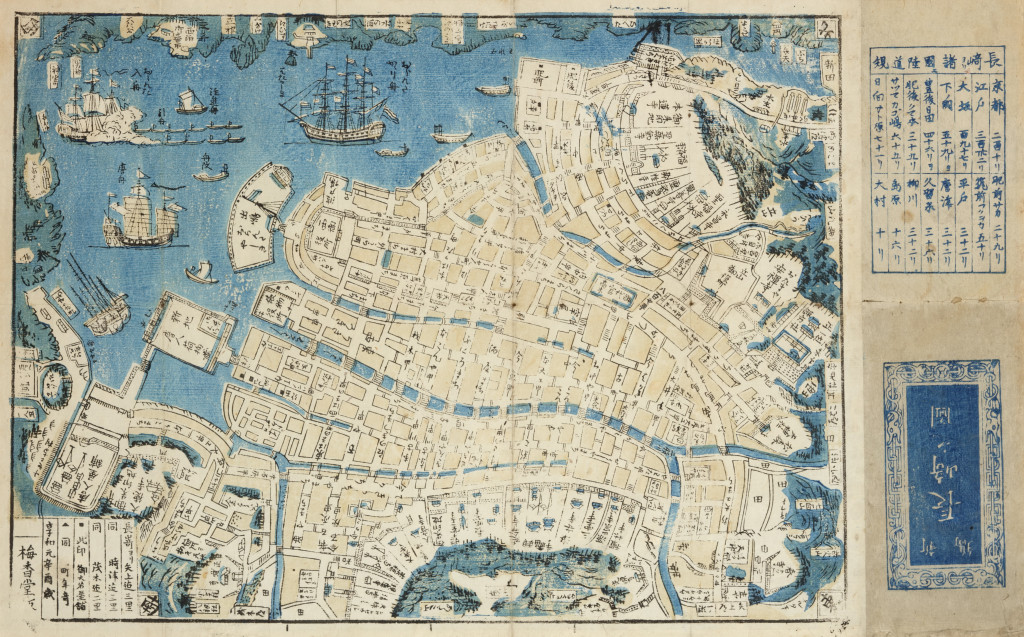
A Japanese woodblock print, Nagasaki-e, of Nagasaki Harbour, Shinkan Nagasaki no dzu
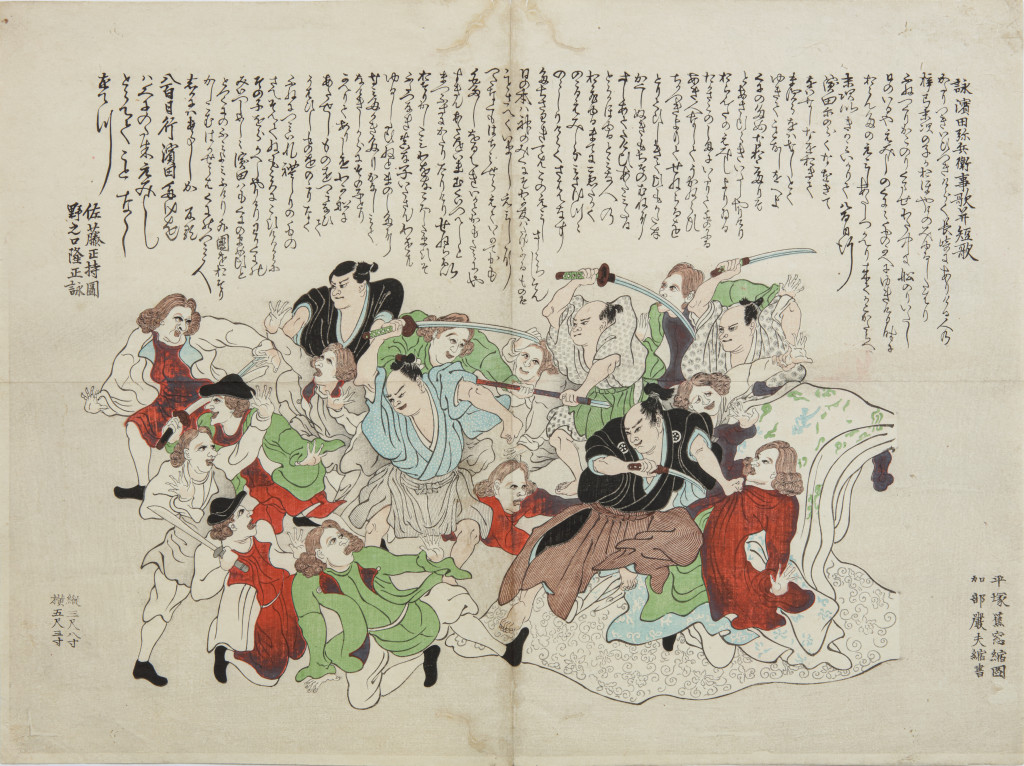
A Japanese woodblock print, Ukiyo-e, depicting the capture of Pieter Nuyts