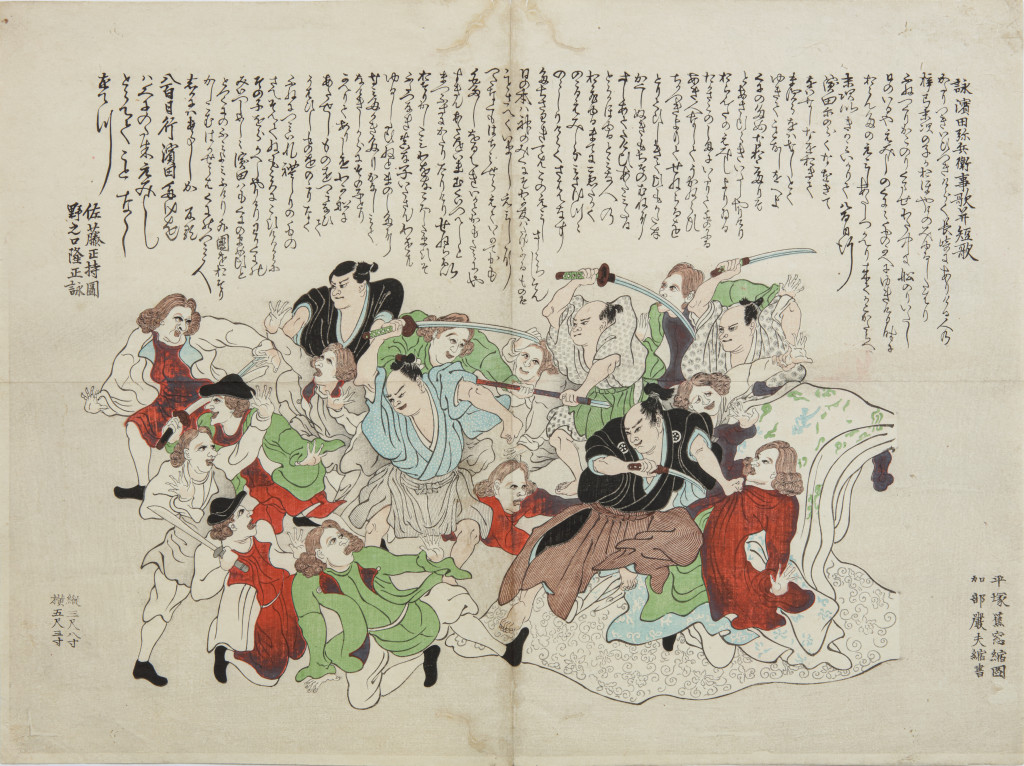
A Japanese woodblock print, Ukiyo-e, depicting the capture of Pieter Nuyts
Meiji period, late 19th century
H. 36.5 x W. 49 cm
The print depicts the capture of the Dutch governor of Formosa (Taiwan), Pieter Nuyts, his son Laurens, and some other Dutchmen, by Hamada-Yahyoe and other Japanese sea captains in 1628.
The Japanese texts read:
'Title of the picture: Story telling about the Hamada-Yahyoe Incident with it’s poem.’
'Sizes of original picture: 114 x 159 cm.’
'Original painter: Sato-Masaki (1809-1857).’
'Original poet: Nonokuchi-Masataka (1793-1871).’
'Engraver after the original: Hiratsuka-Kunso, and poet Kabe-Iwao (1849-1922).’
Pieter Nuyts was born in 1598 in Middelburg from wealthy protestant immigrants from Antwerp. After his study of philosophy in Leiden, he returned to Middelburg to work in his father’s trading company. In 1620 Pieter married Cornelia Jacot, also a child of Antwerp émigrés. Together they had four children, Laurens in 1622, Pieter in1624 and the twins Anna Cornelia and Elisabeth in 1626. In 1626 Pieter entered service with the VOC and was seen as one of its rising stars. On 11 May 1626, Pieter and his eldest son Laurens (only 4 years old) sailed from Amsterdam on the VOC ship 't Gulden Zeepaert. Deviating from the standard route to Batavia (Jakarta) the ship continued east to map the southern coast of Australia. The ship’s captain François Thijssen, named the region 't Landt van Pieter Nuyts, after Nuyts who was the highest-ranking official onboard. Today several areas in South Australia still bear his names, such as Nuyts Reef, Cape Nuyts and Nuyts Archipelago.
On May 1627, just one month after completing his Australian voyage, Nuyts was simultaneously appointed governor of Formosa, present-day Taiwan, and ambassador to Japan. In this last capacity, he made the court journey to the Shõgun, Takugawa Iemitsu. At the same time Hamada Yahyoe, a Japanese trader based in Nagasaki with frequent business in Formosa, where he already had some collisions with Nuyts, had taken a group of native Formosans to Japan, posing them as the rulers of Formosa. His plan was to have the Formosans grant sovereignty over Formosa to the Shõgun. At the same time, Nuyts was in Japan to assert the Dutch claim on the island. Both embassies were refused an audience with the Shõgun. The Dutch failure being variously attributed to Nuyts “haughty demeanour and the antics of his travel companions,” and to “Hamada’s machinations at the court.”
On returning from his unsuccessful mission to Japan, Nuyts took up his position as the third governor of Formosa, with his residence in Fort Zeelandia. One of his first aims was to force an opening for the Dutch to trade with China, something which had eluded the Dutch since they arrived in East Asia in the early 17th century. To further this goal, he took hostage Zheng Zhiling, merchant, pirate, military leader, and interpreter in the peace negotiations between the Dutch and Ming China over the Pescadores Islands, occupied by the Dutch. Nuyts refused to release him until Zheng agreed to give the Dutch trading privileges. Not the best way to make friends and thirty years later it was Zheng’s son, Koxinga, who would end the Dutch reign in Formosa.
Nuyts also succeeded in making enemies in Formosa by treating the natives with arrogance. In 1629 he narrowly escaped death when after being feted at the native village of Mattau, the locals took advantage of the relaxed and convivial atmosphere to slaughter sixty off-guard Dutch soldiers. Nuyts was spared by having left early to return to fort Zeelandia. Later the Dutch would take revenge by massacring the village of Mattau.
The already troubled relations with Japanese merchants in Formosa took a turn for the worse in 1628. The Japanese, who had been trading in Formosa long before the arrival of the Dutch, refused to pay Dutch tolls levied for conducting business in the area. Nuyts exacted revenge on the same Hamada Yahei who he blamed for causing the failure of the Japanese embassy by impounding his ships until the tolls were paid. However, the Japanese still refused to pay taxes and instead Hamada took Nuyts hostage at knife point in his own office (as illustrated in the present print), demanding the return of his ships and safe passage to Japan. This was granted by the Council of Formosa, and as a security six Dutchmen, including Nuyts’ son Laurens, were taken to Japan as hostages. Laurens died in Omura prison on 29 December 1631. During the later Japanese occupation of Taiwan, 1895 till 1945, school history books retold the hostage taking as the Nuyts-incident (noitsu jiken), portraying the Dutchman as a “typical arrogant western bully who slighted Japanese trading rights and trod on the rights of the native inhabitants (sic).”
The Dutch were very keen to resume the lucrative trade with Japan which had been choked off in the wake of the dispute between Nuyts and Hamada. All their overtures to the Japanese court failed, until they decided to extradite Nuyts to Japan for the Shõgun to punish him as he saw fit. This shows the relative weakness of the Dutch when confronted by powerful Eastern Asian states such as Japan. Nuyts was held under house arrest by the Japanese from 1632 until 1636, when he was sent back to Batavia (Jakarta), where he was fined, dishonourably dismissed, and sent back to the Netherlands by the VOC. Thanks to powerful allies in the Middelburg Chamber of the VOC Nuyts successfully reclaimed the fines placed on him and started a career as local administrator and mayor of the town of Hulst. He died on 11 December 1655.
For more reading on this subject see:
Leonard Blussé, Bull in a China Shop: Pieter Nuyts in China and Japan (1627-1636), Leiden, 2003.
H. 36.5 x W. 49 cm
The print depicts the capture of the Dutch governor of Formosa (Taiwan), Pieter Nuyts, his son Laurens, and some other Dutchmen, by Hamada-Yahyoe and other Japanese sea captains in 1628.
The Japanese texts read:
'Title of the picture: Story telling about the Hamada-Yahyoe Incident with it’s poem.’
'Sizes of original picture: 114 x 159 cm.’
'Original painter: Sato-Masaki (1809-1857).’
'Original poet: Nonokuchi-Masataka (1793-1871).’
'Engraver after the original: Hiratsuka-Kunso, and poet Kabe-Iwao (1849-1922).’
Pieter Nuyts was born in 1598 in Middelburg from wealthy protestant immigrants from Antwerp. After his study of philosophy in Leiden, he returned to Middelburg to work in his father’s trading company. In 1620 Pieter married Cornelia Jacot, also a child of Antwerp émigrés. Together they had four children, Laurens in 1622, Pieter in1624 and the twins Anna Cornelia and Elisabeth in 1626. In 1626 Pieter entered service with the VOC and was seen as one of its rising stars. On 11 May 1626, Pieter and his eldest son Laurens (only 4 years old) sailed from Amsterdam on the VOC ship 't Gulden Zeepaert. Deviating from the standard route to Batavia (Jakarta) the ship continued east to map the southern coast of Australia. The ship’s captain François Thijssen, named the region 't Landt van Pieter Nuyts, after Nuyts who was the highest-ranking official onboard. Today several areas in South Australia still bear his names, such as Nuyts Reef, Cape Nuyts and Nuyts Archipelago.
On May 1627, just one month after completing his Australian voyage, Nuyts was simultaneously appointed governor of Formosa, present-day Taiwan, and ambassador to Japan. In this last capacity, he made the court journey to the Shõgun, Takugawa Iemitsu. At the same time Hamada Yahyoe, a Japanese trader based in Nagasaki with frequent business in Formosa, where he already had some collisions with Nuyts, had taken a group of native Formosans to Japan, posing them as the rulers of Formosa. His plan was to have the Formosans grant sovereignty over Formosa to the Shõgun. At the same time, Nuyts was in Japan to assert the Dutch claim on the island. Both embassies were refused an audience with the Shõgun. The Dutch failure being variously attributed to Nuyts “haughty demeanour and the antics of his travel companions,” and to “Hamada’s machinations at the court.”
On returning from his unsuccessful mission to Japan, Nuyts took up his position as the third governor of Formosa, with his residence in Fort Zeelandia. One of his first aims was to force an opening for the Dutch to trade with China, something which had eluded the Dutch since they arrived in East Asia in the early 17th century. To further this goal, he took hostage Zheng Zhiling, merchant, pirate, military leader, and interpreter in the peace negotiations between the Dutch and Ming China over the Pescadores Islands, occupied by the Dutch. Nuyts refused to release him until Zheng agreed to give the Dutch trading privileges. Not the best way to make friends and thirty years later it was Zheng’s son, Koxinga, who would end the Dutch reign in Formosa.
Nuyts also succeeded in making enemies in Formosa by treating the natives with arrogance. In 1629 he narrowly escaped death when after being feted at the native village of Mattau, the locals took advantage of the relaxed and convivial atmosphere to slaughter sixty off-guard Dutch soldiers. Nuyts was spared by having left early to return to fort Zeelandia. Later the Dutch would take revenge by massacring the village of Mattau.
The already troubled relations with Japanese merchants in Formosa took a turn for the worse in 1628. The Japanese, who had been trading in Formosa long before the arrival of the Dutch, refused to pay Dutch tolls levied for conducting business in the area. Nuyts exacted revenge on the same Hamada Yahei who he blamed for causing the failure of the Japanese embassy by impounding his ships until the tolls were paid. However, the Japanese still refused to pay taxes and instead Hamada took Nuyts hostage at knife point in his own office (as illustrated in the present print), demanding the return of his ships and safe passage to Japan. This was granted by the Council of Formosa, and as a security six Dutchmen, including Nuyts’ son Laurens, were taken to Japan as hostages. Laurens died in Omura prison on 29 December 1631. During the later Japanese occupation of Taiwan, 1895 till 1945, school history books retold the hostage taking as the Nuyts-incident (noitsu jiken), portraying the Dutchman as a “typical arrogant western bully who slighted Japanese trading rights and trod on the rights of the native inhabitants (sic).”
The Dutch were very keen to resume the lucrative trade with Japan which had been choked off in the wake of the dispute between Nuyts and Hamada. All their overtures to the Japanese court failed, until they decided to extradite Nuyts to Japan for the Shõgun to punish him as he saw fit. This shows the relative weakness of the Dutch when confronted by powerful Eastern Asian states such as Japan. Nuyts was held under house arrest by the Japanese from 1632 until 1636, when he was sent back to Batavia (Jakarta), where he was fined, dishonourably dismissed, and sent back to the Netherlands by the VOC. Thanks to powerful allies in the Middelburg Chamber of the VOC Nuyts successfully reclaimed the fines placed on him and started a career as local administrator and mayor of the town of Hulst. He died on 11 December 1655.
For more reading on this subject see:
Leonard Blussé, Bull in a China Shop: Pieter Nuyts in China and Japan (1627-1636), Leiden, 2003.
Part of the Japan collection.
Related objects
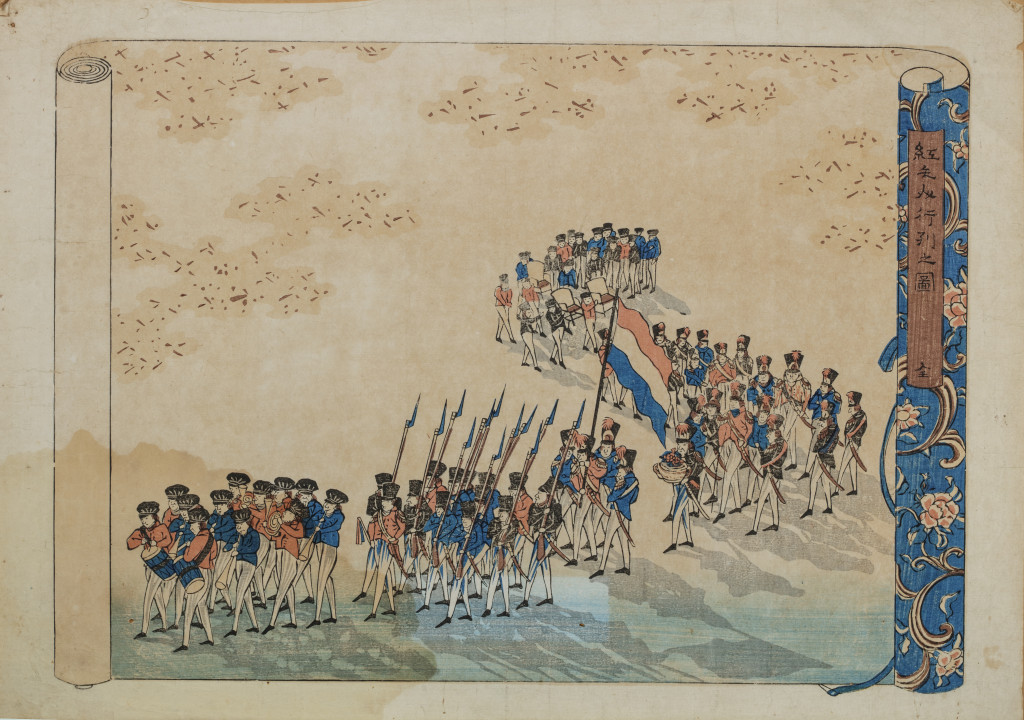
A Japanese colour woodblock print, makimono, titled 'Marching of the red-haired’
A Japanese colour woodblock print, makimono, titled 'Marching of the red-haired’ Circa 1844
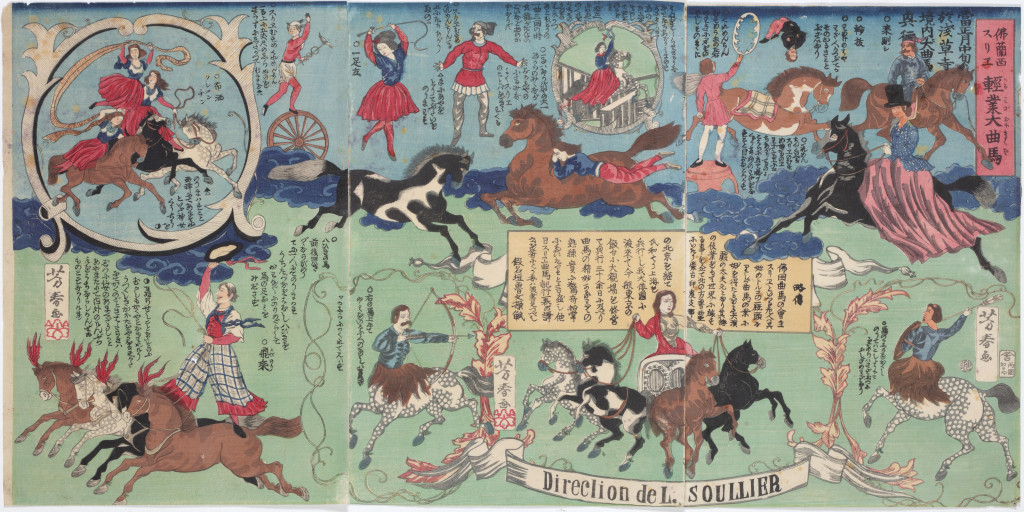
A Japanese colour woodblock print, Öban tate-e by Utagawa Yoshiharu (1828-1888), 'The Great French Soullier Circus and Equestrian Acrobatic Show
A Japanese colour woodblock print, Öban tate-e by Utagawa Yoshiharu (1828-1888), 'The Great French Soullier Circus and Equestrian Acrobatic Show Circa 1871, published by Kagaya Kichibei