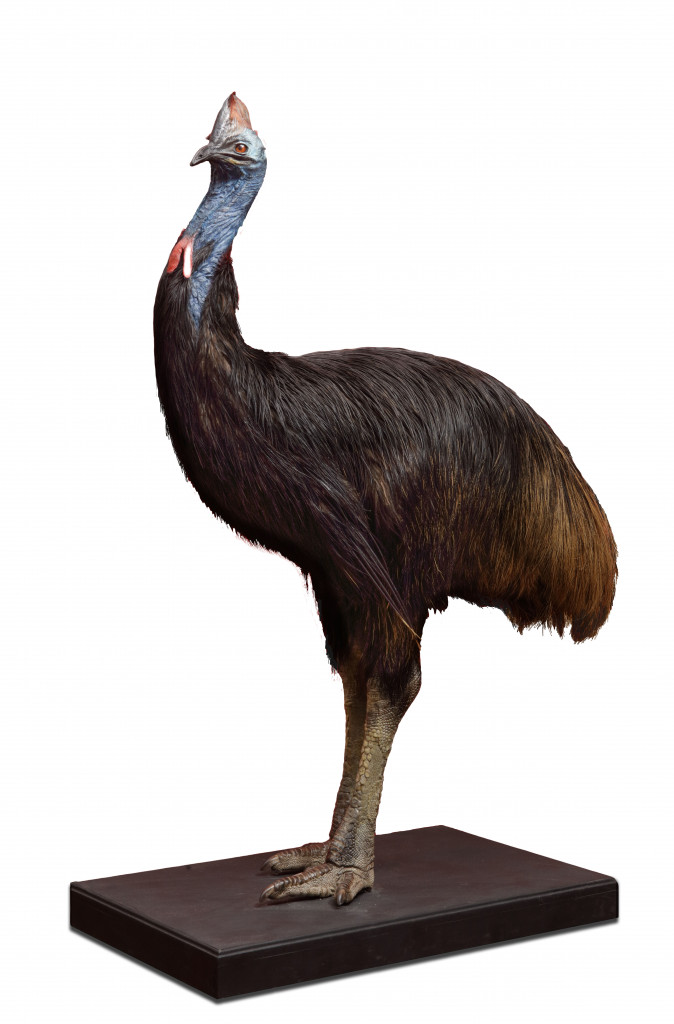
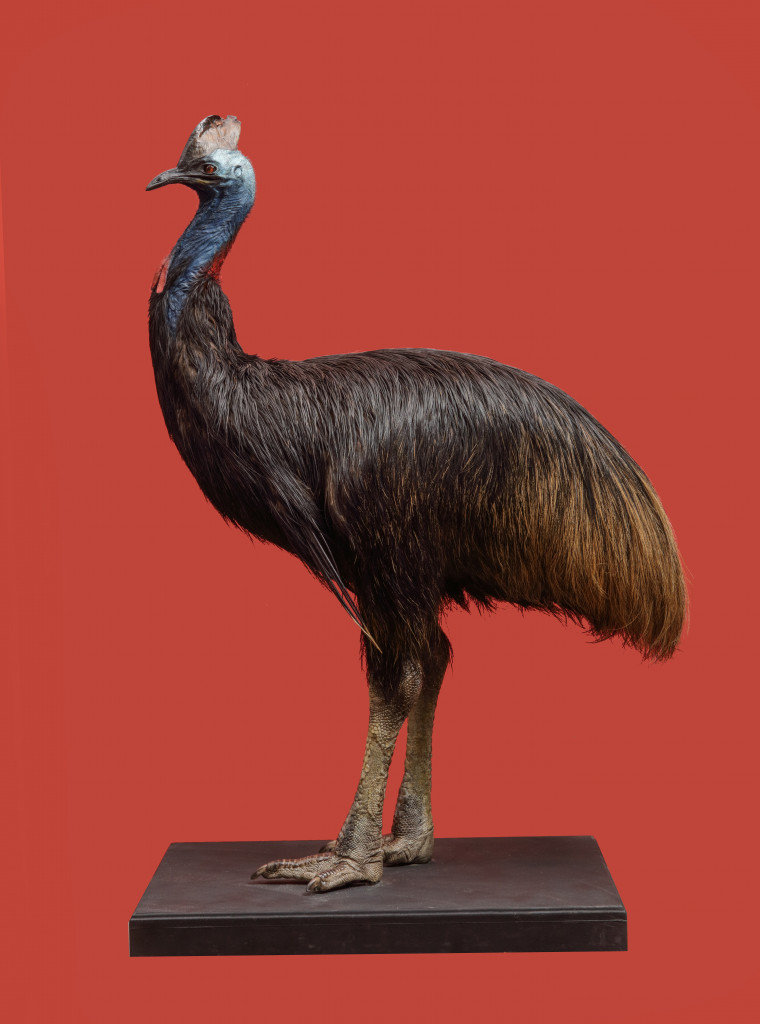
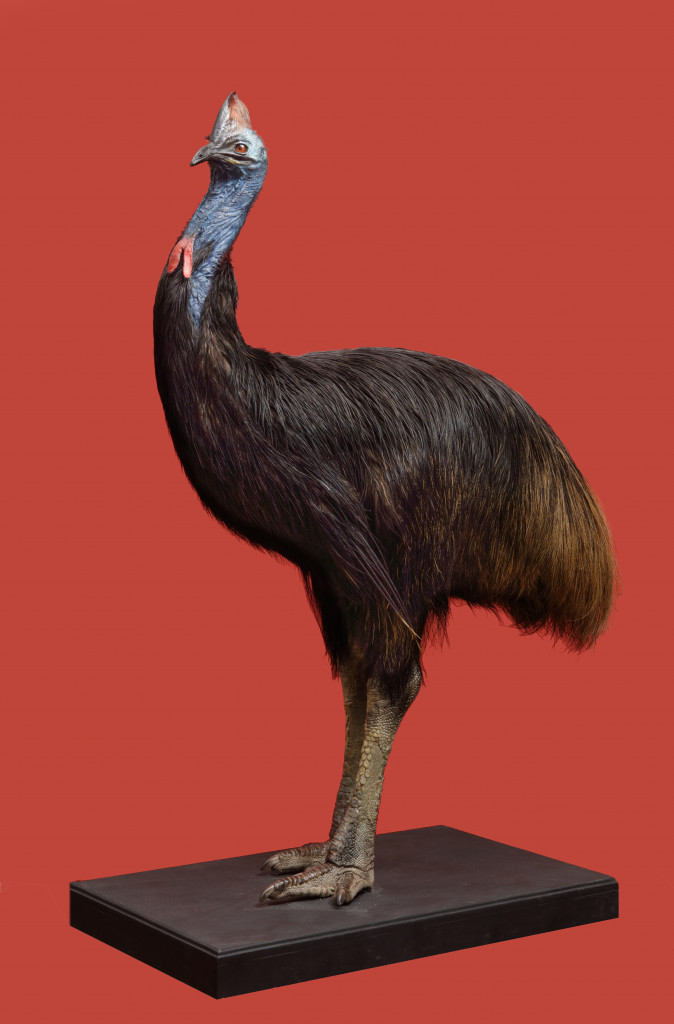
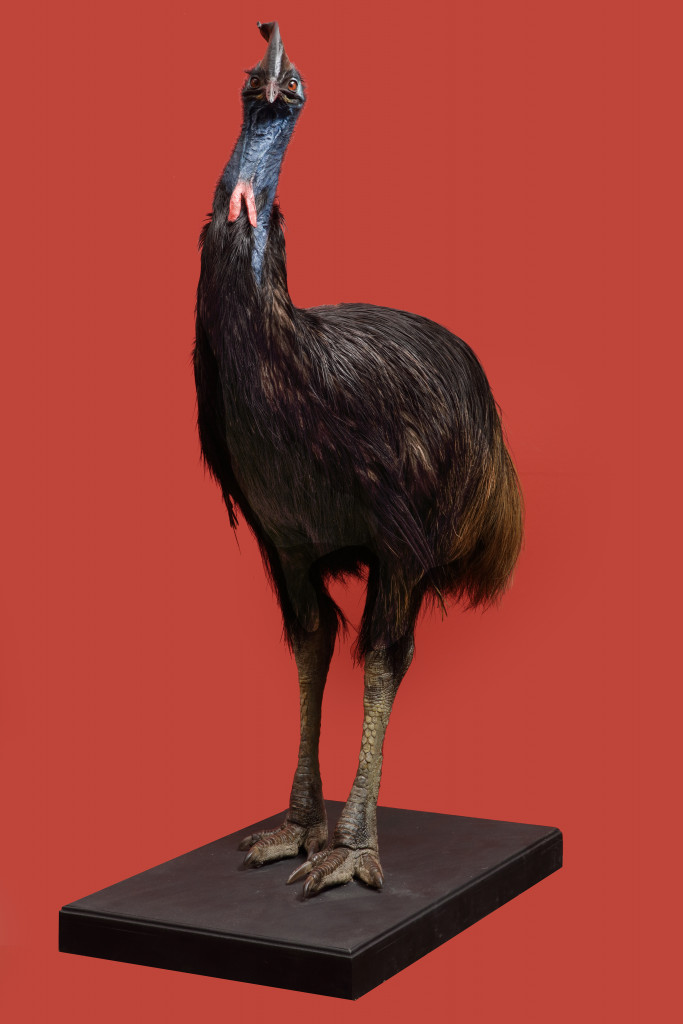
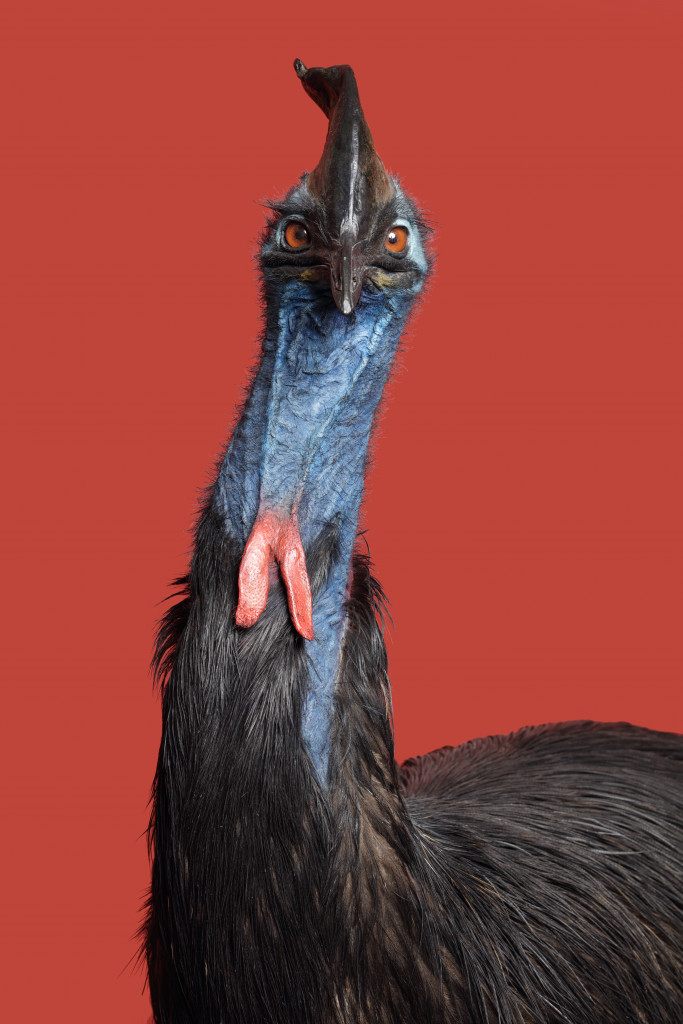
A large taxidermy Southern cassowary (Casuarius casuarius)
The Netherlands, 21st century, died of natural cause in a European zoo
H. 141 cm
Endemic to North-east Australia and Papua-Guinea, the Cassowary is regarded as the most dangerous bird in the world. In extremely urbanised areas where Cassowaries used to naturally live such as in Queensland, Australia, the local Cassowary population had adapted to its less forested grounds. Increasing urbanisation has increased the likelihood of human-cassowary interaction, a potentially dangerous mix. Being very agressive, but not afraid of humans, they often cause lethal damage to unsuspecting people who approach them - especially when they have chicks, which are raised by the male bird.
Houtman’s fleet of four vessels and 249 sailors left Amsterdam in February 1595, and arrived in Banten, a port in northwest Java, on 27 July 1595. Their primary objective was to find spices, but they also picked up a number of other valuable imports, including one large bird known as an “emeu”. Until the middle of the 18th century the cassowary was referred to by Europeans using the Indonesian word emeu. The modern name cassowary is from the Malay kesuari.

The year after their return, one of the Dutch members of the expedition, Willem Lodewycksz, published his diary of their adventures in his Historie van Indien_ (History of East India). He was a keen observer and made sketches to support his written descriptions The book states that on 4 December 1596, the prince of Sidayu (a district of Java) gave a bird named “emeu” to Schellinger, a captain of one of the ships. This bird was said to have come from the Island of Banda. This historic expedition appears to be the first encounter between Europeans and the cassowary.
H. 141 cm
Endemic to North-east Australia and Papua-Guinea, the Cassowary is regarded as the most dangerous bird in the world. In extremely urbanised areas where Cassowaries used to naturally live such as in Queensland, Australia, the local Cassowary population had adapted to its less forested grounds. Increasing urbanisation has increased the likelihood of human-cassowary interaction, a potentially dangerous mix. Being very agressive, but not afraid of humans, they often cause lethal damage to unsuspecting people who approach them - especially when they have chicks, which are raised by the male bird.
Houtman’s fleet of four vessels and 249 sailors left Amsterdam in February 1595, and arrived in Banten, a port in northwest Java, on 27 July 1595. Their primary objective was to find spices, but they also picked up a number of other valuable imports, including one large bird known as an “emeu”. Until the middle of the 18th century the cassowary was referred to by Europeans using the Indonesian word emeu. The modern name cassowary is from the Malay kesuari.

The year after their return, one of the Dutch members of the expedition, Willem Lodewycksz, published his diary of their adventures in his Historie van Indien_ (History of East India). He was a keen observer and made sketches to support his written descriptions The book states that on 4 December 1596, the prince of Sidayu (a district of Java) gave a bird named “emeu” to Schellinger, a captain of one of the ships. This bird was said to have come from the Island of Banda. This historic expedition appears to be the first encounter between Europeans and the cassowary.
Related objects
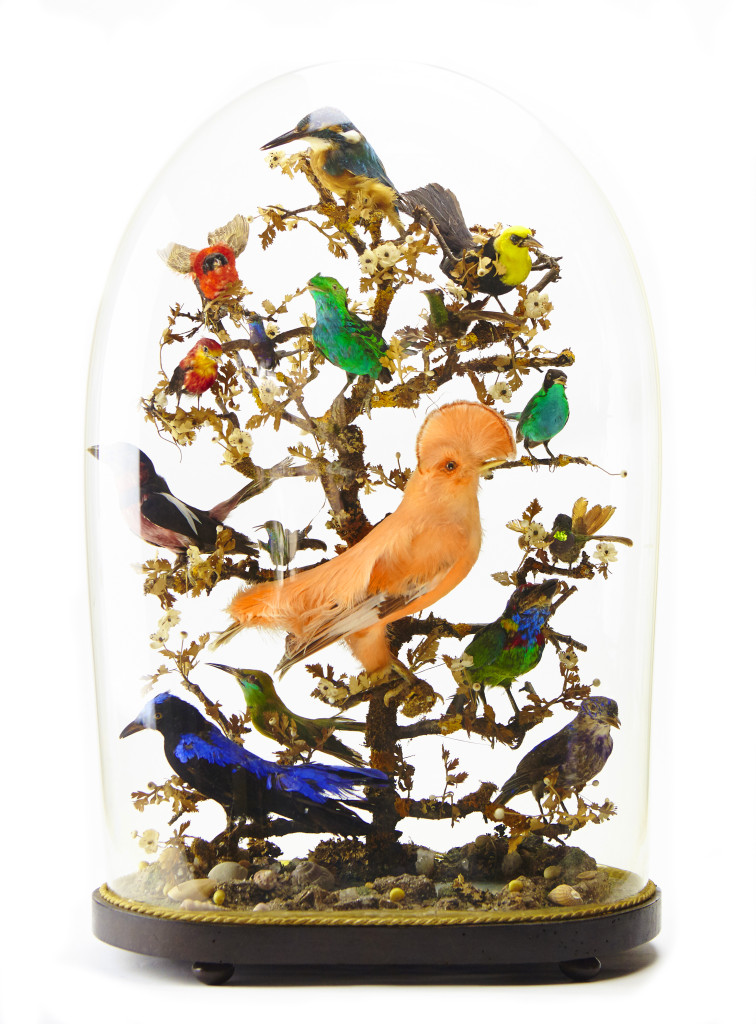
A large French glass dome with Taxidermy tropical birds, a.o. a Cock of the Rock and several Cotinga
A LARGE FRENCH GLASS DOME WITH TAXIDERMY TROPICAL BIRDS, A.O. A COCK OF THE ROCK AND SEVERAL COTINGA
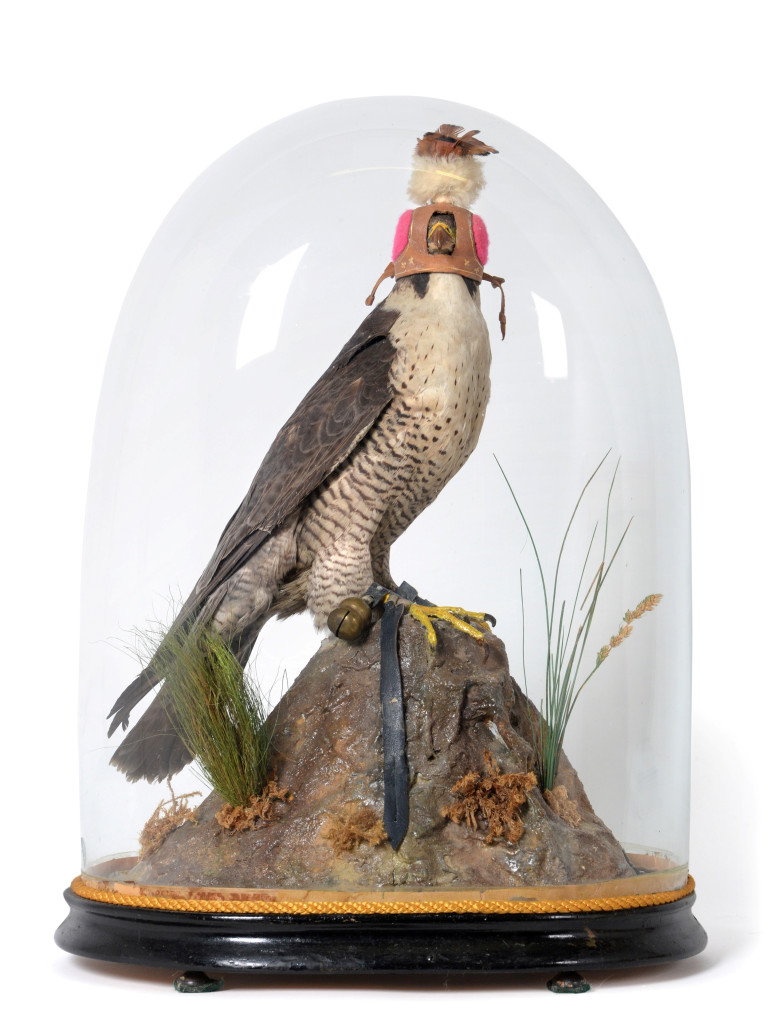
A Victorian Taxidermy hooded Peregrine Falcon
A RARE VICTORIAN TAXIDERMY HOODED PEREGRINE FALCON (FALCO PEREGRINUS)
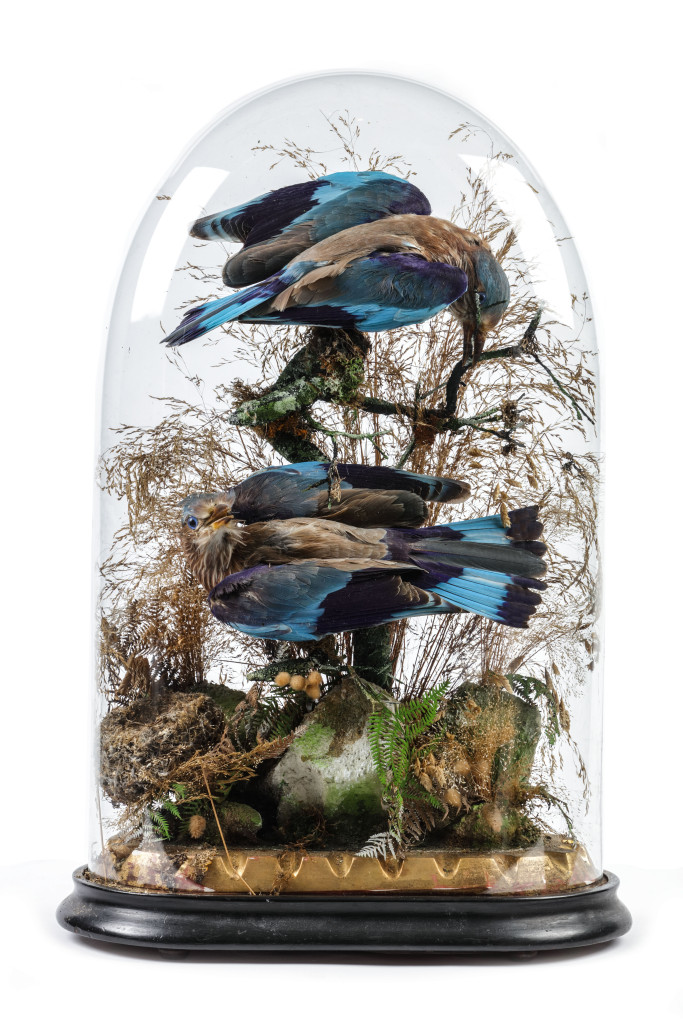
A Victorian taxidermy dome with Indian Roller birds (Coracias benghalensis)
Victorian taxidermy dome with Indian Roller birds (Coracias benghalensis)