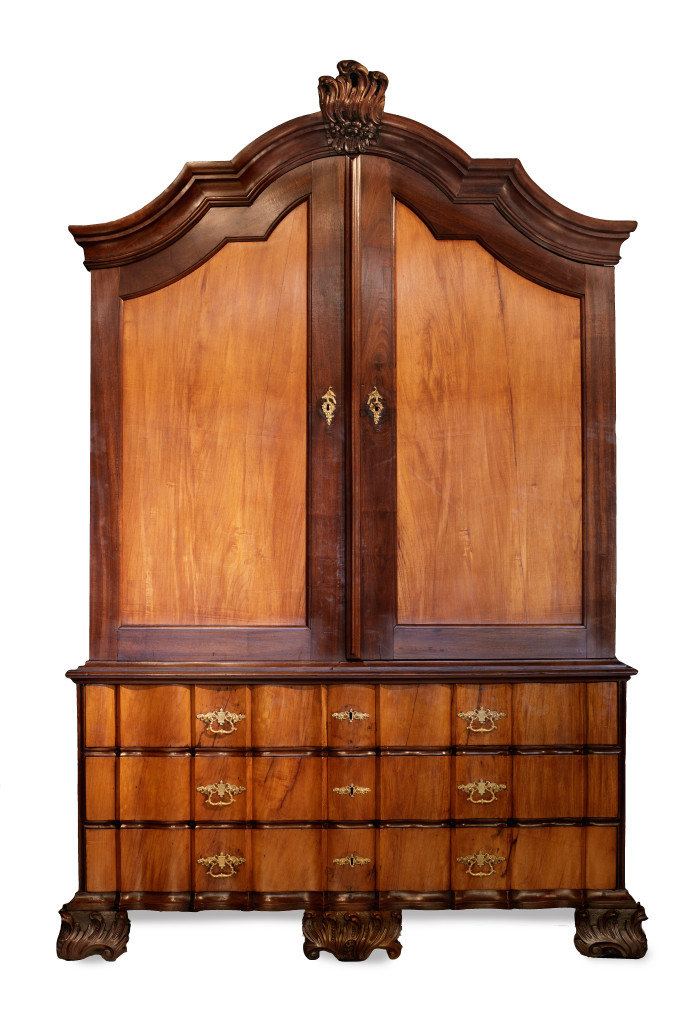
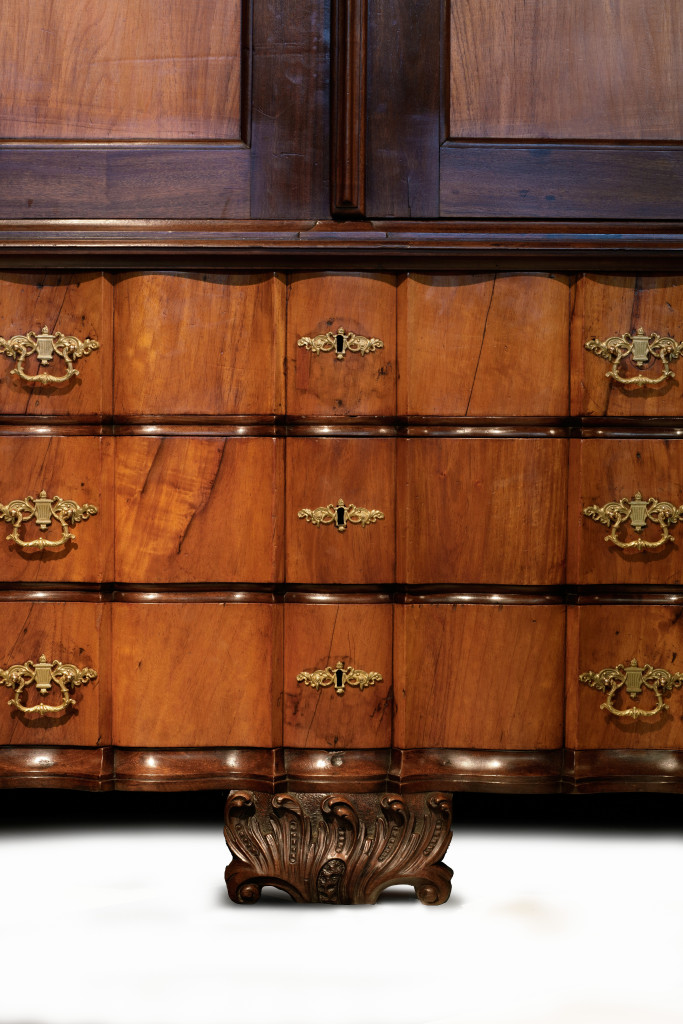
An impressive and important Ambonya, stinkwood and pine Rococo Cape cabinet with Ormolu mounts
With sculpted hood with central rocaille ornament, two plain doors above three large drawers, on rocaille-shaped feet, on wheels, with ormolu mounts.
H. 265 x W. 174 x D. 70 cm
This very large cabinet belongs to the most impressive type of furniture made in the late 18th century at the Cape of Good Hope. These cabinets were made of a combination of indigenous and exotic woods of which stinkwood and amboyna were the most common. Apart from their excessive proportions, they are known for their rich carvings in the gables and feet. The carved elements in the present cabinet are of high quality and obviously the work of an experienced furniture maker. Originally this cabinet probably had silver escutcheons and handles as most of the 18th century Dutch Cape cabinets had.
Part of the Africa collection.
Related objects
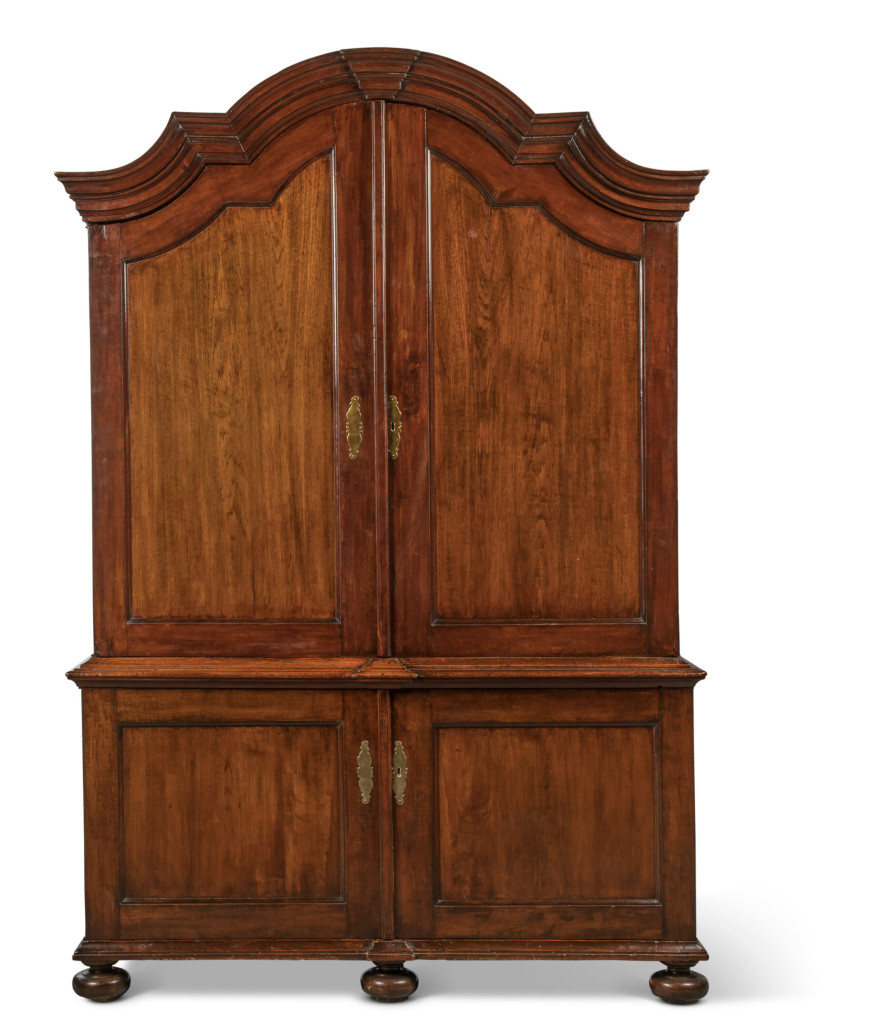
A rare Cape Dutch-colonial stinkwood and yellowwood armoire
Due to the strong French presence at the Cape during the second half of the 18th century, these cabinets have become known as armoires at the Cape, although the model is very much Dutch. The cabinets are often made of a combination of indigenous (such as yellowwood, Podocarpus latifolius and, stinkwood, Ocotea bullata) and exotic timbers. They are characterised by a bold moulded cornice and elaborate carved key-blocks, feet and base apron. Besides their height, the proportions of Cape cabinets are perceived as immense, which made them sought-after status symbols in upper-middle-class households at the Cape in the relatively prosperous second half of the 18th century. But in a society where status, practicality and commercial necessity overlapped, these cabinets also served at times as repositories for stock-in-trade. Often women managed retail businesses from home, and the present rather simple cabinet may have functioned as a store of merchandise in the voorkamer.
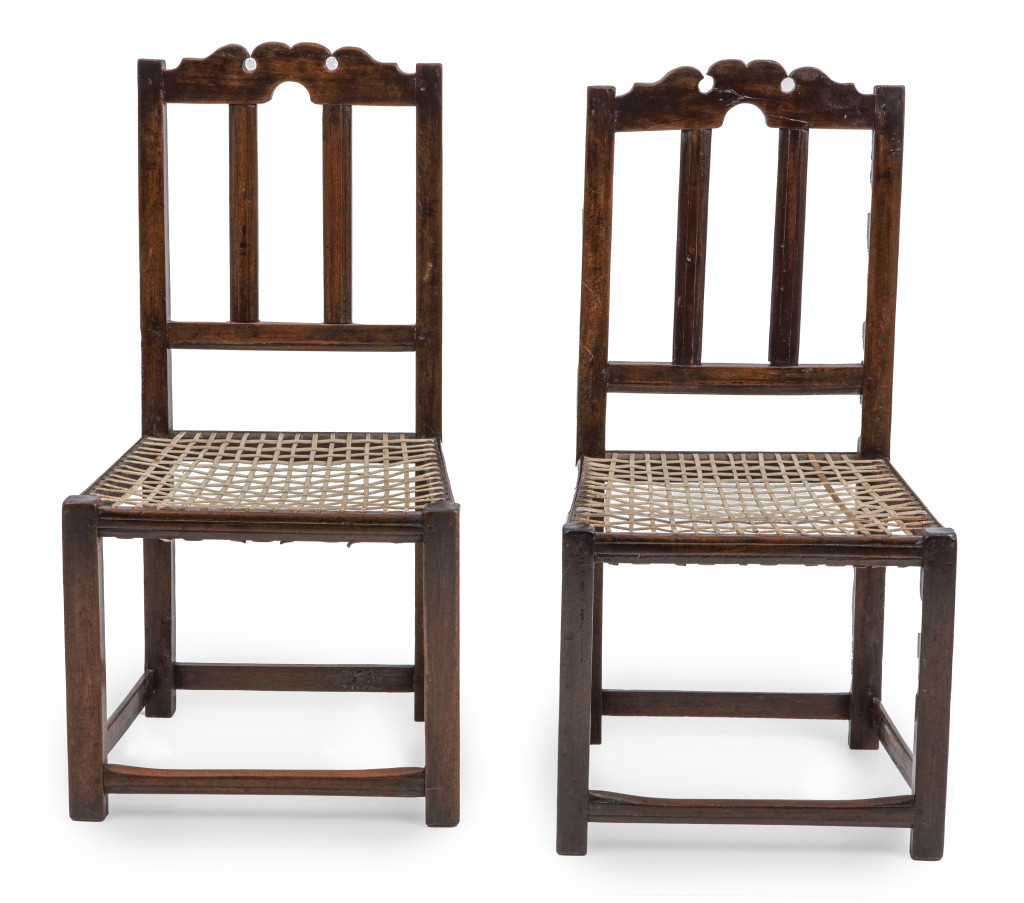
A pair of stinkwood and leather-strip Cape Dutch 'riempie' chairs
The chairs in the so-called Transitional Tulbagh style characterise - as perhaps no other locally-made chairs - a Cape vernacular. The prototype of this chair is the caned high-back chair of the William and Mary period (1690-1705), which was much simplified at the Cape during the first half of the 18th century, becoming a plain country chair with thronging for the seats. The square, upright structure of the chairs is characteristic, with only the shaped crest rail relieving the overall unadorned appearance. This outline was retained as a decorative feature on the backs of settees and chairs until the late 18th century.
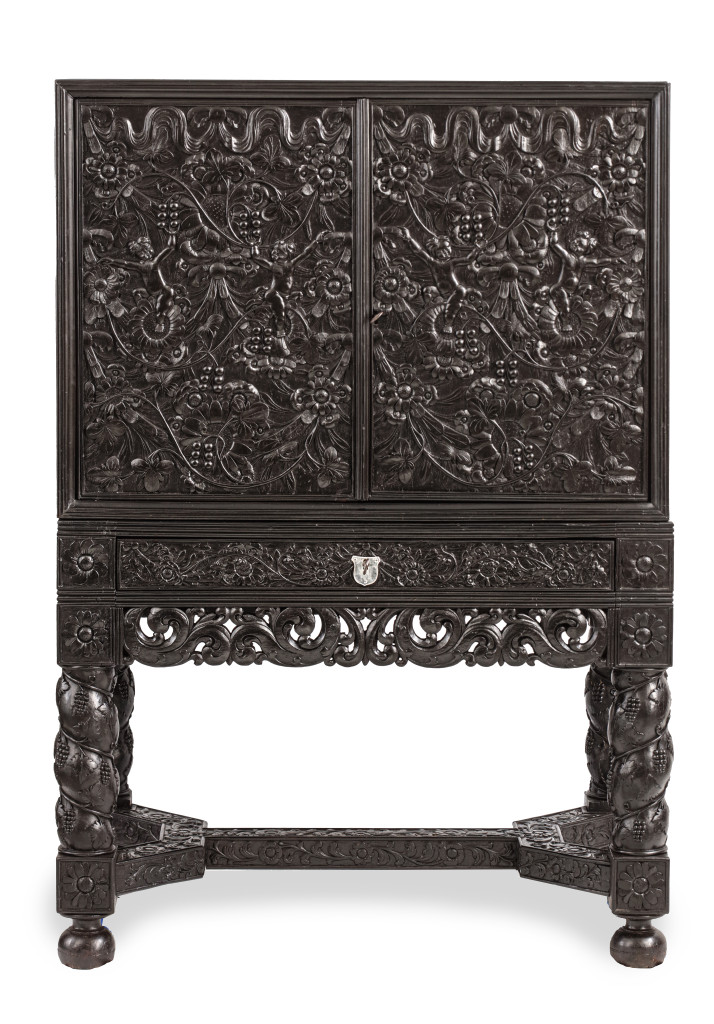
A Dutch-colonial Indonesian ebony cabinet on stand
Indonesian Ebony Cabinet on Stand