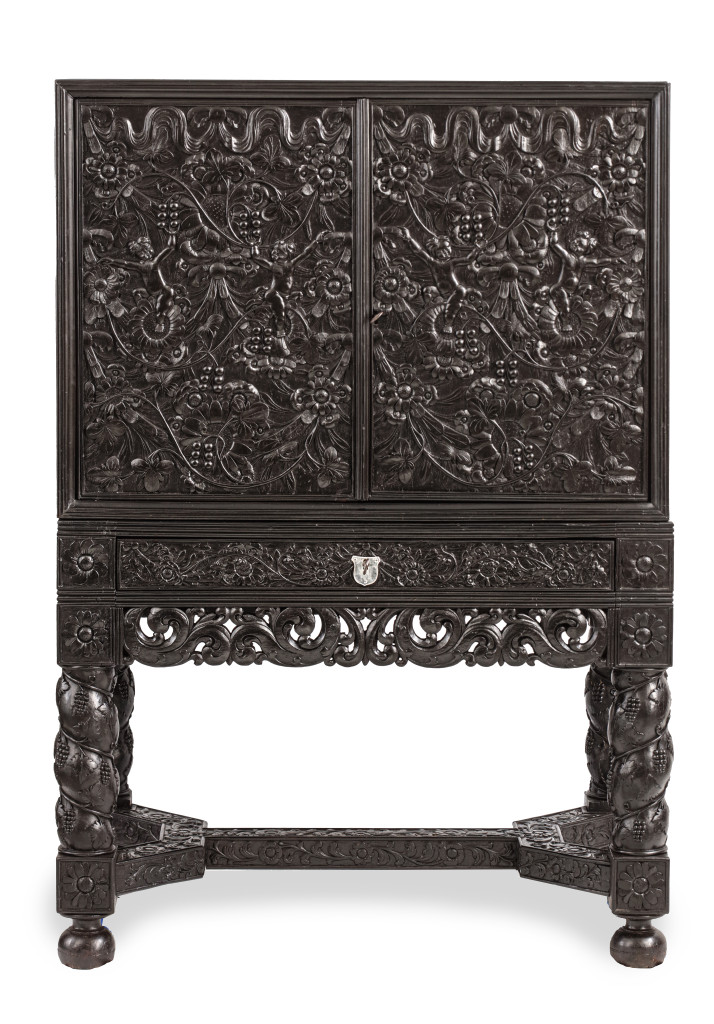
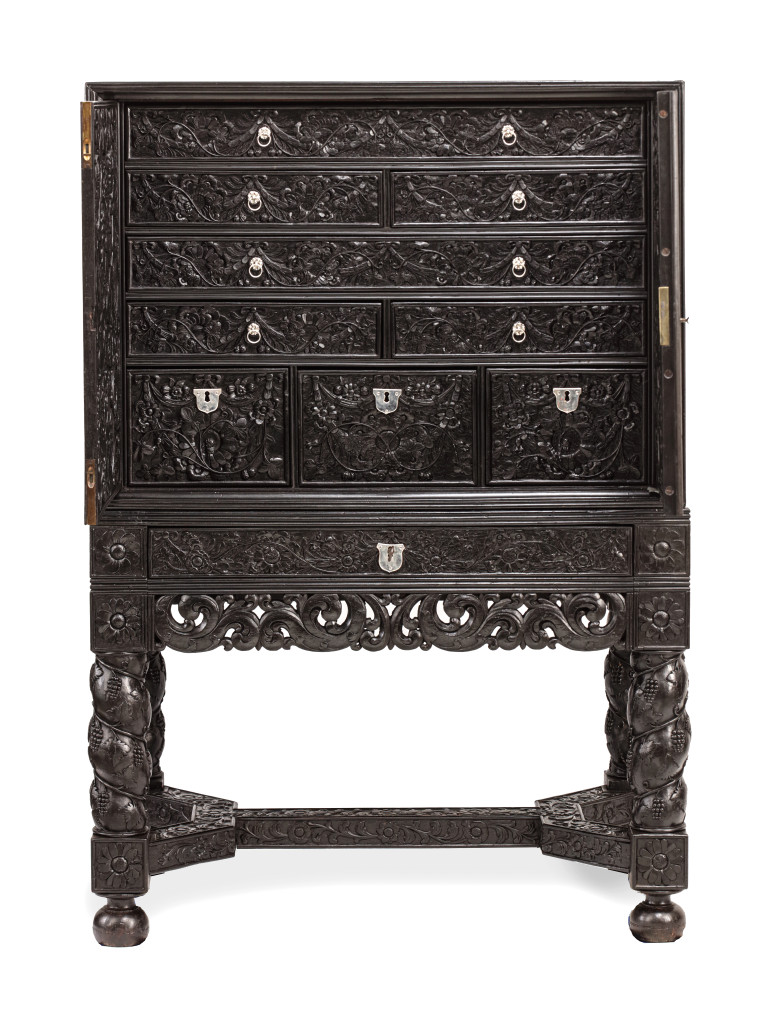
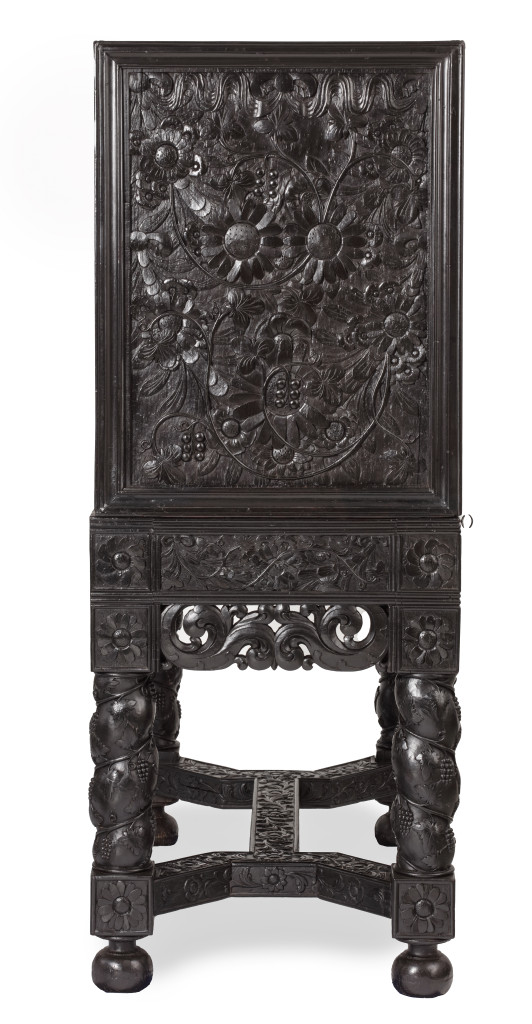
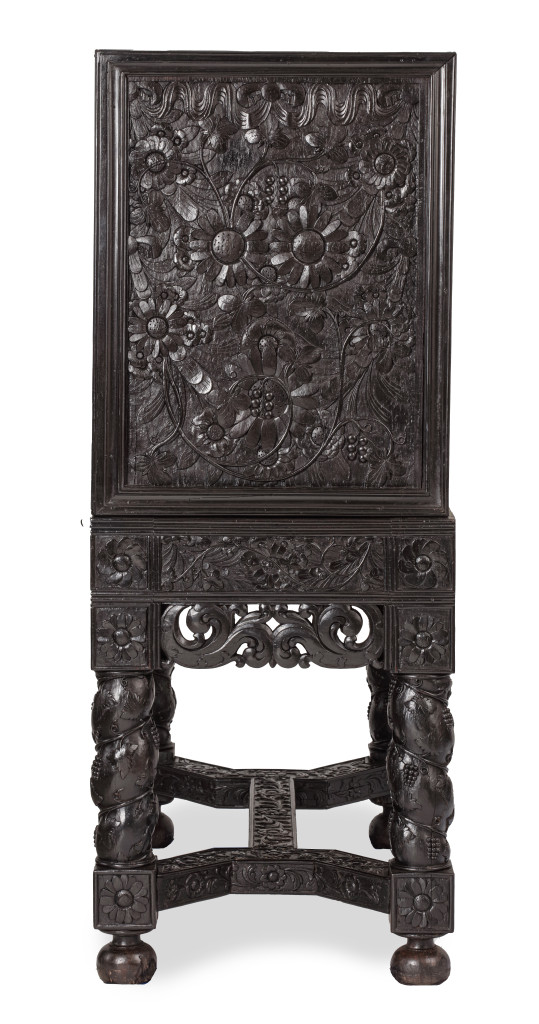
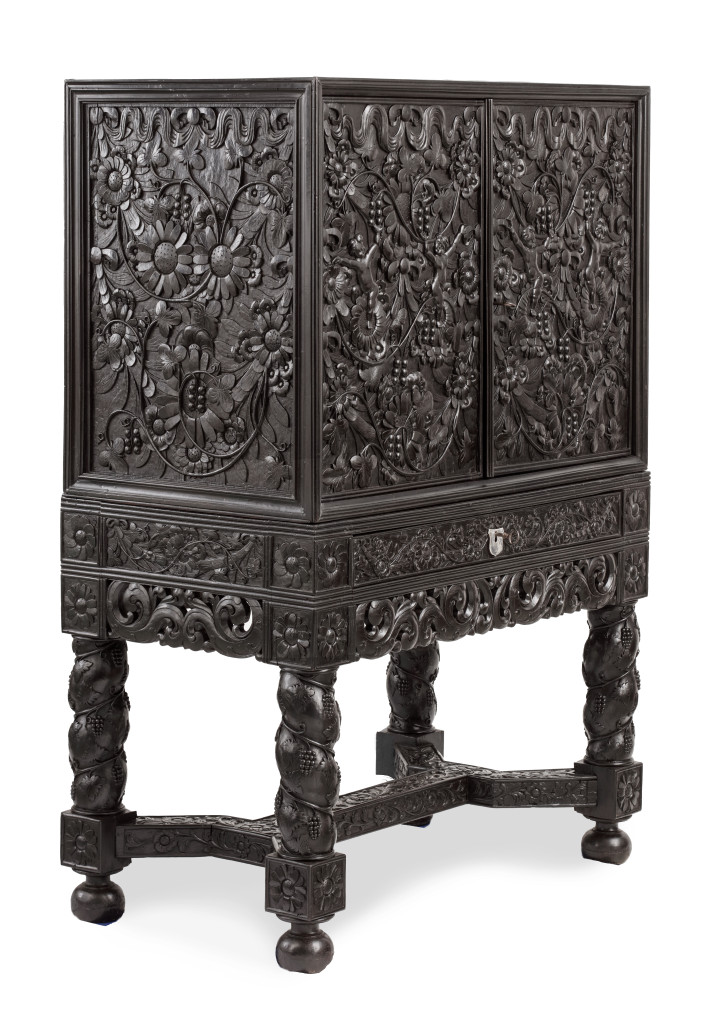
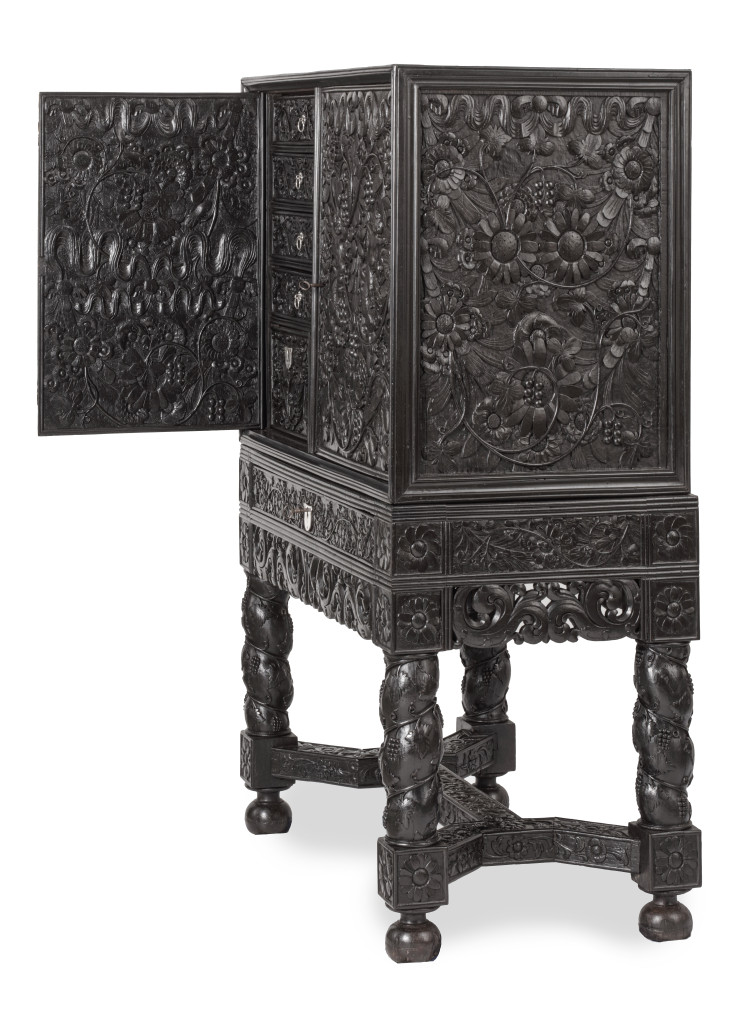
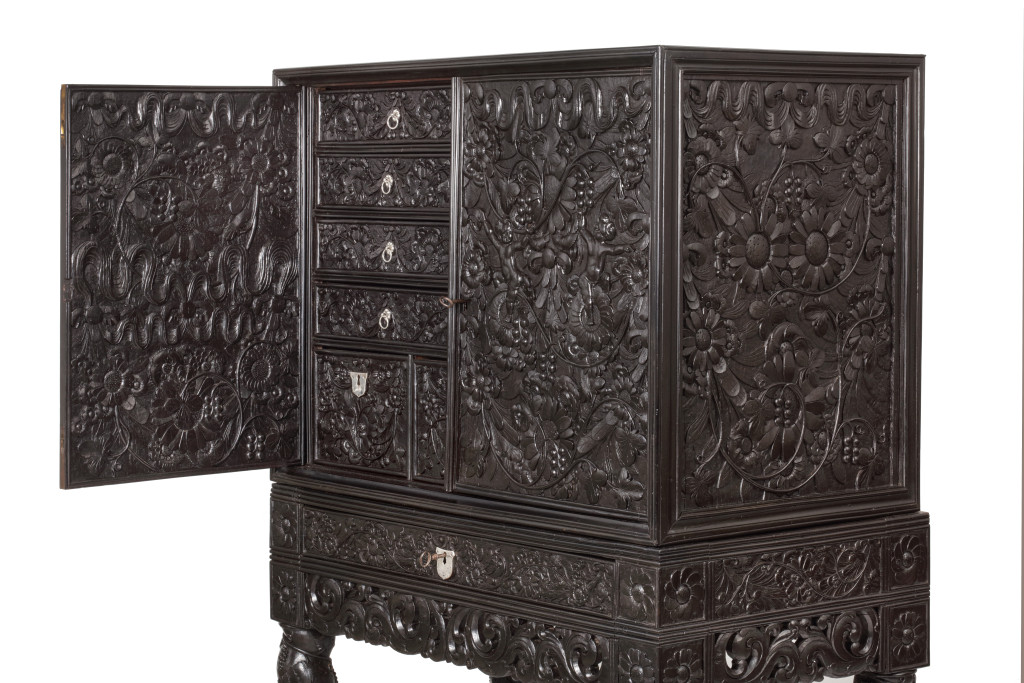
A Dutch-colonial Indonesian ebony cabinet on stand
Jakarta (Batavia), 2nd half 17th century
Made of several hardwoods, including ebony, profusely carved on its sides and top; the doors are carved on both sides; the cabinet has an arrangement of drawers on five levels; the front of these is again carved but in lower relief compared to the carving on the carcass of the cabinet; the carving on the top of the cabinet consists of a garland of flowers under which there are spiralling botanical tendrils that weave around sunflowers; the sides have a ribbon motif on the top under which sunflowers and berries are seen against swirling tendrils. There are heavy and substantial silver handles which are mounted on the sunflower heads; this reveals a level of sophistication seldom seen in these cabinets. The exterior of the doors at the front are a tour de force of both design and execution. The top of each is defined by the ribbon motif continued from that on the sides. Under this is a riot of plant forms, including sunflowers and berries; amidst these are two putti playing amongst the foliage. This is repeated on the other door. The interiors of the doors are unusual as they are also carved. The ribbon motif continues on the top edge, and there is another ribbon in the central portion. The swirling plant motifs are seen throughout. The fronts of the draws are carved in lower relief with the plant and sunflower motifs.
H. 79 x W. 68.5 x D. 53 cm (cabinet)
H. 100 x W. 71.5 x D. 56 cm (stand)
Provenance:
Private collection, South Africa (since the late 19th century); thence by descent
There is a related clothes chest in the Tropenmuseum in Amsterdam, which is illustrated in Hollandsche Koloniale Barokmeubel by Dr V.I.Van De Wall, fig 58. It is described there as unusual for a clothes chest to be decorated in such a manner and that, as the carving would have taken a great deal of time and skill, it was very valuable and could be called unique. Our cabinet must certainly have come from the same workshop as the chest.
Made of several hardwoods, including ebony, profusely carved on its sides and top; the doors are carved on both sides; the cabinet has an arrangement of drawers on five levels; the front of these is again carved but in lower relief compared to the carving on the carcass of the cabinet; the carving on the top of the cabinet consists of a garland of flowers under which there are spiralling botanical tendrils that weave around sunflowers; the sides have a ribbon motif on the top under which sunflowers and berries are seen against swirling tendrils. There are heavy and substantial silver handles which are mounted on the sunflower heads; this reveals a level of sophistication seldom seen in these cabinets. The exterior of the doors at the front are a tour de force of both design and execution. The top of each is defined by the ribbon motif continued from that on the sides. Under this is a riot of plant forms, including sunflowers and berries; amidst these are two putti playing amongst the foliage. This is repeated on the other door. The interiors of the doors are unusual as they are also carved. The ribbon motif continues on the top edge, and there is another ribbon in the central portion. The swirling plant motifs are seen throughout. The fronts of the draws are carved in lower relief with the plant and sunflower motifs.
H. 79 x W. 68.5 x D. 53 cm (cabinet)
H. 100 x W. 71.5 x D. 56 cm (stand)
Provenance:
Private collection, South Africa (since the late 19th century); thence by descent
There is a related clothes chest in the Tropenmuseum in Amsterdam, which is illustrated in Hollandsche Koloniale Barokmeubel by Dr V.I.Van De Wall, fig 58. It is described there as unusual for a clothes chest to be decorated in such a manner and that, as the carving would have taken a great deal of time and skill, it was very valuable and could be called unique. Our cabinet must certainly have come from the same workshop as the chest.
Part of the Indonesian Archipelago collection.
Related objects
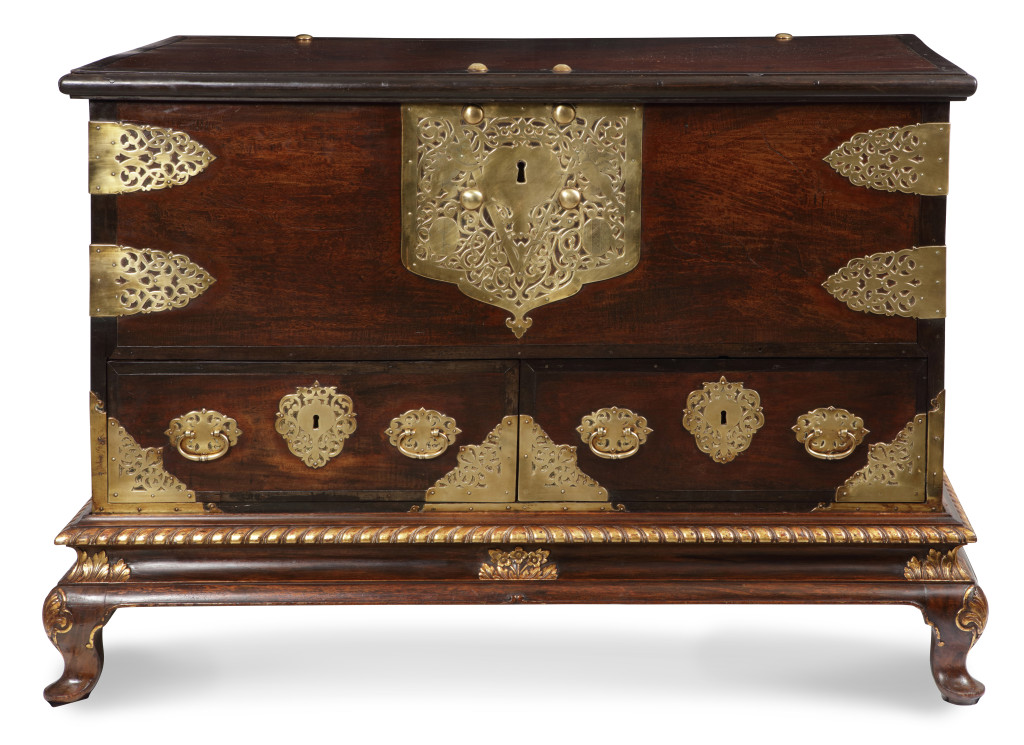
A large Dutch-colonial padouk wood 'VOC' chest on a stand
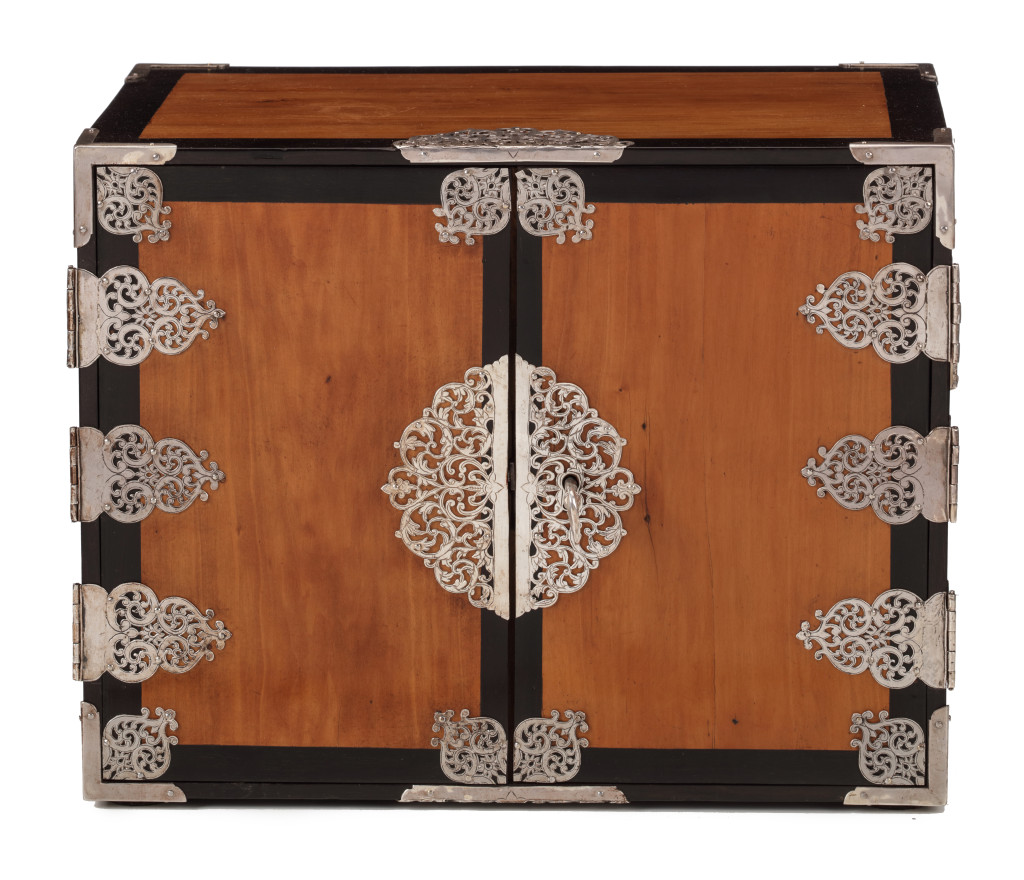
A Dutch-colonial amboyna and ebony collector's cabinet with silver mounts
_Batavia (Jakarta) or Sri Lanka, late 17th/early 18th century_ _H. 29 x W. 37 x D. 23.5 cm_ Provenance: Hague antiques trade Private collection, the Netherlands
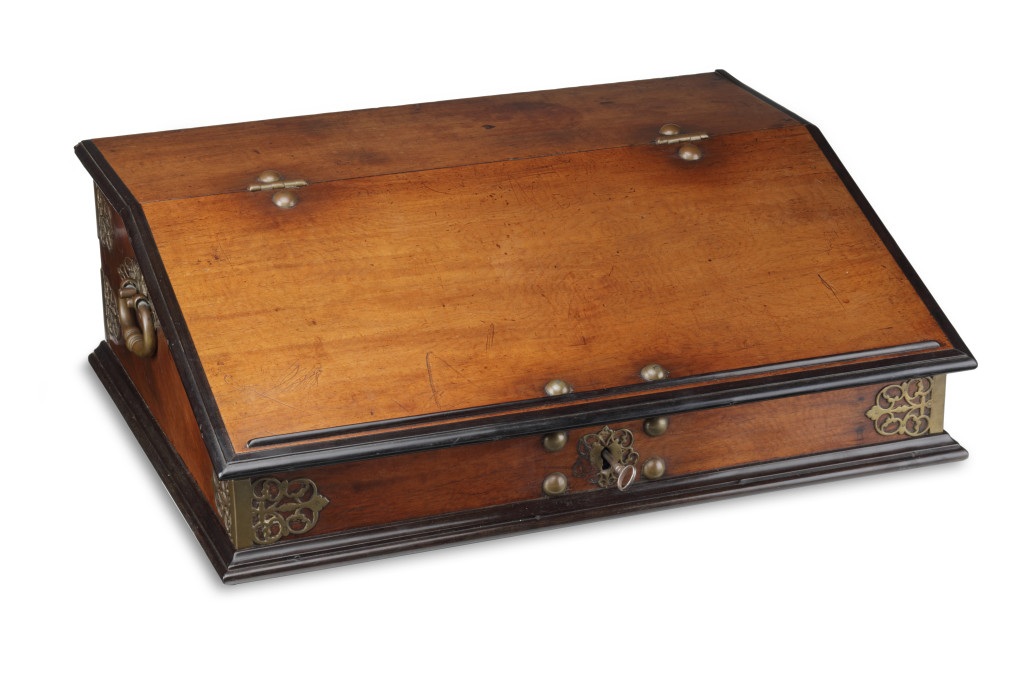
A large Indonesian Amboyna and Ebony portable writing desk with brass mounts
Indonesian Amboyna Ebony writing desk