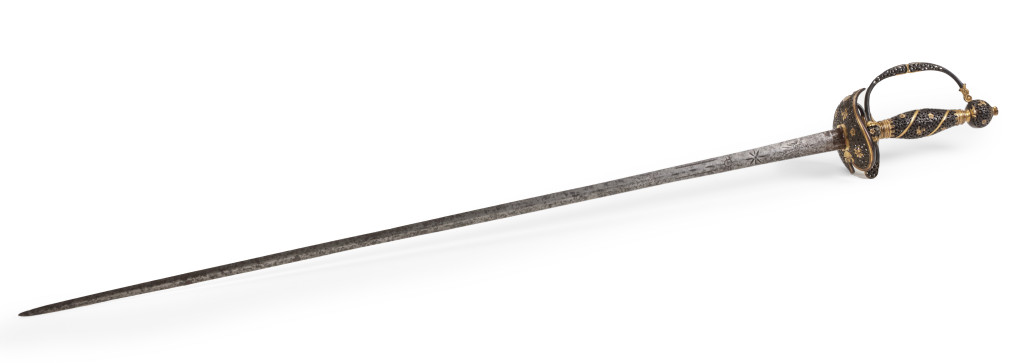
A smallsword with a Japanese sawasa hilt and a Dutch steel blade
Holland and Japan, mid-18th century
L. 90.5 cm
Literature:
Rijksmuseum Amsterdam, Sawasa / Japanese export art in black and gold 1650-1800 , Zwolle, Uitgeverij WBOOKS, 1998
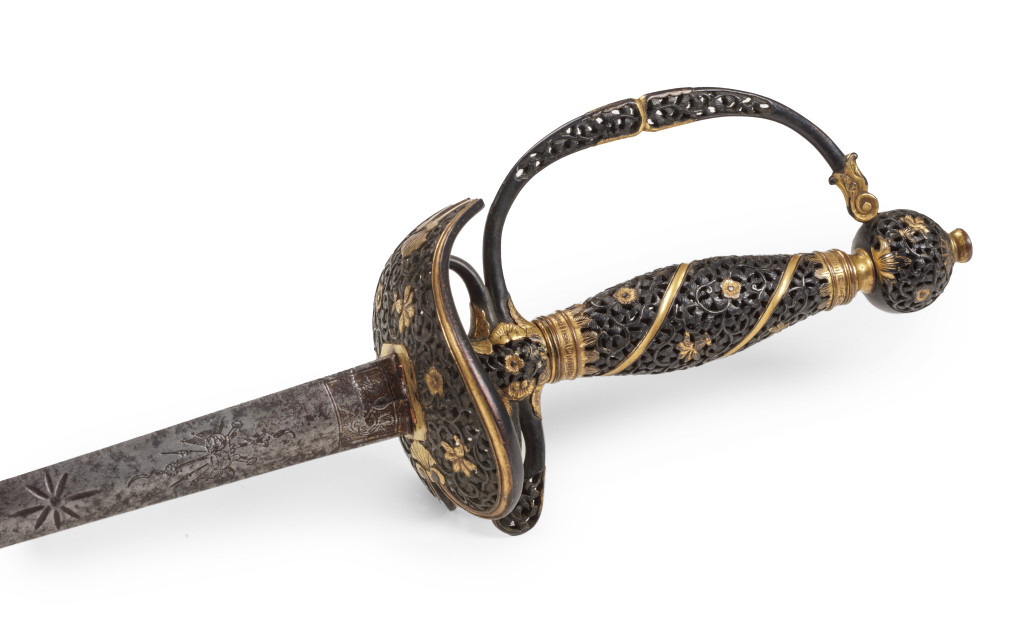
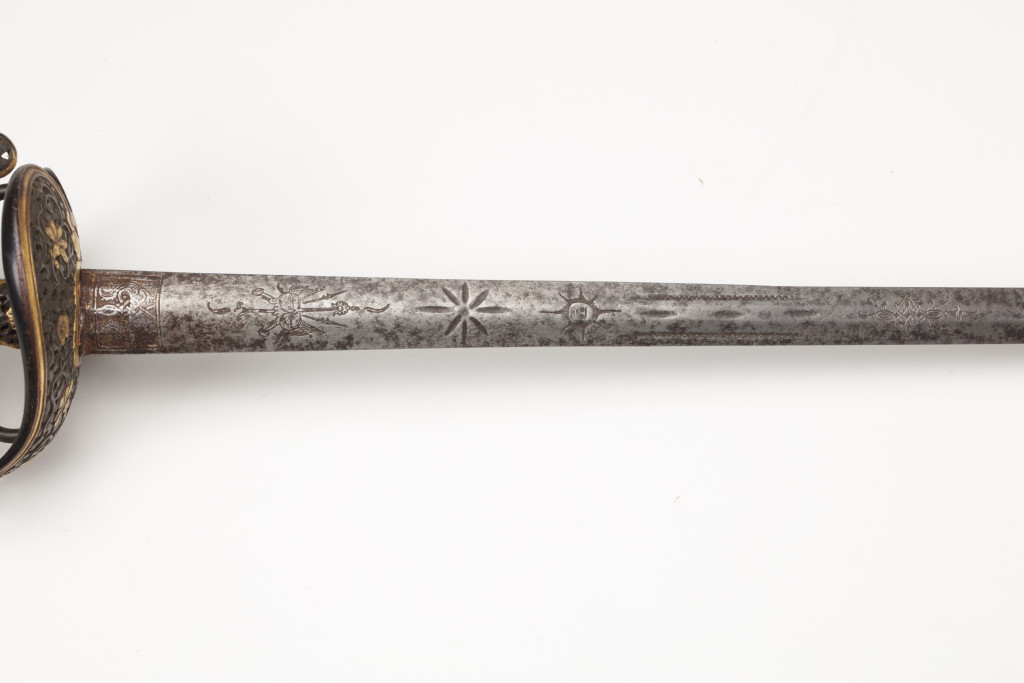
The sawasa hilt, locket, and chape, made of an alloy of copper, silver, gold, zinc, arsenic, chromium, and nickel, consist of separate parts: the pommel, grip, knuckle, guard, guillon and guillon block, and the boat-shaped shell guard, which are decorated with black lacquered open relief with gilt flowers separated by a spiral gilt grove. The double-edged oval European/Dutch blade bears three marks: on top parade symbols, such as drums, flags, and lances; in the middle a ground paternoster; and below a faced sun.
The VOC transported blades from Holland to Batavia (Jakarta), and at first, the blades were mainly of the short, carved type the Dutch preferred for their personal defense. Important officials and those based in Japan had the blades fitted with sawasa hilts. By the mid-18th century, the hanger for personal defense was followed by the smallsword sent to Japan for furbishing with sawasa sword furniture. These smallswords may have been used for the hunt but probably more often during parades.
The Japanese made hilts in a few shapes but with a boundless variety of decorations. In the last quarter of the 18th century, with the VOC's downfall, the sawasaware market disappeared.
L. 90.5 cm
Literature:
Rijksmuseum Amsterdam, Sawasa / Japanese export art in black and gold 1650-1800 , Zwolle, Uitgeverij WBOOKS, 1998
The sawasa hilt, locket, and chape, made of an alloy of copper, silver, gold, zinc, arsenic, chromium, and nickel, consist of separate parts: the pommel, grip, knuckle, guard, guillon and guillon block, and the boat-shaped shell guard, which are decorated with black lacquered open relief with gilt flowers separated by a spiral gilt grove. The double-edged oval European/Dutch blade bears three marks: on top parade symbols, such as drums, flags, and lances; in the middle a ground paternoster; and below a faced sun.
The VOC transported blades from Holland to Batavia (Jakarta), and at first, the blades were mainly of the short, carved type the Dutch preferred for their personal defense. Important officials and those based in Japan had the blades fitted with sawasa hilts. By the mid-18th century, the hanger for personal defense was followed by the smallsword sent to Japan for furbishing with sawasa sword furniture. These smallswords may have been used for the hunt but probably more often during parades.
The Japanese made hilts in a few shapes but with a boundless variety of decorations. In the last quarter of the 18th century, with the VOC's downfall, the sawasaware market disappeared.
Part of the Japan collection.
Related objects
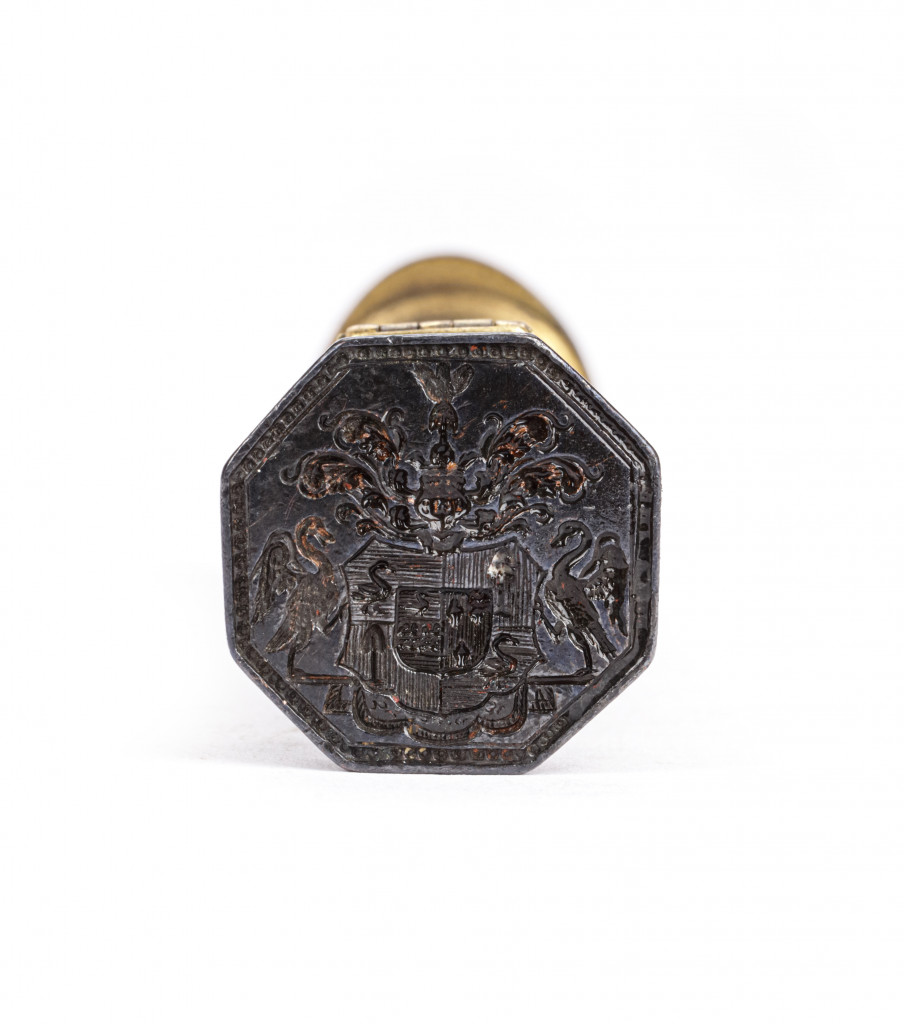
A Sawasa armorial wax container with a seal Japan
A Sawasa armorial wax container with a seal Japan Edo period, mid 18th century
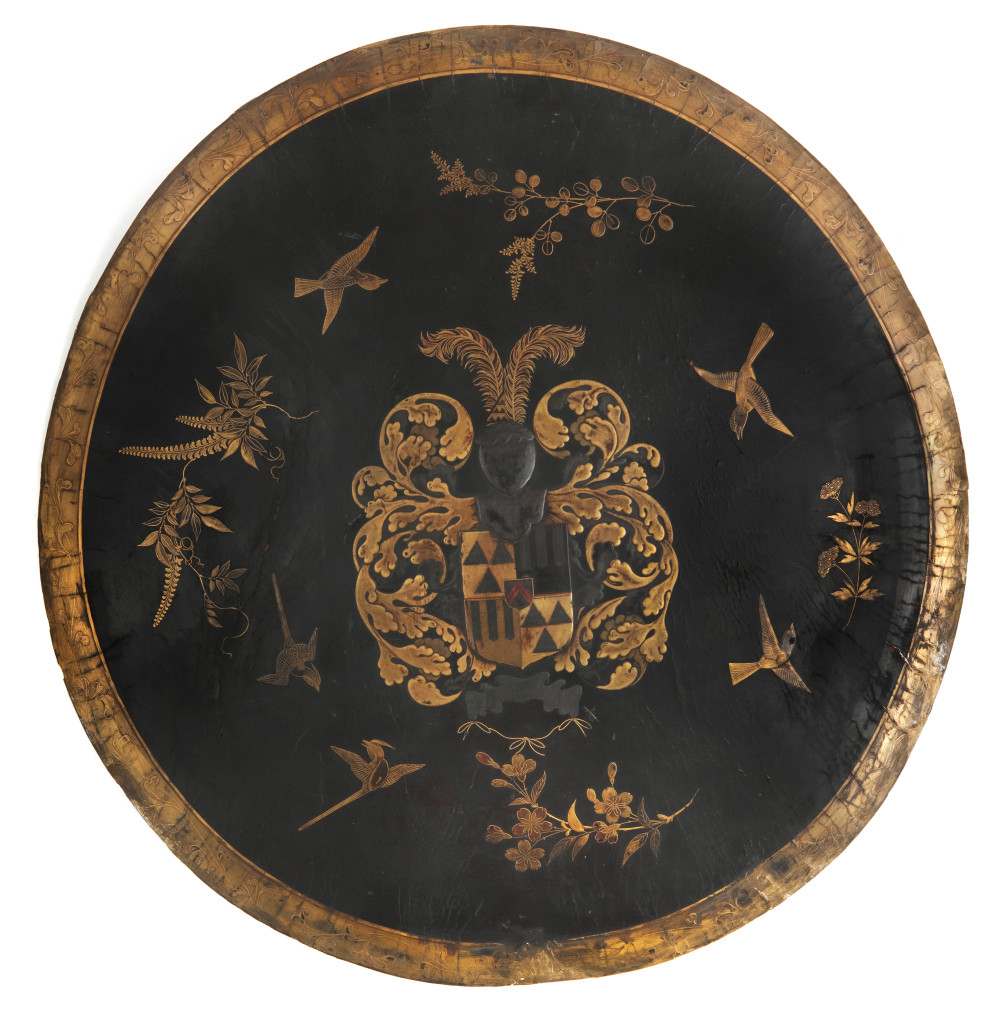
A highly important Japanese export lacquer Indian buffalo shield with the Sweers coat-of-arms, for the Dutch market
Edo period, circa 1690
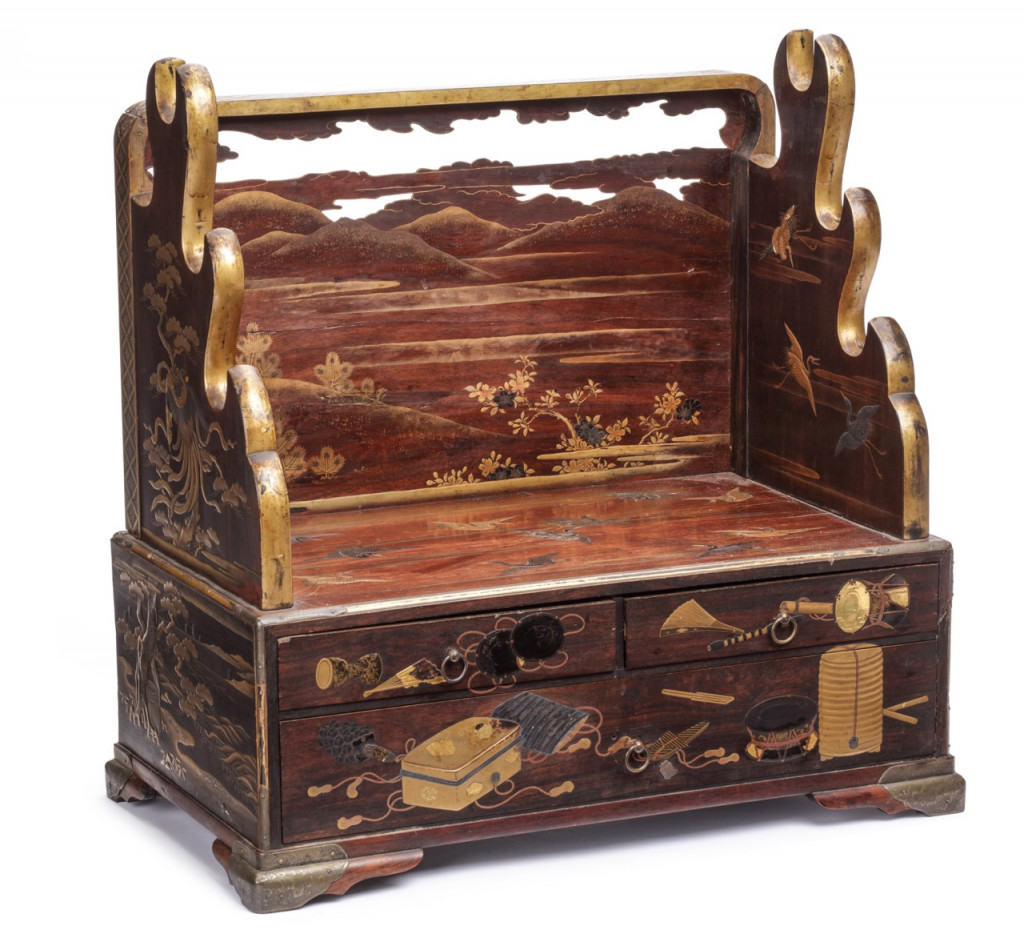
A Japanese lacquer sword stand or katana-kake
The stand has a brown lacquer ground decorated in maki-e. The upper section of the rack shows mountainous landscapes in taka-maki-e with flying black and gold cranes. This scene is most likely a reference to the well-known poem by Minatomo no Yorimasa, which reads: ‘From the beach of Sumiyoshi, gazing through the pine trees at the ocean, the moon casts a shadow over Awaji island.’