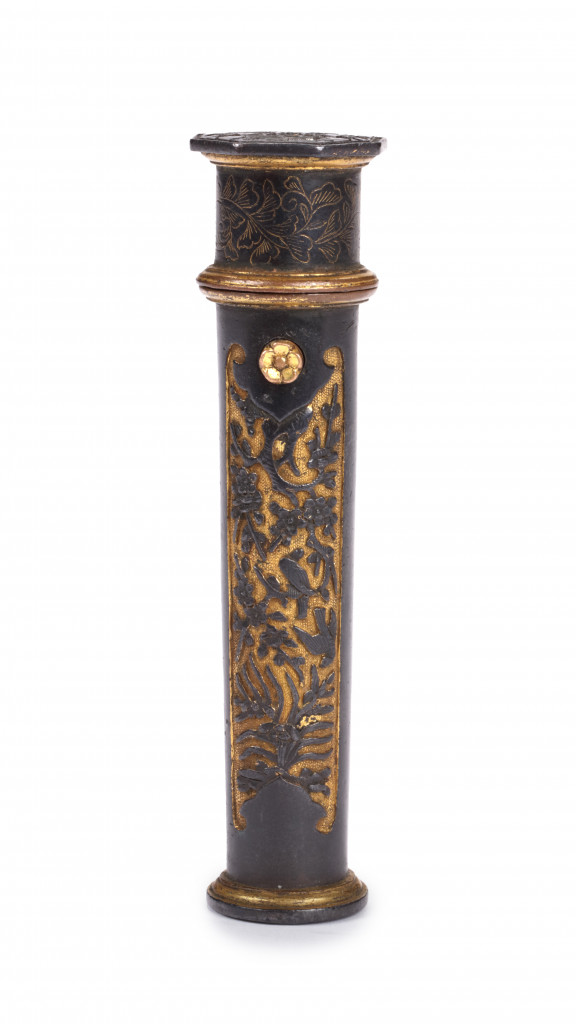
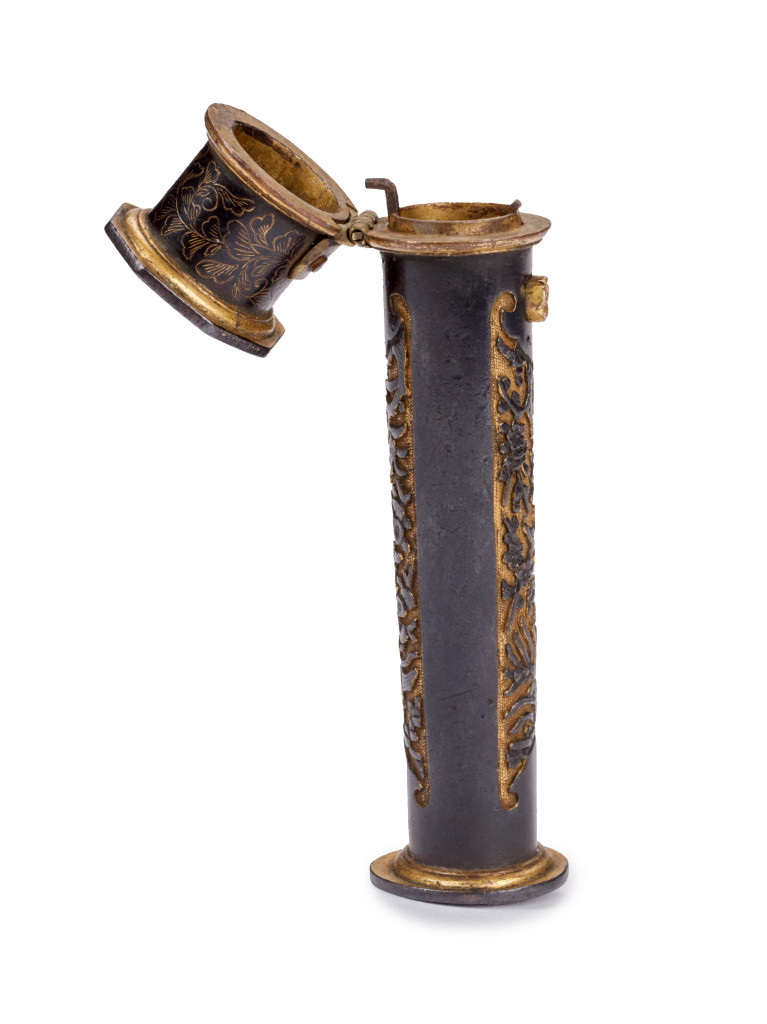
A Sawasa armorial wax container with a seal Japan
Edo period, mid 18th century
L. 9.3 cm
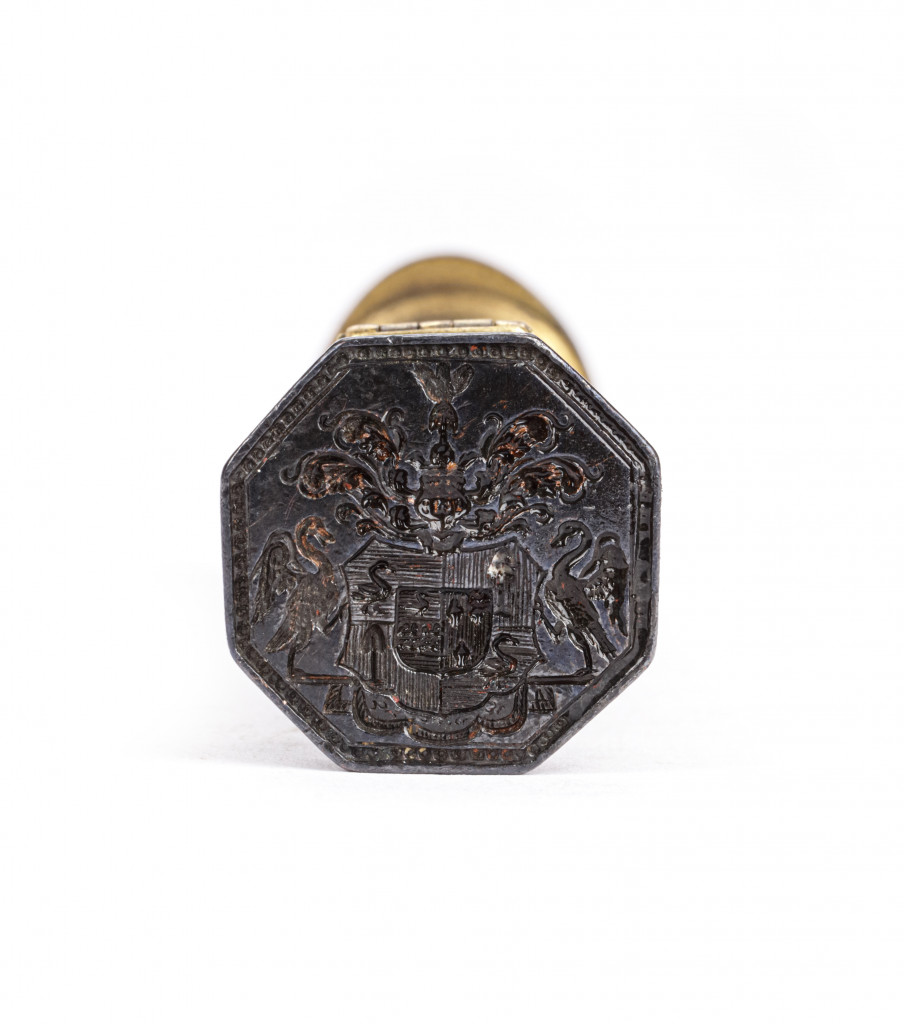
The coat-of-arms, consisting of shovels, swans, lions and rhombus, belongs to Gerrit de Graeff Vrij-heer van de Heerlijkheid Zuid-Polsbroek and Heer van Purmerend en Ilpendam (Amsterdam 1711 – Slot Ilpenstein 1752). Gerrit de Graeff was a Dutch regent from the important patrician De Graeff family, notorious for being rich and for his stinginess. Gerrit had a famous art collection but is supposed to have silently sold his family portraits; his ancestor Andries de Graeff (1611-1678) a very powerful member of the Amsterdam patriciate and seven times mayor of the city, painted by Rembrandt in 1639, and the painting 'Jacob Blessing the Sons of Joseph’, the sitters being Wendela de Graeff (niece of Andries and wife of 'Raad-Pensionaris of Holland, Johan de Witt) and her two sons, also painted by Rembrandt. The paintings were sold for a large sum to an art dealer in Hamburg who sold them to the great art collector William VIII Landgrave of Hesse- Cassel (1682-1760). Since Gerrit couldn’t allow himself to be known to barter away important family portraits, they were sold as an 'anonymous portrait of a man’ and another 'anonymous painting.’ Now these Rembrandt paintings are in the Wilhelmhöhe in Kassel.
His family owned a house on the Herengracht in Amsterdam (until recently Het Tassenmuseum), castle Ilpenstein near Ilpendam, and Bronstee, a country estate near Heemstede. Gerrit studied law in Leiden where he graduated in 1732. He married twice, first with Maria Elisabeth Sautijn (1709-1736), daughter of the Amsterdam burgomaster Jan Sautijn (1680-1750) and Catharina Munster (1684-1768). In this marriage Joan de Graeff was born, who died 19 years old.
The second marriage was with Elisabeth Lestevenon (1716-1766), daughter of Abraham Lestevenon
and Geertruid de Vroede, and sister of Mattheus Lestevenon, Dutch ambassador to France. In this marriage six children were born; three of them died young.
In 1736 Gerrit became one of the 'Heren Zeventien’ of the VOC, the Dutch East India Company, and a year later he was also appointed as one of the 'Heren Negentien’ of the WIC, the Dutch West India Company. In 1737 he became member of the 'vroedschap’, the city council of Amsterdam, and captain of the 'schutterij’. From 1748 till his death in 1752 he was one of the directors of the Company of Suriname and commissaris in Noorderkwartier.
L. 9.3 cm
The coat-of-arms, consisting of shovels, swans, lions and rhombus, belongs to Gerrit de Graeff Vrij-heer van de Heerlijkheid Zuid-Polsbroek and Heer van Purmerend en Ilpendam (Amsterdam 1711 – Slot Ilpenstein 1752). Gerrit de Graeff was a Dutch regent from the important patrician De Graeff family, notorious for being rich and for his stinginess. Gerrit had a famous art collection but is supposed to have silently sold his family portraits; his ancestor Andries de Graeff (1611-1678) a very powerful member of the Amsterdam patriciate and seven times mayor of the city, painted by Rembrandt in 1639, and the painting 'Jacob Blessing the Sons of Joseph’, the sitters being Wendela de Graeff (niece of Andries and wife of 'Raad-Pensionaris of Holland, Johan de Witt) and her two sons, also painted by Rembrandt. The paintings were sold for a large sum to an art dealer in Hamburg who sold them to the great art collector William VIII Landgrave of Hesse- Cassel (1682-1760). Since Gerrit couldn’t allow himself to be known to barter away important family portraits, they were sold as an 'anonymous portrait of a man’ and another 'anonymous painting.’ Now these Rembrandt paintings are in the Wilhelmhöhe in Kassel.
His family owned a house on the Herengracht in Amsterdam (until recently Het Tassenmuseum), castle Ilpenstein near Ilpendam, and Bronstee, a country estate near Heemstede. Gerrit studied law in Leiden where he graduated in 1732. He married twice, first with Maria Elisabeth Sautijn (1709-1736), daughter of the Amsterdam burgomaster Jan Sautijn (1680-1750) and Catharina Munster (1684-1768). In this marriage Joan de Graeff was born, who died 19 years old.
The second marriage was with Elisabeth Lestevenon (1716-1766), daughter of Abraham Lestevenon
and Geertruid de Vroede, and sister of Mattheus Lestevenon, Dutch ambassador to France. In this marriage six children were born; three of them died young.
In 1736 Gerrit became one of the 'Heren Zeventien’ of the VOC, the Dutch East India Company, and a year later he was also appointed as one of the 'Heren Negentien’ of the WIC, the Dutch West India Company. In 1737 he became member of the 'vroedschap’, the city council of Amsterdam, and captain of the 'schutterij’. From 1748 till his death in 1752 he was one of the directors of the Company of Suriname and commissaris in Noorderkwartier.
Related objects
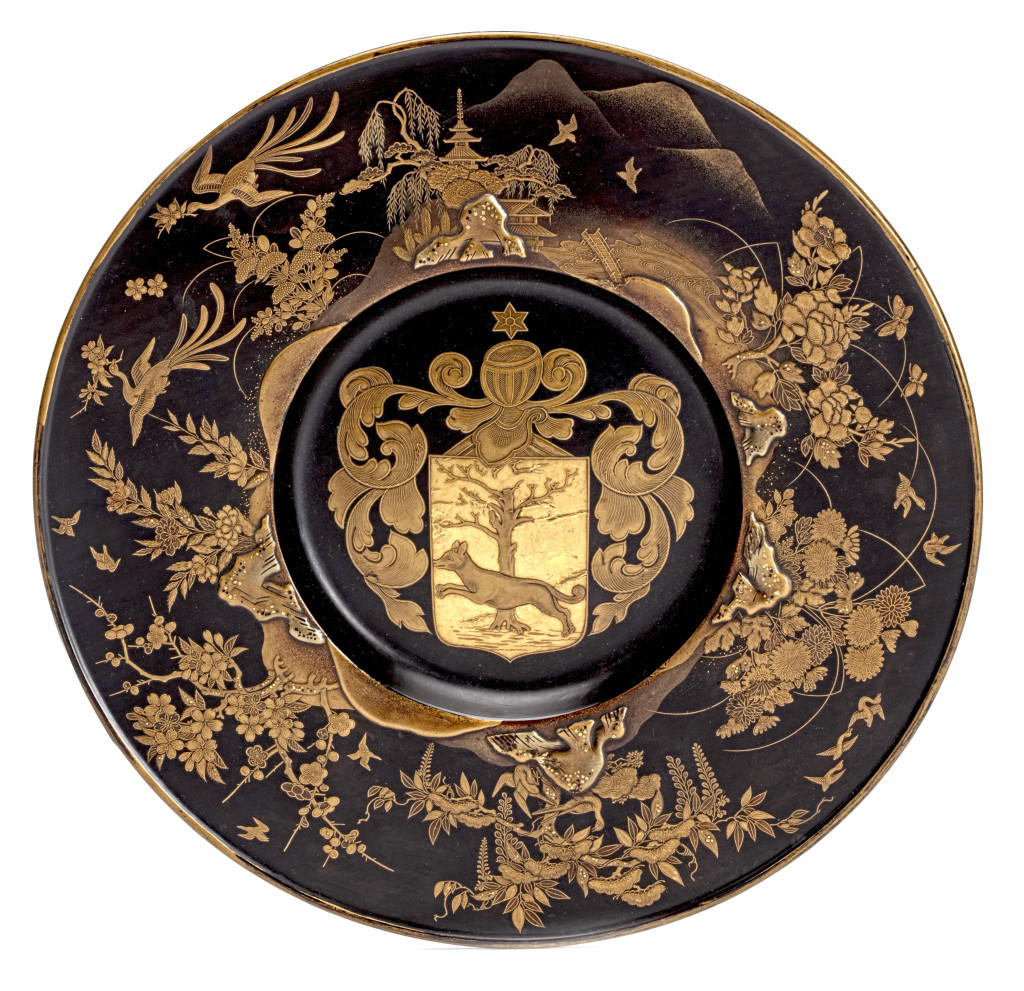
A rare Japanese export lacquer armorial dish with the coat-of-arms of Pieter de Vos
From Japan, dating from the Edo period, c. 1699, in black lacquer rioro ground, the rim decorated with landscapes, mountains, a pagoda, birds, phoenixes, and flowering trees and plants, the centre with the coat of arms of Pieter de Vos, in hiramaki-e, takamakie, gold and silver kirikane and uchikomi.
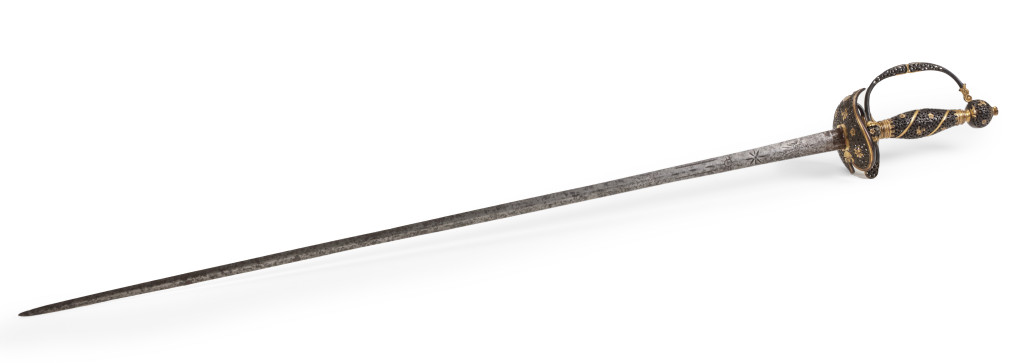
A smallsword with a Japanese sawasa hilt and a Dutch steel blade
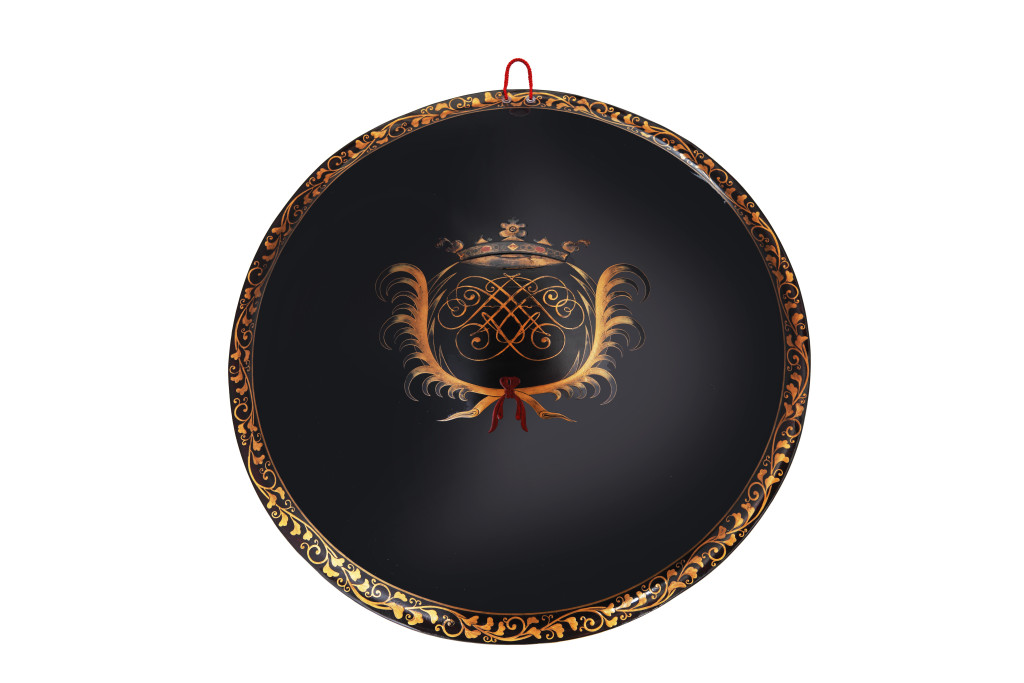
An extremely rare circular Japanese Armorial Lacquer Shield for the Dutch market with initials
17th century