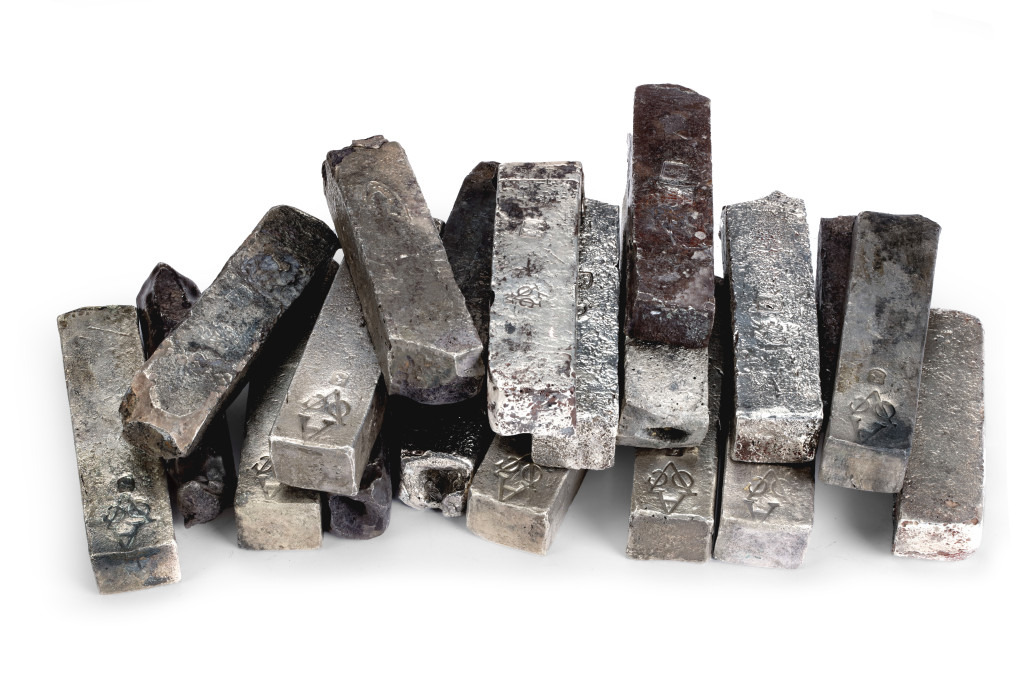
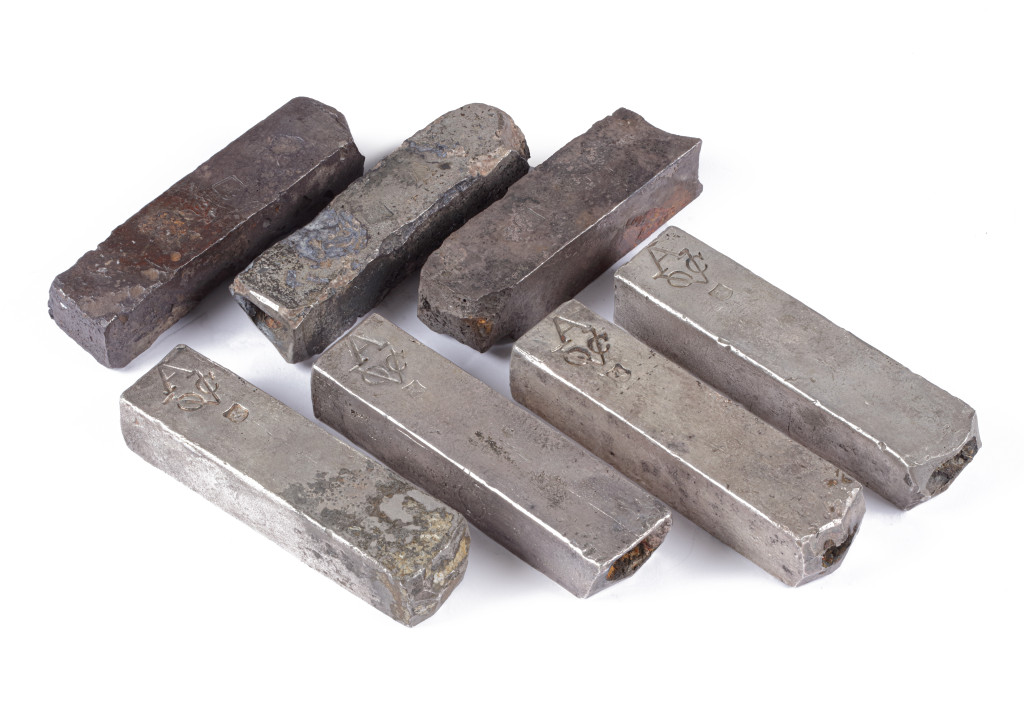
A collection of VOC silver ingots
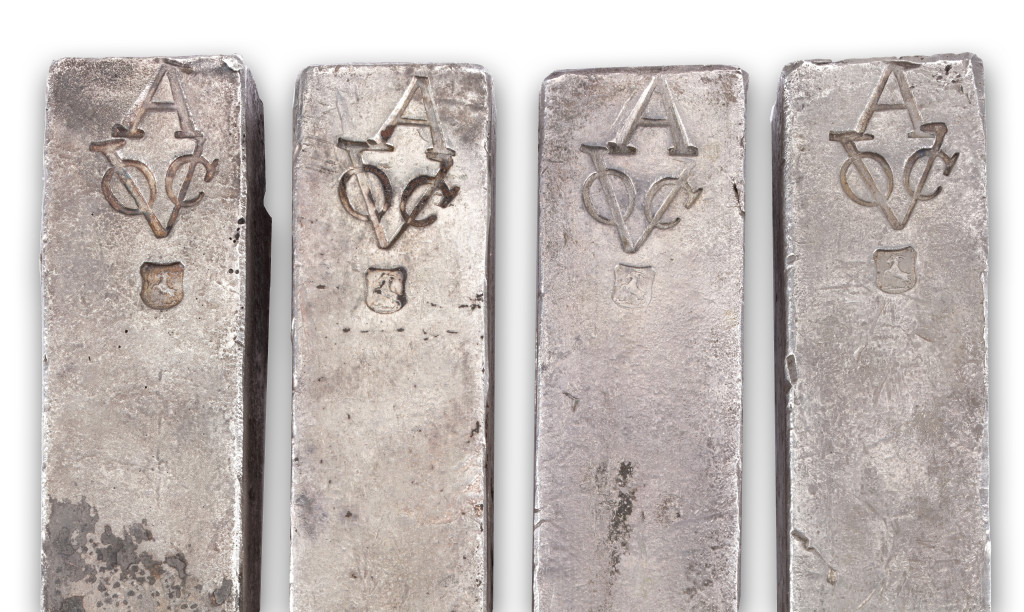
Eleven stamped with VOC Amsterdam monogram, and with the Amsterdam assayer’s hallmark of the Grill family, silver assayers in Amsterdam, circa 1738
Weight approx. 1960 grams
All bars are 98.7% pure silver
Eleven stamped with the VOC Zeeland/Middelburg monogram, with the Middelburg assayer’s hallmark of François Engelsen or with the assayer’s hallmark of Gerrit van Driel
Weight approx. 1700 grams
All bars are 98.7% pure silver
The Amsterdam ingots were salvaged in 2004 from the wreck of the VOC East-Indiaman Rooswijk of the Amsterdam VOC Chamber. She sank on her second voyage to the Dutch East Indies off the English coast on the Goodwin Sands in 1739. The Dutch had little to offer in Asia but silver and gold. Therefore, VOC ships had to sail to Asia with silver and gold bars to pay for Asian goods. The bars were cast in private factories, run by assayers, from melted-down silver coins, mainly Spanish-American ‘reales’. Once in Asia, these bars were melted down again and minted into coins and silver objects that could be used to pay for purchases or as diplomatic gifts in the East.
The Grill family originated from Genoa, their name comes from the Italian Grillo, meaning cricket, and the family’s coat-of-arms displays a crane holding a cricket in its beak. Part of the family moved to Augsburg and Amsterdam where they became gold- and silversmiths. Some moved on to Sweden to become one of the wealthiest merchant families in Stockholm in the 18th century, having significant influence within the Swedish East India Company (SOIC).
The Middelburg ingots were salvaged in 1986 from the wreck of the VOC East-Indiaman Bredenhof of the Middelburg VOC Chamber, heading for India and wrecked the 6th of June 1753 on a reef about 13 miles off the coast of Mozambique. The Bredenhof carried 29 crates with silver bars and a crate with 5000 gold ducats. To prevent looting the crew dropped the boxes containing the silver bars overboard, expecting to recover them later, and took the gold with them ashore. Attempts to recover the lost silver in 1754 and again in 1755 failed. The boxes falling on the reef broke and the silver bars moved about by the currents on the reef and in the sand lost weight and shape through abrasion. On
a few bars, some of the very first bars brought to the surface in May 1986, a small drill test has been performed on the side for metallurgical assessment. In addition, the year of the find and the registration number have been punched. Silversmith François Engelsen jr. (1694-1754) was Dean of the Guild of Silversmiths in Middelburg in 1752.
Weight approx. 1960 grams
All bars are 98.7% pure silver
Eleven stamped with the VOC Zeeland/Middelburg monogram, with the Middelburg assayer’s hallmark of François Engelsen or with the assayer’s hallmark of Gerrit van Driel
Weight approx. 1700 grams
All bars are 98.7% pure silver
The Amsterdam ingots were salvaged in 2004 from the wreck of the VOC East-Indiaman Rooswijk of the Amsterdam VOC Chamber. She sank on her second voyage to the Dutch East Indies off the English coast on the Goodwin Sands in 1739. The Dutch had little to offer in Asia but silver and gold. Therefore, VOC ships had to sail to Asia with silver and gold bars to pay for Asian goods. The bars were cast in private factories, run by assayers, from melted-down silver coins, mainly Spanish-American ‘reales’. Once in Asia, these bars were melted down again and minted into coins and silver objects that could be used to pay for purchases or as diplomatic gifts in the East.
The Grill family originated from Genoa, their name comes from the Italian Grillo, meaning cricket, and the family’s coat-of-arms displays a crane holding a cricket in its beak. Part of the family moved to Augsburg and Amsterdam where they became gold- and silversmiths. Some moved on to Sweden to become one of the wealthiest merchant families in Stockholm in the 18th century, having significant influence within the Swedish East India Company (SOIC).
The Middelburg ingots were salvaged in 1986 from the wreck of the VOC East-Indiaman Bredenhof of the Middelburg VOC Chamber, heading for India and wrecked the 6th of June 1753 on a reef about 13 miles off the coast of Mozambique. The Bredenhof carried 29 crates with silver bars and a crate with 5000 gold ducats. To prevent looting the crew dropped the boxes containing the silver bars overboard, expecting to recover them later, and took the gold with them ashore. Attempts to recover the lost silver in 1754 and again in 1755 failed. The boxes falling on the reef broke and the silver bars moved about by the currents on the reef and in the sand lost weight and shape through abrasion. On
a few bars, some of the very first bars brought to the surface in May 1986, a small drill test has been performed on the side for metallurgical assessment. In addition, the year of the find and the registration number have been punched. Silversmith François Engelsen jr. (1694-1754) was Dean of the Guild of Silversmiths in Middelburg in 1752.
Part of the Europe collection.
Related objects
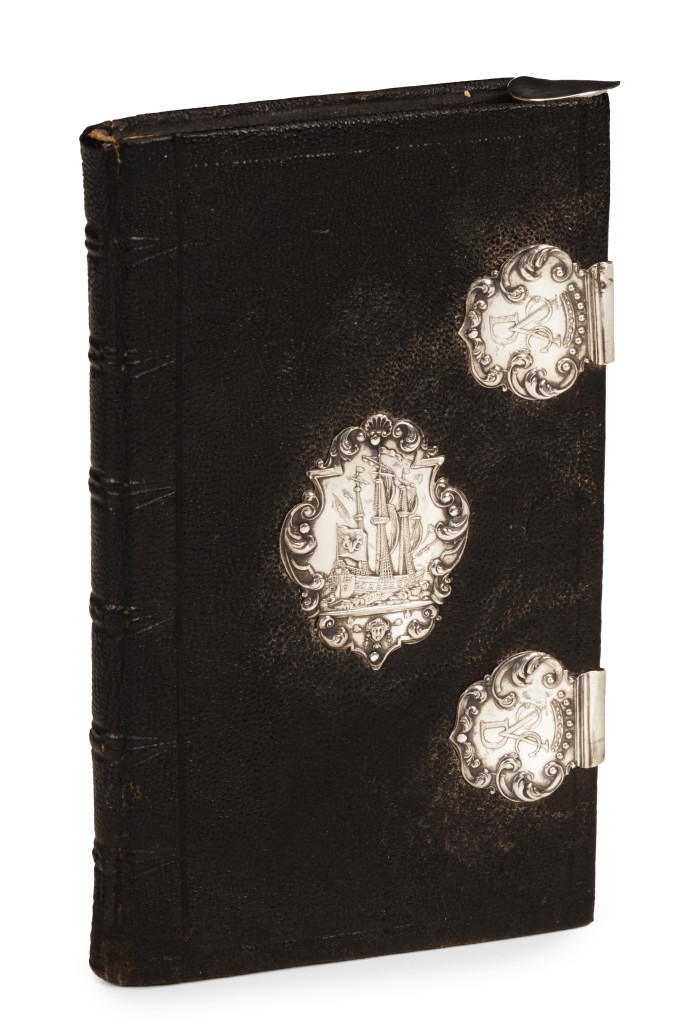
A shagreen bound VOC Delft notebook with silver mounts and pen
_Probably Amsterdam, circa 1780_ _H. 13.9 x H. 8.1 x D. 1.5 cm_ Provenance: Private collection, the Netherlands
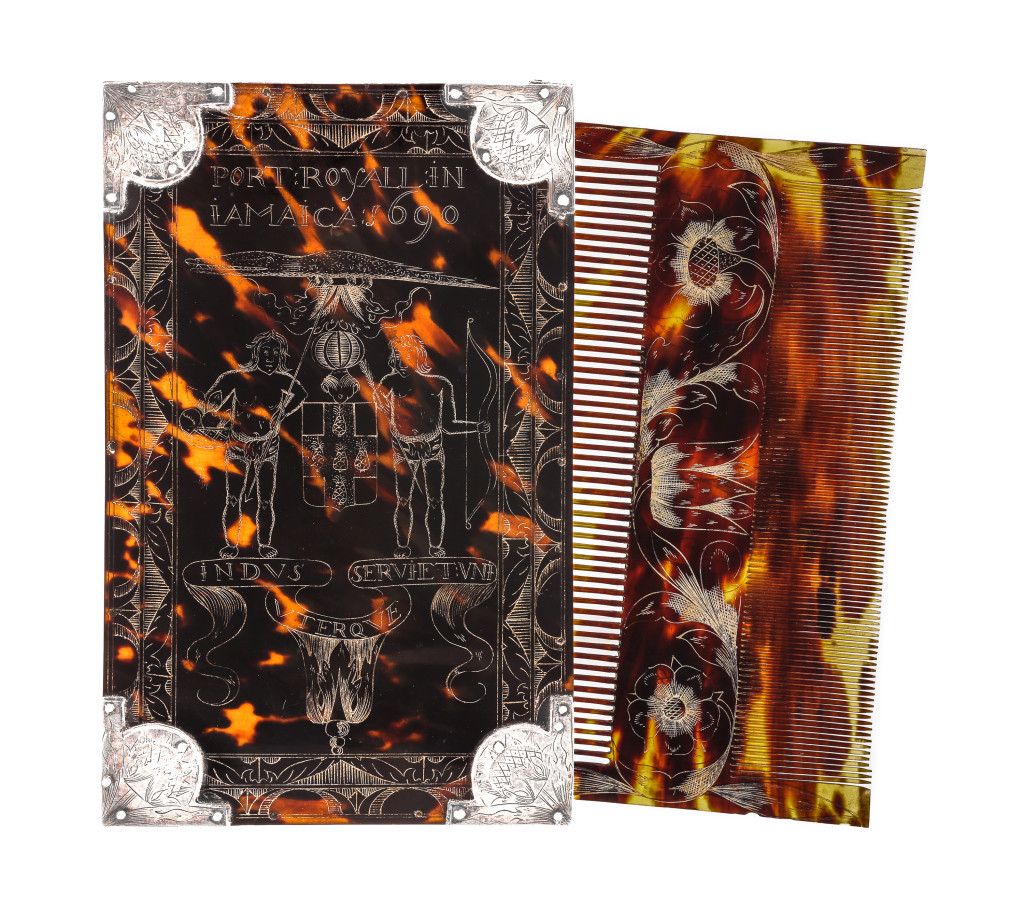
A British-colonial Jamaican engraved tortoiseshell comb-case with silver mounts and a comb
_Jamaica, Port Royal, dated 1690_ _H. 16 x W. 10.2 x D. 1.1 cm (case)_ The case attributed to Matthew Comberford (act. 1688-1692), the comb to Paul Bennett (act. 1670-1692) Provenance: - Architect Thomas Wallis (1873–1953), who designed the Tate Gallery, London; thence by descent - Gifted to the previous owner by the son of Wallis in the 1970s
No image
Three silver V.O.C. ingots
Circa 1738, with VOC monogram and the assay mark of the Amsterdam Grill family