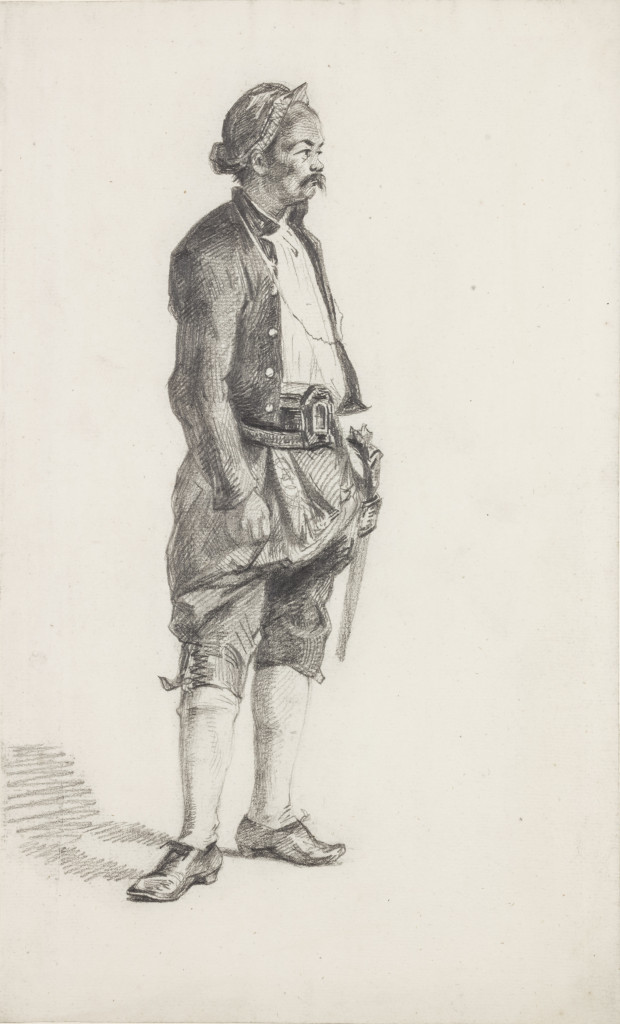
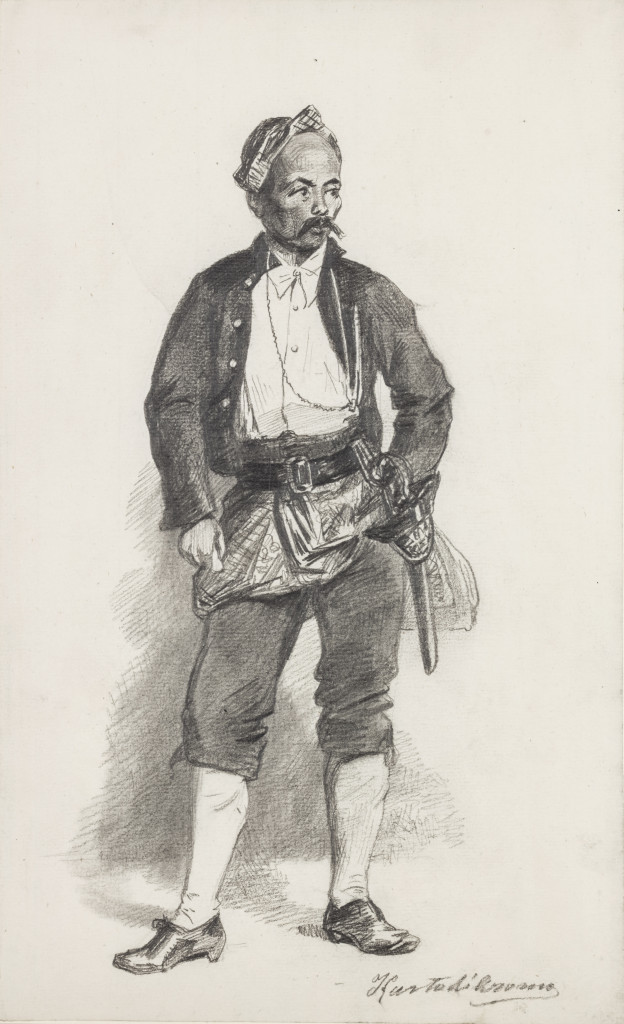
Two study portraits of Mas Marco Kartodikromo (1890-1932)
Early 20th century
One inscribed Kartodikromo lower right
Pencil on European paper, 32.5 x 19.6 cm
Marco Kartodikromo, born in 1890 in Blora, Central Java, emerged as a pioneering journalist and writer in early 20th-century Indonesia. His career began in 1911, with contributions to key publications such as Medan Prijaji and Doenia Bergerak. Kartodikromo’s writings were characterized by their bold critique of Dutch colonial rule and the feudal systems in Indonesia. His outspoken nature led to frequent imprisonments and ultimately to his exile to the Boven-Digoel prison camp in Papua.
Kartodikromo’s literary works, written mainly in Malay, are significant for their social realism and their vivid portrayal of class struggles. He depicted the injustices faced by the common people and the moral failings of the colonial elite. His notable works include Mata Gelap (1914), Student Hidjo (1918), and Rasa Merdika (1924). These works not only challenged the status quo but also provided a voice for the oppressed, making him a pivotal figure in Indonesian literature.
In addition to his literary contributions, Kartodikromo was a staunch advocate for Indonesian independence. His relentless pursuit of social justice and equality resonated through his writings and actions. Despite the hardships he faced, including multiple imprisonments and harsh conditions in exile, he remained committed to his cause until his death from malaria in 1932.
Kartodikromo’s legacy is enduring. He is remembered as a trailblazer who courageously confronted oppressive systems and inspired subsequent generations of Indonesian writers and activists. His works continue to be studied and celebrated for their contribution to Indonesian national consciousness and their role in the broader struggle for independence.
One inscribed Kartodikromo lower right
Pencil on European paper, 32.5 x 19.6 cm
Marco Kartodikromo, born in 1890 in Blora, Central Java, emerged as a pioneering journalist and writer in early 20th-century Indonesia. His career began in 1911, with contributions to key publications such as Medan Prijaji and Doenia Bergerak. Kartodikromo’s writings were characterized by their bold critique of Dutch colonial rule and the feudal systems in Indonesia. His outspoken nature led to frequent imprisonments and ultimately to his exile to the Boven-Digoel prison camp in Papua.
Kartodikromo’s literary works, written mainly in Malay, are significant for their social realism and their vivid portrayal of class struggles. He depicted the injustices faced by the common people and the moral failings of the colonial elite. His notable works include Mata Gelap (1914), Student Hidjo (1918), and Rasa Merdika (1924). These works not only challenged the status quo but also provided a voice for the oppressed, making him a pivotal figure in Indonesian literature.
In addition to his literary contributions, Kartodikromo was a staunch advocate for Indonesian independence. His relentless pursuit of social justice and equality resonated through his writings and actions. Despite the hardships he faced, including multiple imprisonments and harsh conditions in exile, he remained committed to his cause until his death from malaria in 1932.
Kartodikromo’s legacy is enduring. He is remembered as a trailblazer who courageously confronted oppressive systems and inspired subsequent generations of Indonesian writers and activists. His works continue to be studied and celebrated for their contribution to Indonesian national consciousness and their role in the broader struggle for independence.
Part of the Japan collection.