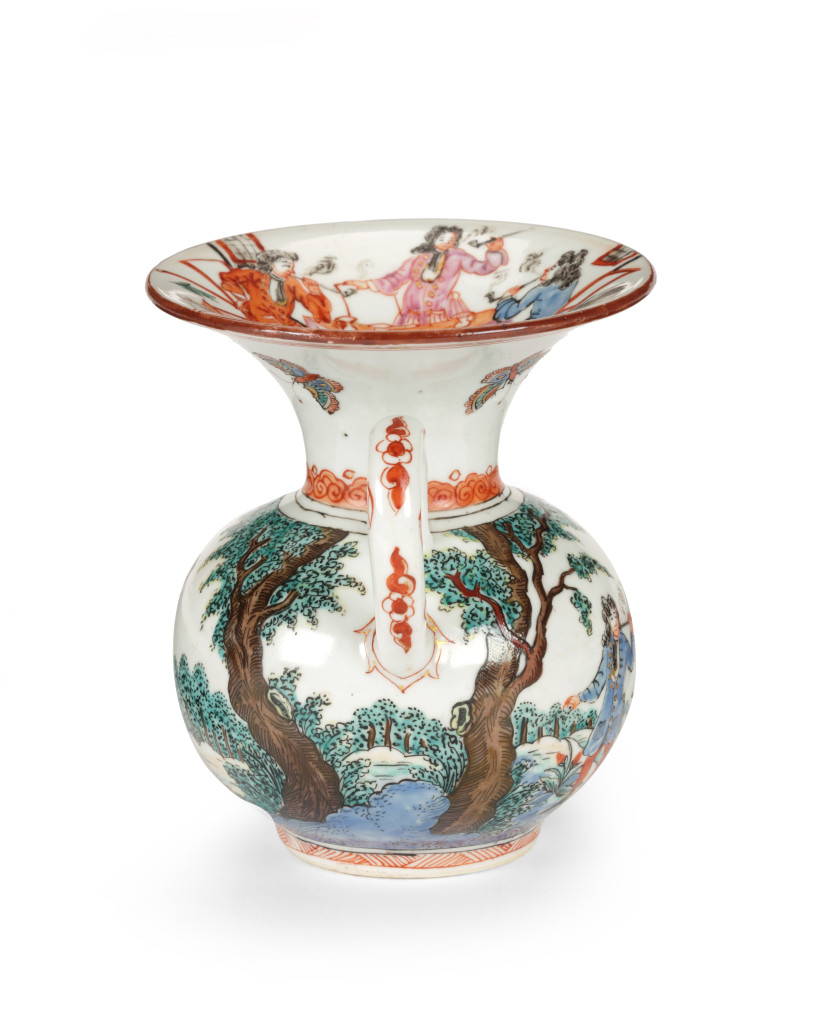
A rare Amsterdam decorated Chinese export porcelain plantation spittoon
Yongzheng/Qianlong period, circa 1720-1740, over-decorated in Holland
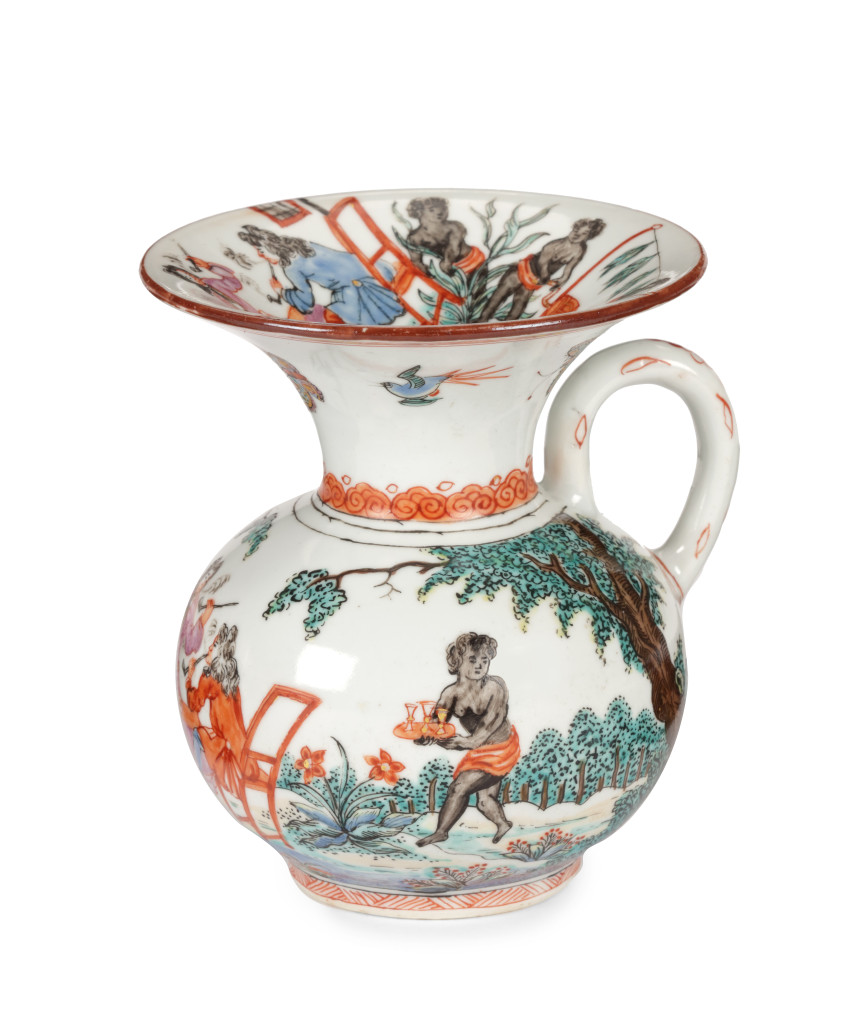
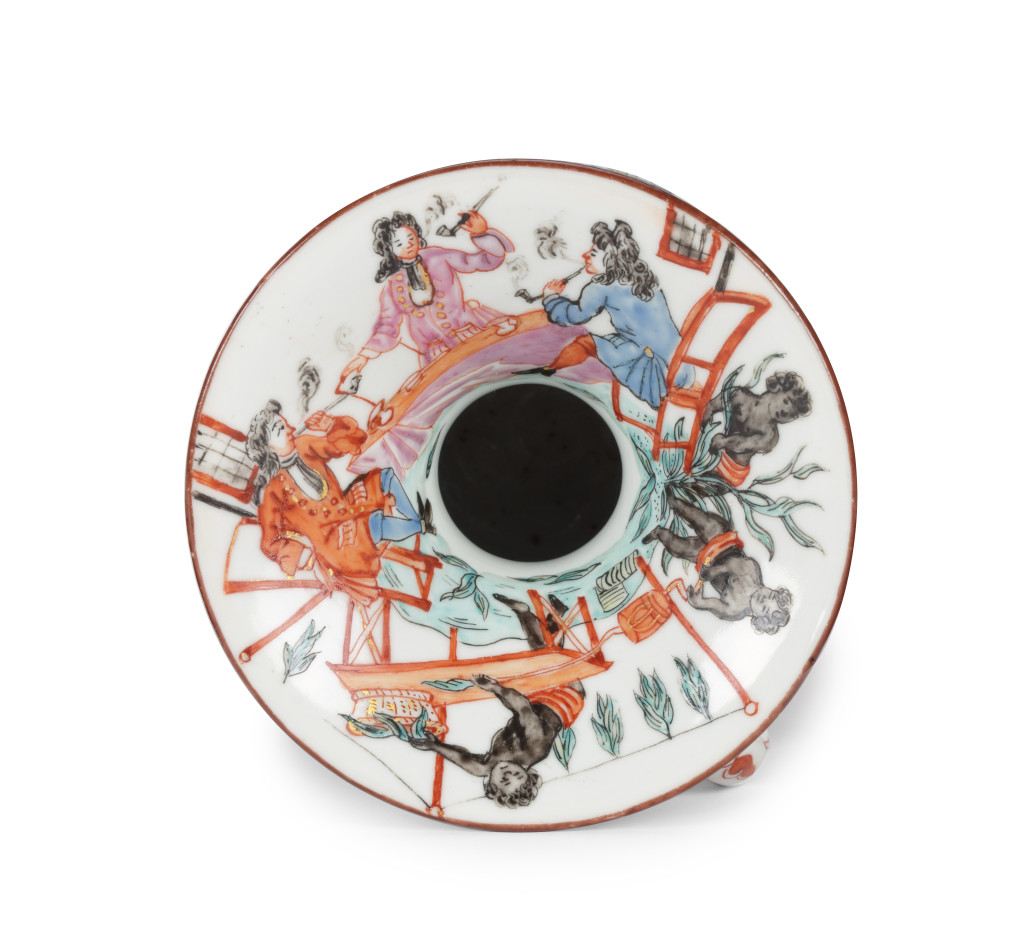
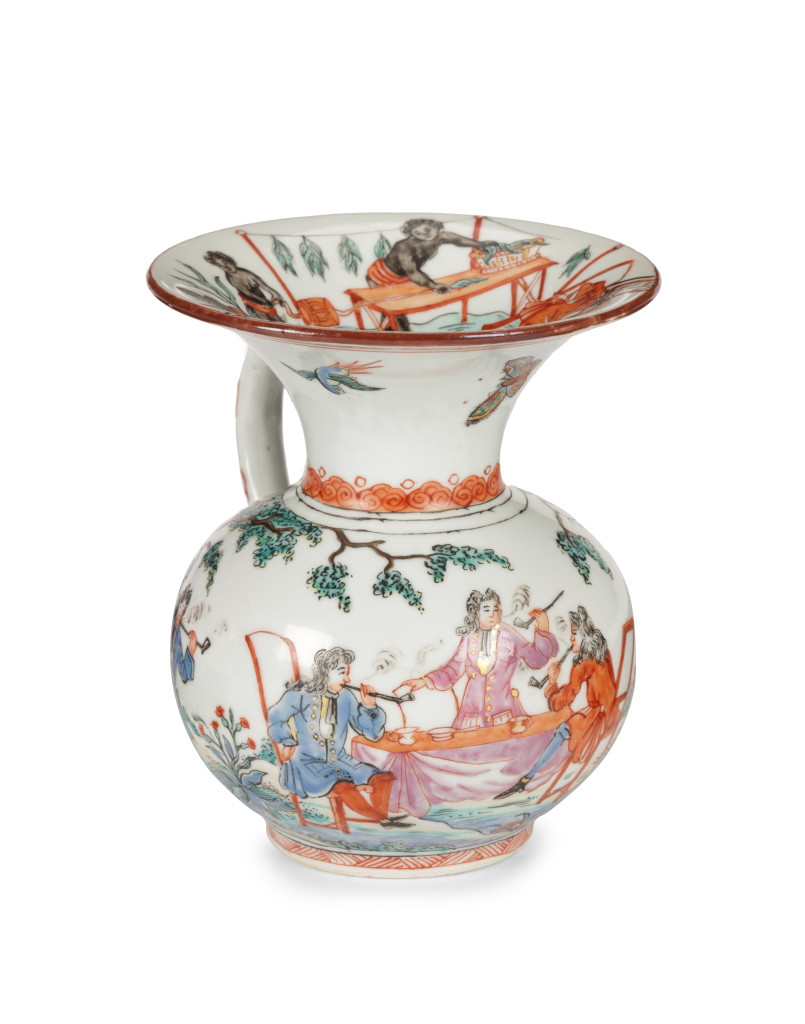
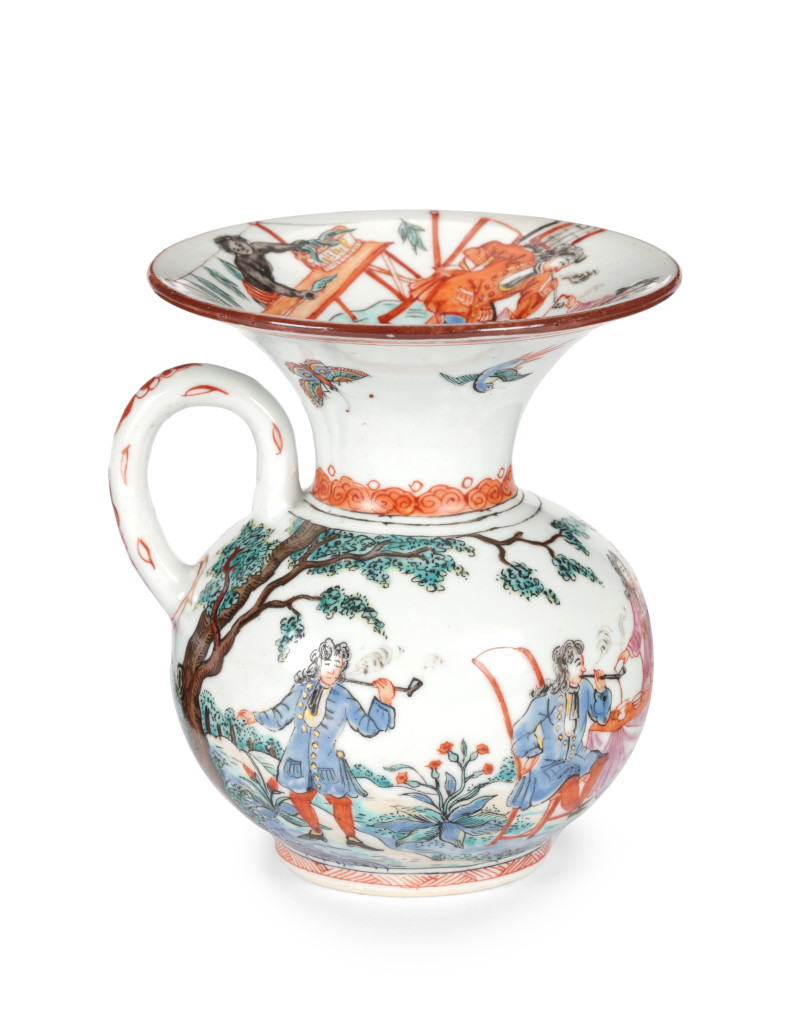
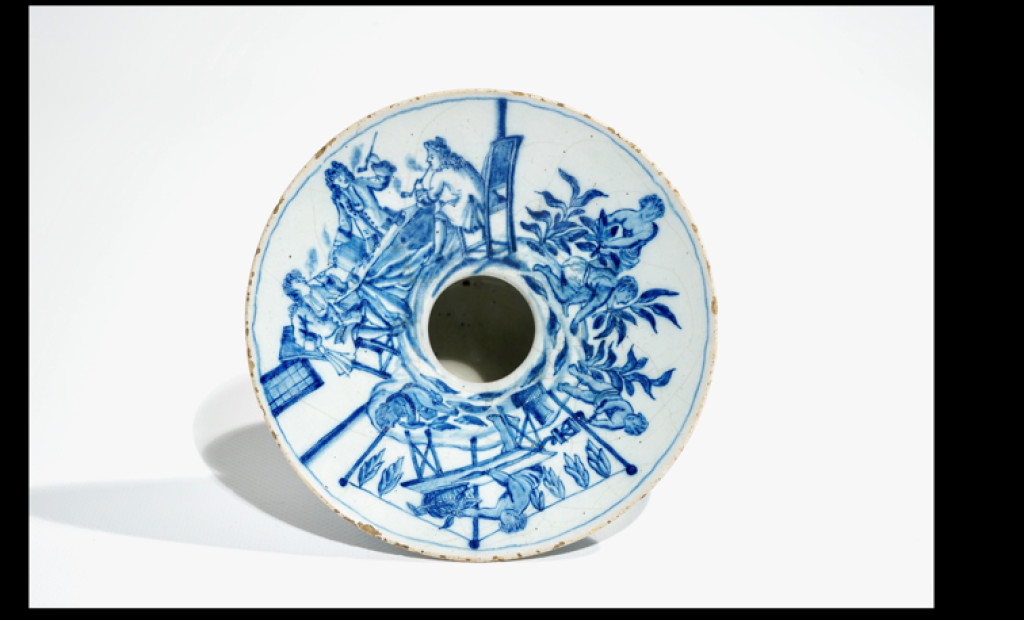
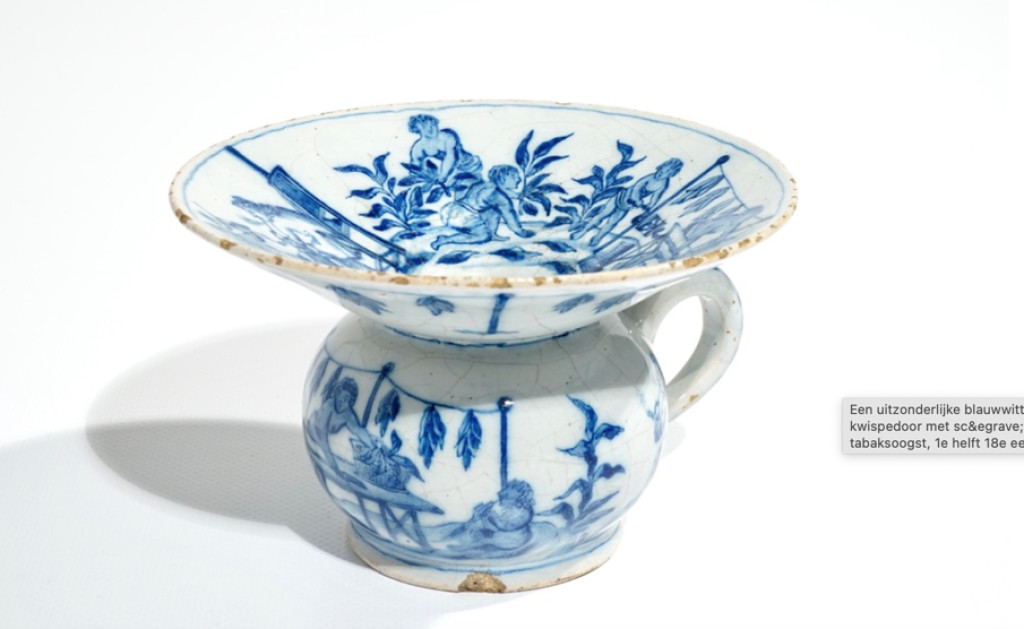
On a short, straight foot with a rounded body decorated with a continuous tobacco plantation scene. The gently sloping wide rim is decorated with an idem scene on the inside and birds and butterlies on the outside.
H. 11 x Diam. 9.5 cm
Provenance:
Private collection, the Netherlands
Private collection, the Netherlands (since the early 2000s)
Amsterdam played a central role in world trade during the 17th and 18th centuries. The city greatly benefitted from international trade, including the trade in enslaved Africans and their labour on plantations in Surinam. Many wealthy Amsterdam citizens were shareholders in this plantation economy and made vast fortunes. This wealth enabled them to collect luxury products, including Chinese porcelain. The objects they collected reflected their status and their connections to global trade. Standing among the collection, one was meant to feel at the centre of the world. These kinds of collection 'cabinets' arose from encyclopaedic thinking—the idea of the superior European 'who could easily gather the world and place it in a room'.
The original porcelain came from China, where it was made and exported to Europe. Chinese porcelain was highly prized at the time and was often imported by the VOC (Dutch East India Company). However, as in this case, some pieces were further decorated in the Netherlands with European scenes and designs. This over-decoration often was done in Amsterdam, where specialized workshops added European-themed decoration to porcelain. The goal was to cater to the tastes of wealthy European collectors and increase the value of the porcelain.
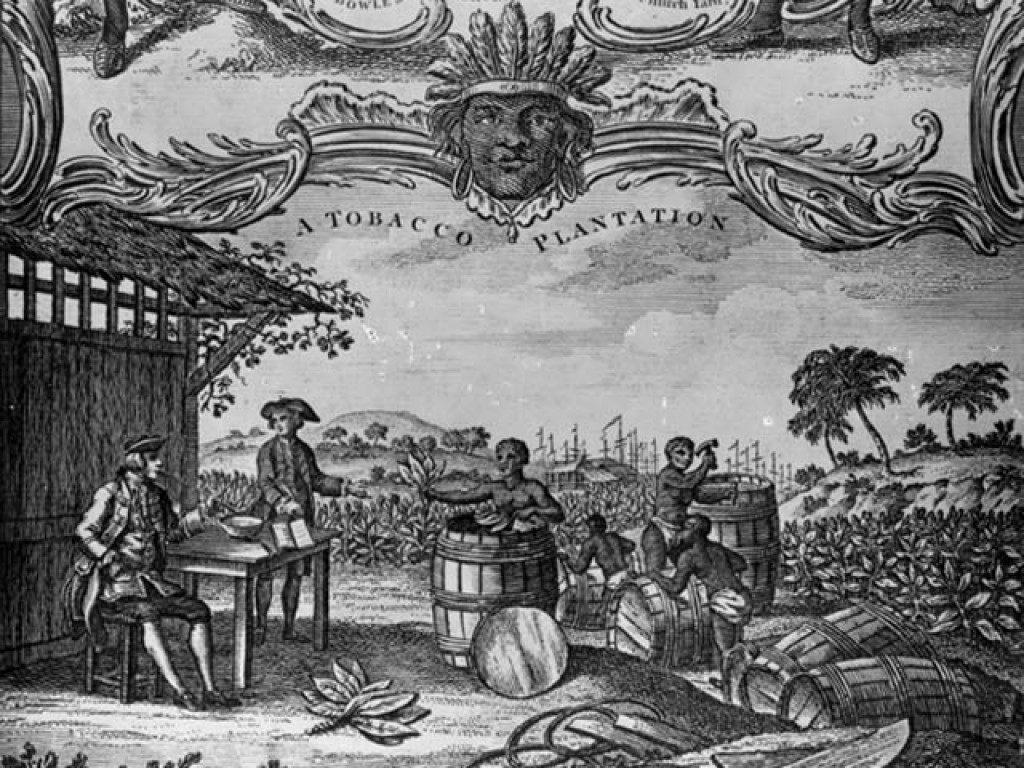
The spittoon shows scenes of plantation owners, probably European gentlemen, enjoying their wealth (and tobacco). This directly refers to the involvement of the wealthy Amsterdam elite in the plantation economy and the tobacco industry. This imagery reinforces the connection with plantation culture and the wealth that came from it. It was not hidden—in fact, it was flaunted. Enslaved Africans are depicted as putti, small Cupid-like figures. The image can also be interpreted as an 'allegory' of the tobacco industry, from production to use. However, the message remains the same.
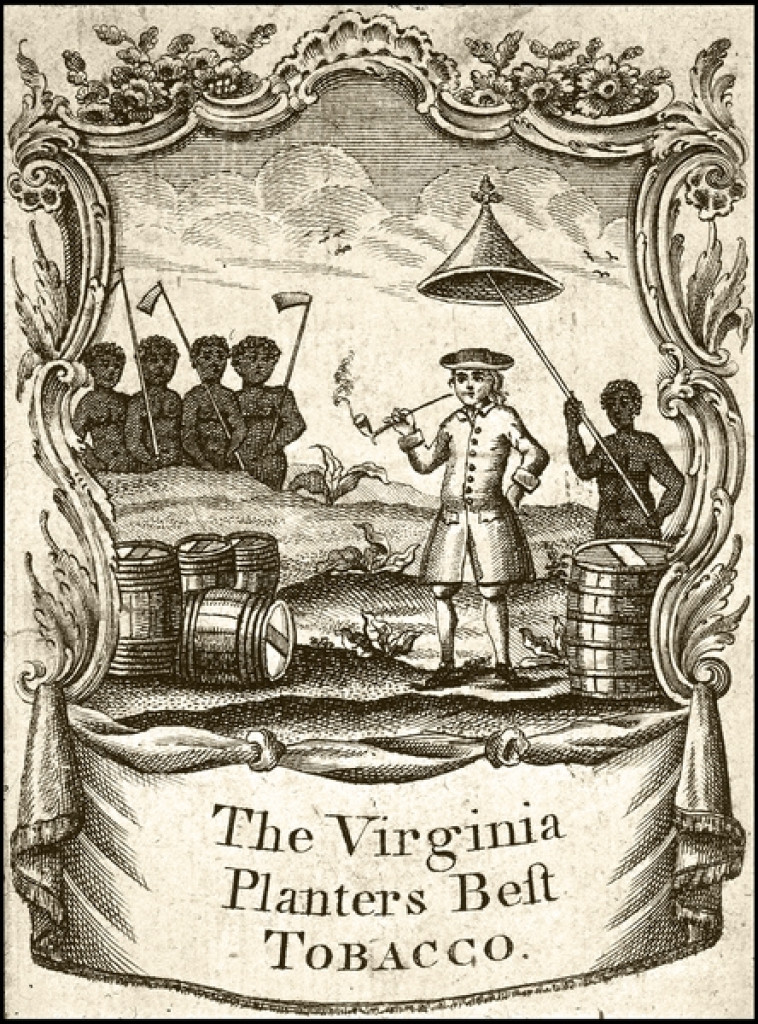
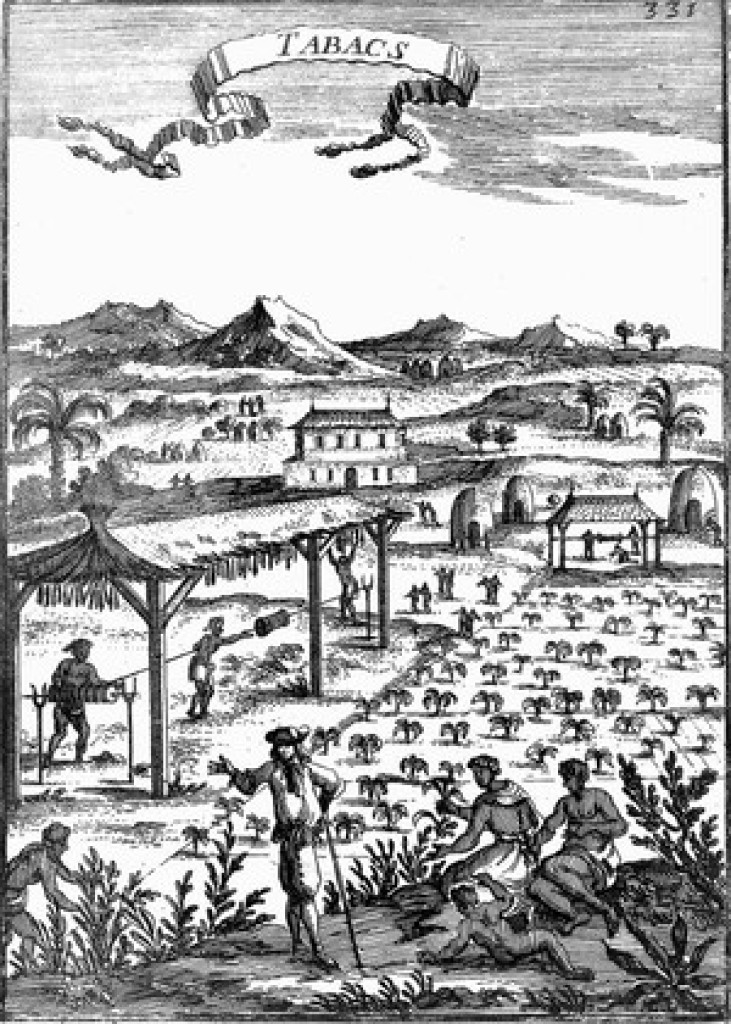
The depiction of enslaved Africans working on the tobacco plantation appears to be based on an engraving from the 1683 book Description de l'Univers, Tome 5. On page 331, there is an illustration of a tobacco plantation in colonial America, most likely Virginia. The resemblance between the enslaved workers in the engraving and those depicted on the spittoon is striking.
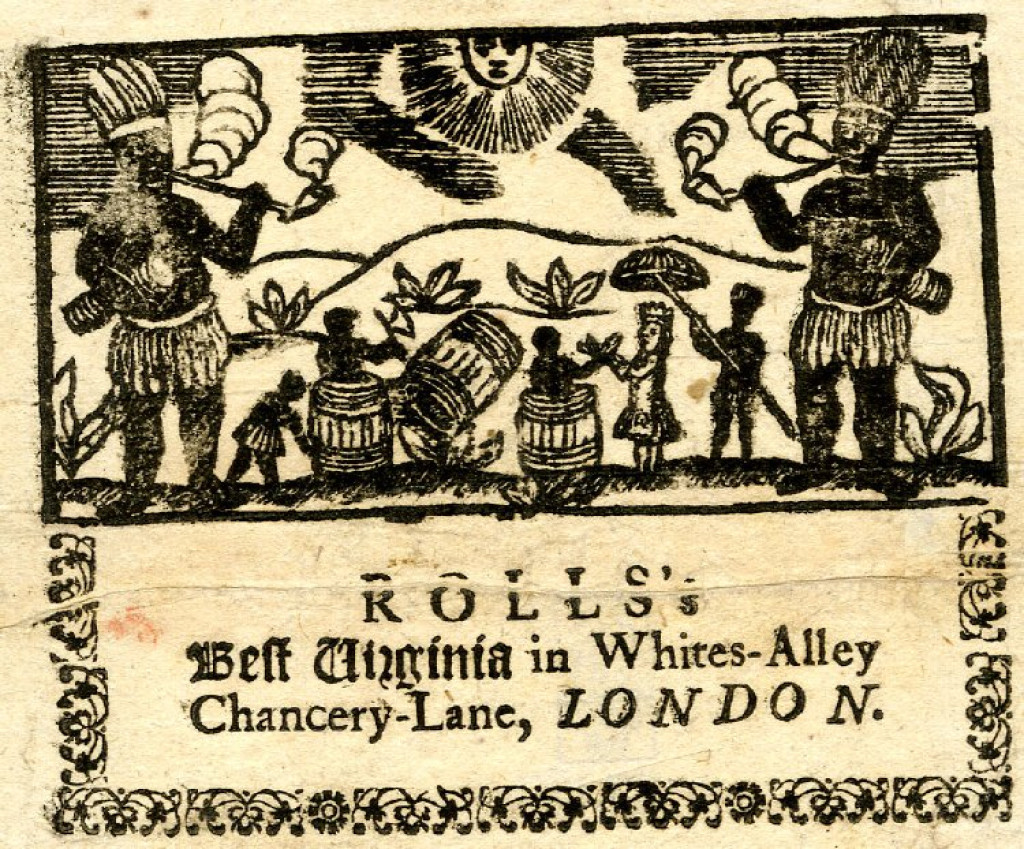
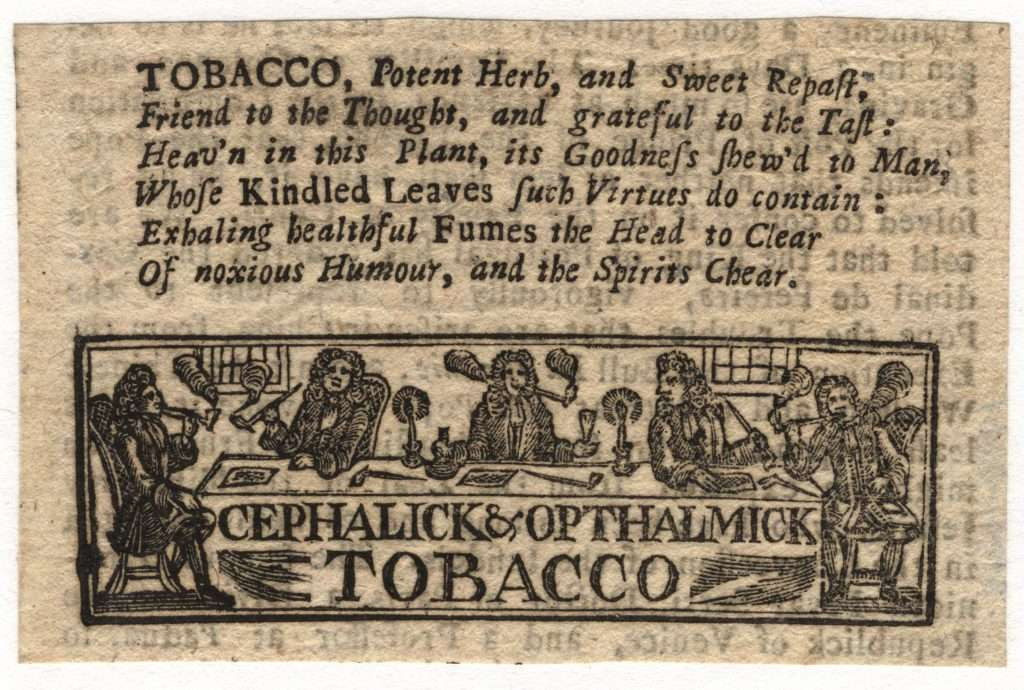
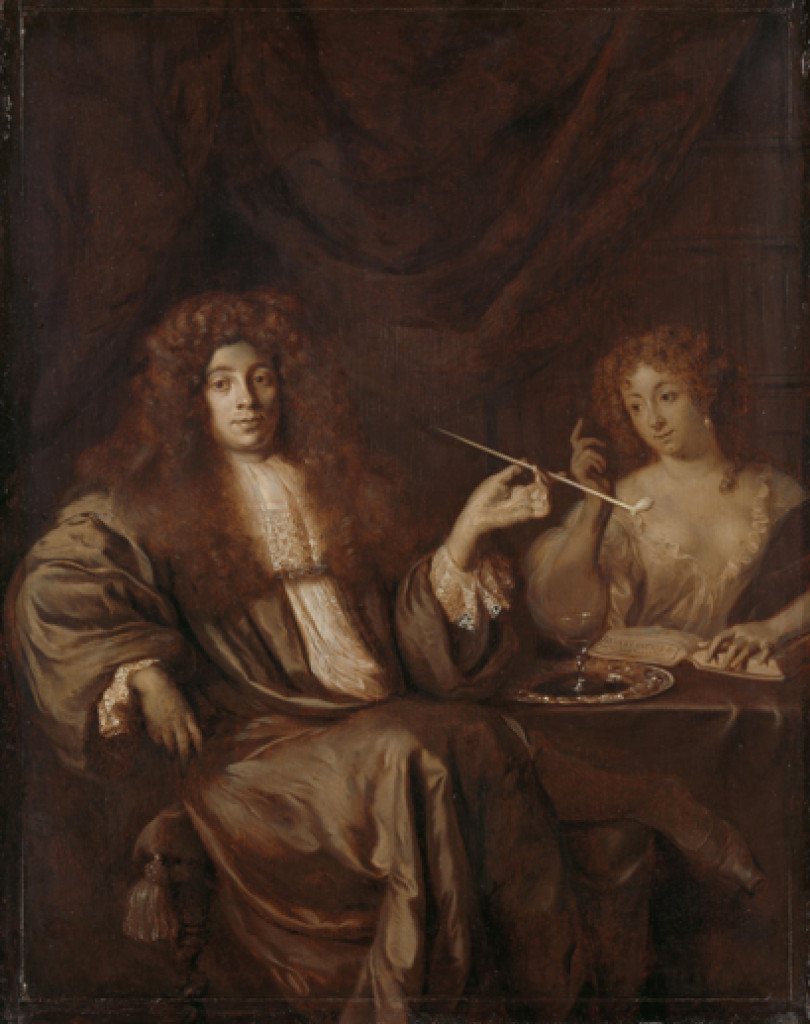
As for the European figures smoking pipes on the spittoon, they were likely inspired by Virginian tobacco advertisements and packaging from the early 1700s. One particularly notable example is a wrapper that features plantation owners gathered around a table, smoking their pipes.
In the Rijksmuseum collection (object.no. [BK-NM-12400-403](https://www.rijksmuseum.nl/nl/collectie/BK-NM-12400-403), there are two spittoons made of Delft earthenware, with almost identical decoration, arguably by the same hand. It seems plausible that a 'factory' sold Delft earthenware and Chinese porcelain spittoons alike, decorated in the same way.
The decoration could have been applied in Amsterdam, but due to its refined quality, it is likely that it was decorated in Delft—although over-decorating is widely known as 'Amsterdam decorated'. As was Amsterdam, Delft was an important centre for the over-decoration of porcelain at that time. There were several workshops and studios that specialized in decorating imported products, including Chinese porcelain.
The over-decoration was applied using so-called encre de Chine (Chinese ink) and other enamel paints on the already glazed porcelain, which was then re-fired. This technique was executed carefully and required great skill, as the decoration was applied on top of the original glaze without damaging the porcelain. Chinese porcelain was already considered a luxury product, but the over-decoration increased the exclusivity and status of such objects. Combining the 'exotic' (Chinese porcelain) and the locally adapted (European decorations) made it a status symbol among wealthy collectors. It was a very costly possession at the time, and only the most affluent citizens could afford such objects. The wealthiest citizens were arguably the ones who invested well in the trade of humans and their slave labour.
Comparable imagery appears in earlier engravings, such as those in Allain Manesson Mallet’s Description de l’univers (1683). Likewise, tobacco advertisements from the early 18th century, such as those preserved by the New York Public Library, depicted plantation owners leisurely enjoying their product.
- Du Tertre, J.-B. (1667–1671). Histoire générale des Antilles habitées par les Français (Vols. 1–4). Paris: Thomas Jolly.
- Mallet, A. M. (1683). Description de l’univers: Contenant les différents systèmes du monde, les cartes générales & particulières de la géographie ancienne & moderne (Vol. 5). Paris: Chez Denys Thierry. [https://gallica.bnf.fr/ark:/12148/bpt6k8702814q/f353.item](https://gallica.bnf.fr/ark:/12148/bpt6k8702814q/f353.item)
- Thierry, D. (1683). A tobacco plantation in the Caribbean islands, with black workers and a white overseer [Engraving]. Wellcome Collection. [https://commons.wikimedia.org/wiki/File:A](https://commons.wikimedia.org/wiki/File:A%3C/em%3Etobacco%3Cem%3Eplantation%3C/em%3Ewith%3Cem%3Eblack%3C/em%3Eworkers%3Cem%3Eand%3C/em%3Ea%3Cem%3Ewhite%3C/em%3Eoverseer%3Cem%3EWellcome%3C/em%3EV0019120.jpg)[tobacco](https://commons.wikimedia.org/wiki/File:A%3C/em%3Etobacco%3Cem%3Eplantation%3C/em%3Ewith%3Cem%3Eblack%3C/em%3Eworkers%3Cem%3Eand%3C/em%3Ea%3Cem%3Ewhite%3C/em%3Eoverseer%3Cem%3EWellcome%3C/em%3EV0019120.jpg)[plantation](https://commons.wikimedia.org/wiki/File:A%3C/em%3Etobacco%3Cem%3Eplantation%3C/em%3Ewith%3Cem%3Eblack%3C/em%3Eworkers%3Cem%3Eand%3C/em%3Ea%3Cem%3Ewhite%3C/em%3Eoverseer%3Cem%3EWellcome%3C/em%3EV0019120.jpg)[with](https://commons.wikimedia.org/wiki/File:A%3C/em%3Etobacco%3Cem%3Eplantation%3C/em%3Ewith%3Cem%3Eblack%3C/em%3Eworkers%3Cem%3Eand%3C/em%3Ea%3Cem%3Ewhite%3C/em%3Eoverseer%3Cem%3EWellcome%3C/em%3EV0019120.jpg)[black](https://commons.wikimedia.org/wiki/File:A%3C/em%3Etobacco%3Cem%3Eplantation%3C/em%3Ewith%3Cem%3Eblack%3C/em%3Eworkers%3Cem%3Eand%3C/em%3Ea%3Cem%3Ewhite%3C/em%3Eoverseer%3Cem%3EWellcome%3C/em%3EV0019120.jpg)[workers](https://commons.wikimedia.org/wiki/File:A%3C/em%3Etobacco%3Cem%3Eplantation%3C/em%3Ewith%3Cem%3Eblack%3C/em%3Eworkers%3Cem%3Eand%3C/em%3Ea%3Cem%3Ewhite%3C/em%3Eoverseer%3Cem%3EWellcome%3C/em%3EV0019120.jpg)[and](https://commons.wikimedia.org/wiki/File:A%3C/em%3Etobacco%3Cem%3Eplantation%3C/em%3Ewith%3Cem%3Eblack%3C/em%3Eworkers%3Cem%3Eand%3C/em%3Ea%3Cem%3Ewhite%3C/em%3Eoverseer%3Cem%3EWellcome%3C/em%3EV0019120.jpg)[a](https://commons.wikimedia.org/wiki/File:A%3C/em%3Etobacco%3Cem%3Eplantation%3C/em%3Ewith%3Cem%3Eblack%3C/em%3Eworkers%3Cem%3Eand%3C/em%3Ea%3Cem%3Ewhite%3C/em%3Eoverseer%3Cem%3EWellcome%3C/em%3EV0019120.jpg)[white](https://commons.wikimedia.org/wiki/File:A%3C/em%3Etobacco%3Cem%3Eplantation%3C/em%3Ewith%3Cem%3Eblack%3C/em%3Eworkers%3Cem%3Eand%3C/em%3Ea%3Cem%3Ewhite%3C/em%3Eoverseer%3Cem%3EWellcome%3C/em%3EV0019120.jpg)[overseer](https://commons.wikimedia.org/wiki/File:A%3C/em%3Etobacco%3Cem%3Eplantation%3C/em%3Ewith%3Cem%3Eblack%3C/em%3Eworkers%3Cem%3Eand%3C/em%3Ea%3Cem%3Ewhite%3C/em%3Eoverseer%3Cem%3EWellcome%3C/em%3EV0019120.jpg)[Wellcome](https://commons.wikimedia.org/wiki/File:A%3C/em%3Etobacco%3Cem%3Eplantation%3C/em%3Ewith%3Cem%3Eblack%3C/em%3Eworkers%3Cem%3Eand%3C/em%3Ea%3Cem%3Ewhite%3C/em%3Eoverseer%3Cem%3EWellcome%3C/em%3EV0019120.jpg)[V0019120.jpg](https://commons.wikimedia.org/wiki/File:A%3C/em%3Etobacco%3Cem%3Eplantation%3C/em%3Ewith%3Cem%3Eblack%3C/em%3Eworkers%3Cem%3Eand%3C/em%3Ea%3Cem%3Ewhite%3C/em%3Eoverseer%3Cem%3EWellcome%3C/em%3EV0019120.jpg)
- New York Public Library. (n.d.). London’s Virginia [Colonial men smoke, as Africans work in fields beyond] [Image]. NYPL Digital Collections. [https://digitalcollections.nypl.org/items/510d47dc-8aa1-a3d9-e040-e00a18064a99](https://digitalcollections.nypl.org/items/510d47dc-8aa1-a3d9-e040-e00a18064a99)
- Helbig, J. (n.d.). Faïences hollandaises, XVIIe–XVIIIe–début XIXe s. (Vols. I & II). Brussels: Musées royaux d’Art et d’Histoire. [https://library.si.edu/digital-library/book/faenceshollandai01muse](https://library.si.edu/digital-library/book/faenceshollandai01muse)
- Rijksmuseum. (n.d.). Kwispedoor [Delftware spittoon]. Rijksmuseum Collection. [https://www.rijksmuseum.nl/nl/collectie/BK-NM-12400-403](https://www.rijksmuseum.nl/nl/collectie/BK-NM-12400-403)
- Unknown. (18th century). The Virginia Planters Best Tobacco [Tobacco advertisement]. No publisher.
On a short, straight foot with a rounded body decorated with a continuous tobacco plantation scene. The gently sloping wide rim is decorated with an idem scene on the inside and birds and butterlies on the outside.
H. 11 x Diam. 9.5 cm
Provenance:
Private collection, the Netherlands
Private collection, the Netherlands (since the early 2000s)
Amsterdam played a central role in world trade during the 17th and 18th centuries. The city greatly benefitted from international trade, including the trade in enslaved Africans and their labour on plantations in Surinam. Many wealthy Amsterdam citizens were shareholders in this plantation economy and made vast fortunes. This wealth enabled them to collect luxury products, including Chinese porcelain. The objects they collected reflected their status and their connections to global trade. Standing among the collection, one was meant to feel at the centre of the world. These kinds of collection 'cabinets' arose from encyclopaedic thinking—the idea of the superior European 'who could easily gather the world and place it in a room'.
The original porcelain came from China, where it was made and exported to Europe. Chinese porcelain was highly prized at the time and was often imported by the VOC (Dutch East India Company). However, as in this case, some pieces were further decorated in the Netherlands with European scenes and designs. This over-decoration often was done in Amsterdam, where specialized workshops added European-themed decoration to porcelain. The goal was to cater to the tastes of wealthy European collectors and increase the value of the porcelain.
The spittoon shows scenes of plantation owners, probably European gentlemen, enjoying their wealth (and tobacco). This directly refers to the involvement of the wealthy Amsterdam elite in the plantation economy and the tobacco industry. This imagery reinforces the connection with plantation culture and the wealth that came from it. It was not hidden—in fact, it was flaunted. Enslaved Africans are depicted as putti, small Cupid-like figures. The image can also be interpreted as an 'allegory' of the tobacco industry, from production to use. However, the message remains the same.
The depiction of enslaved Africans working on the tobacco plantation appears to be based on an engraving from the 1683 book Description de l'Univers, Tome 5. On page 331, there is an illustration of a tobacco plantation in colonial America, most likely Virginia. The resemblance between the enslaved workers in the engraving and those depicted on the spittoon is striking.
As for the European figures smoking pipes on the spittoon, they were likely inspired by Virginian tobacco advertisements and packaging from the early 1700s. One particularly notable example is a wrapper that features plantation owners gathered around a table, smoking their pipes.
In the Rijksmuseum collection (object.no. [BK-NM-12400-403](https://www.rijksmuseum.nl/nl/collectie/BK-NM-12400-403), there are two spittoons made of Delft earthenware, with almost identical decoration, arguably by the same hand. It seems plausible that a 'factory' sold Delft earthenware and Chinese porcelain spittoons alike, decorated in the same way.
The decoration could have been applied in Amsterdam, but due to its refined quality, it is likely that it was decorated in Delft—although over-decorating is widely known as 'Amsterdam decorated'. As was Amsterdam, Delft was an important centre for the over-decoration of porcelain at that time. There were several workshops and studios that specialized in decorating imported products, including Chinese porcelain.
The over-decoration was applied using so-called encre de Chine (Chinese ink) and other enamel paints on the already glazed porcelain, which was then re-fired. This technique was executed carefully and required great skill, as the decoration was applied on top of the original glaze without damaging the porcelain. Chinese porcelain was already considered a luxury product, but the over-decoration increased the exclusivity and status of such objects. Combining the 'exotic' (Chinese porcelain) and the locally adapted (European decorations) made it a status symbol among wealthy collectors. It was a very costly possession at the time, and only the most affluent citizens could afford such objects. The wealthiest citizens were arguably the ones who invested well in the trade of humans and their slave labour.
Comparable imagery appears in earlier engravings, such as those in Allain Manesson Mallet’s Description de l’univers (1683). Likewise, tobacco advertisements from the early 18th century, such as those preserved by the New York Public Library, depicted plantation owners leisurely enjoying their product.
- Du Tertre, J.-B. (1667–1671). Histoire générale des Antilles habitées par les Français (Vols. 1–4). Paris: Thomas Jolly.
- Mallet, A. M. (1683). Description de l’univers: Contenant les différents systèmes du monde, les cartes générales & particulières de la géographie ancienne & moderne (Vol. 5). Paris: Chez Denys Thierry. [https://gallica.bnf.fr/ark:/12148/bpt6k8702814q/f353.item](https://gallica.bnf.fr/ark:/12148/bpt6k8702814q/f353.item)
- Thierry, D. (1683). A tobacco plantation in the Caribbean islands, with black workers and a white overseer [Engraving]. Wellcome Collection. [https://commons.wikimedia.org/wiki/File:A](https://commons.wikimedia.org/wiki/File:A%3C/em%3Etobacco%3Cem%3Eplantation%3C/em%3Ewith%3Cem%3Eblack%3C/em%3Eworkers%3Cem%3Eand%3C/em%3Ea%3Cem%3Ewhite%3C/em%3Eoverseer%3Cem%3EWellcome%3C/em%3EV0019120.jpg)[tobacco](https://commons.wikimedia.org/wiki/File:A%3C/em%3Etobacco%3Cem%3Eplantation%3C/em%3Ewith%3Cem%3Eblack%3C/em%3Eworkers%3Cem%3Eand%3C/em%3Ea%3Cem%3Ewhite%3C/em%3Eoverseer%3Cem%3EWellcome%3C/em%3EV0019120.jpg)[plantation](https://commons.wikimedia.org/wiki/File:A%3C/em%3Etobacco%3Cem%3Eplantation%3C/em%3Ewith%3Cem%3Eblack%3C/em%3Eworkers%3Cem%3Eand%3C/em%3Ea%3Cem%3Ewhite%3C/em%3Eoverseer%3Cem%3EWellcome%3C/em%3EV0019120.jpg)[with](https://commons.wikimedia.org/wiki/File:A%3C/em%3Etobacco%3Cem%3Eplantation%3C/em%3Ewith%3Cem%3Eblack%3C/em%3Eworkers%3Cem%3Eand%3C/em%3Ea%3Cem%3Ewhite%3C/em%3Eoverseer%3Cem%3EWellcome%3C/em%3EV0019120.jpg)[black](https://commons.wikimedia.org/wiki/File:A%3C/em%3Etobacco%3Cem%3Eplantation%3C/em%3Ewith%3Cem%3Eblack%3C/em%3Eworkers%3Cem%3Eand%3C/em%3Ea%3Cem%3Ewhite%3C/em%3Eoverseer%3Cem%3EWellcome%3C/em%3EV0019120.jpg)[workers](https://commons.wikimedia.org/wiki/File:A%3C/em%3Etobacco%3Cem%3Eplantation%3C/em%3Ewith%3Cem%3Eblack%3C/em%3Eworkers%3Cem%3Eand%3C/em%3Ea%3Cem%3Ewhite%3C/em%3Eoverseer%3Cem%3EWellcome%3C/em%3EV0019120.jpg)[and](https://commons.wikimedia.org/wiki/File:A%3C/em%3Etobacco%3Cem%3Eplantation%3C/em%3Ewith%3Cem%3Eblack%3C/em%3Eworkers%3Cem%3Eand%3C/em%3Ea%3Cem%3Ewhite%3C/em%3Eoverseer%3Cem%3EWellcome%3C/em%3EV0019120.jpg)[a](https://commons.wikimedia.org/wiki/File:A%3C/em%3Etobacco%3Cem%3Eplantation%3C/em%3Ewith%3Cem%3Eblack%3C/em%3Eworkers%3Cem%3Eand%3C/em%3Ea%3Cem%3Ewhite%3C/em%3Eoverseer%3Cem%3EWellcome%3C/em%3EV0019120.jpg)[white](https://commons.wikimedia.org/wiki/File:A%3C/em%3Etobacco%3Cem%3Eplantation%3C/em%3Ewith%3Cem%3Eblack%3C/em%3Eworkers%3Cem%3Eand%3C/em%3Ea%3Cem%3Ewhite%3C/em%3Eoverseer%3Cem%3EWellcome%3C/em%3EV0019120.jpg)[overseer](https://commons.wikimedia.org/wiki/File:A%3C/em%3Etobacco%3Cem%3Eplantation%3C/em%3Ewith%3Cem%3Eblack%3C/em%3Eworkers%3Cem%3Eand%3C/em%3Ea%3Cem%3Ewhite%3C/em%3Eoverseer%3Cem%3EWellcome%3C/em%3EV0019120.jpg)[Wellcome](https://commons.wikimedia.org/wiki/File:A%3C/em%3Etobacco%3Cem%3Eplantation%3C/em%3Ewith%3Cem%3Eblack%3C/em%3Eworkers%3Cem%3Eand%3C/em%3Ea%3Cem%3Ewhite%3C/em%3Eoverseer%3Cem%3EWellcome%3C/em%3EV0019120.jpg)[V0019120.jpg](https://commons.wikimedia.org/wiki/File:A%3C/em%3Etobacco%3Cem%3Eplantation%3C/em%3Ewith%3Cem%3Eblack%3C/em%3Eworkers%3Cem%3Eand%3C/em%3Ea%3Cem%3Ewhite%3C/em%3Eoverseer%3Cem%3EWellcome%3C/em%3EV0019120.jpg)
- New York Public Library. (n.d.). London’s Virginia [Colonial men smoke, as Africans work in fields beyond] [Image]. NYPL Digital Collections. [https://digitalcollections.nypl.org/items/510d47dc-8aa1-a3d9-e040-e00a18064a99](https://digitalcollections.nypl.org/items/510d47dc-8aa1-a3d9-e040-e00a18064a99)
- Helbig, J. (n.d.). Faïences hollandaises, XVIIe–XVIIIe–début XIXe s. (Vols. I & II). Brussels: Musées royaux d’Art et d’Histoire. [https://library.si.edu/digital-library/book/faenceshollandai01muse](https://library.si.edu/digital-library/book/faenceshollandai01muse)
- Rijksmuseum. (n.d.). Kwispedoor [Delftware spittoon]. Rijksmuseum Collection. [https://www.rijksmuseum.nl/nl/collectie/BK-NM-12400-403](https://www.rijksmuseum.nl/nl/collectie/BK-NM-12400-403)
- Unknown. (18th century). The Virginia Planters Best Tobacco [Tobacco advertisement]. No publisher.
Part of the The Americas, Europe and China collections.
Related objects
-medium.jpg)
A rare 'Amsterdam decorated' Chinese export porcelain plantation spittoon
Yongzheng/Qianlong period, circa 1720-1740, over-decorated in Holland _H. 9 x Diam. 13.5 cm_ Provenance: Private collection, France
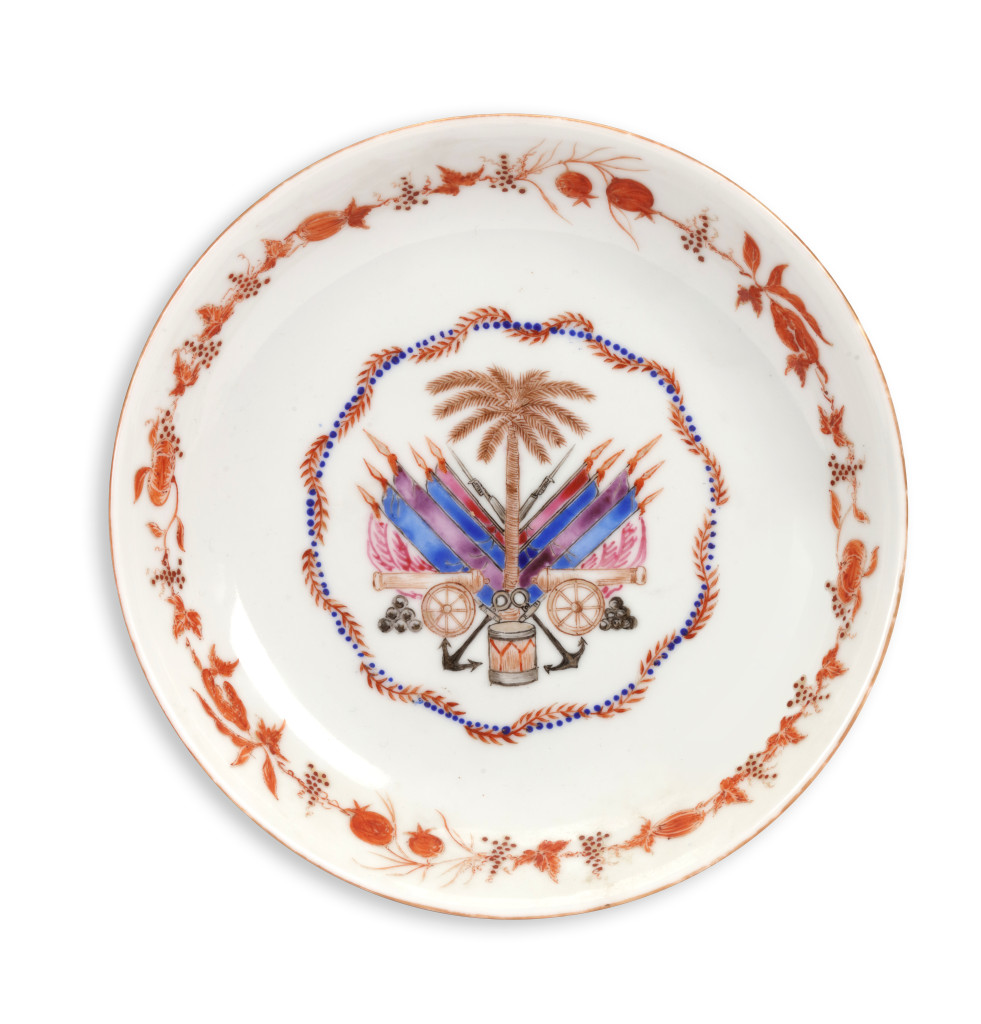
A Chinese export porcelain dish with the Haitian coat-of-arms
_19th century_ _Diam. 18 cm_ Provenance: Private collection, United States
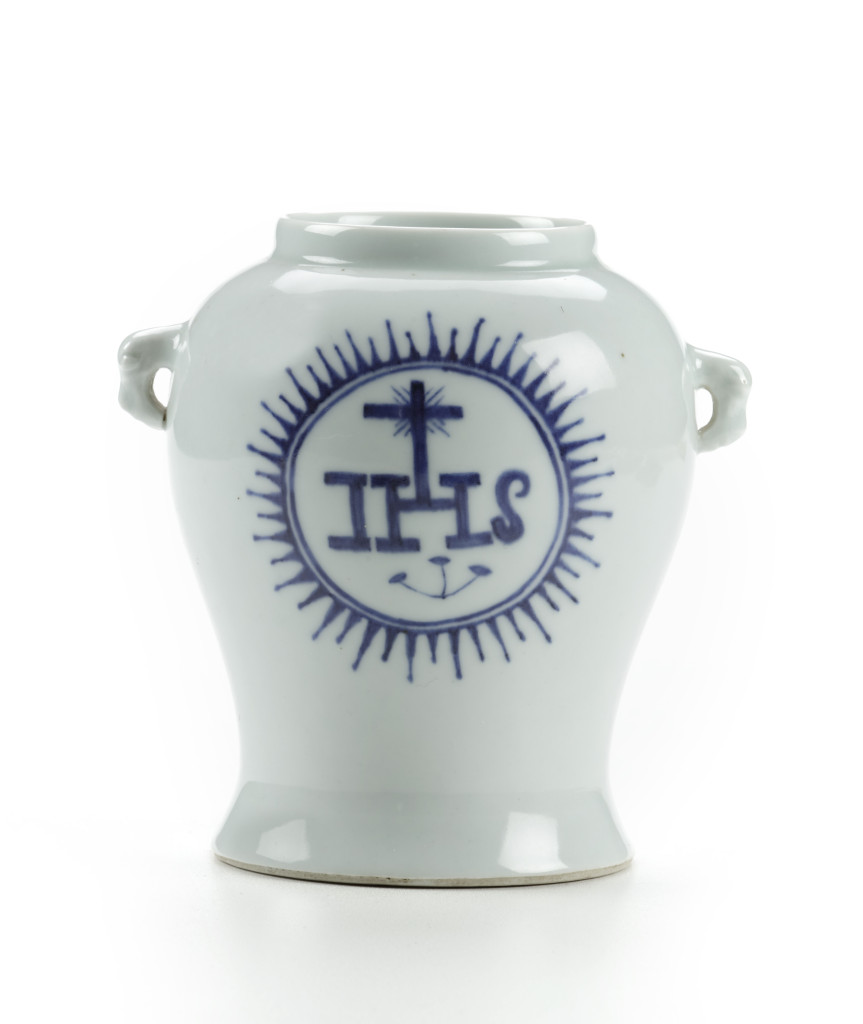
A Chinese blu-and-white porcelain jar with the IHS insignia
Pale white body with centrally an IHS medallion encircled by a halo.