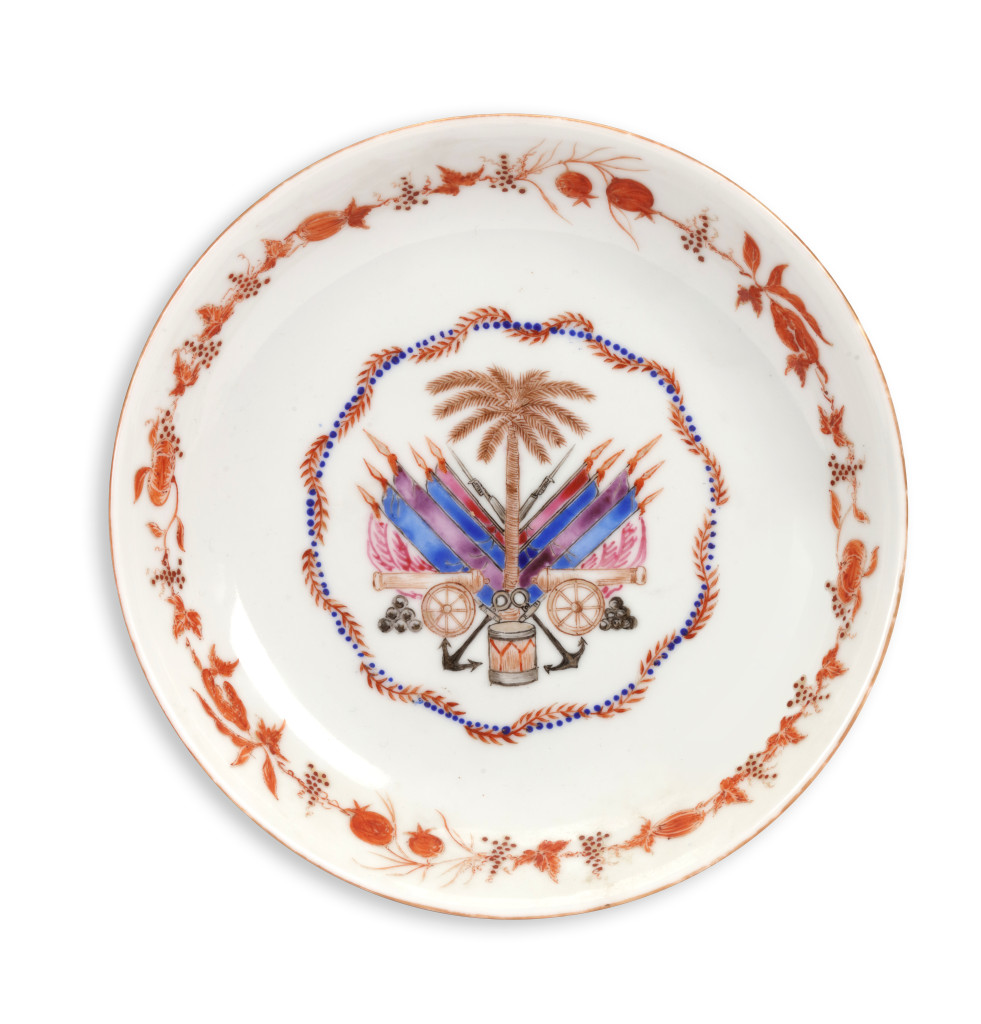
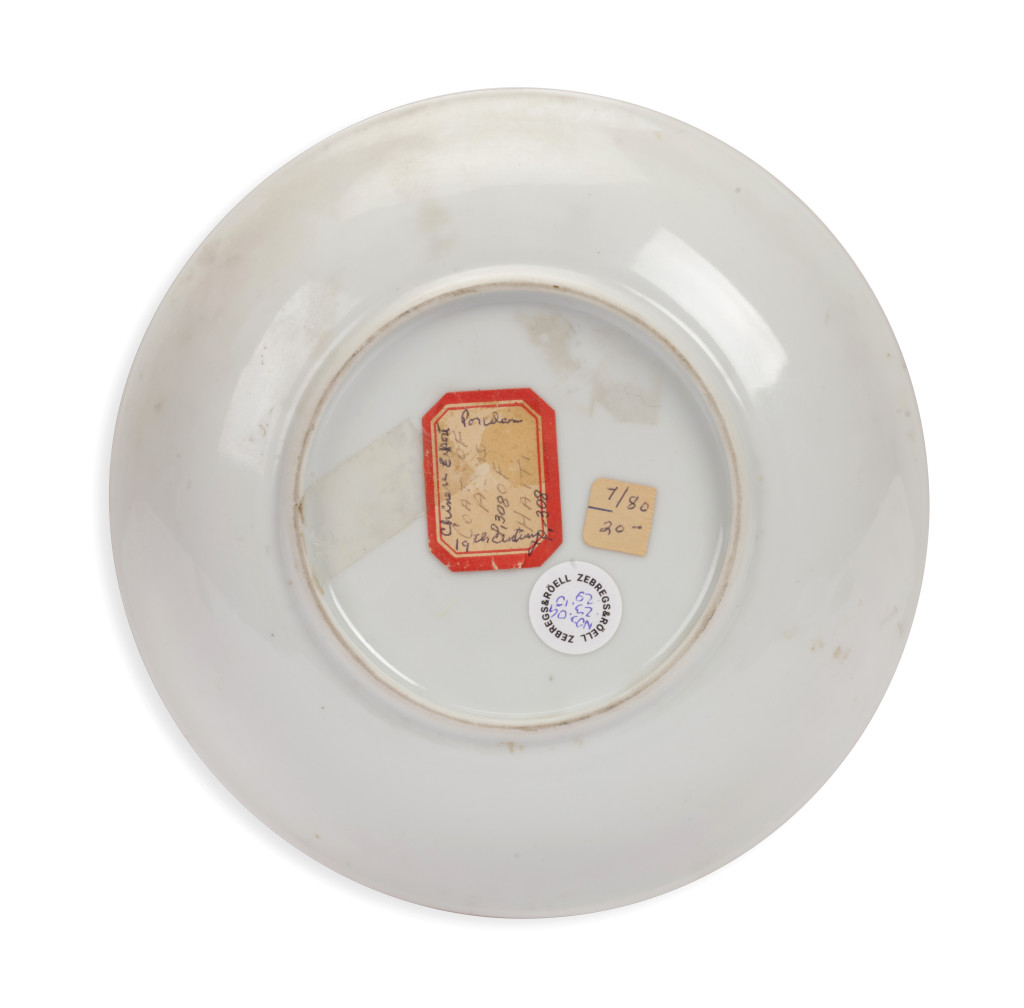
A Chinese export porcelain dish with the Haitian coat-of-arms
19th century
Diam. 18 cm
Provenance:
Private collection, United States
The central motif is inspired by Haiti’s coat-of-arms, showing the heraldic colours, as well as the recognizable palm and military trophies. However, it is not heraldically accurate for the flags are miscounted and somewhat reshaped, elements are altered (e.g., anchors added, projectile elements simplified), and key standard features such as the motto and liberty-cap are omitted.
It’s a typical Canton export workshop translation from an imperfect model. Based on prints or drawings supplied by intermediaries, porcelain with a recognizable but ‘approximate’ national emblem was produced. It was likely an order by a Haiti-facing elite, mercantile, consular/diplomatic, or state-adjacent patron.
Henri Christophe (1767-1820), King of Haiti, is known for constructing Citadel Henry, now known as Citadelle Laferrière, the Sans-Souci Palace, the royal chapel of Milot, the Palais de la Belle Rivière and numerous other palaces. It is highly plausible that Henri Christophe was presented, or ordered, a Chinese armorial export porcelain dinner service to be used and displayed in one of these lavish palaces.
Diam. 18 cm
Provenance:
Private collection, United States
The central motif is inspired by Haiti’s coat-of-arms, showing the heraldic colours, as well as the recognizable palm and military trophies. However, it is not heraldically accurate for the flags are miscounted and somewhat reshaped, elements are altered (e.g., anchors added, projectile elements simplified), and key standard features such as the motto and liberty-cap are omitted.
It’s a typical Canton export workshop translation from an imperfect model. Based on prints or drawings supplied by intermediaries, porcelain with a recognizable but ‘approximate’ national emblem was produced. It was likely an order by a Haiti-facing elite, mercantile, consular/diplomatic, or state-adjacent patron.
Henri Christophe (1767-1820), King of Haiti, is known for constructing Citadel Henry, now known as Citadelle Laferrière, the Sans-Souci Palace, the royal chapel of Milot, the Palais de la Belle Rivière and numerous other palaces. It is highly plausible that Henri Christophe was presented, or ordered, a Chinese armorial export porcelain dinner service to be used and displayed in one of these lavish palaces.
Part of the The Americas and China collections.
Related objects
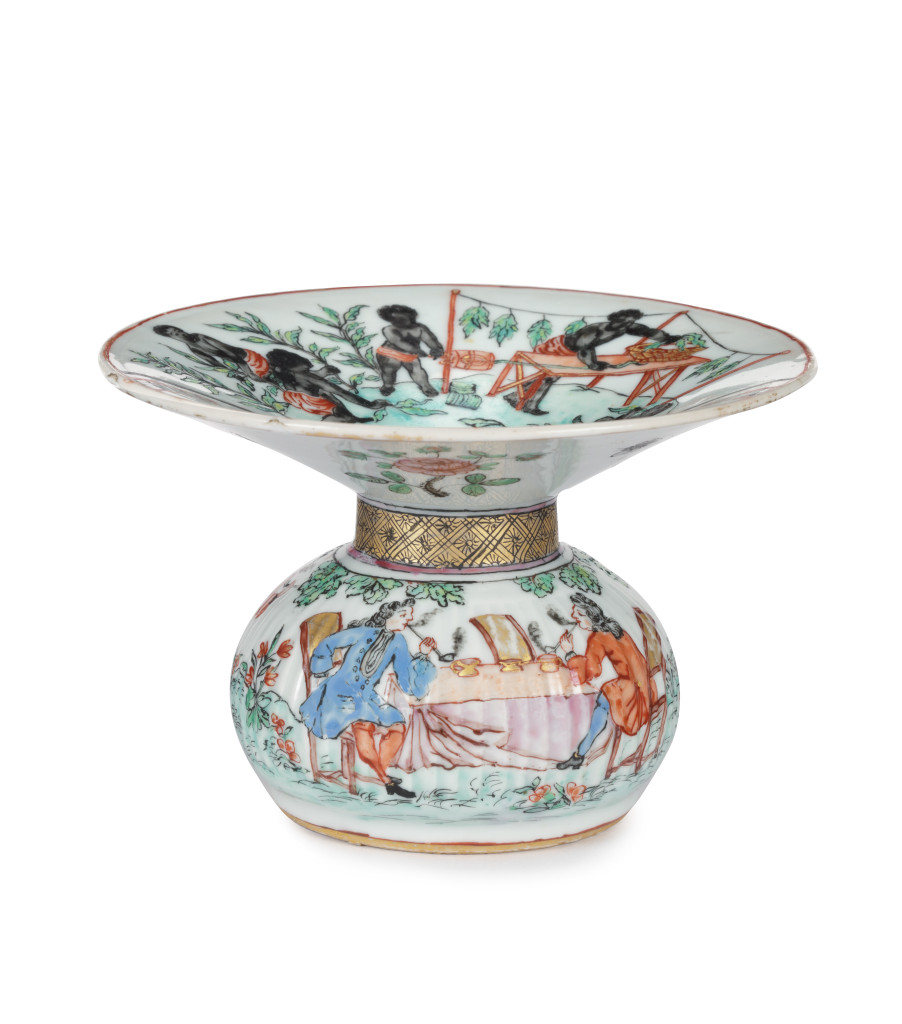
A rare 'Amsterdam decorated' Chinese export porcelain plantation spittoon
Yongzheng/Qianlong period, circa 1720-1740, over-decorated in Holland _H. 9 x Diam. 13.5 cm_ Provenance: Private collection, France
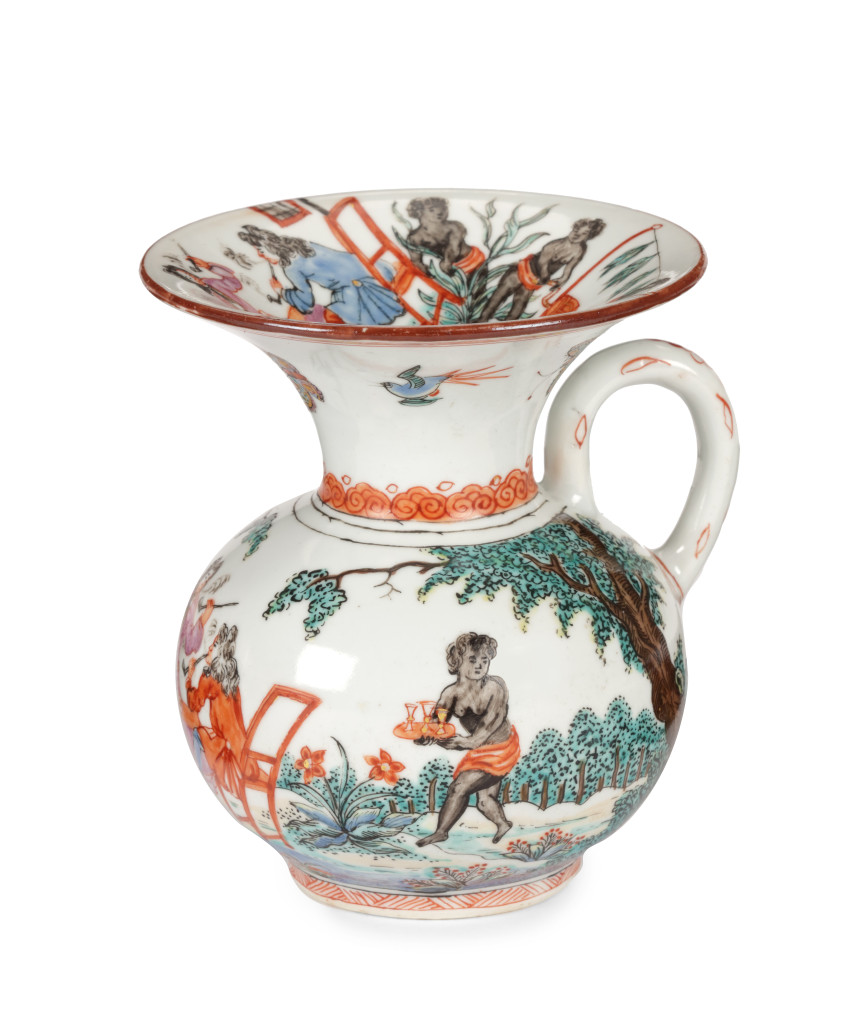
A rare Amsterdam decorated Chinese export porcelain plantation spittoon
_Yongzheng/Qianlong period, circa 1720-1740, over-decorated in Holland_ _H. 11 x Diam. 9.5 cm_ Provenance: -Private collection, the Netherlands -Private collection, the Netherlands (since the early 2000s)
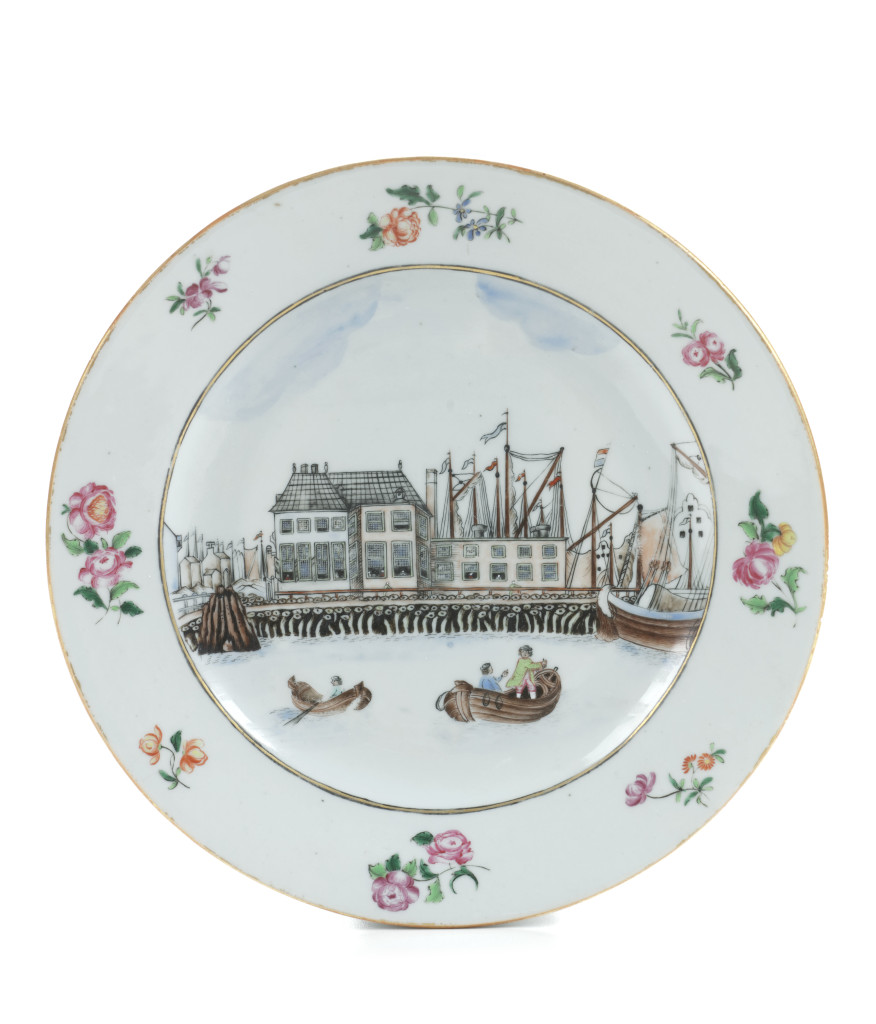
A Chinese famille rose export porcelain 'Amsterdam Waterfront' dish
Chinese Qianlong Amsterdam Dish