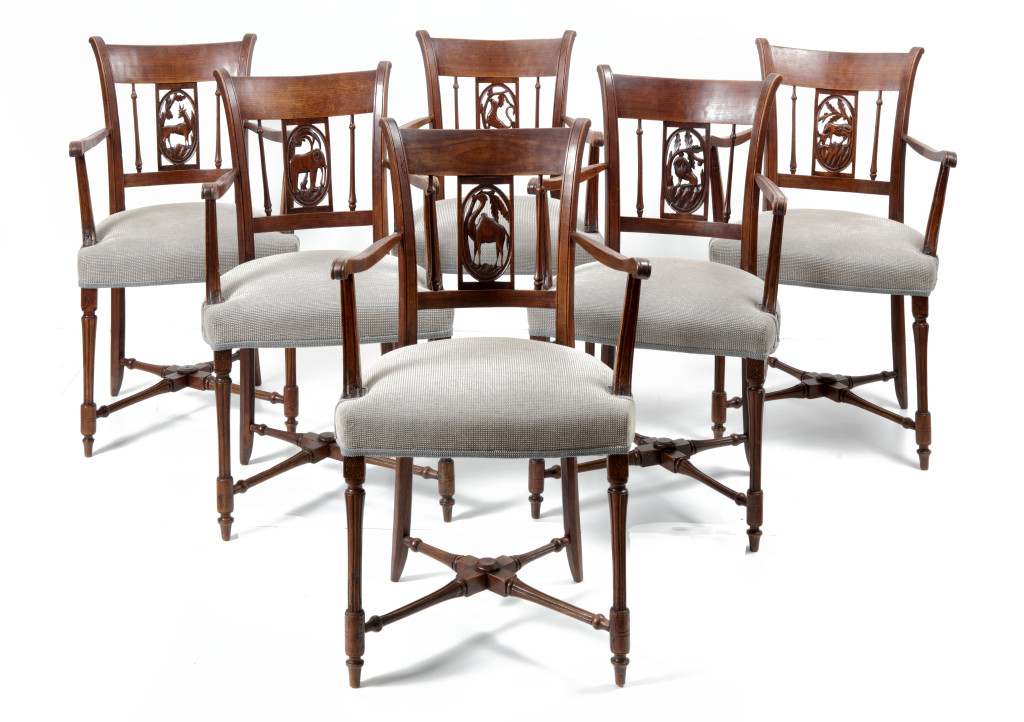
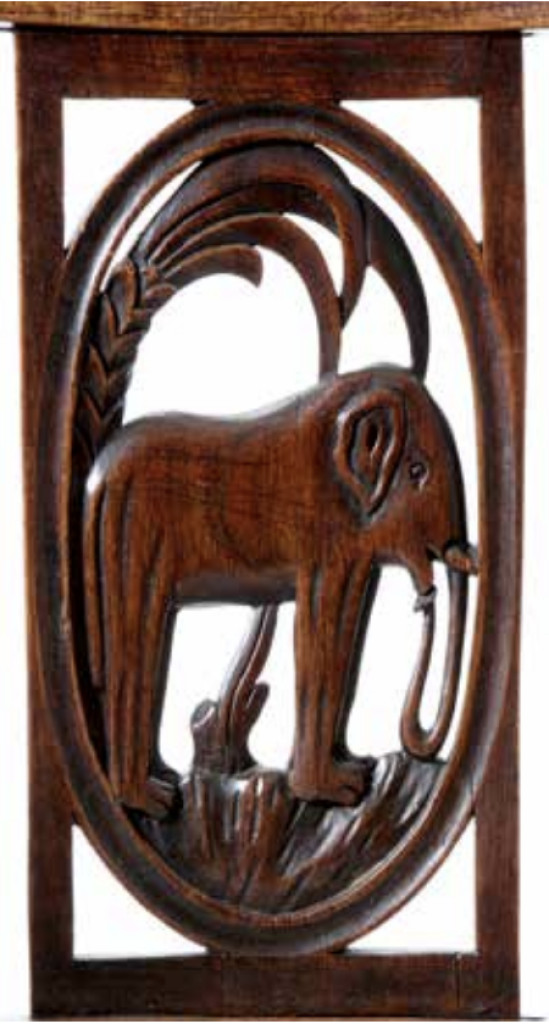
A set of six French directoire chairs with figural back splats depicting African animals
H. 76.5 x W. 49.5 x D. 37 cm
Each in elm and pear wood, with later upholstery, each with a back splat depicting an african animal; elephant, camel, buffalo, lion, antelope and a leopard.
These chairs are possibly so-called “meubles de port” made in Bordeaux or Lorient and ordered by a Frenchman who had returned from (South) Africa.
Related objects
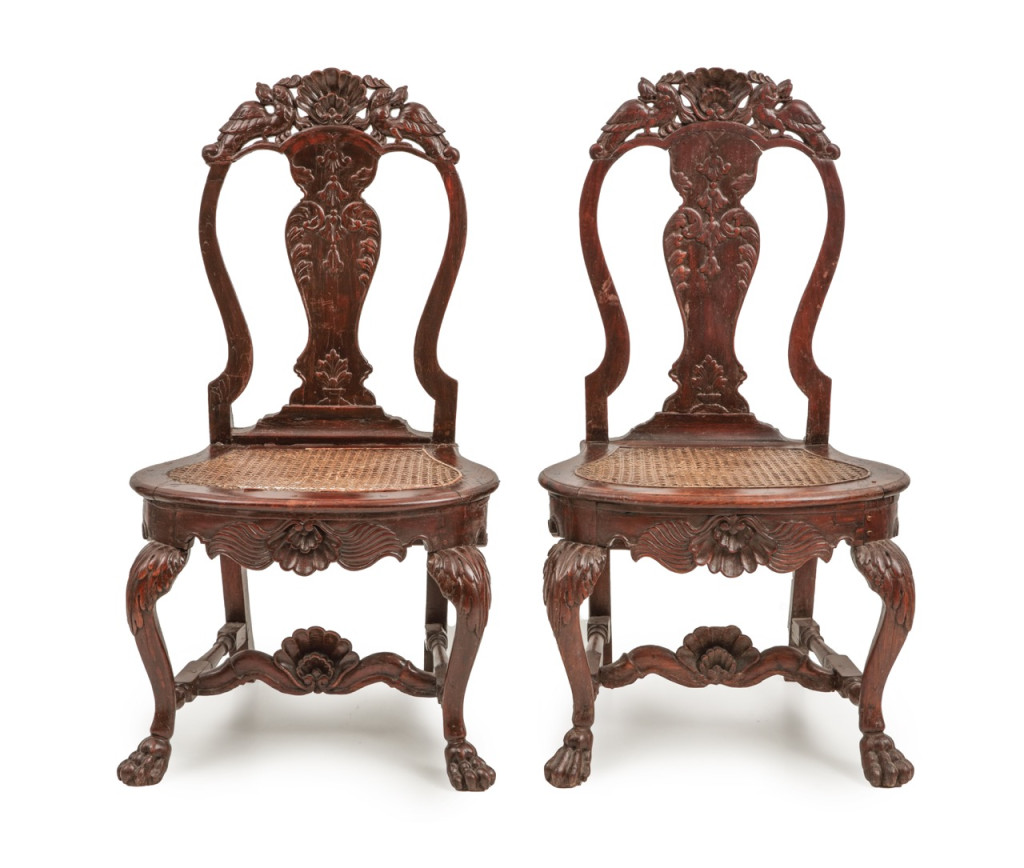
A pair of Dutch colonial Sri Lankan red lacquered high-back side chairs
The carving in the crest of the chairs represents the Garuda, the eagle of Vishnu. Similar chairs can be found in the Wolvendaal Church in Colombo. The wood is probably Bädi-del wood or Breadfruit (Artocarpus Nobilis). However, the red lacquer may have been applied in Batavia after a VOC official stationed in Sri Lanka moved there.
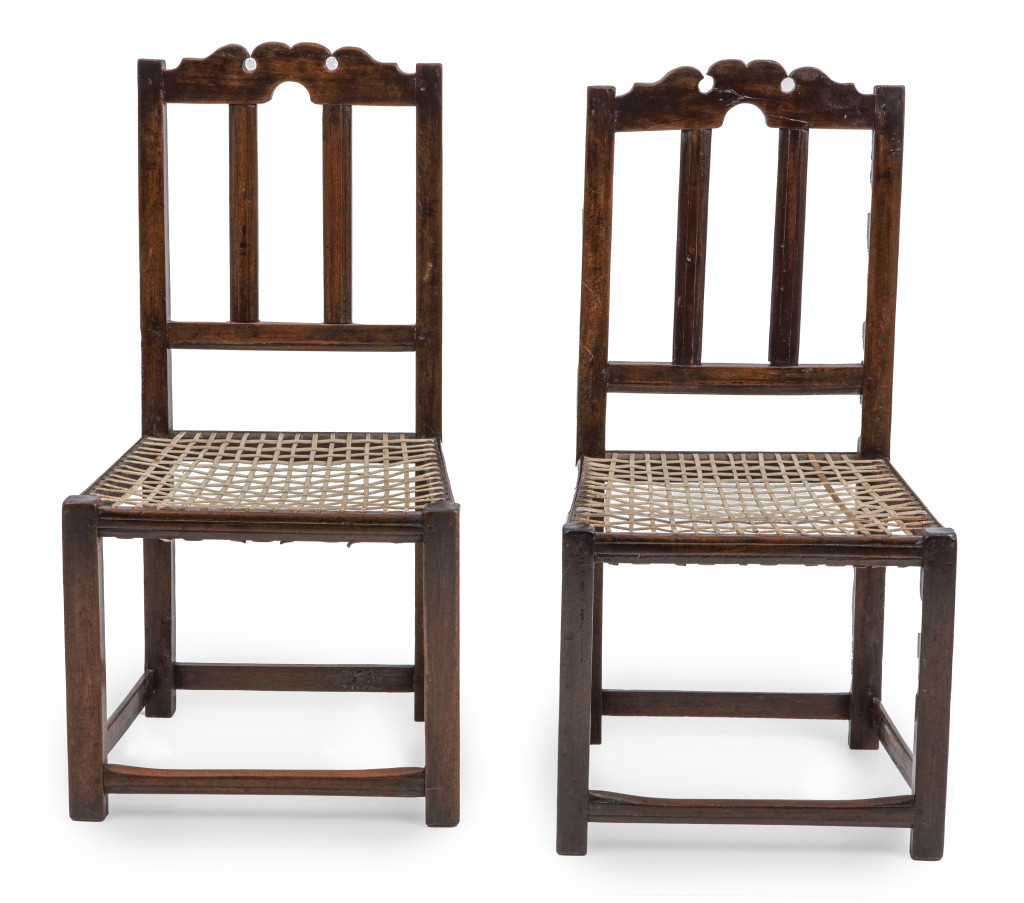
A pair of stinkwood and leather-strip Cape Dutch 'riempie' chairs
The chairs in the so-called Transitional Tulbagh style characterise - as perhaps no other locally-made chairs - a Cape vernacular. The prototype of this chair is the caned high-back chair of the William and Mary period (1690-1705), which was much simplified at the Cape during the first half of the 18th century, becoming a plain country chair with thronging for the seats. The square, upright structure of the chairs is characteristic, with only the shaped crest rail relieving the overall unadorned appearance. This outline was retained as a decorative feature on the backs of settees and chairs until the late 18th century.