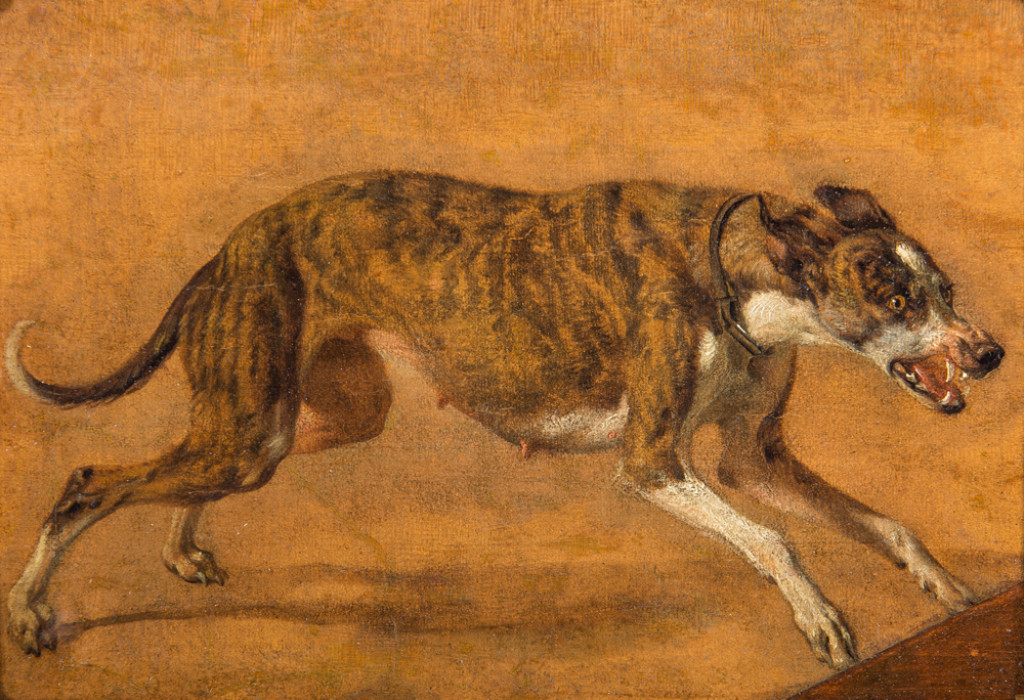
Attributed to Ludolf de Jongh (1616-1679)
Oil on paper laid down on panel, 17.5 x 25.5 cm
Provenance:
Private collection, the Netherlands
We are grateful to Mr Fred Meijer for his attribution to Ludolf de Jongh
Ludolf de Jongh was the son of a shoemaker. When his father moved to Rotterdam, the young Ludolf decided to learn art rather than shoemaking and became a pupil of Cornelis Saftleven. Later he studied under Anthony Palamedes in Delft and still later with Jan van Bijlert in Utrecht. In 1635 he travelled to France with Francis Bacon. Seven years later, in 1642, he returned to the Netherlands when he heard that his mother had fallen ill. He set up a shop in Rotterdam, and his earliest signed paintings date from that year.
According to Houbraken, his travels had caused him to speak French so fluently, that his parents had to learn French in order to speak with him. De Jongh’s work shows a strong influence from the Utrecht school of Caravaggio admirers, especially Jacob Duck, but also from Pieter de Hooch. In the 1650’s he was one of the most fashionable painters of Rotterdam. He experimented with various innovations in portraiture in this period, both from a psychological perspective with expressions, but also with the use of space and lighting. He married the daughter of a member of the highest circles of Rotterdam, Pieter Montagne and was granted a rank of major in the schutterij, that he fulfilled until 1697, the year he died. From 1660 onwards he painted less, and this may have been due to his responsibilities as a major, as a merchant, and later as a magistrate in Hillegersberg.
Part of the Europe collection.
Related objects
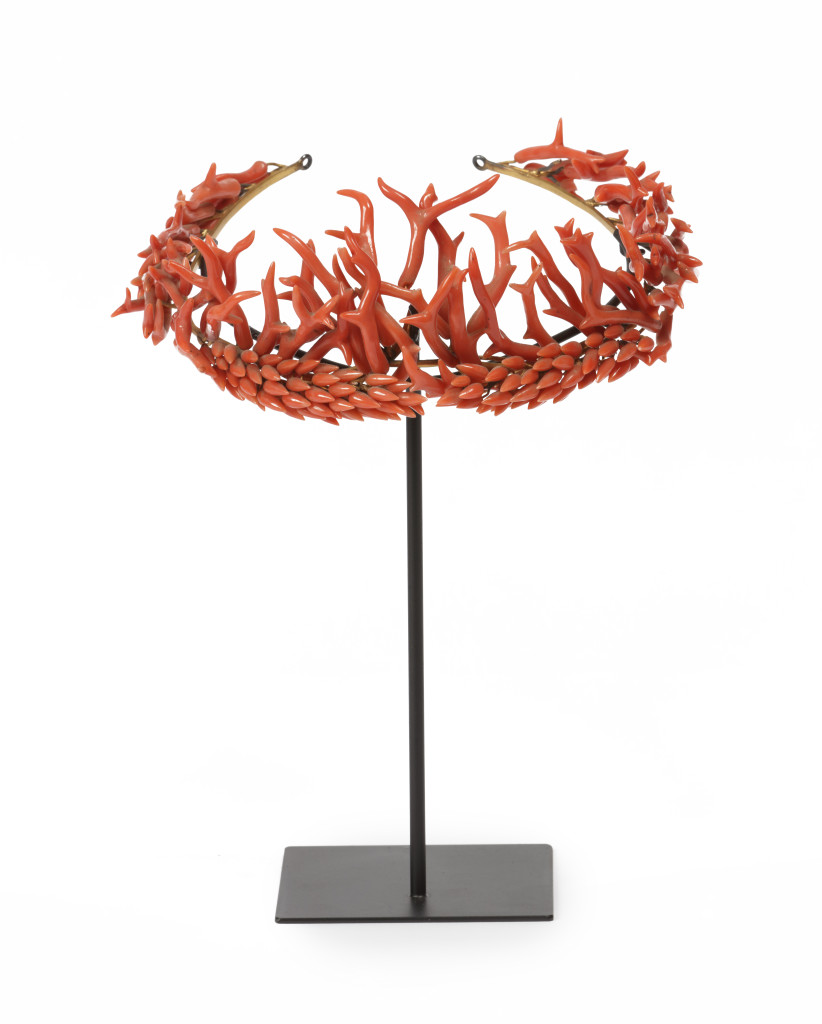
A Red Coral (Corallium rubrum) crown or tiara attributed to the Phillips Brothers of London
Although the present piece bears no signature, it is closely related to the work of the Phillips Brothers, for whom Robert Phillips was the leading supplier of coral objects in London. As early as 1870, the company was able to title itself “The most complete collection of fine coral work in the world". Coral jewellery, from elaborate tiaras like the one presented to simple strings of beads, was one of the most characteristic forms of personal jewellery in the Victorian era. The origins of the fashion have been variously traced to Napoleon’s Italian campaigns; to the coral jewellery of a royal bride (the Duchess d’Aumale in Naples in 1845); or (more circularly) to the era’s general interest in decorative naturalism. The European centre for coral design was Naples, with easy access to beds of red coral in the Mediterranean, which were indeed largely destroyed by the popularity during this period. The most prominent designer Robert Phillips directed the fashion from his studio on Cockspur Street. Its heyday in Britain - particularly of the naturalistic strain, which preserved the spiky natural shapes of the coral forms - were the 1850s. Later the fashion collapsed, perhaps under its own weight. (Anderson, 2008)
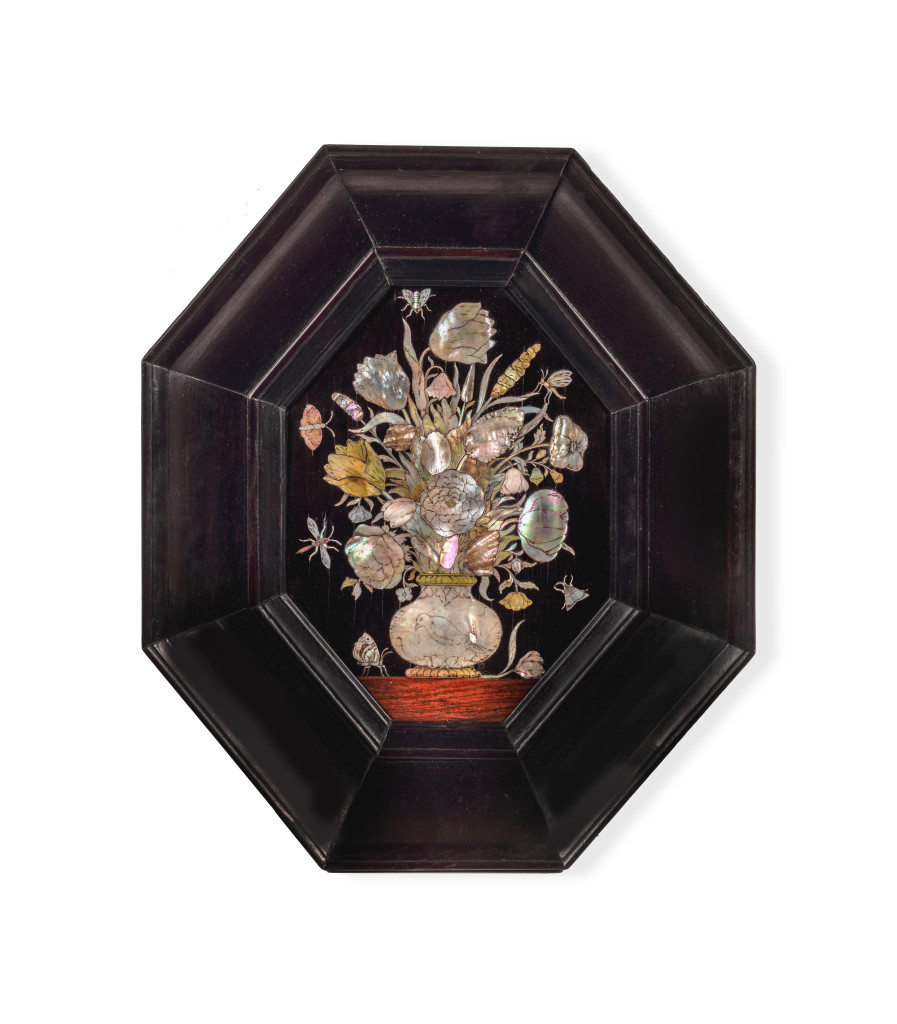
A Dutch mother of pearl inlaid panel depicting a vase of flowers attributed to Anna Maria van Rijswijck (c. 1628 - 1671-1672)
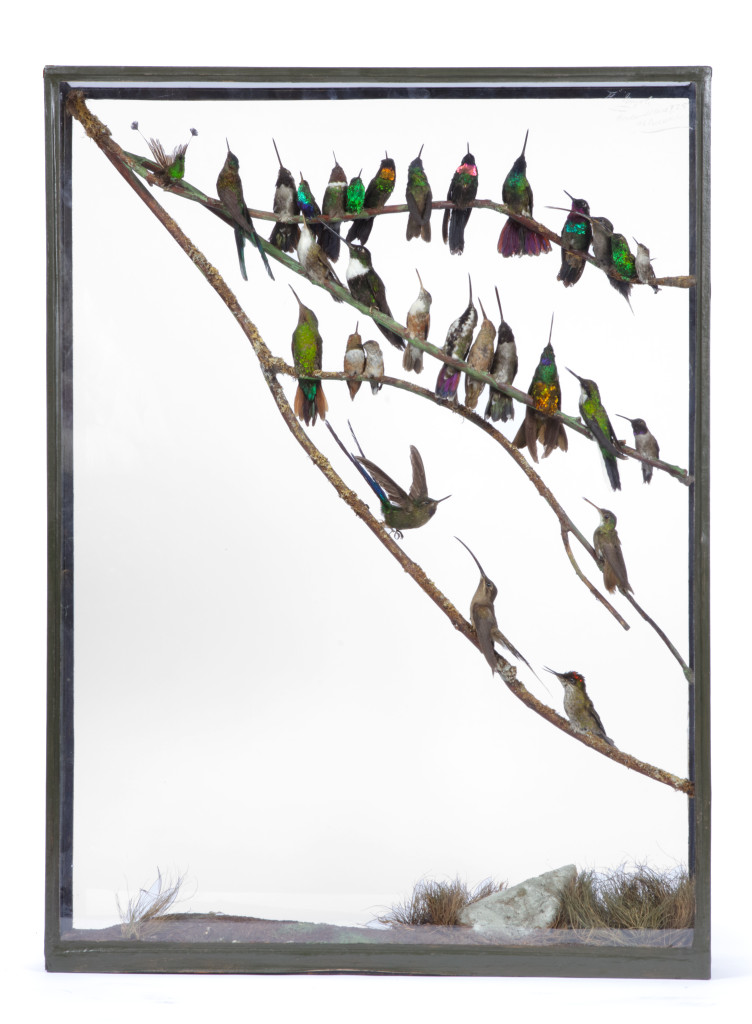
A delicate case with Taxidermy Hummingbirds attributed to Rowland Ward (1848-1912)
England, circa 1890-1910, the front glass engraved for 'The Jungle, Piccadilly Circus, London”