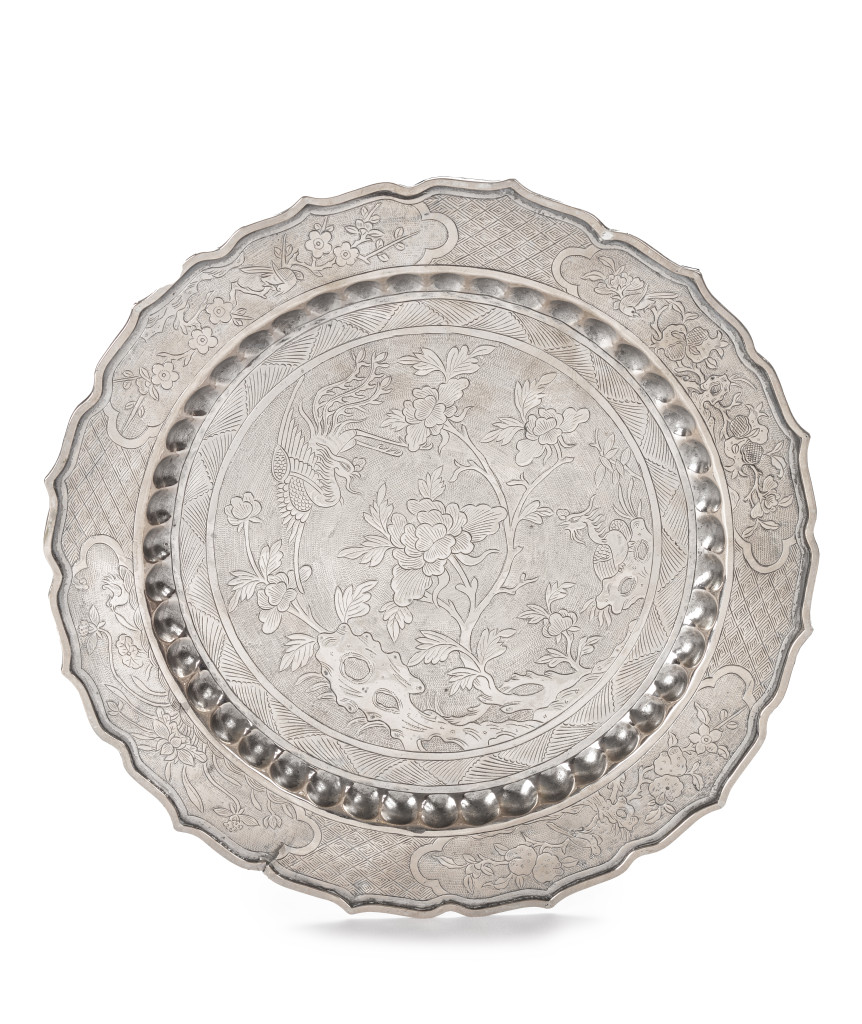
A silver Indonesian Peranakan plate
Jakarta (Batavia), 1st quarter 18th century, apparently unmarked, engraved at the reverse DLN 05298676
Diam. 27.5 cm
Weight 317 grams
The undulating rim of the plate has four cartouches decorated with various birds amongst the flowers of the four seasons, cherry blossom (winter), peony (spring), lotus (summer) and chrysanthemum (autumn), separated by trellis work. The middle of the plate is decorated with two phoenixes amongst blossoming peonies: clearly Indo- Chinese or so-called Peranakan work. From about 1680 until De Chinese Moord, the Chinese Murder, in 1740, the Chinese were the largest community in Jakarta (Batavia) and provided an essential contribution to the development of the city. A similar plate was in the Dutch Reformed Church in Depok, according to tradition donated to the church by Cornelis Chastelein, Ordinary Member of the Council of the Indies from 1705 until his death in 1714. Depok was one of Chastelein’s estates where he had a pepper plantation. He bought twelve enslaved families for the estate, but since he opposed slavery he converted as many enslaved as he could to Christianity so he could free them. The Council of Batavia had ruled the slavery of Christians was against the Bible, so Chastelein was able to free at least 200 enslaved.
Diam. 27.5 cm
Weight 317 grams
The undulating rim of the plate has four cartouches decorated with various birds amongst the flowers of the four seasons, cherry blossom (winter), peony (spring), lotus (summer) and chrysanthemum (autumn), separated by trellis work. The middle of the plate is decorated with two phoenixes amongst blossoming peonies: clearly Indo- Chinese or so-called Peranakan work. From about 1680 until De Chinese Moord, the Chinese Murder, in 1740, the Chinese were the largest community in Jakarta (Batavia) and provided an essential contribution to the development of the city. A similar plate was in the Dutch Reformed Church in Depok, according to tradition donated to the church by Cornelis Chastelein, Ordinary Member of the Council of the Indies from 1705 until his death in 1714. Depok was one of Chastelein’s estates where he had a pepper plantation. He bought twelve enslaved families for the estate, but since he opposed slavery he converted as many enslaved as he could to Christianity so he could free them. The Council of Batavia had ruled the slavery of Christians was against the Bible, so Chastelein was able to free at least 200 enslaved.
Related objects
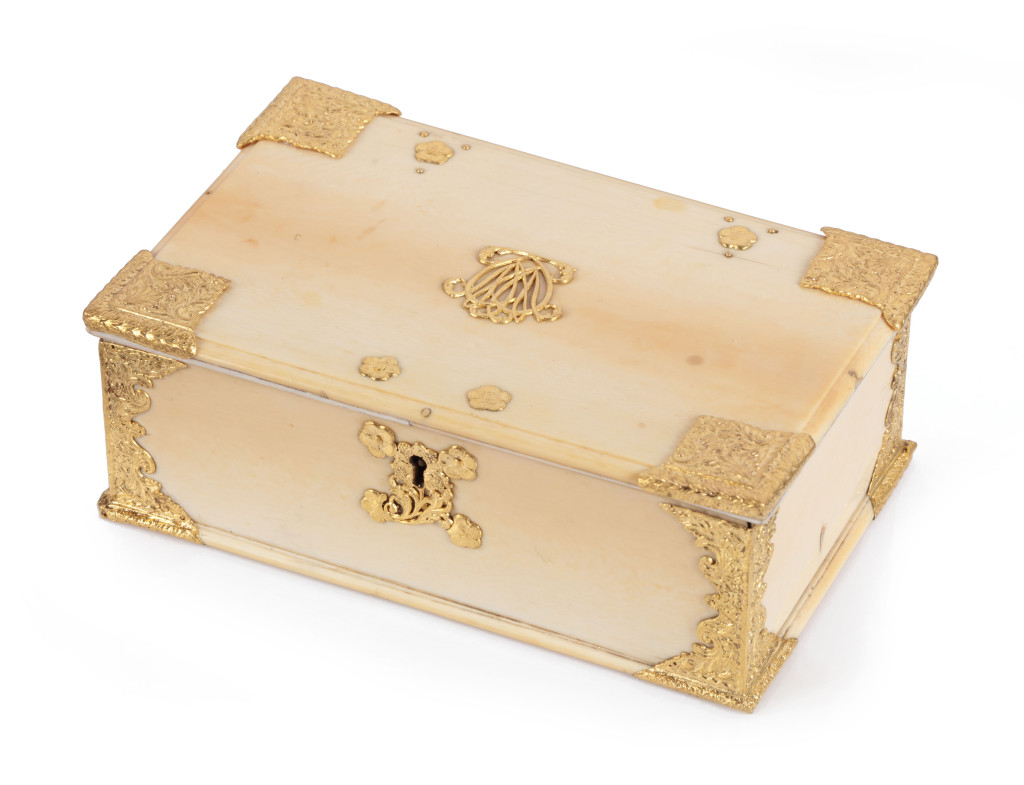
A Dutch colonial Indonesian betel box with gold mounts
Sri Lanka or Jakarta (Batavia), late 18th century, apparently unmarked
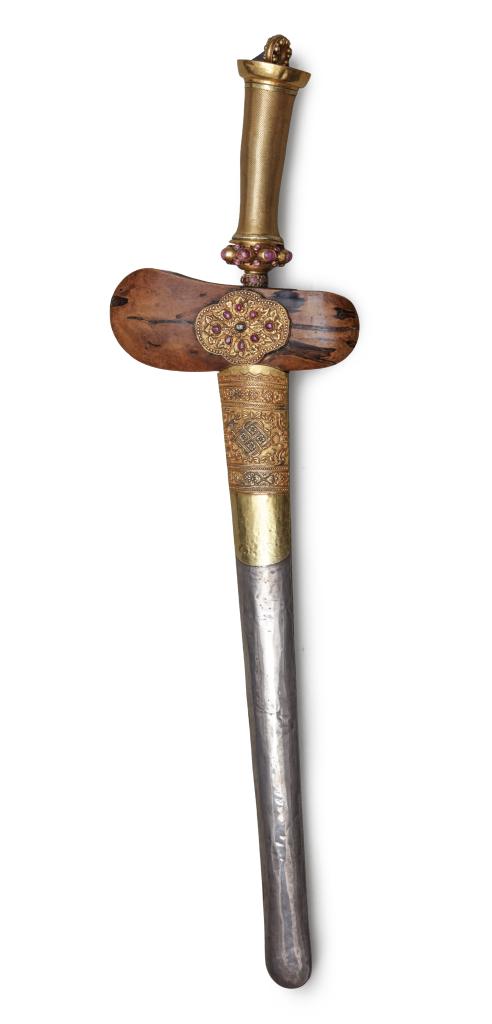
A Balinese kris with gold and silver mounts decorated with ruby cabochons
_Bali, 18th century, the scabbard late 19th century_ _L. 60 cm_ Provenance: Private collection, Germany