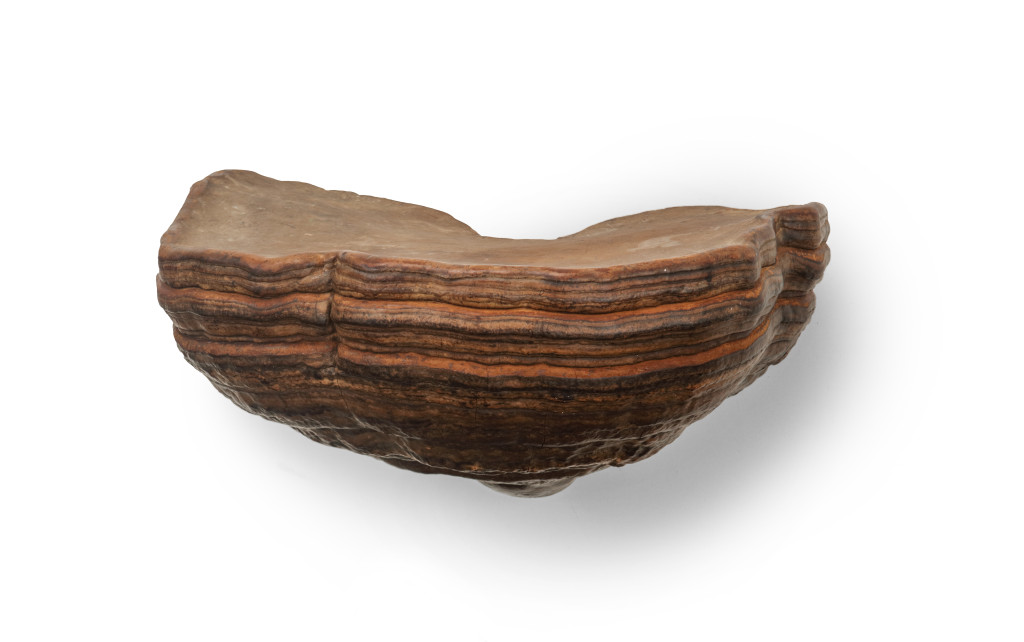
A wall console made from a real tinder hoof bracket fungus (Fomes fomentarius)
The dried natural fungus head is supported on a projecting fungal growth in the back and spreading out dramatically with a lobed outline, one side with an uneven surface and naturally gnarled, the natural patina of a warm brown color. Two apertures drilled to the backside and fitted with metal hooks.
L. 32 cm
Weight approx. 2.2 kg
Provenance:
Private collection, the Netherlands
The bracket hoof fungus (Fomes fomentarius), also known as tinder fungus or false tinder fungus, has a rich history of use across various cultures, dating back thousands of years. Recognisable by its hoof-like shape and woody texture, this perennial polypore has been employed in medicine, craftsmanship, and even the kitchen.
One of the most famous applications of Fomes fomentarius is as a fire starter. Its inner layers, particularly the spongy amadou, were traditionally processed to create tinder. When dried and treated, the amadou is highly flammable, making it a crucial tool for early human survival. This is evidenced by the fact that Ötzi the Iceman, a well-preserved mummy from around 3300 BCE, carried pieces of this fungus for fire-making during his Alpine journey.
It was also valued for its antimicrobial properties in traditional medicine. Folk remedies across Europe and Asia used it to treat wounds, stop bleeding, and even manage inflammation. The fungus was often boiled into teas or applied directly to affected areas. Recent studies have identified compounds within Fomes fomentarius with potential anti-cancer and antioxidant properties, though such uses remain primarily within natural medicine.
Despite its tough and woody nature, the bracket hoof fungus has found less common but intriguing culinary uses. When properly processed, the amadou layer can be softened and used to create a fabric-like material. This unique feature has been utilized by artisans in regions like Transylvania to fashion hats, bags, and even clothing.
The versatility of Fomes fomentarius even extends to the decorative arts – as proven by the present wall bracket. Quite possibly, the use of a piece from nature indoors as a shelve to place something on is an invention from Romanticism. After all, during industrialisation, many people longed to return to idyllic farming, nature and fairytales.
Part of the Europe collection.
Related objects
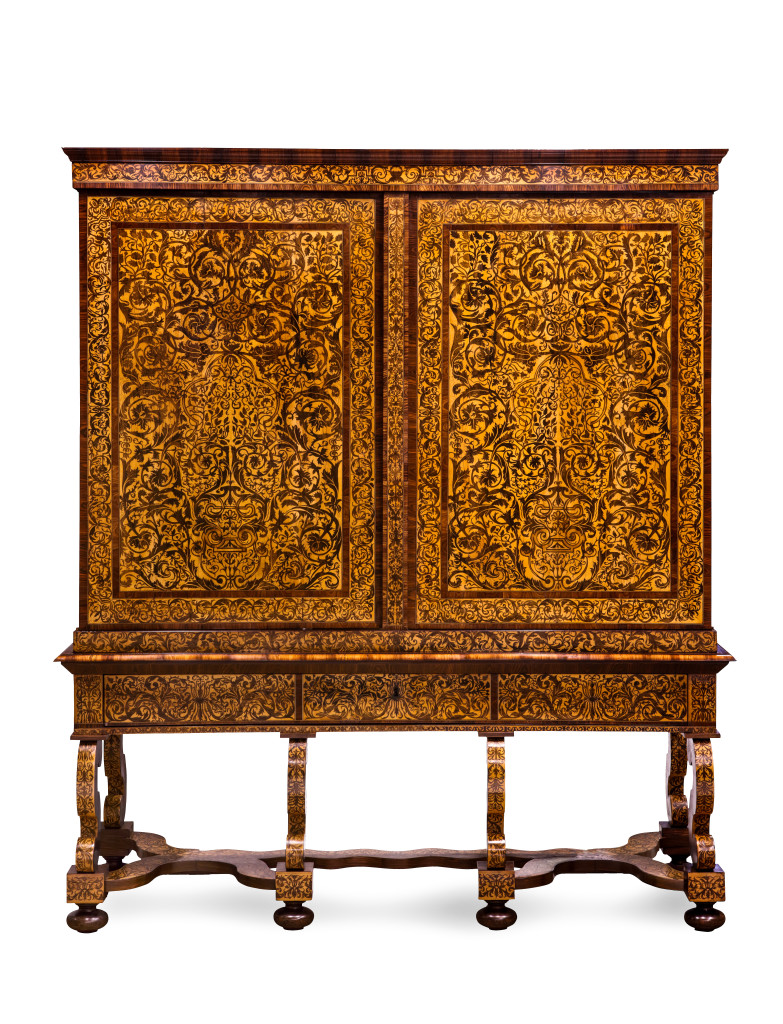
A magnificent Dutch marquetry cabinet on stand, by Jan van Mekeren (1658-1733) possibly made for William III and Mary of England
A magnificent Dutch marquetry cabinet on stand, by Jan van Mekeren (1658-1733) possibly made for William III and Mary of England. The oak cabinet is decorated with 'arabesque' or 'seaweed' marquetry in Turkish walnut (Juglans regia) on a holly (Ilex aquifolium) font, surrounded by a kingwood (Dalbergia cearensis) border. The top has a modest rectangular cornice of a frieze over two doors revealing the interior fitted with four shelves and five drawers. The inside of the doors and the drawer fronts are veneered with plain cedar (probably Cedrus atlantica). The stand has a frieze drawer and is raised on six S-shaped legs, joined by shaped stretchers and raised on turned ball feet. The entire cabinet, from the cornice to the stretchers, is covered in marquetry.
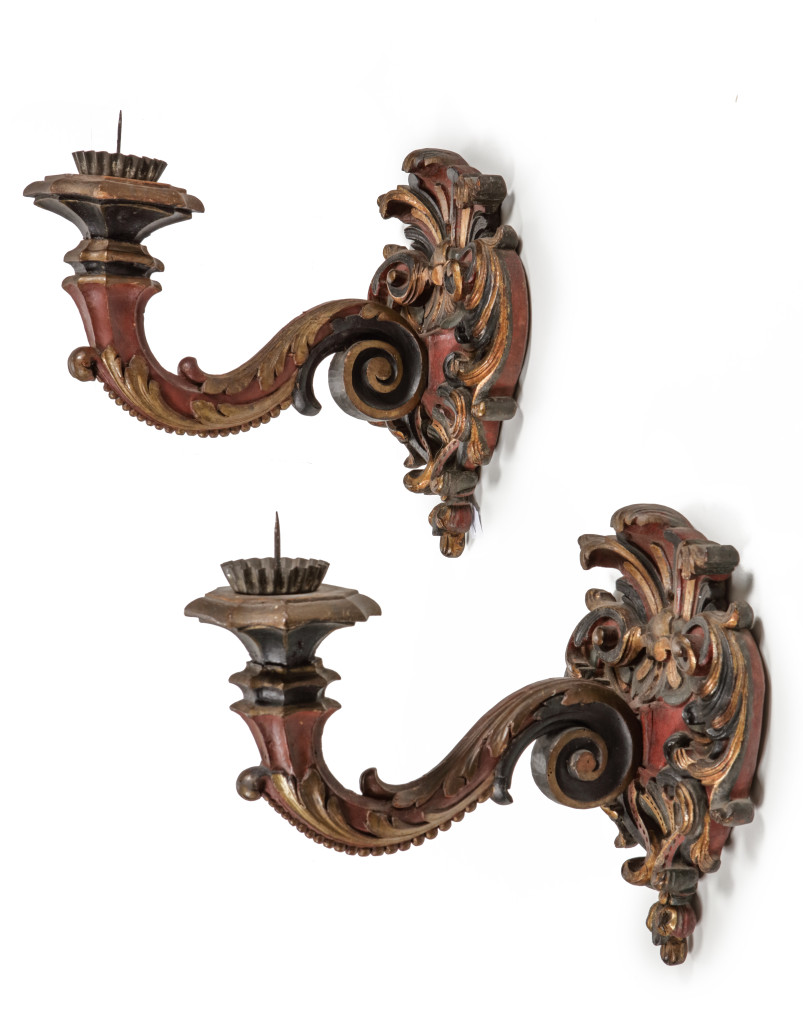
A fine pair of Indonesian red, black and gold lacquered djati wood wall lights
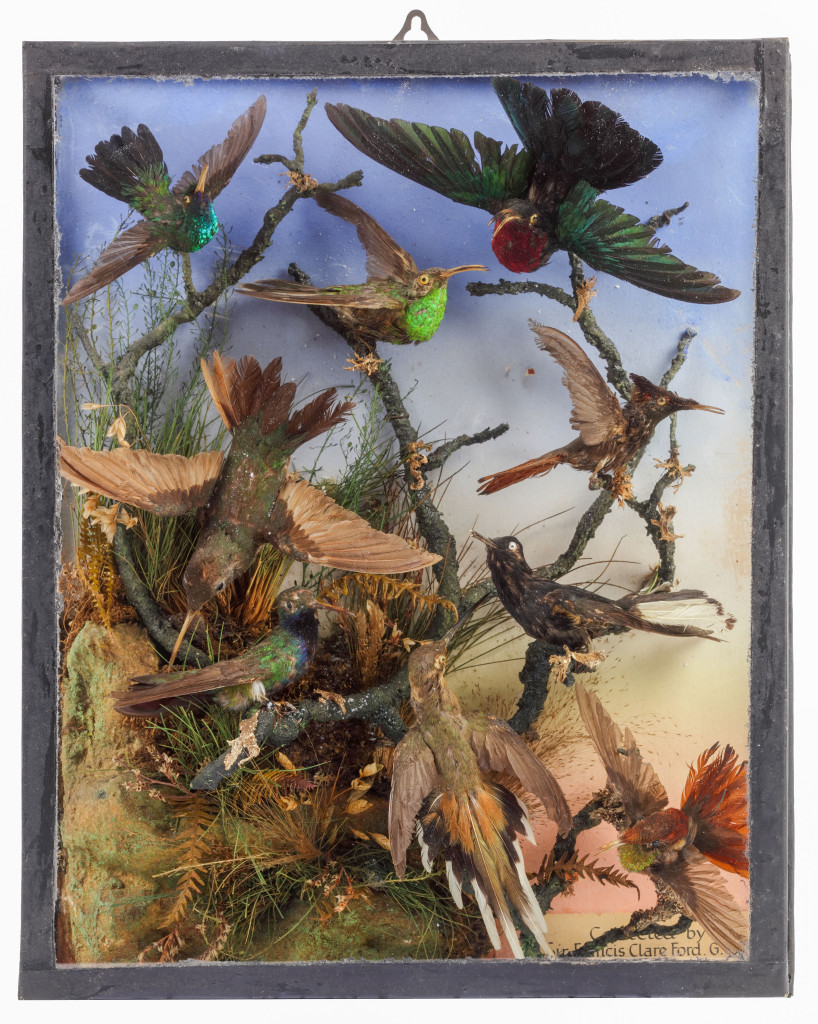
A Victorian display wall case with taxidermy hummingbirds (Trochilidae) collected by Sir Francis Clare Ford (1828-1899)
Taxidermy Hummingbirds collected by Francis Clare Ford