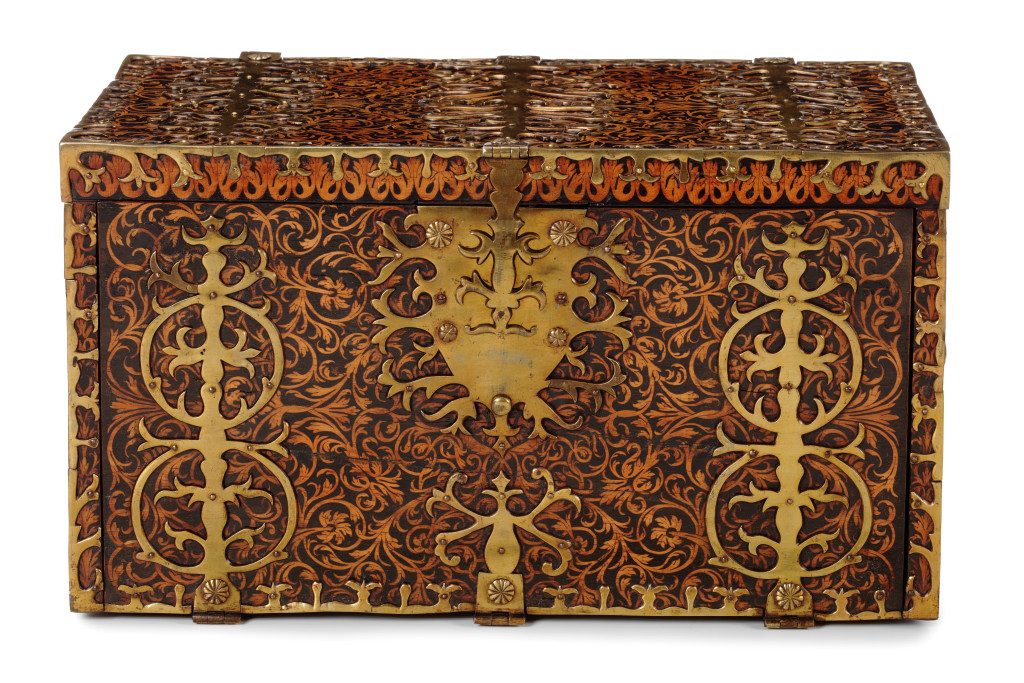
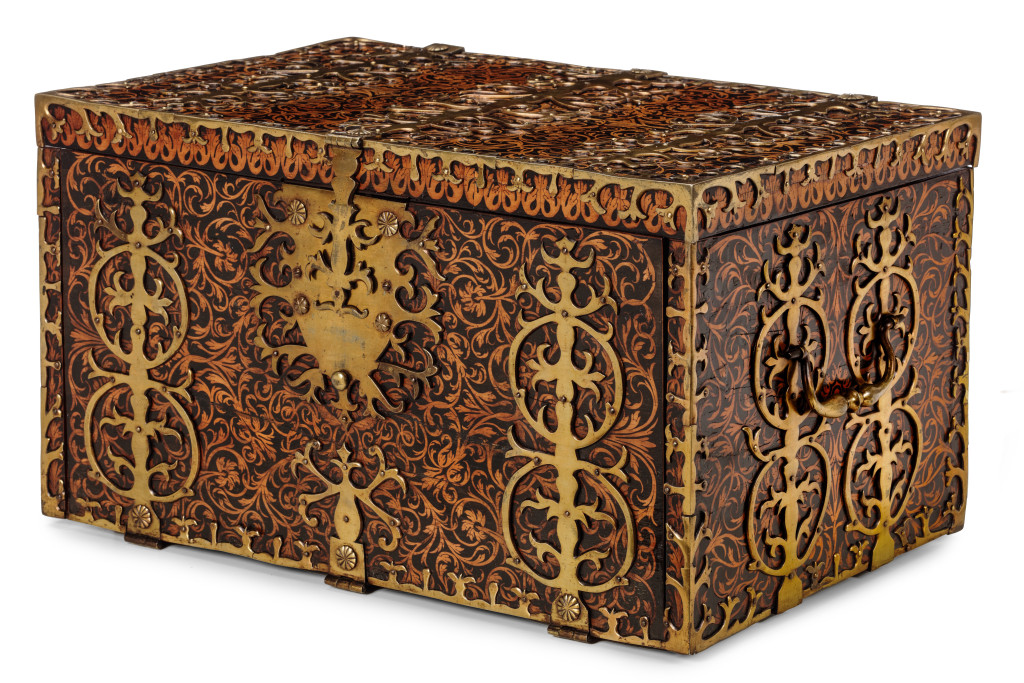
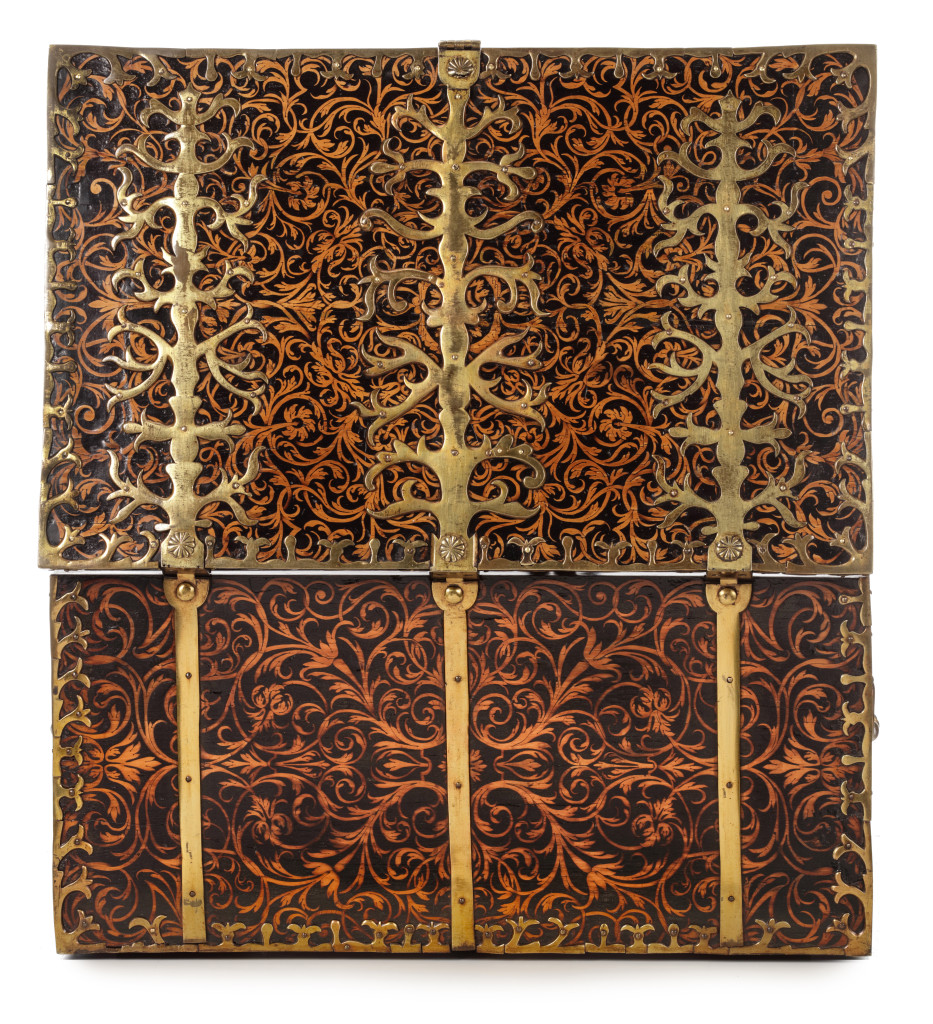
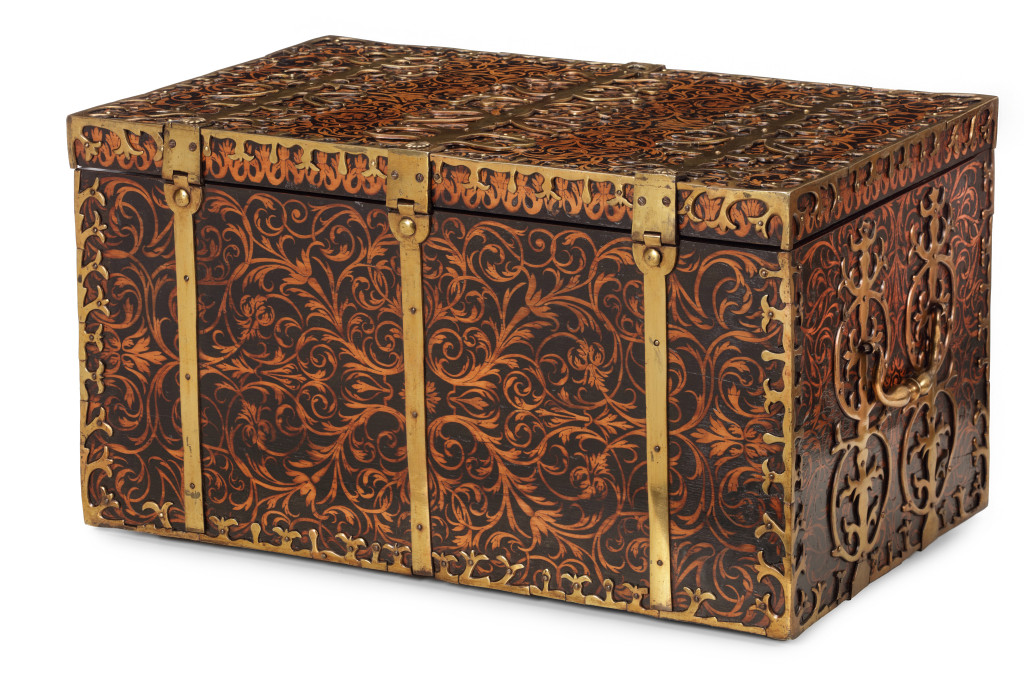
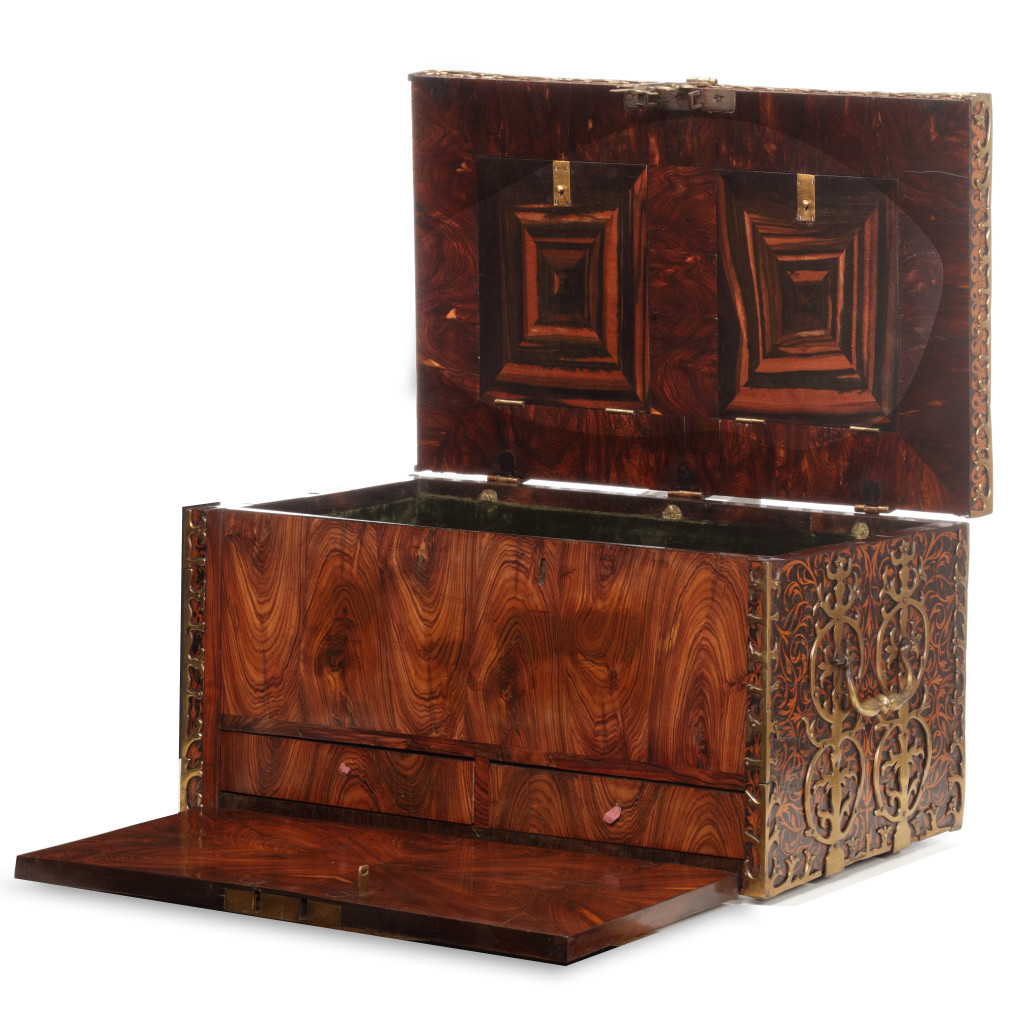
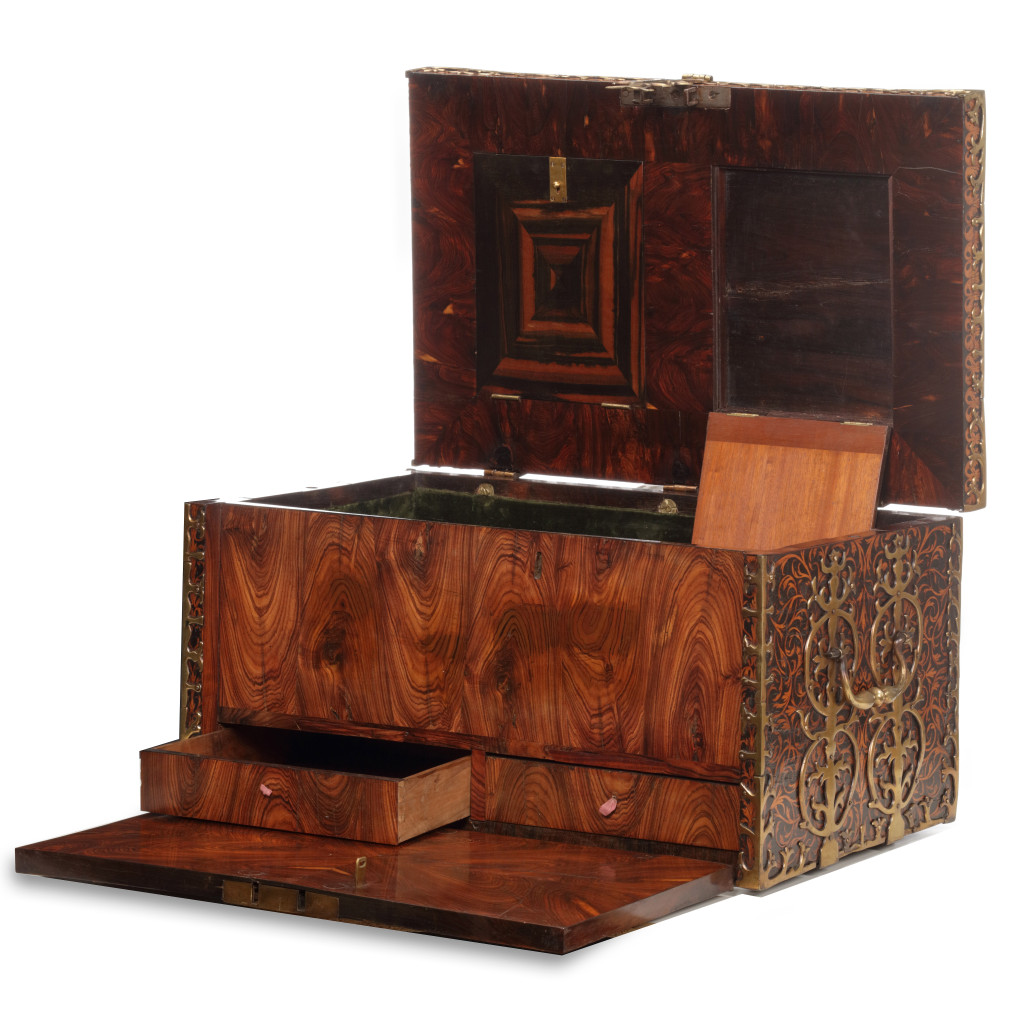
A seaweed marquetry veneered strongbox or 'captain's chest' by Royal Cabinetmaker Gerrit Jensen (1635-1715)
England, circa 1680-1700
The strongbox, known as a coffre fort, retains its many hidden compartments. For instance, within the trunk’s lid are two trap doors, revealing five drawers behind the left door and three drawers behind the right. Furthermore, in the rim of the trunk, four more small drawers are concealed behind thin wooden panels. The latch on the inside face of the trunk, too, can be unlocked to open a fall front, revealing two more drawers. The exterior is delicately veneered in 'seaweed' or arabesque foliate veneer, and the interior retains the original green silk velvet lining.
H. 40 x W. 63 x D. 34 cm
Provenance:
Collection of a Gentleman, purchased in England in the 1970s; thence by descent
This is one of only three thus far known examples of strongboxes with seaweed or arabesque marquetry by Gerrit Jensen, one of which is in the Duke of Devonshire Collection at Chatsworth House and the other at Ham House. Jensen (1635-1715) was of Dutch or Flemish origin and was known to be working in London from premises in St. Martin’s Lane by 1680. He was the only cabinetmaker in England during this period known to have used metal inlays and elaborate 'seaweed’ or ‘arabesque’ marquetry.
Adam Bowett attributes these fine seaweed marquetry strongboxes to Jensen, but doesn't do it fully. He states that "although an attribution is tempting (and Jensen certainly supplied strongboxes to several patrons), marquetry of this style is too common to warrant an attribution on that basis alone. On the other hand, Jensen's claim to authorship is as good as anybody's." About this type of strongbox, he further remarks that they conform to a standard design and that it's possible that they didn't come from furniture makers but from specialized workshops. The metalware was ordered separately and cut to length by the strongbox maker. (1)
He was a furniture supplier to important houses and royal palaces such as Whitehall, St. James, Somerset House, Kensington, Windsor Castle, Hampton Court, and the royal residence at Newmarket. His furniture reflects the fashionable French court styles of Pierre Golle, André Charles Boulle, and Daniel Marot. He was appointed a royal cabinetmaker in 1689–1710 and supplied King William III and Queen Mary II (r. 1689–1702) and Queen Anne (r. 1702-1714).
Source:
Adam Bowett, Gerrit Jensen: Royal Cabinet Maker, 1635-1715, Northall Press, Ripon, 2023, pp. 83-84
The strongbox, known as a coffre fort, retains its many hidden compartments. For instance, within the trunk’s lid are two trap doors, revealing five drawers behind the left door and three drawers behind the right. Furthermore, in the rim of the trunk, four more small drawers are concealed behind thin wooden panels. The latch on the inside face of the trunk, too, can be unlocked to open a fall front, revealing two more drawers. The exterior is delicately veneered in 'seaweed' or arabesque foliate veneer, and the interior retains the original green silk velvet lining.
H. 40 x W. 63 x D. 34 cm
Provenance:
Collection of a Gentleman, purchased in England in the 1970s; thence by descent
This is one of only three thus far known examples of strongboxes with seaweed or arabesque marquetry by Gerrit Jensen, one of which is in the Duke of Devonshire Collection at Chatsworth House and the other at Ham House. Jensen (1635-1715) was of Dutch or Flemish origin and was known to be working in London from premises in St. Martin’s Lane by 1680. He was the only cabinetmaker in England during this period known to have used metal inlays and elaborate 'seaweed’ or ‘arabesque’ marquetry.
Adam Bowett attributes these fine seaweed marquetry strongboxes to Jensen, but doesn't do it fully. He states that "although an attribution is tempting (and Jensen certainly supplied strongboxes to several patrons), marquetry of this style is too common to warrant an attribution on that basis alone. On the other hand, Jensen's claim to authorship is as good as anybody's." About this type of strongbox, he further remarks that they conform to a standard design and that it's possible that they didn't come from furniture makers but from specialized workshops. The metalware was ordered separately and cut to length by the strongbox maker. (1)
He was a furniture supplier to important houses and royal palaces such as Whitehall, St. James, Somerset House, Kensington, Windsor Castle, Hampton Court, and the royal residence at Newmarket. His furniture reflects the fashionable French court styles of Pierre Golle, André Charles Boulle, and Daniel Marot. He was appointed a royal cabinetmaker in 1689–1710 and supplied King William III and Queen Mary II (r. 1689–1702) and Queen Anne (r. 1702-1714).
Source:
Adam Bowett, Gerrit Jensen: Royal Cabinet Maker, 1635-1715, Northall Press, Ripon, 2023, pp. 83-84
Related objects
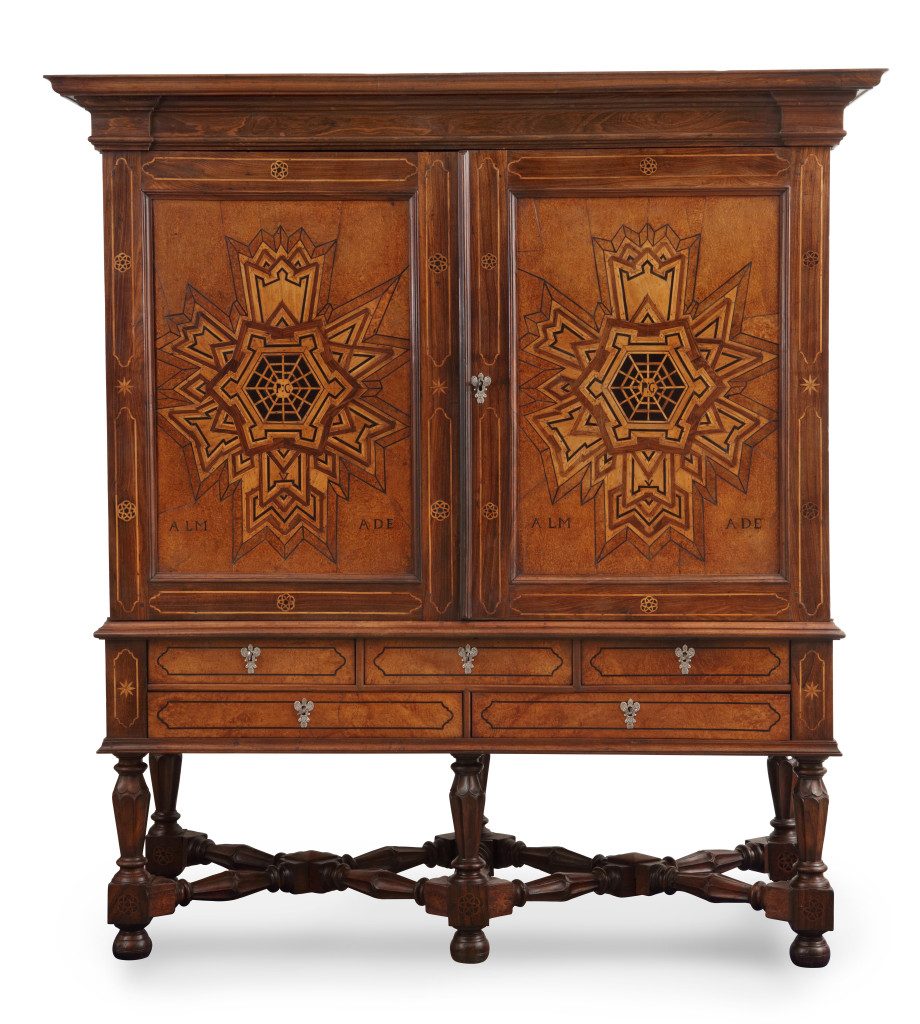
A Dutch-colonial cabinet on stand with marquetry depiction of Fort Almada in Portugal
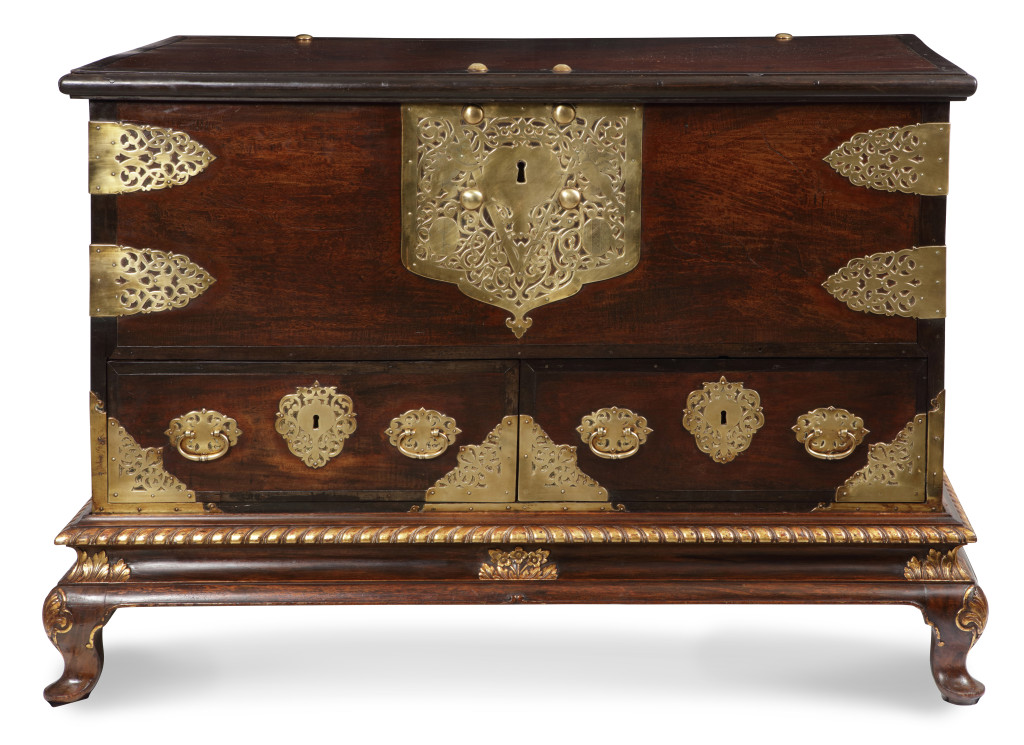
A large Dutch-colonial padouk wood 'VOC' chest on a stand
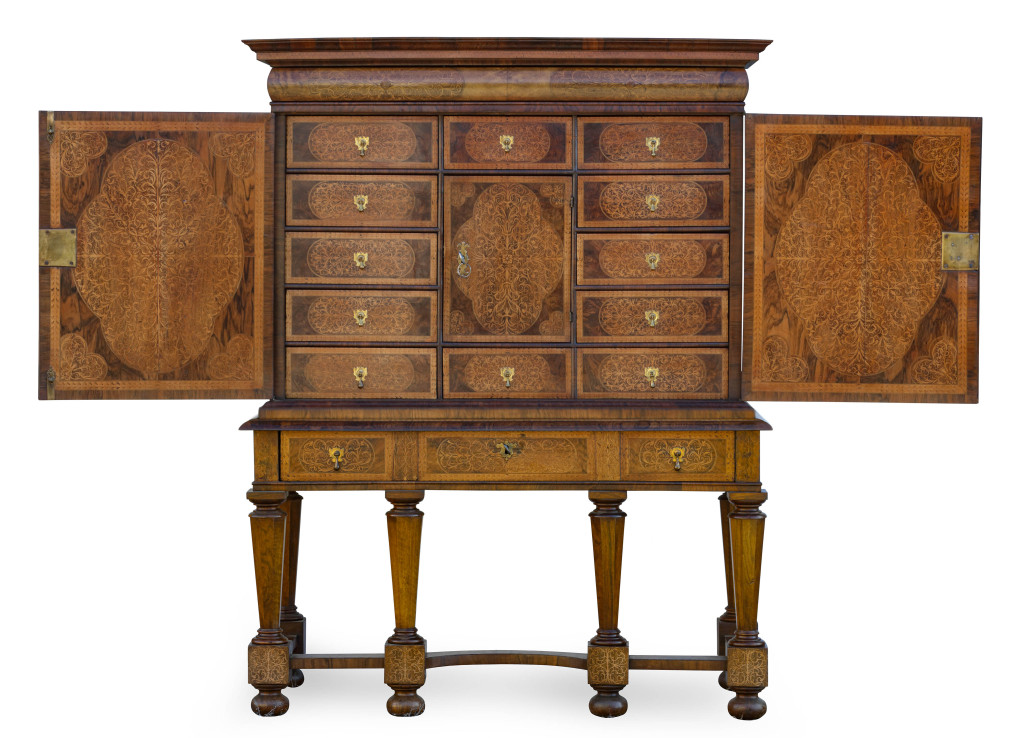
A 'seaweed' marquetry cabinet on stand attributed to the royal cabinetmaker Gerrit Jensen (1667–1715)
_England, the stand probably Holland, circa 1690_ _H. 163 x W. 127 x D. 53 cm_ Provenance: -Private collection, Sicily -Private collection, the Netherlands