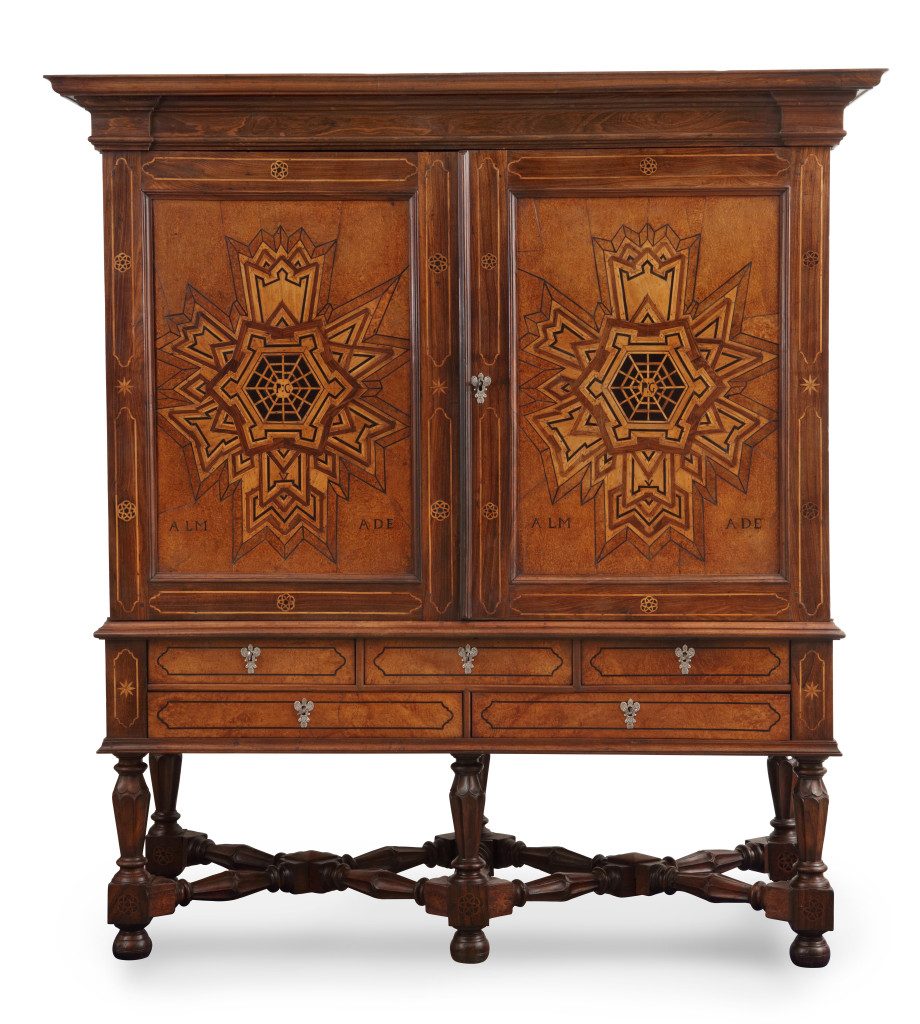
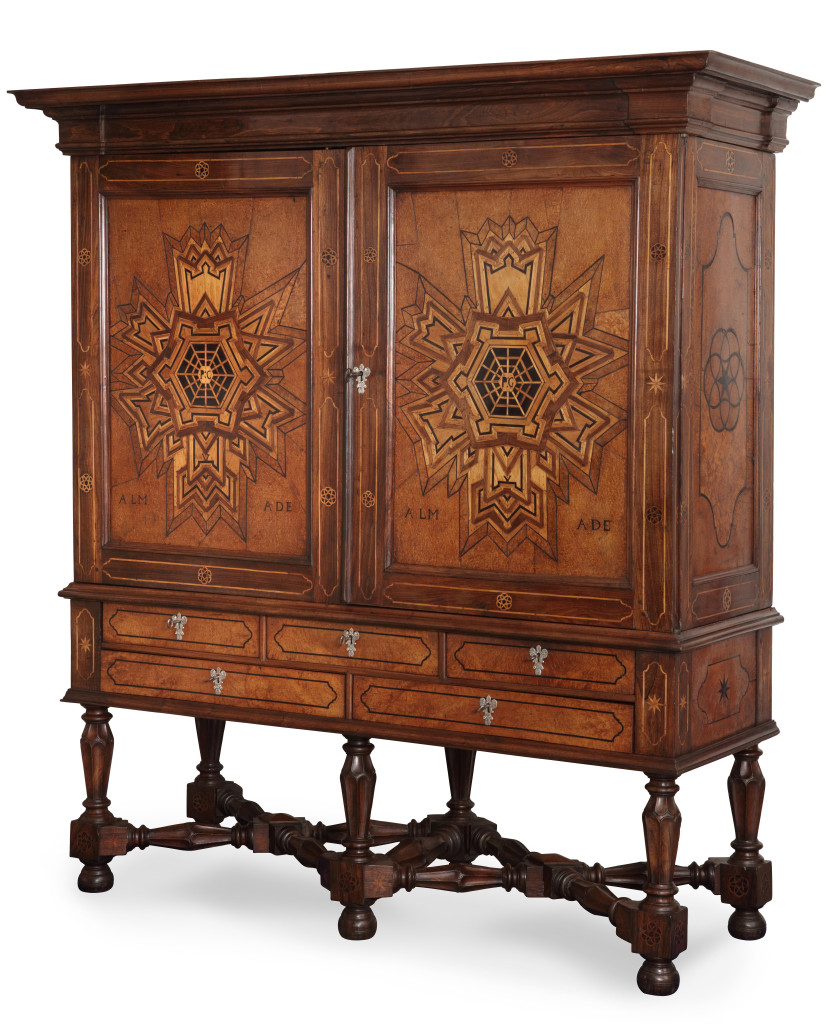
A Dutch-colonial cabinet on stand with marquetry depiction of Fort Almada in Portugal
Former Dutch East Indies, Sri Lanka (Ceylon) or Batavia (Jakarta), early 18th century
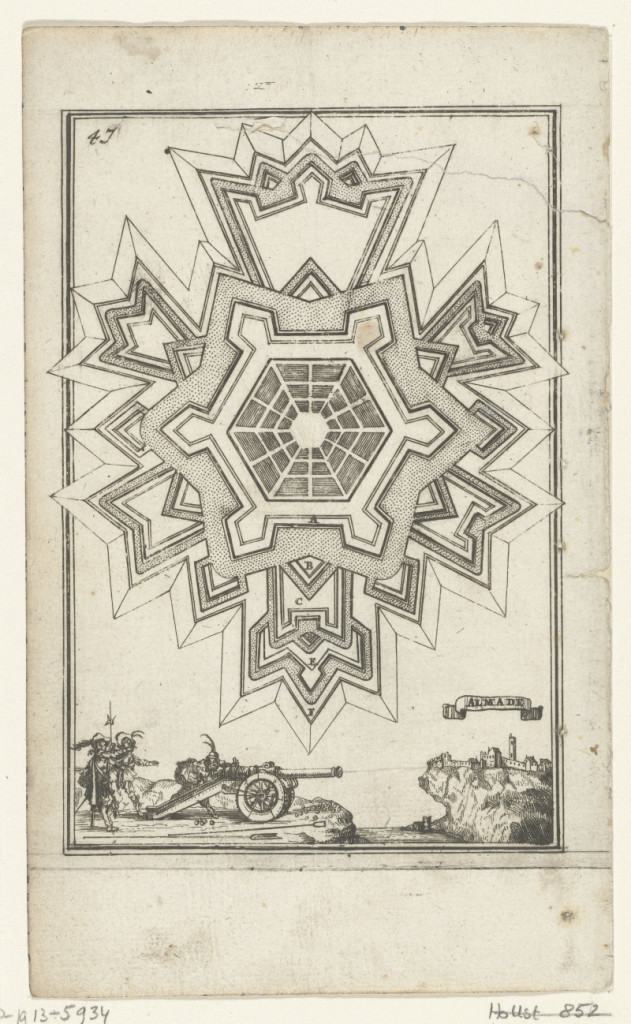
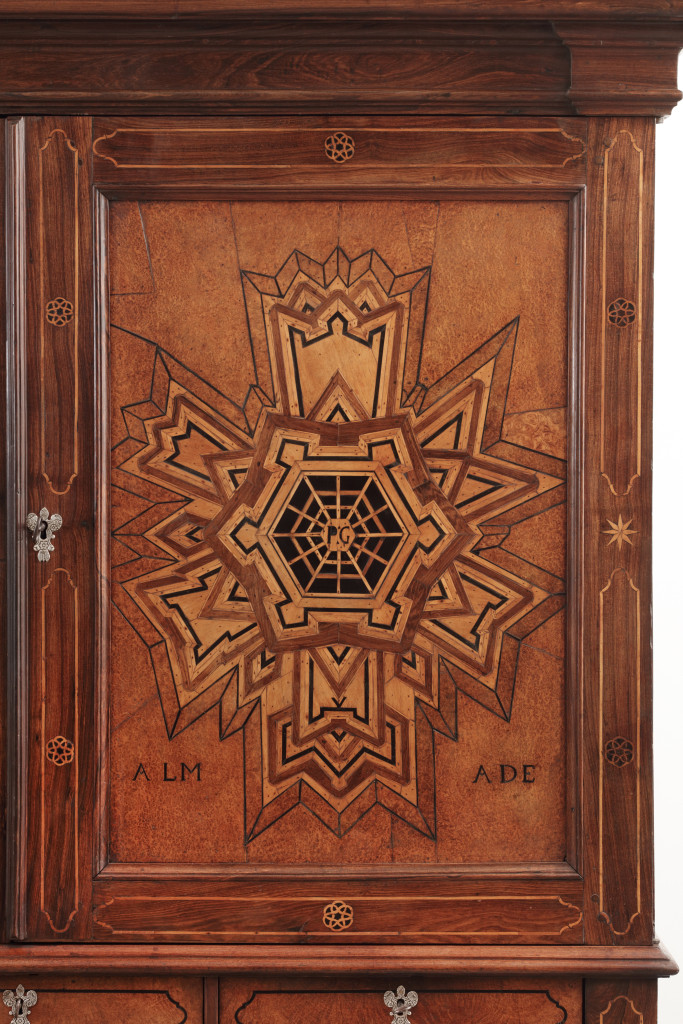
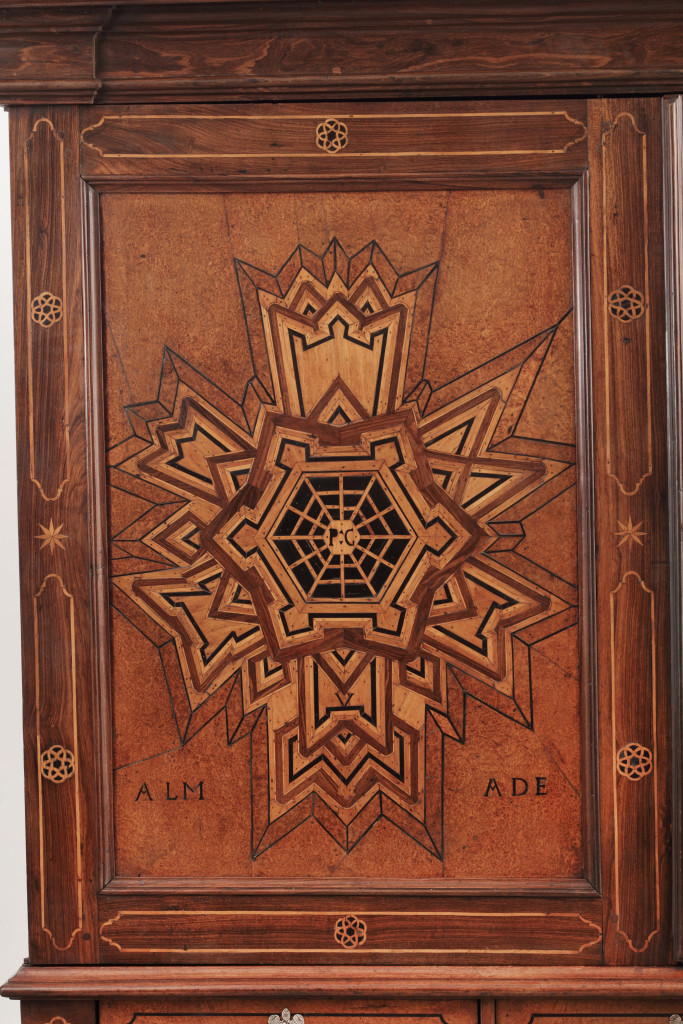
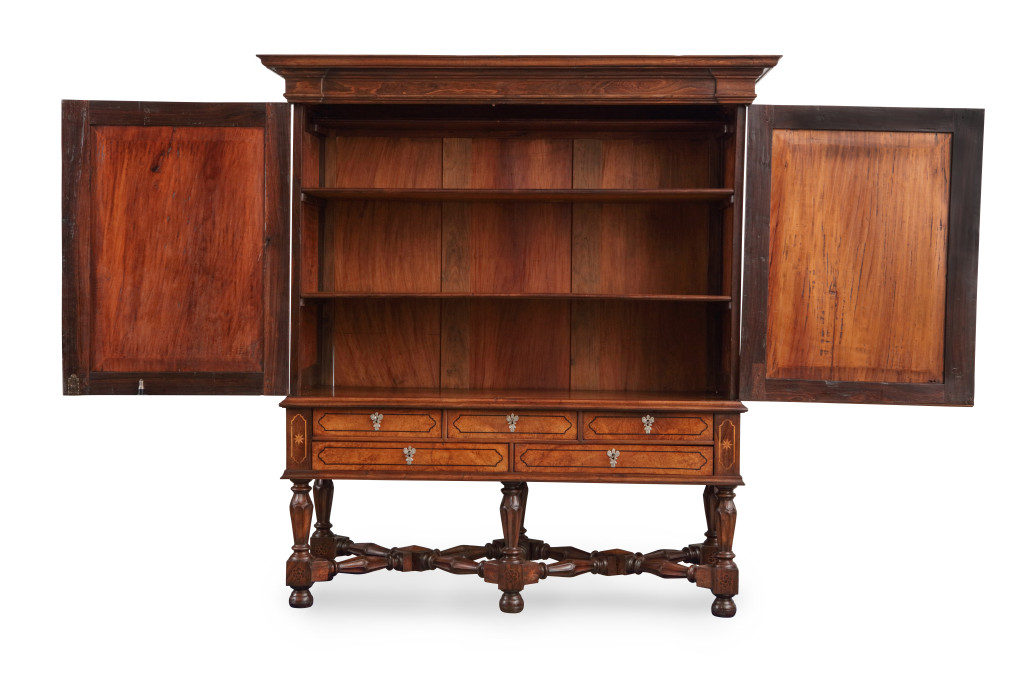
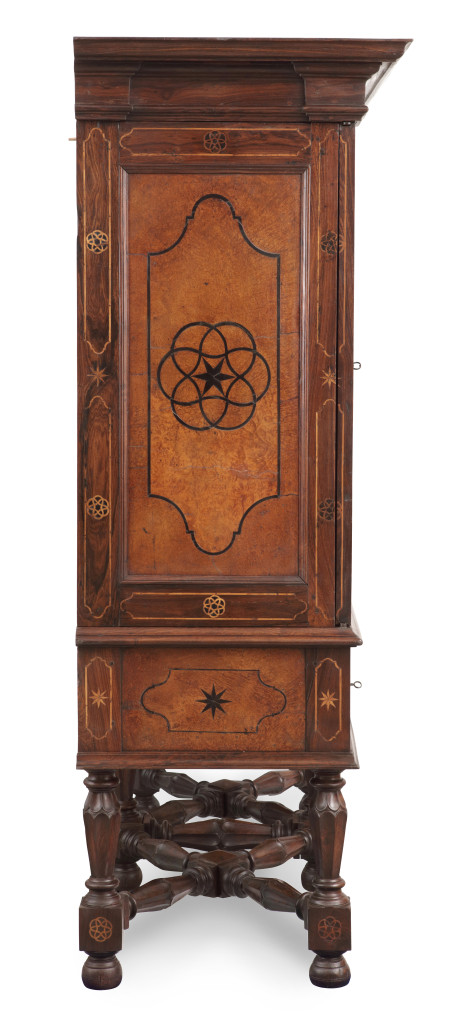
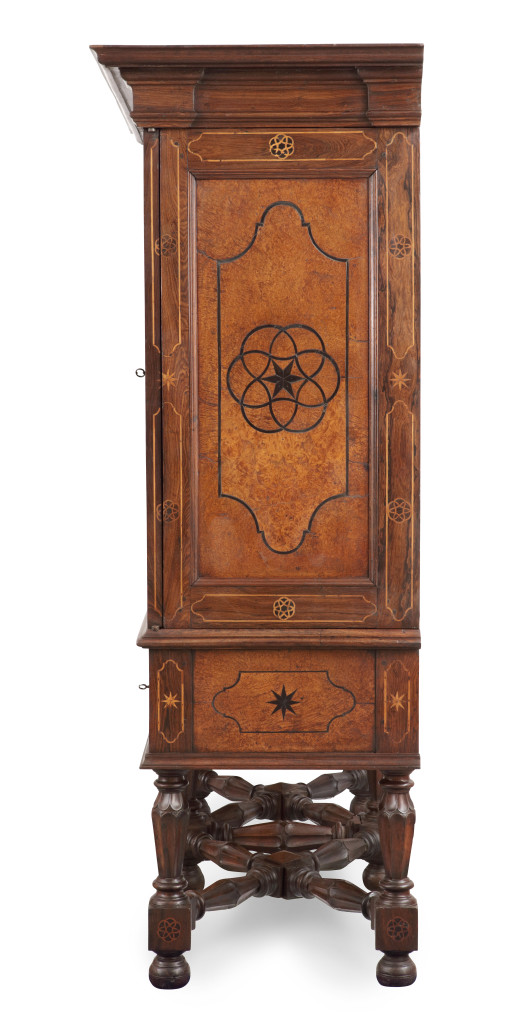
The rectangular cabinet, mounted with silver escutcheons and hinges, has two large doors above a lower section with drawers. The structure is made from sono keling wood, paduk, amboyna, djati, ebony, and satinwood. The doors feature geometric marquetry, held in place with copper nails, based on a print by Romeyn de Hooghe from 'Illustration for the Labour of Mars', by Allain Manesson Mallet, published in 1672. The marquetry includes a Portuguese motif with the letters “PG,” referring to Praça de Guerra in Almada.
H. 196 x W. 182 x D. 68 cm
Provenance:
Private collection, Paris; acquired by descent from the Van Muijden family, who got the cabinet through the Erhardy family, who resided in Batavia in the early 20th century
It is highly unusual that a Portuguese motif - especially such a strong image - is found on Dutch (colonial) furniture. Portugal and the Netherlands, albeit less in the 18th century, were not the best of friends. The cabinet dates from the (second quarter) 18th century and is Dutch-colonial pure in style. Therefore, it was possibly ordered by somebody with a Portuguese background (living) in Sri Lanka or Batavia. After all, the Dutch colonies were a melting pot of cultures.
The rectangular cabinet, mounted with silver escutcheons and hinges, has two large doors above a lower section with drawers. The structure is made from sono keling wood, paduk, amboyna, djati, ebony, and satinwood. The doors feature geometric marquetry, held in place with copper nails, based on a print by Romeyn de Hooghe from 'Illustration for the Labour of Mars', by Allain Manesson Mallet, published in 1672. The marquetry includes a Portuguese motif with the letters “PG,” referring to Praça de Guerra in Almada.
H. 196 x W. 182 x D. 68 cm
Provenance:
Private collection, Paris; acquired by descent from the Van Muijden family, who got the cabinet through the Erhardy family, who resided in Batavia in the early 20th century
It is highly unusual that a Portuguese motif - especially such a strong image - is found on Dutch (colonial) furniture. Portugal and the Netherlands, albeit less in the 18th century, were not the best of friends. The cabinet dates from the (second quarter) 18th century and is Dutch-colonial pure in style. Therefore, it was possibly ordered by somebody with a Portuguese background (living) in Sri Lanka or Batavia. After all, the Dutch colonies were a melting pot of cultures.
Part of the Europe and Indonesian Archipelago collections.
Related objects
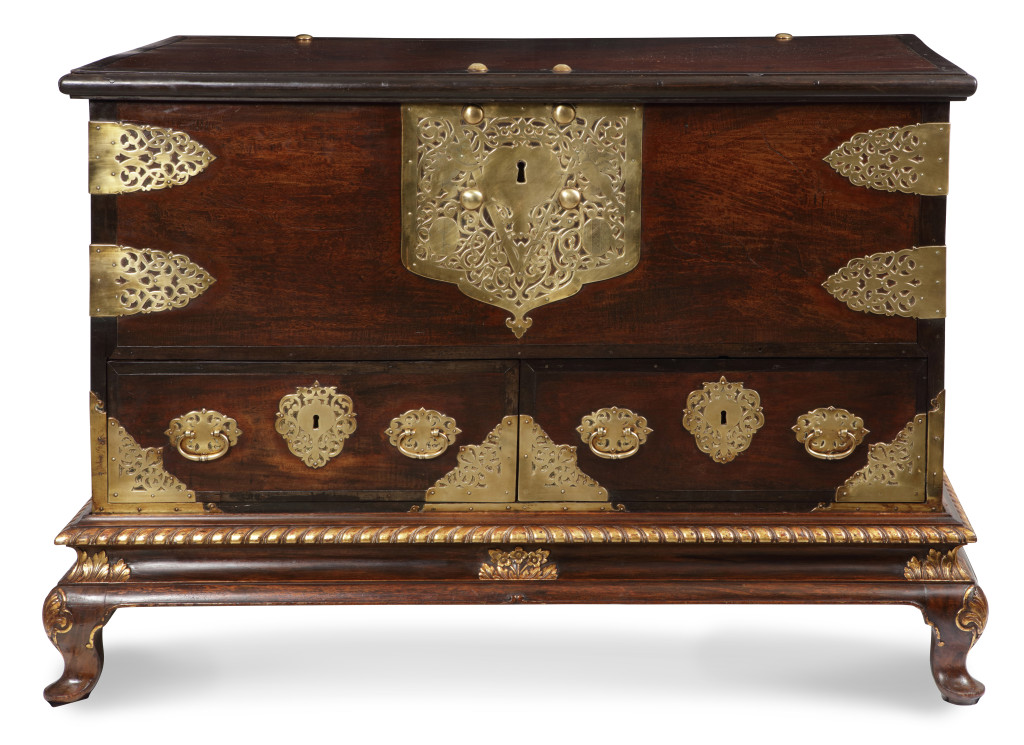
A large Dutch-colonial padouk wood 'VOC' chest on a stand
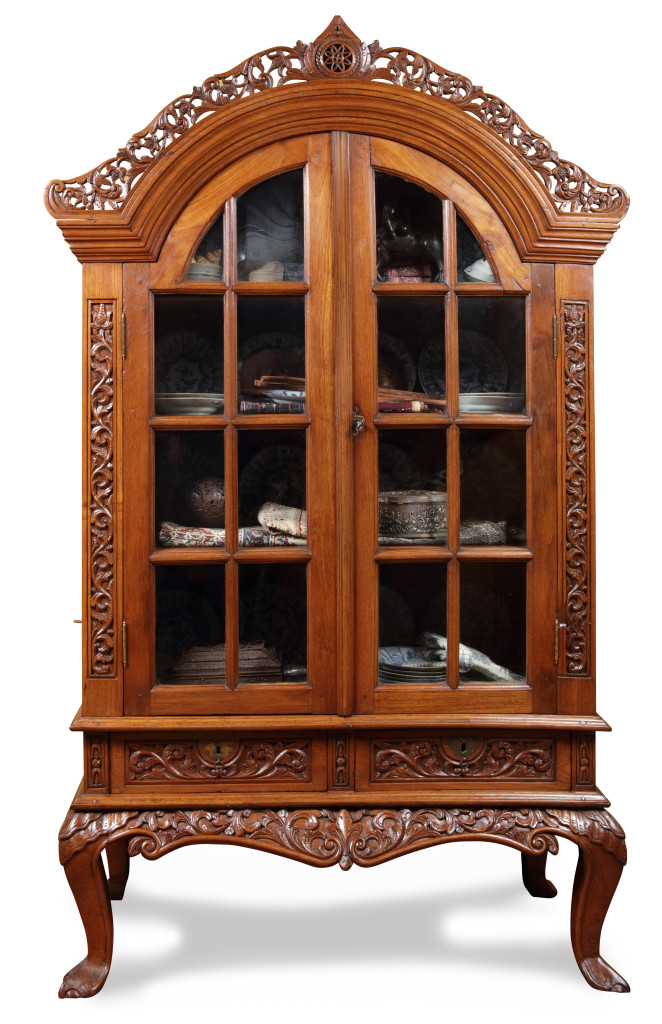
An Indonesian Djati display cabinet
Chinese furniture-makers working in Batavia, late 18th century, dated 1799
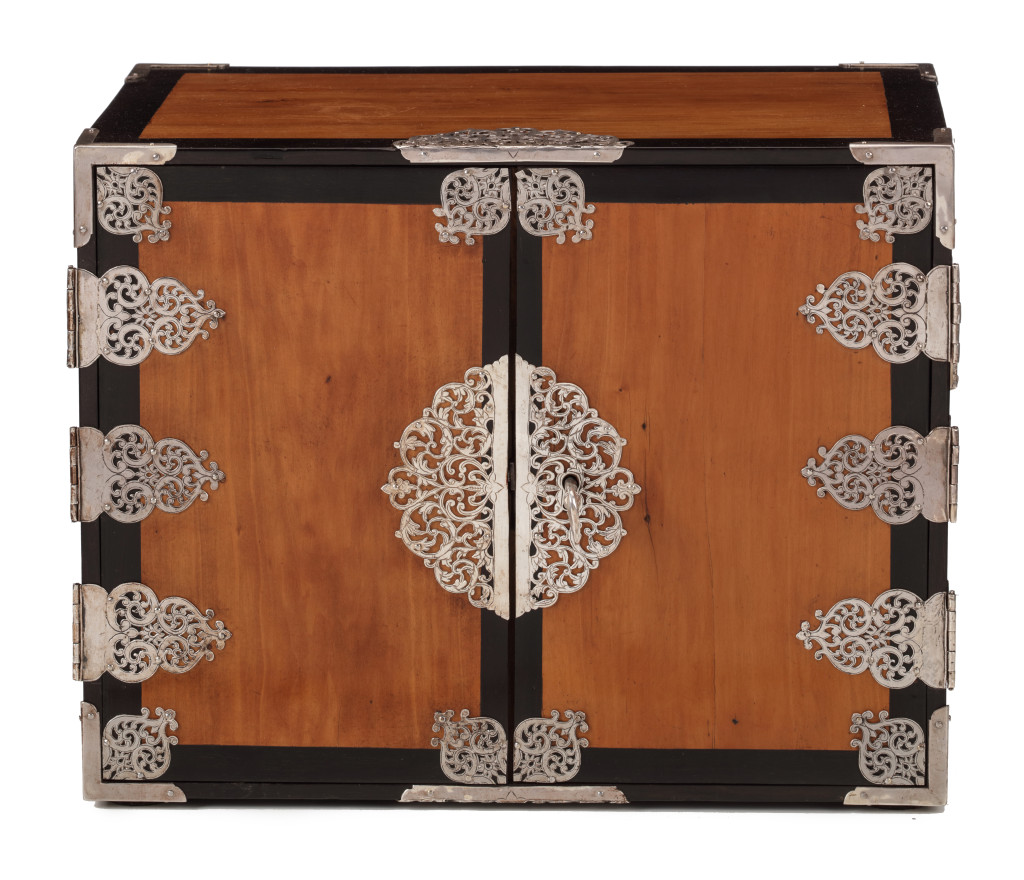
A Dutch-colonial amboyna and ebony collector's cabinet with silver mounts
_Batavia (Jakarta) or Sri Lanka, late 17th/early 18th century_ _H. 29 x W. 37 x D. 23.5 cm_ Provenance: Hague antiques trade Private collection, the Netherlands