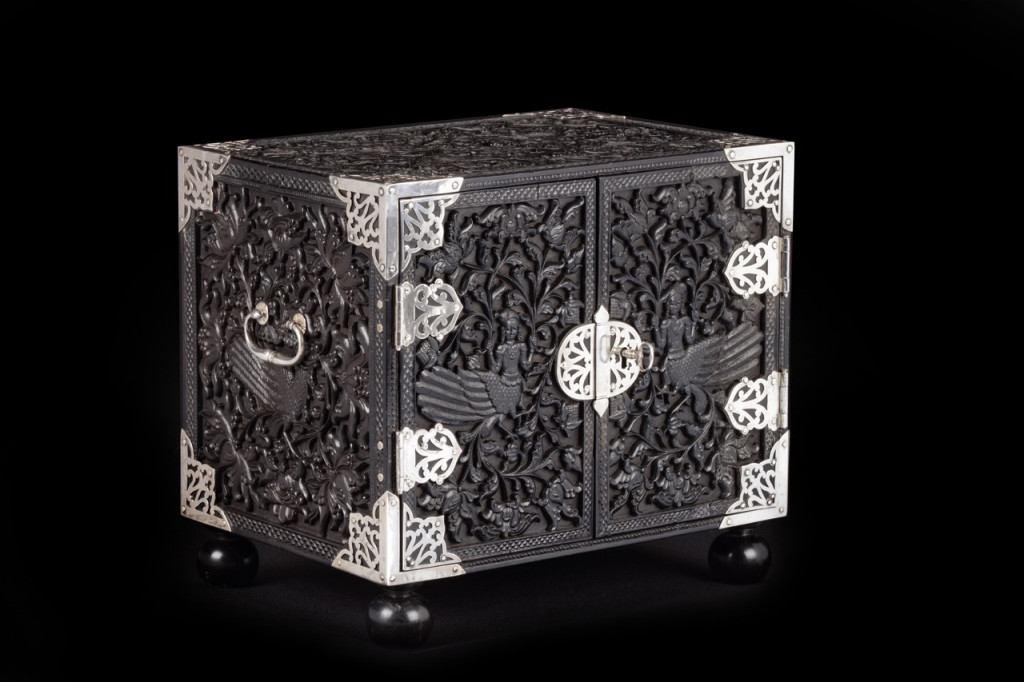
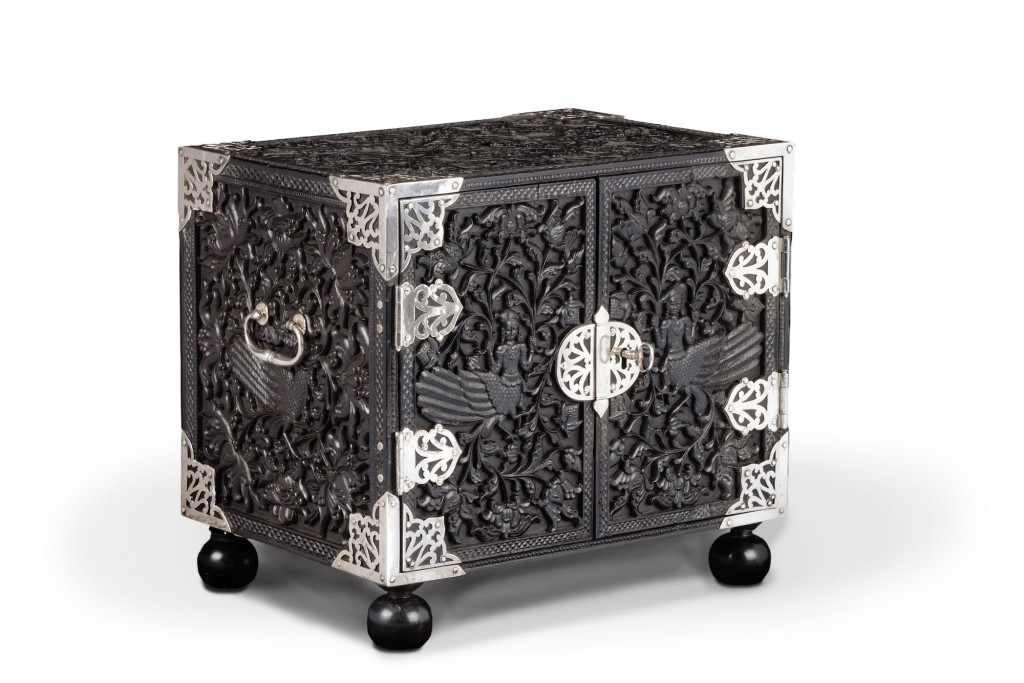
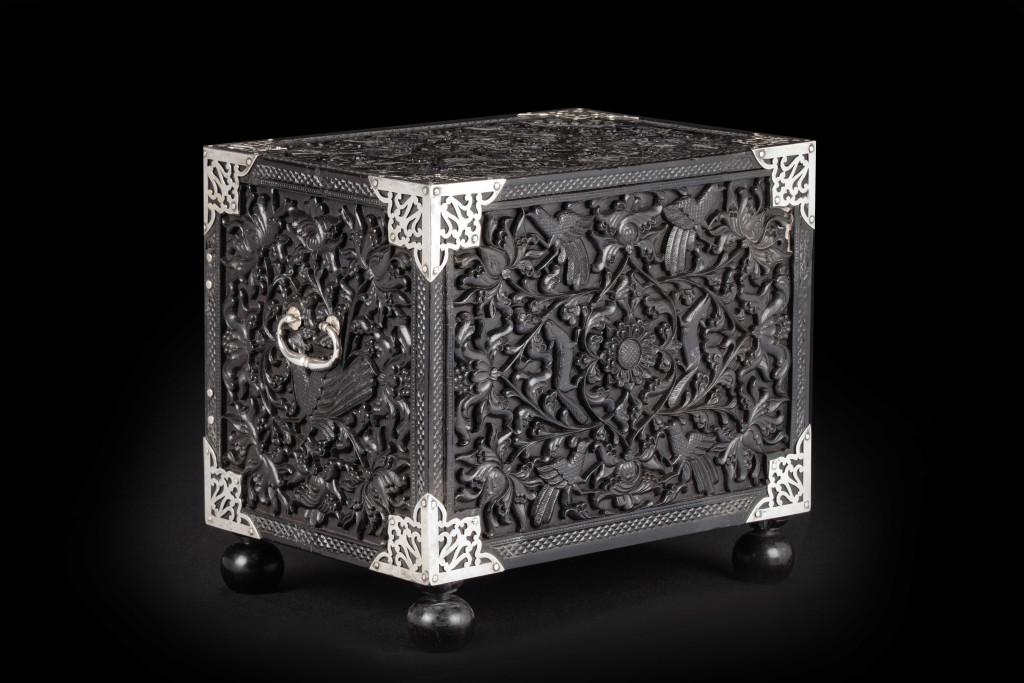
A splendid Dutch-colonial Sinhalese ebony two-door cabinet with silver mounts
Sri Lanka, Kandy, 2nd half 17th century, the mounts later
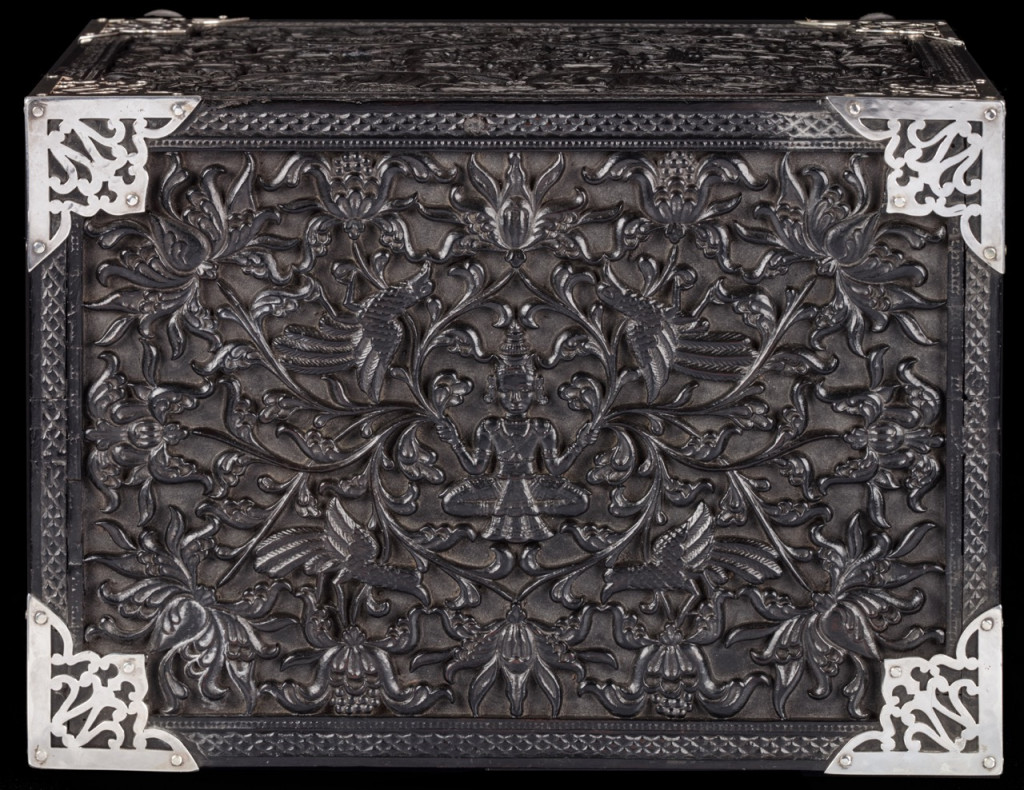
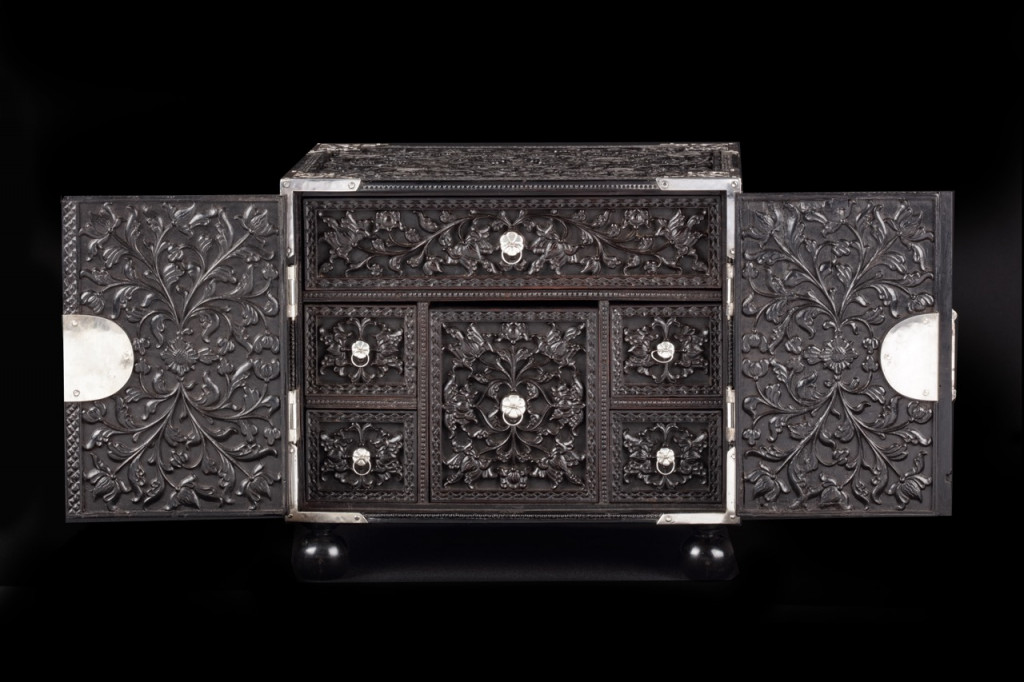
The cabinet with a central drawer with hidden compartment and the top drawer divided into four compartments. The surface carved all-over with scrolling plants issuing fleshy lotus palmettes, and in addition the exterior of the doors with a pair of kinnaris, the top with a seated deity encircled by birds, the back with a central lotus rosette flanked by quadrupeds and birds, and lastly the sides with a serapendiya, bordered by narrow diaper kundi rakkan bands.
H. 29 x W. 32.5 x D. 23 cm
Provenance:
- Private collection, United Kingdom
- Peter Lang, United Kingdom
The richly decorated panels carved in differing degrees of relief reveal the skill of the Sinhalese craftsmen and the scrolls issuing a richness of flowers and fruits are indicative of the island’s vegetal abundance. Their stylization is the result of a cross-fertilization of Dutch and Sinhalese decorative elements that appear on furniture, textiles and silver that later appeared across the Asian VOC territories. The mythical kinnaris, serapendiya and the kundi rakkan banding are typical forms of Sinhalese ornamentation, but not often seen on furniture for the Dutch.
Comparable Sinhalese furniture and objects with related carved decoration can be found in the Royal Collection Trust (21610, 21611), the Museum of Fine Arts Boston (1993.29) and the British Museum (1943.0712.4).
Sources:
- Jan Veenendaal, Furniture from Indonesia, Sri Lanka and India during the Dutch period, Museum Nusantara, Delft, 1985. ill. 25, 29 & 58
- Ananda K. Coomaraswamy, Mediaeval Sinhalese Art, Pantheon Books, New York, 1908
The cabinet with a central drawer with hidden compartment and the top drawer divided into four compartments. The surface carved all-over with scrolling plants issuing fleshy lotus palmettes, and in addition the exterior of the doors with a pair of kinnaris, the top with a seated deity encircled by birds, the back with a central lotus rosette flanked by quadrupeds and birds, and lastly the sides with a serapendiya, bordered by narrow diaper kundi rakkan bands.
H. 29 x W. 32.5 x D. 23 cm
Provenance:
- Private collection, United Kingdom
- Peter Lang, United Kingdom
The richly decorated panels carved in differing degrees of relief reveal the skill of the Sinhalese craftsmen and the scrolls issuing a richness of flowers and fruits are indicative of the island’s vegetal abundance. Their stylization is the result of a cross-fertilization of Dutch and Sinhalese decorative elements that appear on furniture, textiles and silver that later appeared across the Asian VOC territories. The mythical kinnaris, serapendiya and the kundi rakkan banding are typical forms of Sinhalese ornamentation, but not often seen on furniture for the Dutch.
Comparable Sinhalese furniture and objects with related carved decoration can be found in the Royal Collection Trust (21610, 21611), the Museum of Fine Arts Boston (1993.29) and the British Museum (1943.0712.4).
Sources:
- Jan Veenendaal, Furniture from Indonesia, Sri Lanka and India during the Dutch period, Museum Nusantara, Delft, 1985. ill. 25, 29 & 58
- Ananda K. Coomaraswamy, Mediaeval Sinhalese Art, Pantheon Books, New York, 1908
Part of the Indian Ocean collection.
Related objects
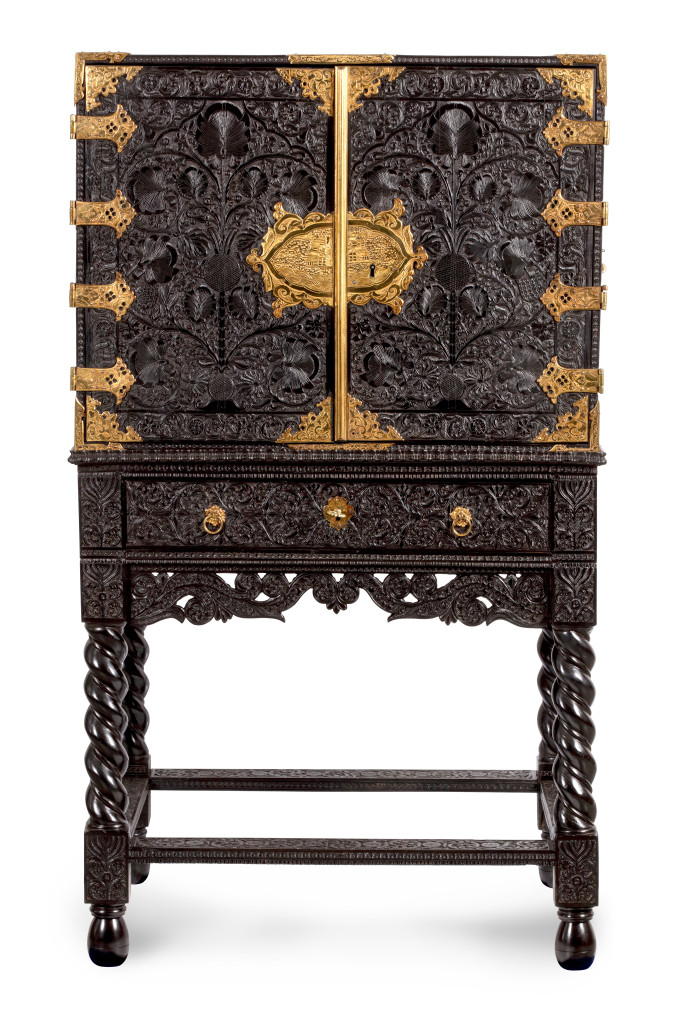
The Chief Merchant’s Cabinet.
Finely carved in low relief, profusely decorated throughout with flowers and foliage. The cabinet, with elaborate gilt-copper Japanese engraved mounts, has seven drawers behind two doors, and the stand is a large drawer above four turned legs. On the back of the cabinet, there is a paper label reading *Mr Huson* and numbered *59*.
No image
Two Sri Lankan satinwood and cane high-back chairs
Sri Lanka High Back Chairs Colonial
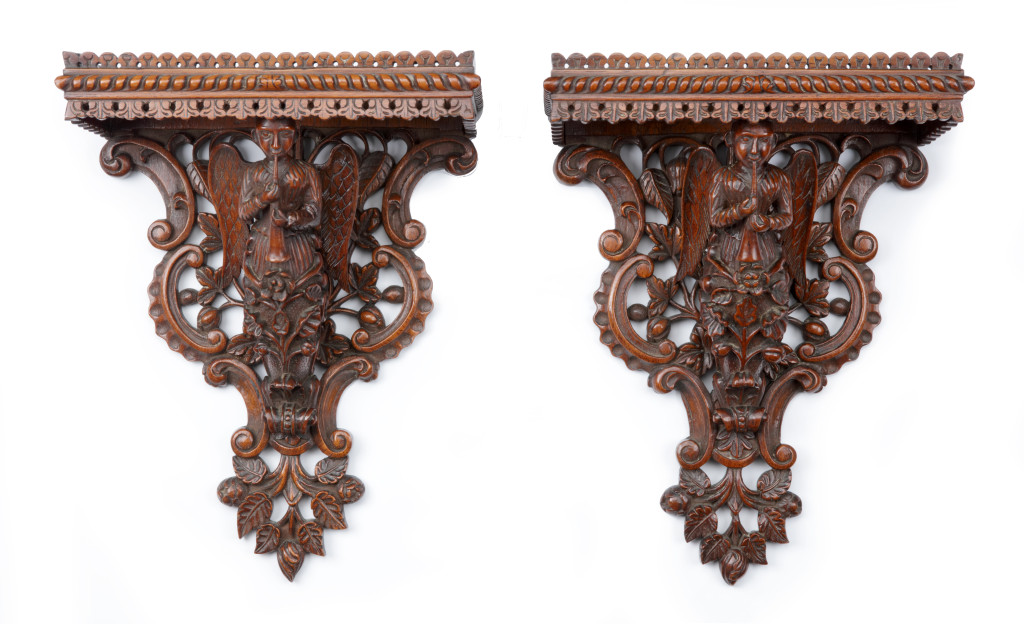
A pair of seldomly seen French Indian Colonial teak wood consoles
French India, Pondicherry, late 19th century