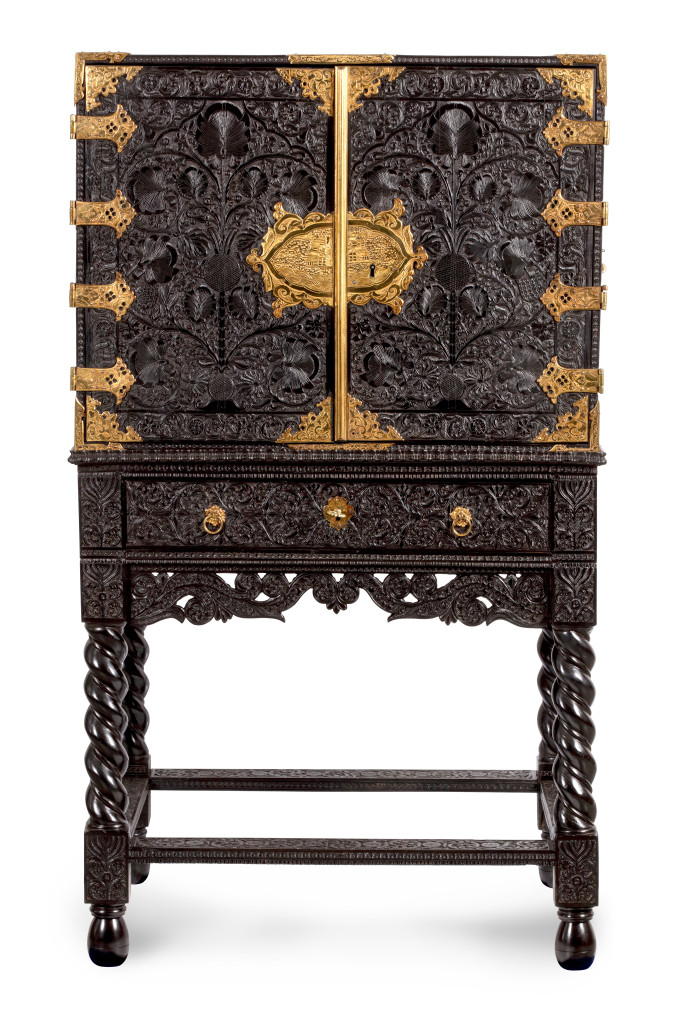
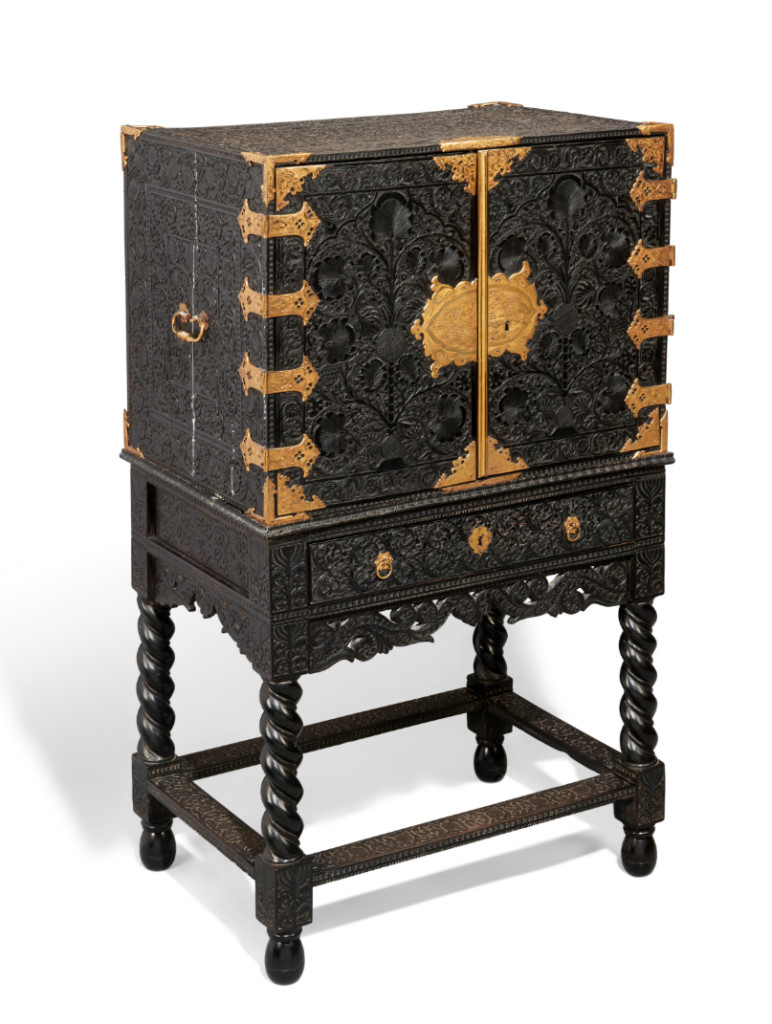
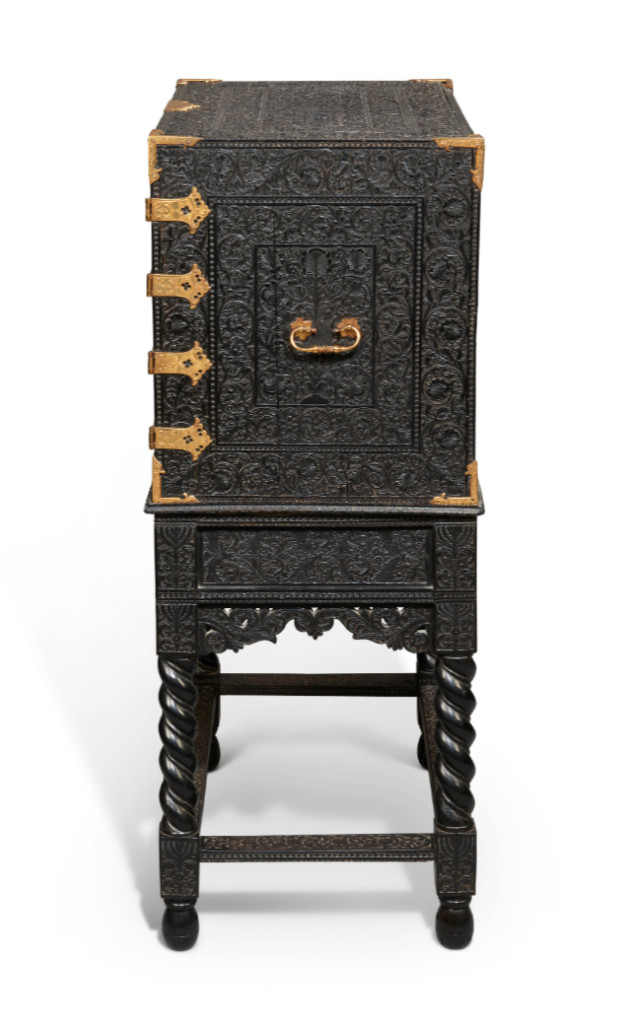
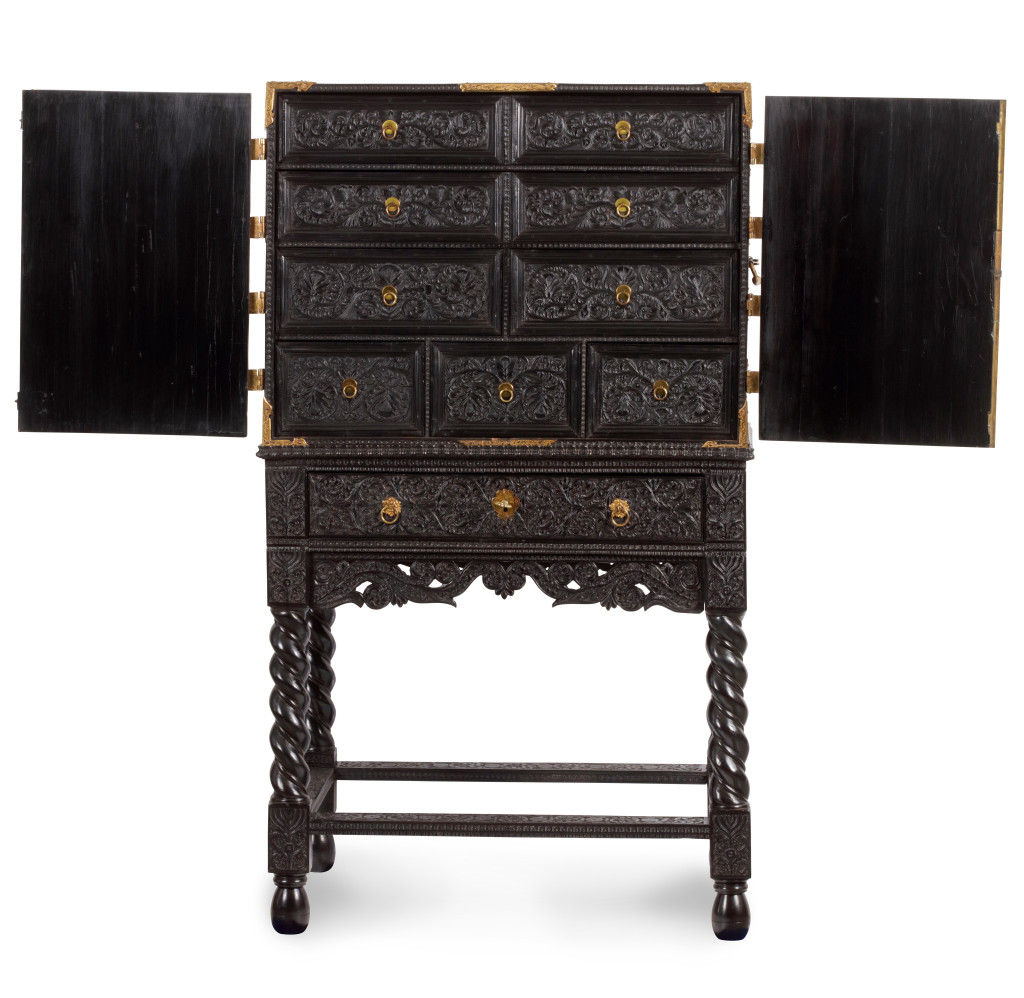
The Chief Merchant’s Cabinet.
Coromandel Coast, the mounts Japanese, 2nd half 17th century
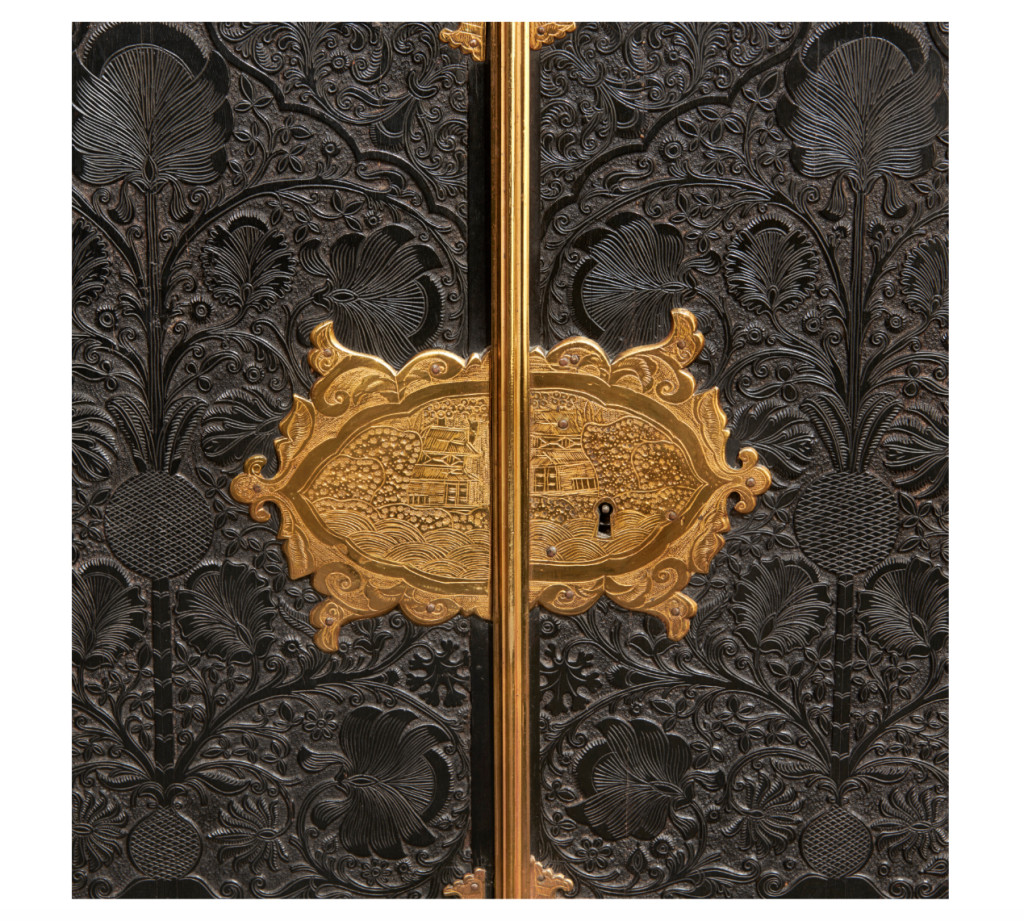
Finely carved in low relief, profusely decorated throughout with flowers and foliage. The cabinet, with elaborate gilt-copper Japanese engraved mounts, has seven drawers behind two doors, and the stand is a large drawer above four turned legs. On the back of the cabinet, there is a paper label reading Mr Huson and numbered 59.
H. 118.5 x W. 69 x D. 47 cm
Provenance:
With Peter Tillou Fine Arts, London
Collection Philip Hewat-Jaboor (purchased from the above in 1993)
This low-relief carving on the present cabinet belongs to the earliest type of carving in ebony, ordered by the Dutch in Asia. The Coromandel Coast harboured an important industry for producing carved ebony furniture before the Dutch were there. In the early 17th century, the Dutch presence on the 'Cust’ became more substantial. They ordered their 'Custmeubelen’ or coastal furniture here because, initially, that was the only place where they could get the highly favoured ebony furniture. Due to severe famines and many wars on the Coast in the second half of the 17th century, many local furniture makers and other craftsmen had to sell themselves into slavery to the Dutch. Many ended up practising their craftsmanship in Batavia.
Initially, these cabinets came without any mounts at all, but most likely, the Dutch started ordering the cabinets with mounts or had them altered later on, for instance, in Batavia. For instance, the Japanese chestnut cabinets of similar form with Indonesian mounts in our collection, but also in the Rijksmuseum (BK-15987). The present cabinet doesn’t have Indonesian but Japanese mounts, executed in gilt copper. The mounts date from the same period as the cabinet and fit perfectly, so it is safe to assume they were added not much later. It is most unusual, possibly unique, to find such elaborate Japanese mounts on an ebony cabinet, which must have been so valuable that only the highest East India Company officials were able to afford.
One can assume that someone like Constantijn Ranst (1635-1714) could have ordered this cabinet during his period as director of Dutch Bengal from 1669 to 1673. He became opperhoofd, or chief merchant, of the Dutch trade post on Deshima in Japan from 1667 to 1668, 1683 to 1684, and 1686 to 1687. A splendid ebony cabinet containing valuables and important letters would not misstand in Ranst’s comptoir on the artificial island in the bay of Nagasaki - especially when it was embellished with lavish Japanese gilt mounts.
Part of the Indian Ocean and Japan collections.
Related objects
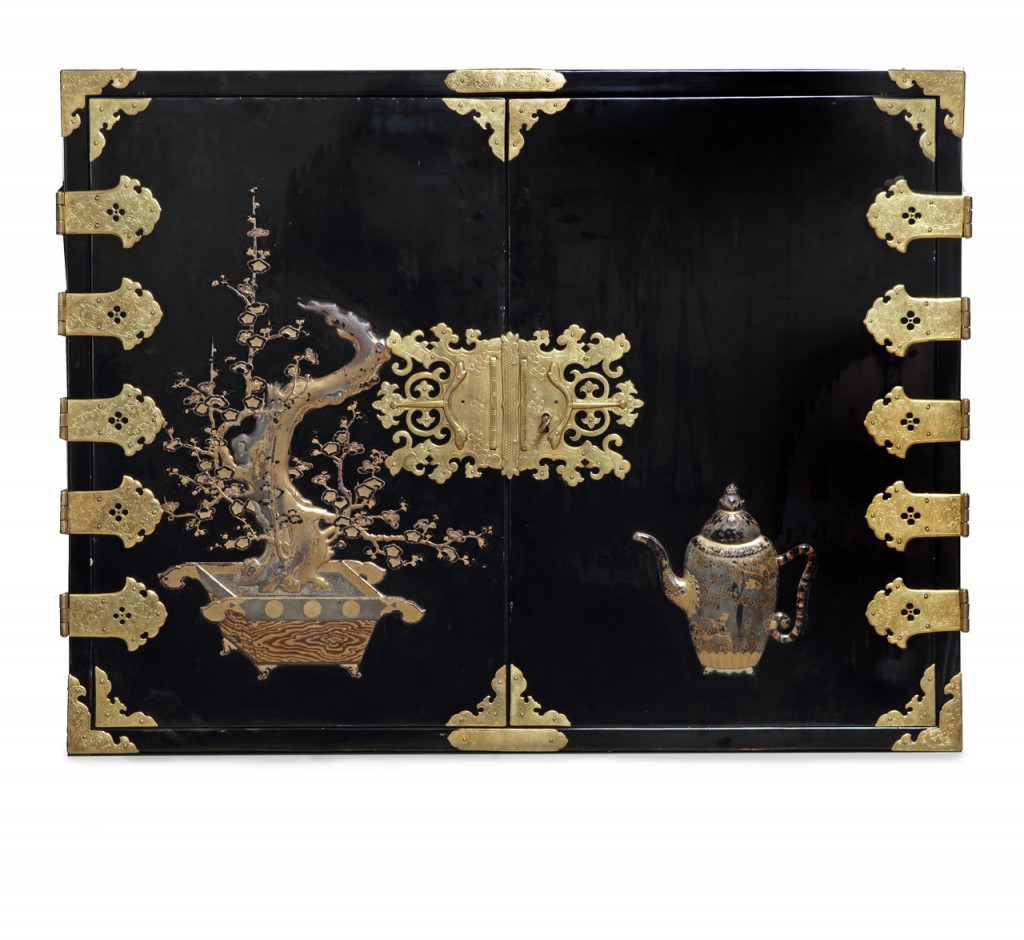
A fine Japanese lacquer cabinet with gilt-copper mounts for the European market
The rectangular cabinet with two hinged doors opening to reveal ten various sized drawers, decorated on the doors with a teapot and a potted shrub in gold, silver and red hiramaki-e, takamaki-e, hirame and nashiji, the sides with birds perched on trees, on a black ground, with the inside of the door with sprinkled gold, nashiji and silver inlaid flower-petals, the drawer fronts decorated with flowers, trees and small pavilions in rocky landscapes (sansui), in gold hiramaki-e and takamaki-e.
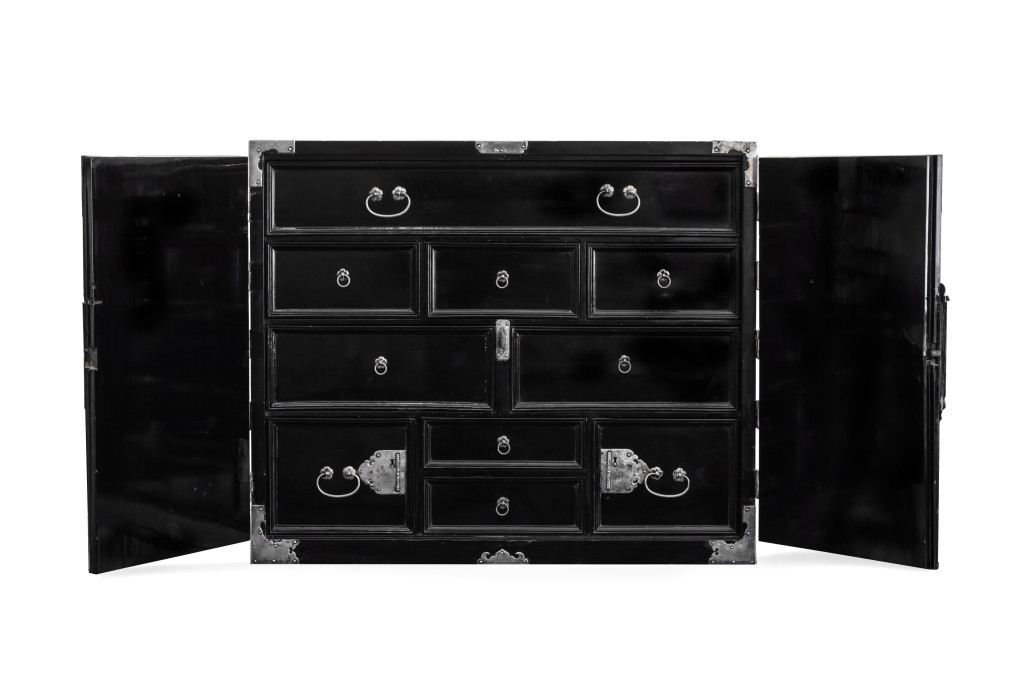
A Unique Dutch-Colonial Japanese black-lacquer cabinet chest with silver mounts
Edo period, early 19th century
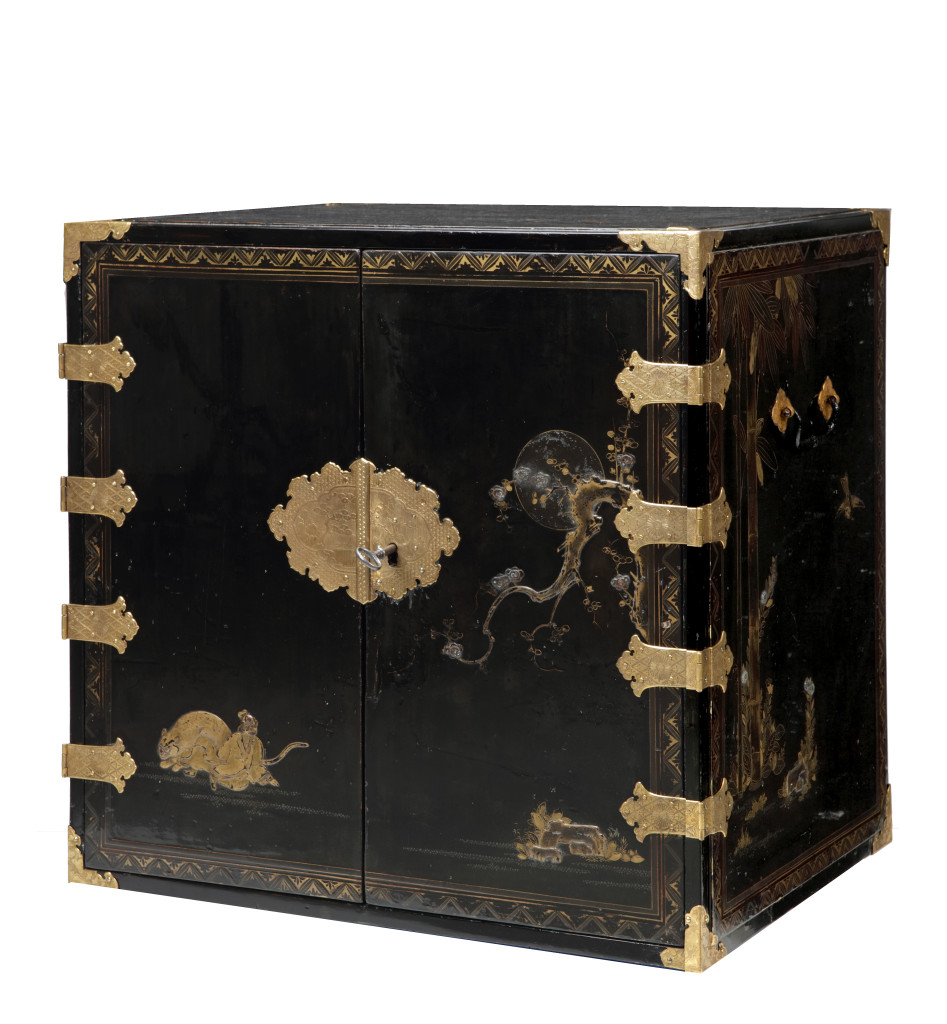
A Japanese 'pictorial style' lacquer cabinet with gilt-metal mounts
Decorated in Japanese relief lacquer work, black lacquer ground decorated in hiramaki-e, takamaki-e, kirigane and nashiji in gold, silver and red, the two hinged doors decorated on the left door with a sitting man and a lying tiger beside him and on the right door a full moon behind a flowering branch, the sides are decorated with bamboos and a bird, the top with a landscape with a pagoda and Mount Fuji in the distance, on the inside of the doors long-tailed birds are depicted and opened the doors reveal ten drawers of different sizes, decorated with a flowering branch within a cartouche and with small gilt-copper mounts in the form of chrysanthemum with a ring attached, the lower drawers to the extreme left and right have engraved metal mounts with keyholes and locks.