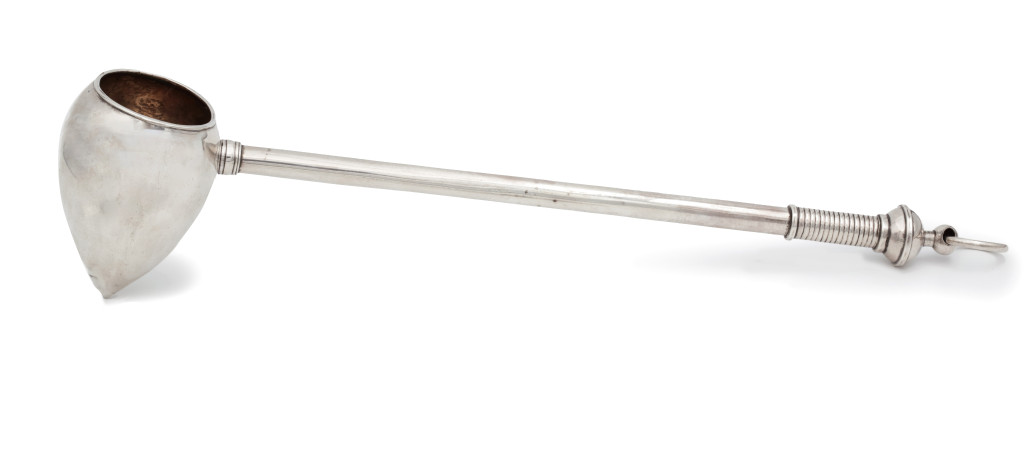
A Dutch Caribbean silver water-scoop
Curaçao, early 19th century, apparently unmarked
L. 39 cm
Weight 247 grams
The form of the water-scoop is derived from a half coconut on a wooden handle. Silver water-scoops, in various forms, were quite common in Central and South America. Silver was supposed to disinfect water, but a silver water-scoop undoubtedly also was a sign of the prosperity of its owner.
Curaçao was a small community with very few silversmiths working there in the 19th century. Hardly any pieces were marked and probably most of what was made in Curaçao was exported to mainland South America. For another water-scoop from our collection, coming from the famous Palm family, see: Uit Verre Streken, December 2020, no. 9 or [click here](https://zebregsroell.com/product/curacao-silver). Another unmarked silver scoop from the collection of Mr. van de Walle is illustated in Uit Verre Streken, June 2014, nr. 6. In the 1940s Van de Walle collected and published on antique Curaçao furniture and silver while working there as a journalist. He was the first Dutchman to collect the applied arts from the Dutch Antilles. (1)
Provenance:
The Ecury family, starting with Francisca Ecury Gomez (1832-?), an enslaved women coming from Venezuela to Curaçao. She was possibly given the water scoop at her manumission in 1868, after which she moved to Aruba. By inheritance to her son Eugenio Candido Ecury (1860 -1893), hence to his son Segundo Nicasio Ecury (1888 – 1967), and to his daughter Yvette Ecury. In the house of Ecury, today the National Archeological Museum in Aruba is situated.
Source:
1. Jan Veenendaal, "Meubelen en zilver van Curaçao in Antie"k, in: Tijdschrift voor Oude Kunst en Kunstnijverheid, November, 1994, pp. 24-31
L. 39 cm
Weight 247 grams
The form of the water-scoop is derived from a half coconut on a wooden handle. Silver water-scoops, in various forms, were quite common in Central and South America. Silver was supposed to disinfect water, but a silver water-scoop undoubtedly also was a sign of the prosperity of its owner.
Curaçao was a small community with very few silversmiths working there in the 19th century. Hardly any pieces were marked and probably most of what was made in Curaçao was exported to mainland South America. For another water-scoop from our collection, coming from the famous Palm family, see: Uit Verre Streken, December 2020, no. 9 or [click here](https://zebregsroell.com/product/curacao-silver). Another unmarked silver scoop from the collection of Mr. van de Walle is illustated in Uit Verre Streken, June 2014, nr. 6. In the 1940s Van de Walle collected and published on antique Curaçao furniture and silver while working there as a journalist. He was the first Dutchman to collect the applied arts from the Dutch Antilles. (1)
Provenance:
The Ecury family, starting with Francisca Ecury Gomez (1832-?), an enslaved women coming from Venezuela to Curaçao. She was possibly given the water scoop at her manumission in 1868, after which she moved to Aruba. By inheritance to her son Eugenio Candido Ecury (1860 -1893), hence to his son Segundo Nicasio Ecury (1888 – 1967), and to his daughter Yvette Ecury. In the house of Ecury, today the National Archeological Museum in Aruba is situated.
Source:
1. Jan Veenendaal, "Meubelen en zilver van Curaçao in Antie"k, in: Tijdschrift voor Oude Kunst en Kunstnijverheid, November, 1994, pp. 24-31
Part of the The Americas collection.
Related objects
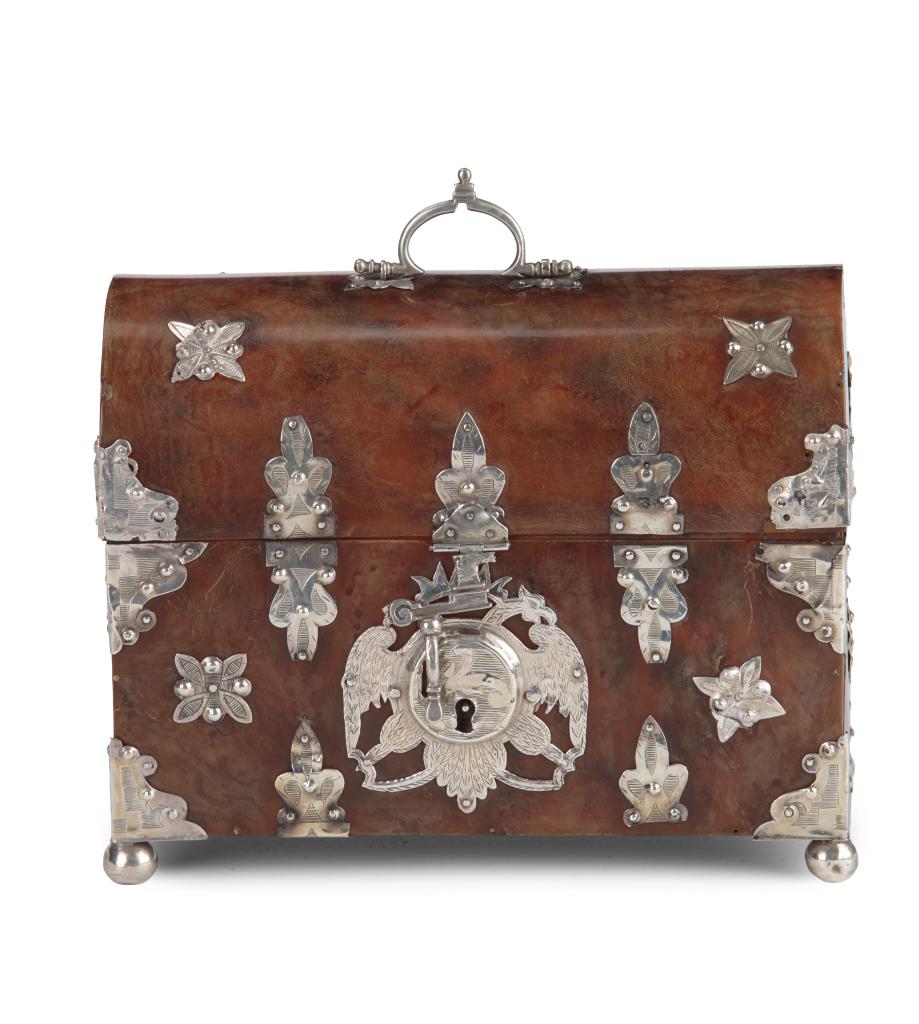
A Spanish-colonial tortoiseshell casket with silver mounts
_Probably Mexico, 17th century_ _H. 12.5 x W. 16 x D. 7 cm_ Provenance: Private Collection, The Hague
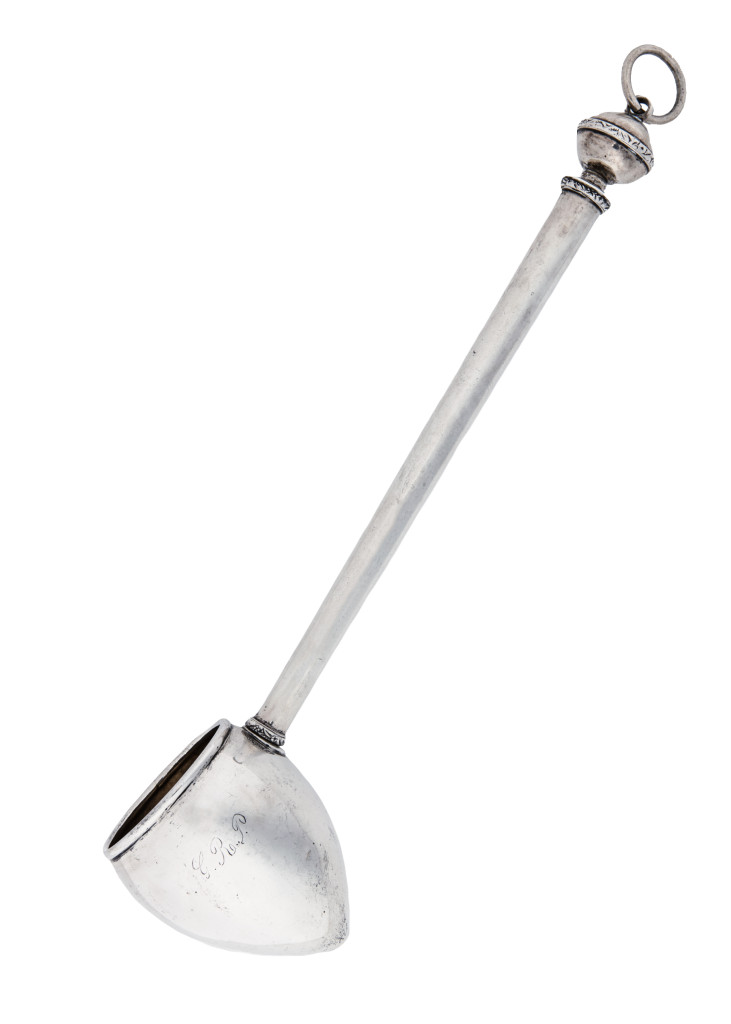
A rare Dutch Caribbean silver water-scoop
_Curaçao, circa 1873_ _L. 35 cm / Weight 221 grams_ Indistinctly marked, engraved with initials G R P.
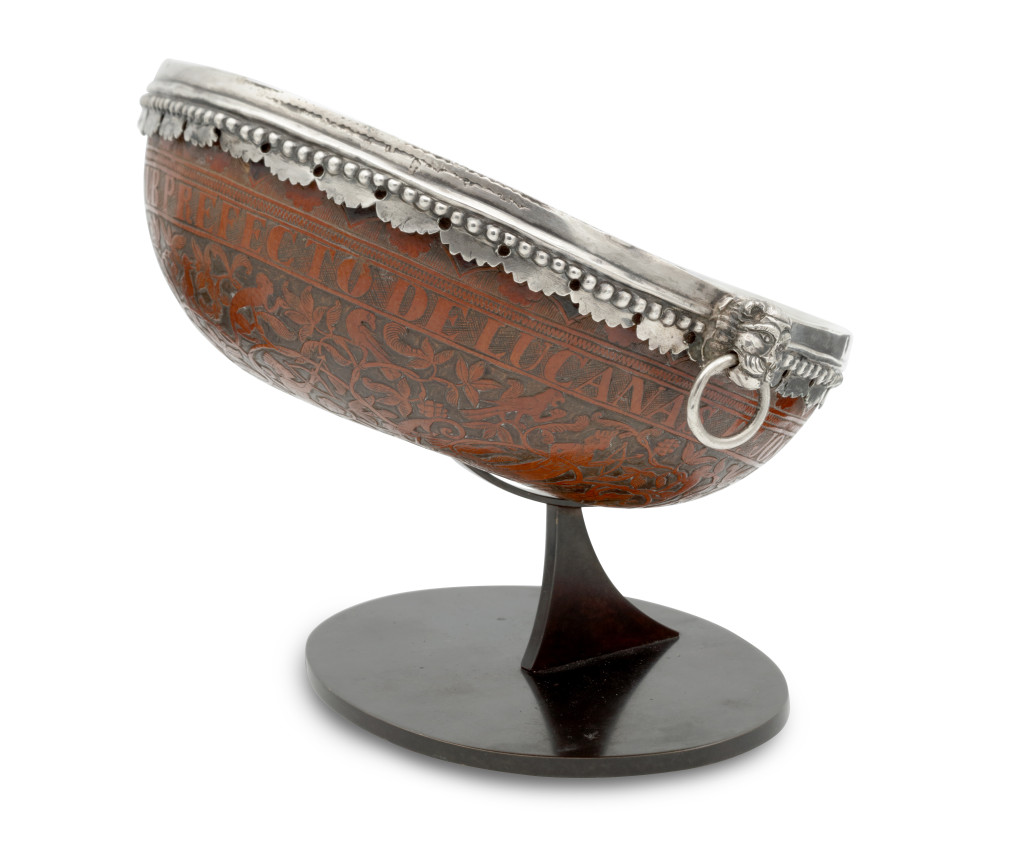
A Peruvian silver-mounted engraved 'mate burilano' gourd bowl
The exterior of the bowl superbly engraved in blackened-background relief, with an female figure representing America, indigenous figures, a farmer and a hunter, surrounded by animals such as monkeys and parrots, all in a lush jungle-like forrest. The bowl mounted with a refined silver rim and two lion-head handles with loose rings in their mouths. Along the rim an inscription is engraved, reading: DEDICADO P.a EL SUB PREFECTO DE LUCANA D.n JOSE MANUEL CASERES.