A highly important gilt-bronze figure of the water moon Guanyin
Late Southern Song to early Yuan dynasty, 13th–14th century
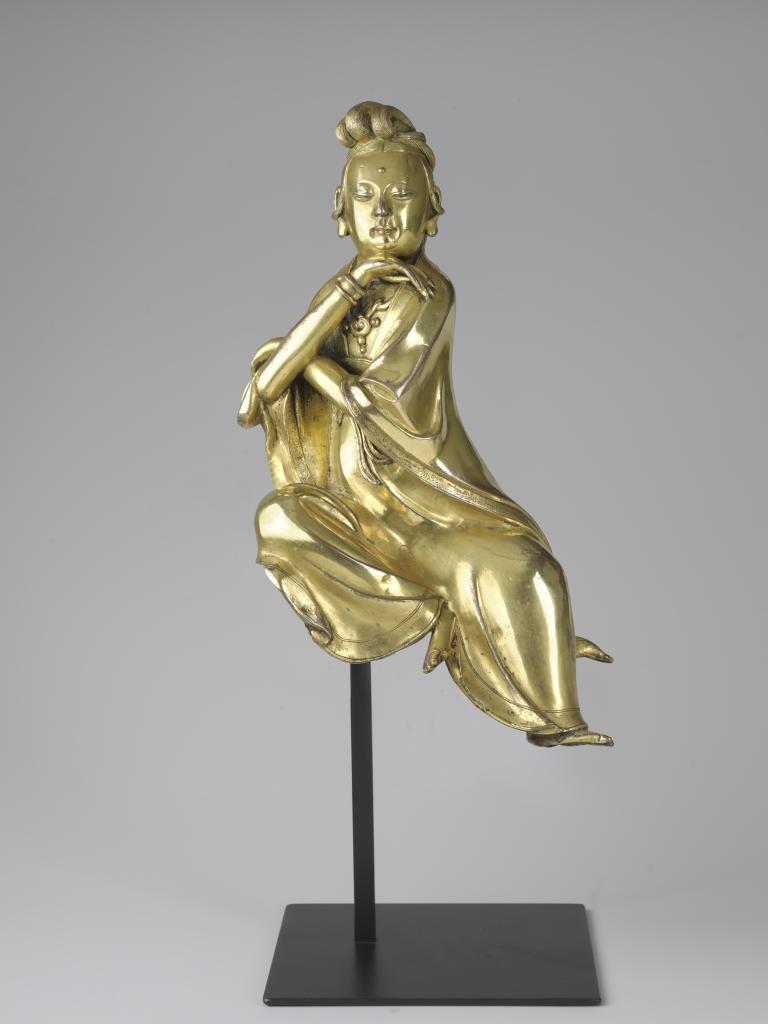
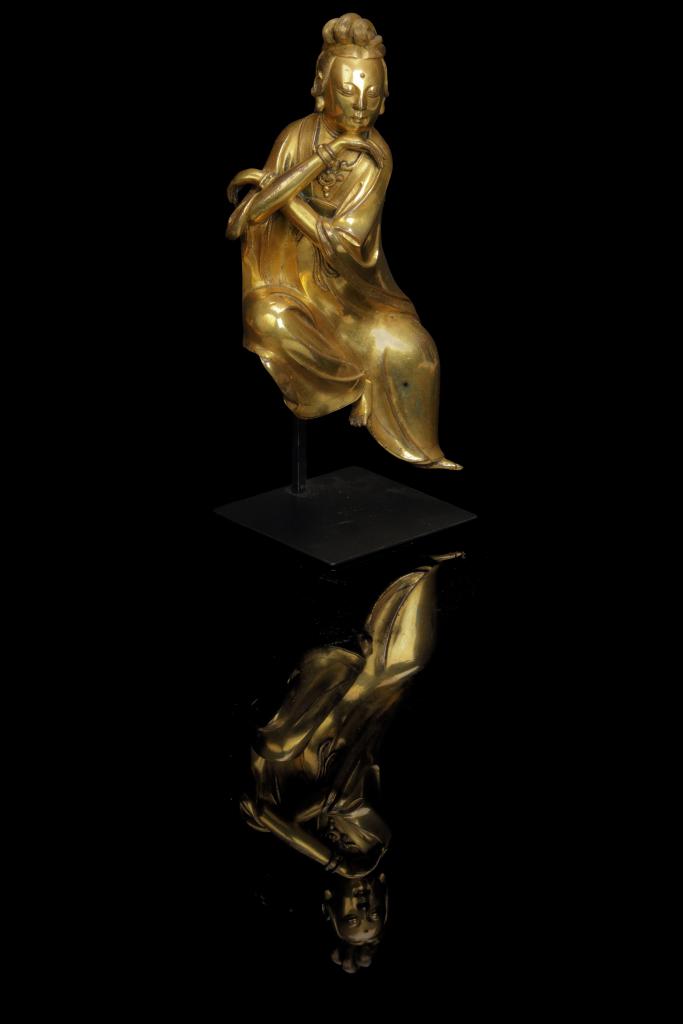
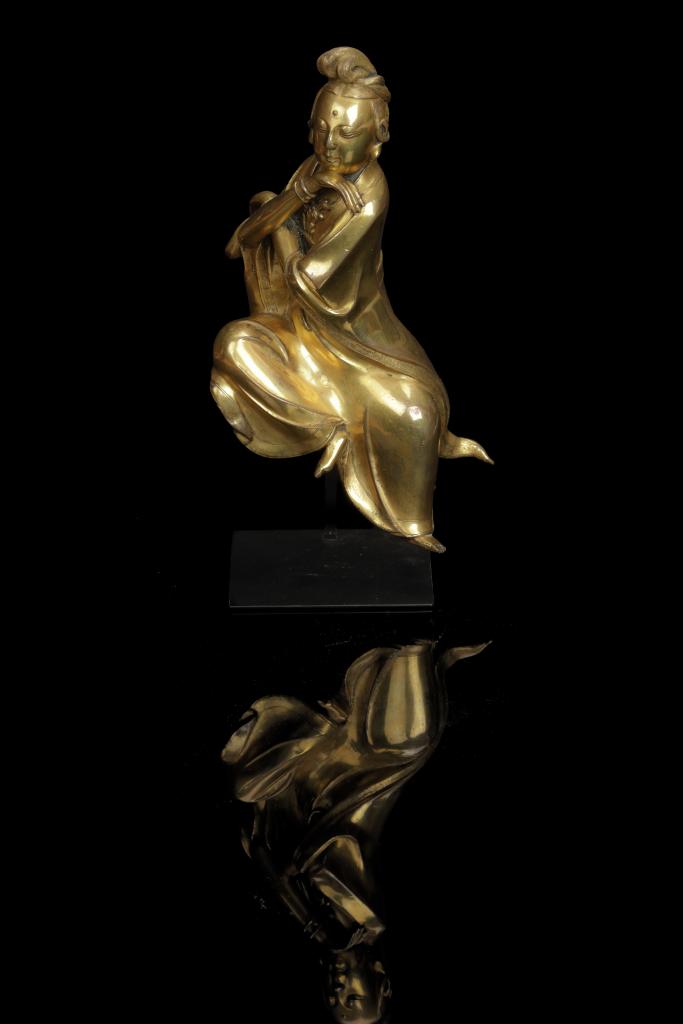
Superbly cast and seated in rajalilasana, the figure rests with the right leg raised and the arms crossed before the chest, the head gently supported by the right hand in an attitude of profound contemplation. The pensive expression is intensified by finely defined features: heavy-lidded, downcast eyes centered by a raised circular urna and delicate rosebud lips that form a restrained smile above a softly rounded chin.
The deity wears long, flowing robes that fall in naturalistic cascades, their hems crisply incised with foliate scrolls and delicately punched with swirling cloud motifs. The figure is further adorned with a necklace suspending a beaded ruyi pendant and a pair of bracelets. The hair, meticulously detailed, is arranged in an elaborate chignon, with two slender strands gracefully framing and encircling the ears.
H. 30.7 x D. 6 x W. 17 cm (excl. stand)
Weight: 2.4 kg
Provenance:
Count Federico Zichy-Thyssen, Paraguay; thence by descent
Private collection, Latin America; where acquired directly by the previous owner
This specific position of the female form of the Bodhisattva represents the Water Moon manifestation. It may be interpreted as a representation of the deity within his Pure Land, or personal paradise. Known as Mount Potalaka, Avalokiteshvara’s Pure Land was originally believed to lie on an island to the south of India. By the Ming dynasty, this legendary realm had come to be associated with Mount Putuo, located off the coast of Zhejiang province, and had developed into a major centre of pilgrimage.
From the mid-Tang dynasty onwards, representations of Guanyin began to adopt increasingly delicate and softly modelled features, particularly in the face, torso, and hands. This gentle treatment encouraged viewers to perceive the bodhisattva in more feminine terms. Gradually, overtly masculine attributes—such as the moustache seen in earlier depictions—disappeared. By the Yuan dynasty, distinctly female images of the bodhisattva had become widespread and popular.
The Water-Moon Guanyin, a form of Avalokitesvara described in the Avatamsaka Sutra, is counted among the bodhisattva’s thirty-three manifestations, as outlined in the “Ten Stages” chapter. Its pictorial formulation is traditionally attributed to Zhou Fang (c. 730–800), a celebrated court painter of the Tang dynasty, marking an important development in the history of Buddhist art.
The subject is frequently depicted in paintings or/and hanging scrolls from the Song, Yuan, and Ming periods but is scarcely seen in sculptures. The pose, which is referred to as 'Royal Ease', is supposed to represent the tranquillity of the figure and its withdrawal from the world and was a popular pose for the sculptures from the 10th to the 14th centuries.
Superbly cast and seated in rajalilasana, the figure rests with the right leg raised and the arms crossed before the chest, the head gently supported by the right hand in an attitude of profound contemplation. The pensive expression is intensified by finely defined features: heavy-lidded, downcast eyes centered by a raised circular urna and delicate rosebud lips that form a restrained smile above a softly rounded chin.
The deity wears long, flowing robes that fall in naturalistic cascades, their hems crisply incised with foliate scrolls and delicately punched with swirling cloud motifs. The figure is further adorned with a necklace suspending a beaded ruyi pendant and a pair of bracelets. The hair, meticulously detailed, is arranged in an elaborate chignon, with two slender strands gracefully framing and encircling the ears.
H. 30.7 x D. 6 x W. 17 cm (excl. stand)
Weight: 2.4 kg
Provenance:
Count Federico Zichy-Thyssen, Paraguay; thence by descent
Private collection, Latin America; where acquired directly by the previous owner
This specific position of the female form of the Bodhisattva represents the Water Moon manifestation. It may be interpreted as a representation of the deity within his Pure Land, or personal paradise. Known as Mount Potalaka, Avalokiteshvara’s Pure Land was originally believed to lie on an island to the south of India. By the Ming dynasty, this legendary realm had come to be associated with Mount Putuo, located off the coast of Zhejiang province, and had developed into a major centre of pilgrimage.
From the mid-Tang dynasty onwards, representations of Guanyin began to adopt increasingly delicate and softly modelled features, particularly in the face, torso, and hands. This gentle treatment encouraged viewers to perceive the bodhisattva in more feminine terms. Gradually, overtly masculine attributes—such as the moustache seen in earlier depictions—disappeared. By the Yuan dynasty, distinctly female images of the bodhisattva had become widespread and popular.
The Water-Moon Guanyin, a form of Avalokitesvara described in the Avatamsaka Sutra, is counted among the bodhisattva’s thirty-three manifestations, as outlined in the “Ten Stages” chapter. Its pictorial formulation is traditionally attributed to Zhou Fang (c. 730–800), a celebrated court painter of the Tang dynasty, marking an important development in the history of Buddhist art.
The subject is frequently depicted in paintings or/and hanging scrolls from the Song, Yuan, and Ming periods but is scarcely seen in sculptures. The pose, which is referred to as 'Royal Ease', is supposed to represent the tranquillity of the figure and its withdrawal from the world and was a popular pose for the sculptures from the 10th to the 14th centuries.
Related objects
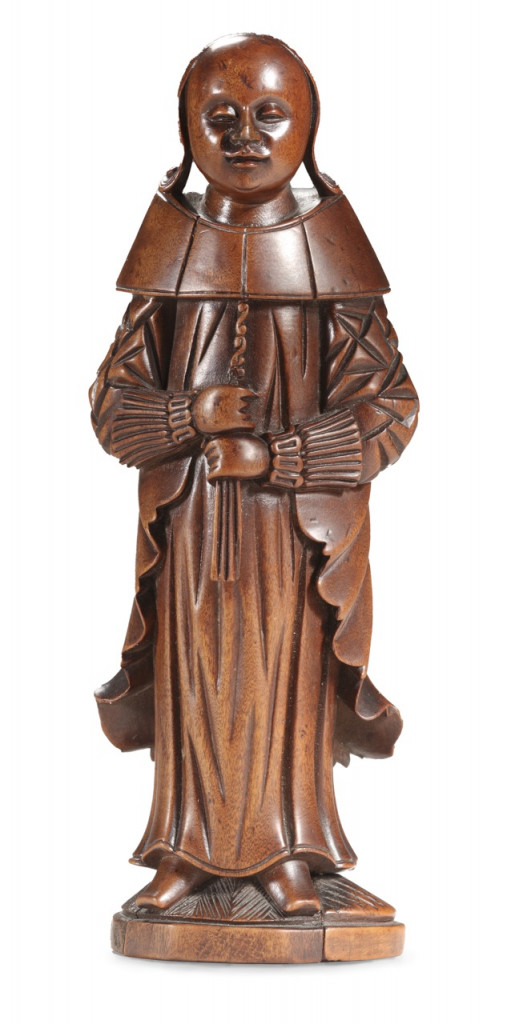
A highly unusual Chinese sandalwood figure of a Dutch lady
China or Jakarta (Batavia), late 17th century
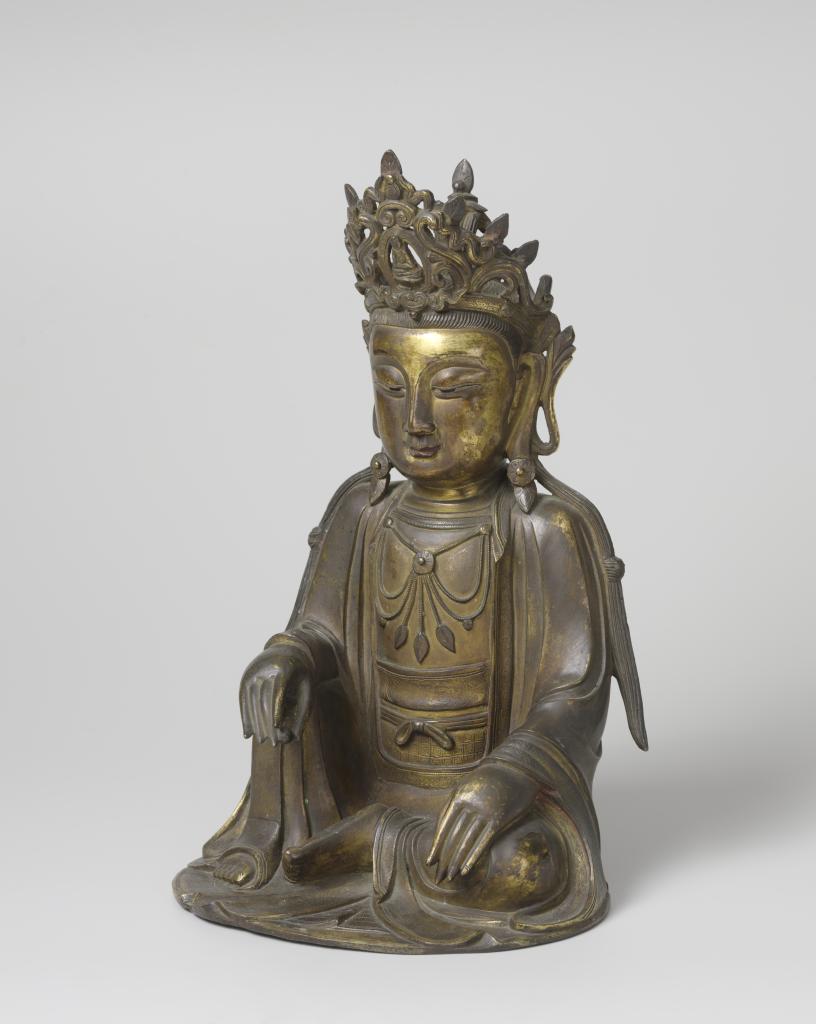
A Chinese gilt-bronze figure of Guanyin
_Ming-dynasty, 16th century _ _H. 39 cm_ Provenance: Private collection, the Netherlands (since the early 20th century)
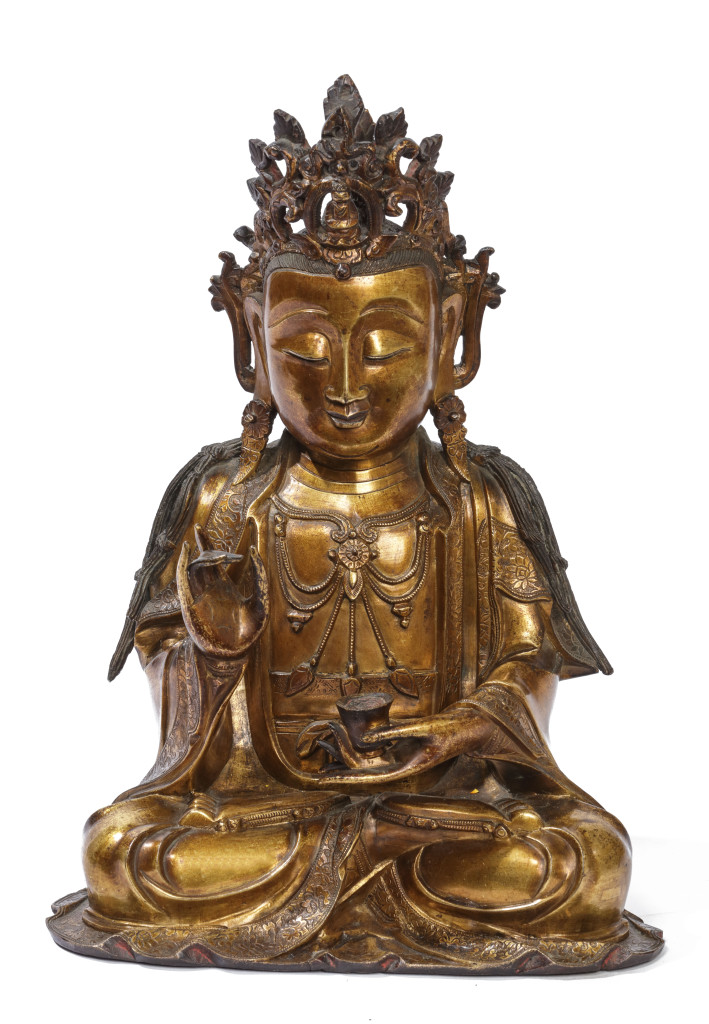
A very fine Chinese gilt-bronze figure of Guanyin
Ming-dynasty, late 16th/early 17th century