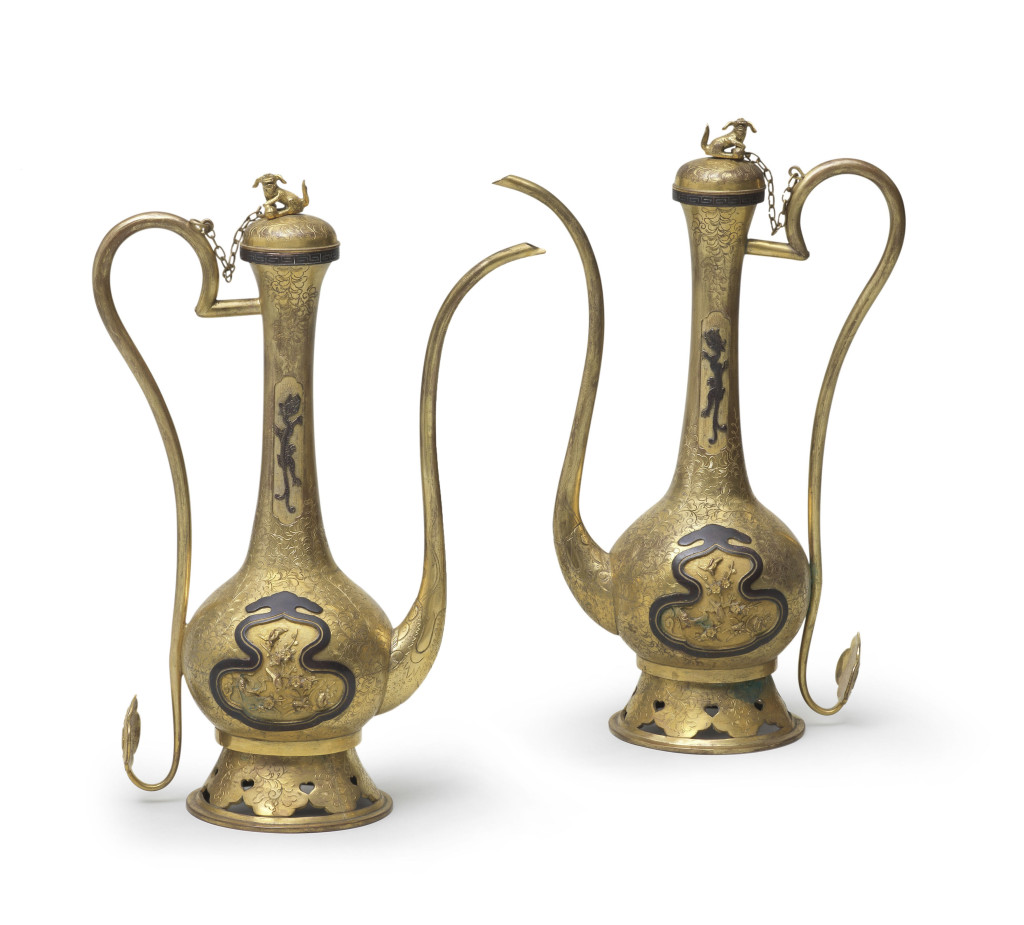
A pair of Japanese sawasa or ‘Tonkin-ware’ ewers for the Islamic market
Japan or Tonkin, 17th century
Each bulbous body is adorned with a double-gourd-shaped cartouche on each flank, showing detailed scenes of songbirds on prunus branches and ducks in a lotus pond in raised and openwork relief, surrounded by finely chiselled leafy vines. The necks feature two cartouches too, each containing a chilong dragon crawling up. The S-shaped spouts emerge from a chiselled Devine beast’s head, and each loop handle ends in a ruyi-shaped cartouche. Lastly, each ewer rests on a pierced, flared base and has a cover topped with a Buddhist shishi lion finial.
H. 30 cm (each)
Provenance:
Private collection, United Kingdom
This pair of highly refined ewers showcases the cross-pollination of Chinese, Persian, and Japanese artistic tradition and a Dutch nose for trade. Inspired by 16th-century Chinese ceramic vessels, this pair of ewers reflects the Persian metalworking influences, particularly evident in the elongated necks and domed lids. The Chinese started producing export wares for the Islamic market early on, an idea cleverly copied by the Dutch, who simply copied the idea. Probably - within the shadows of private trade (read: smuggeling), a Dutchman ordered ewers like the ones present in Japan or Tonkin, catering to the Islamic niche market. Surely, he was able to sell them for good profit upon arrival in a port with a VOC trade post such as Al Mukha (Mocca) in Yemen or Bandar-e Abbas (Gamron), Fort Mosselstein at Kharg Island, or Bandar-e Kong in Persia.
For a comparable ewer, see: R. Mowry, China's Renaissance in Bronze: The Robert H. Clague Collection of Later Chinese Bronzes, 1100-1900, Phoenix, 1992, pp. 131-136, pl. 26, and for another pair of bulbous ewers, but in lacquer and with European ormulu mounts, see the Louvre collection (inv.no. MR 380 85).
Each bulbous body is adorned with a double-gourd-shaped cartouche on each flank, showing detailed scenes of songbirds on prunus branches and ducks in a lotus pond in raised and openwork relief, surrounded by finely chiselled leafy vines. The necks feature two cartouches too, each containing a chilong dragon crawling up. The S-shaped spouts emerge from a chiselled Devine beast’s head, and each loop handle ends in a ruyi-shaped cartouche. Lastly, each ewer rests on a pierced, flared base and has a cover topped with a Buddhist shishi lion finial.
H. 30 cm (each)
Provenance:
Private collection, United Kingdom
This pair of highly refined ewers showcases the cross-pollination of Chinese, Persian, and Japanese artistic tradition and a Dutch nose for trade. Inspired by 16th-century Chinese ceramic vessels, this pair of ewers reflects the Persian metalworking influences, particularly evident in the elongated necks and domed lids. The Chinese started producing export wares for the Islamic market early on, an idea cleverly copied by the Dutch, who simply copied the idea. Probably - within the shadows of private trade (read: smuggeling), a Dutchman ordered ewers like the ones present in Japan or Tonkin, catering to the Islamic niche market. Surely, he was able to sell them for good profit upon arrival in a port with a VOC trade post such as Al Mukha (Mocca) in Yemen or Bandar-e Abbas (Gamron), Fort Mosselstein at Kharg Island, or Bandar-e Kong in Persia.
For a comparable ewer, see: R. Mowry, China's Renaissance in Bronze: The Robert H. Clague Collection of Later Chinese Bronzes, 1100-1900, Phoenix, 1992, pp. 131-136, pl. 26, and for another pair of bulbous ewers, but in lacquer and with European ormulu mounts, see the Louvre collection (inv.no. MR 380 85).
Part of the Islamic world, China and Japan collections.
Related objects
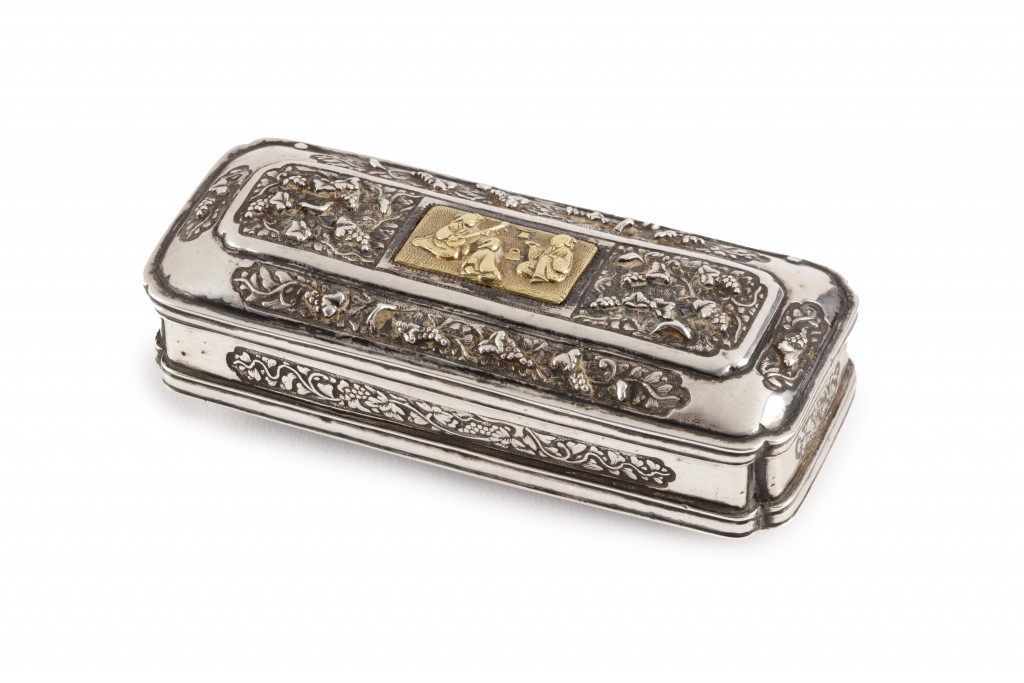
A Sawasa-ware export silver and gold tobacco box
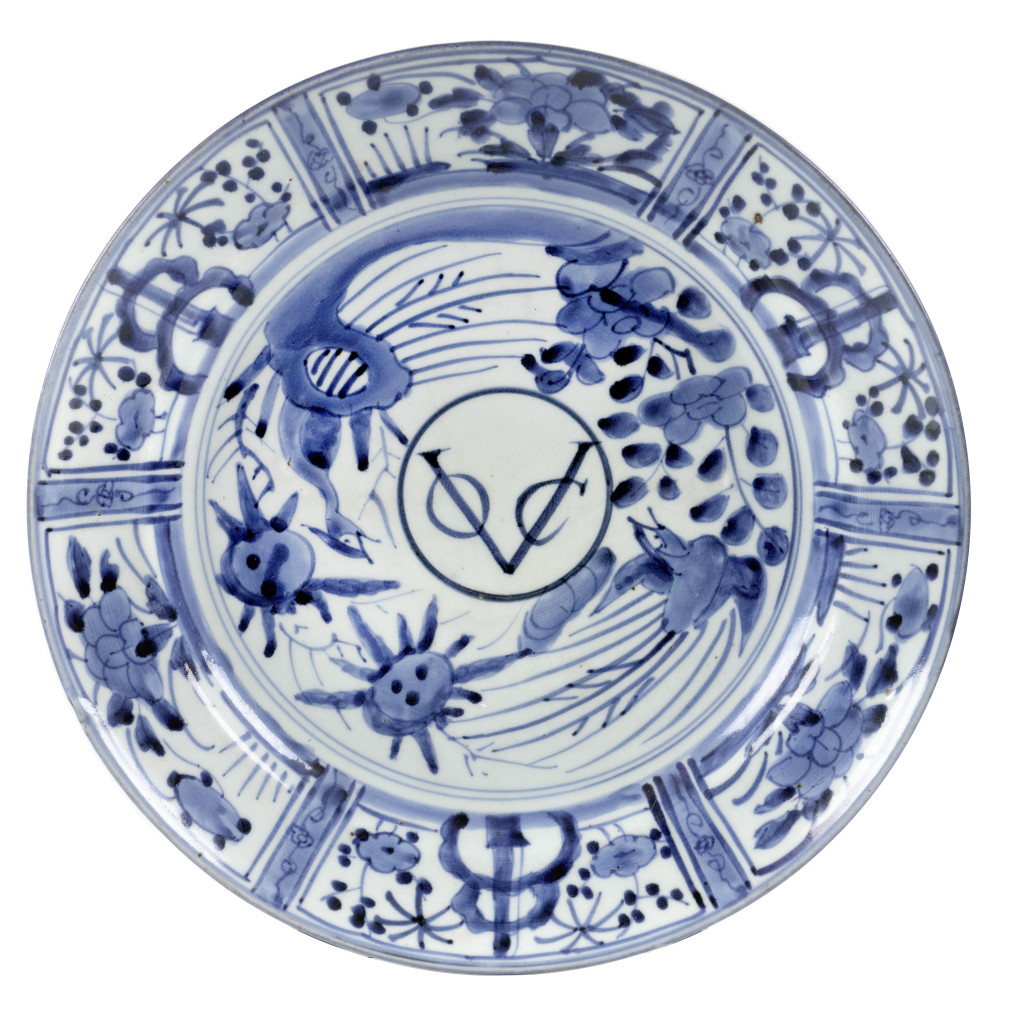
A rare large Japanese Arita blue and white porcelain 'V.O.C' dish
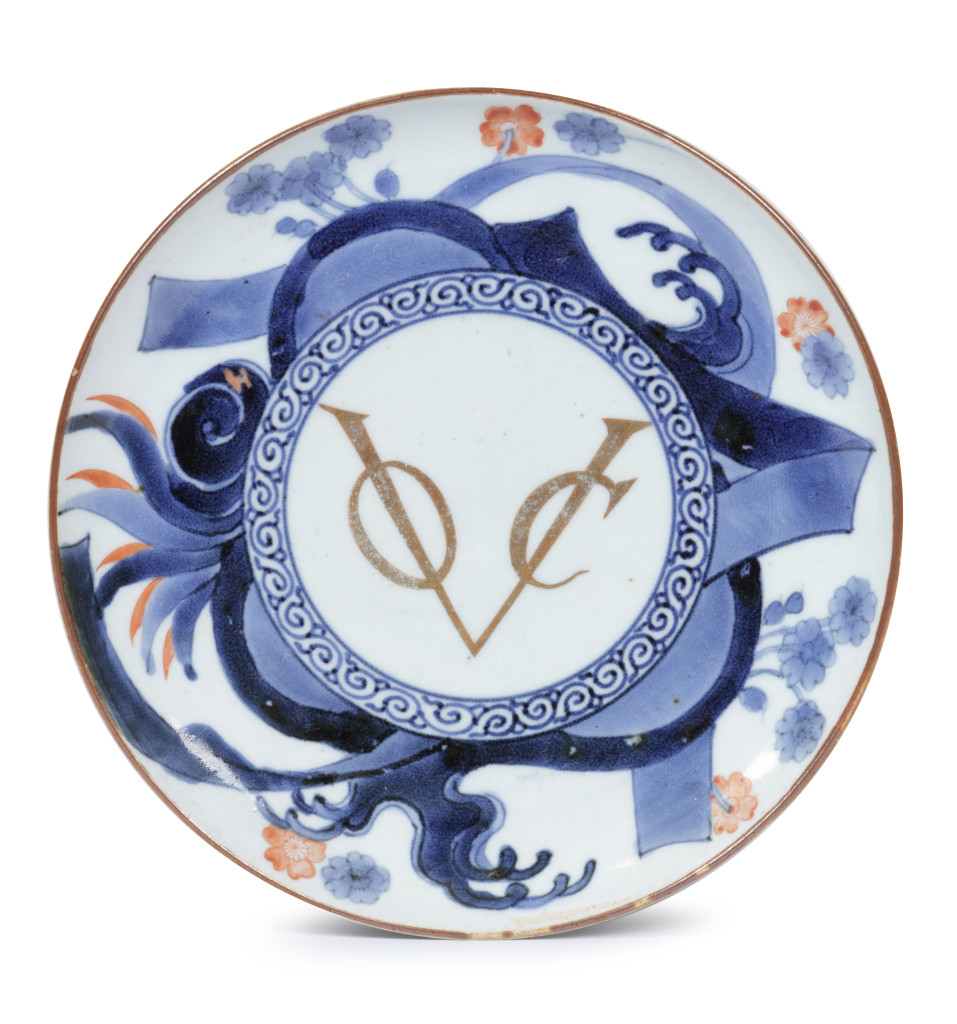
A Japanese Ko-imari porcelain 'VOC' dish
Arita, Edo period, first half 19th century Decorated in blue and iron-red under glaze with in the center the VOC monogram in gold. The bottom with imitation Chinese Ming Dynasty Chenghua marks, 'Great Ming Chenghua period mark'. Diam. 21.2 cm Dishes like the one present were very expensive souvenirs for wealthy Japanese domestic tourists who visited Nagasaki to get a glimpse of the Dutch on Deshima. The design of this particular dish is unknown, and it is possibly unique.