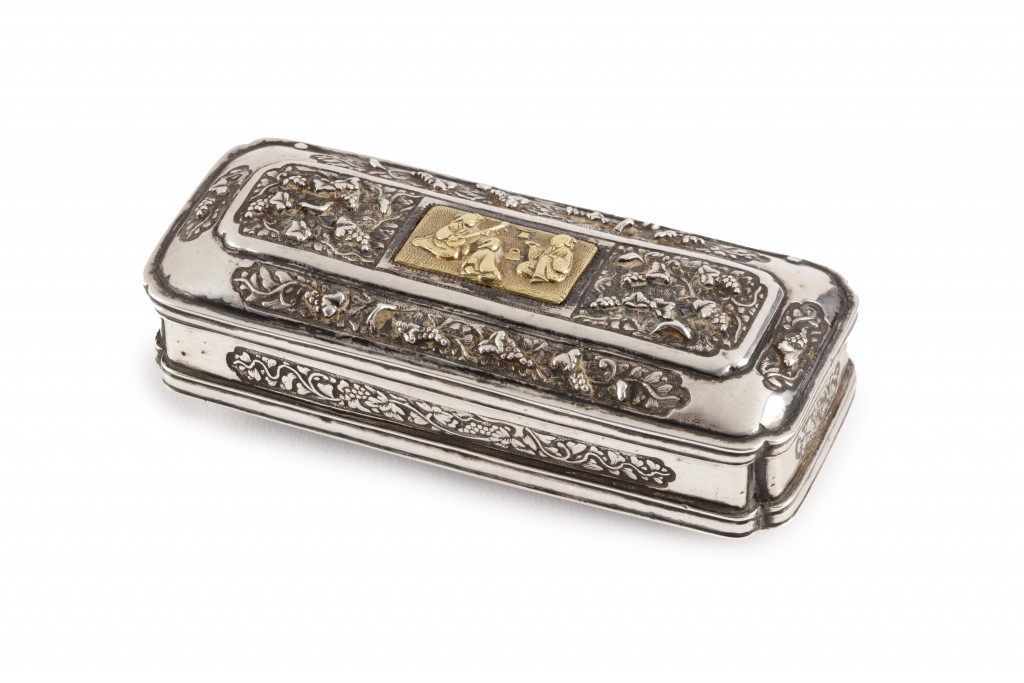
A Sawasa-ware export silver and gold tobacco box
Japan, Nagasaki, 17th century
L. 11.3 x W. 4.7 x W. 3.3 cm
Weight 169 grams
This is probably the work of Chinese silversmiths working in Nagasaki. Chinese and Japanese metalworkers in Nagasaki made objects following similar designs and manufacturing techniques but mostly in different materials; the Chinese using silver and the Japanese an alloy of copper, gold, silver, arsenic and antimony, known as shakudo (or sawasa as known in Batavia by the Dutch). The present silver box has apparent similarities with shakudo tobacco boxes. Usually, the decoration in these cast and chiselled utilitarian boxes is Chinese, showing trees, flowers, animals, birds, insects and Chinese temples with their flags. The present box, however, has a unique Western design with grapevines and grape bunches all around, and peonies in the centre of the bottom. Grapes are the symbol of the Last Supper and therefore the blood of Jesus Christ.
In 17th century Japan, however this symbol, if recognised as Christian, was forbidden, as Christianity was banned in Japan. Peonies symbolise romance and prosperity and are regarded as an omen of good fortune and happy marriage. The inside of the box is gilded.
The top of the box is provided with a gold plate depicting three Japanese ladies attending a tea ceremony in the pleasure quarters for which Nagasaki was renowned. One of the ladies is playing the Shamisan. A similar tea ceremony is depicted on an early shakudo, black and gold tobacco box from circa 1650-60 (John Hawkins, Chinese silversmiths working in Nagasaki between 1660 and 1800 in: The Journal of the Silver Society, no. 33, p. 139-158).
Provenance:
Michael Lindörfer, a violin maker in Weimar
On a photograph dated 01- 02-1969, Lindörfer is shown presenting a violin to David Oistrach.
L. 11.3 x W. 4.7 x W. 3.3 cm
Weight 169 grams
This is probably the work of Chinese silversmiths working in Nagasaki. Chinese and Japanese metalworkers in Nagasaki made objects following similar designs and manufacturing techniques but mostly in different materials; the Chinese using silver and the Japanese an alloy of copper, gold, silver, arsenic and antimony, known as shakudo (or sawasa as known in Batavia by the Dutch). The present silver box has apparent similarities with shakudo tobacco boxes. Usually, the decoration in these cast and chiselled utilitarian boxes is Chinese, showing trees, flowers, animals, birds, insects and Chinese temples with their flags. The present box, however, has a unique Western design with grapevines and grape bunches all around, and peonies in the centre of the bottom. Grapes are the symbol of the Last Supper and therefore the blood of Jesus Christ.
In 17th century Japan, however this symbol, if recognised as Christian, was forbidden, as Christianity was banned in Japan. Peonies symbolise romance and prosperity and are regarded as an omen of good fortune and happy marriage. The inside of the box is gilded.
The top of the box is provided with a gold plate depicting three Japanese ladies attending a tea ceremony in the pleasure quarters for which Nagasaki was renowned. One of the ladies is playing the Shamisan. A similar tea ceremony is depicted on an early shakudo, black and gold tobacco box from circa 1650-60 (John Hawkins, Chinese silversmiths working in Nagasaki between 1660 and 1800 in: The Journal of the Silver Society, no. 33, p. 139-158).
Provenance:
Michael Lindörfer, a violin maker in Weimar
On a photograph dated 01- 02-1969, Lindörfer is shown presenting a violin to David Oistrach.
Related objects
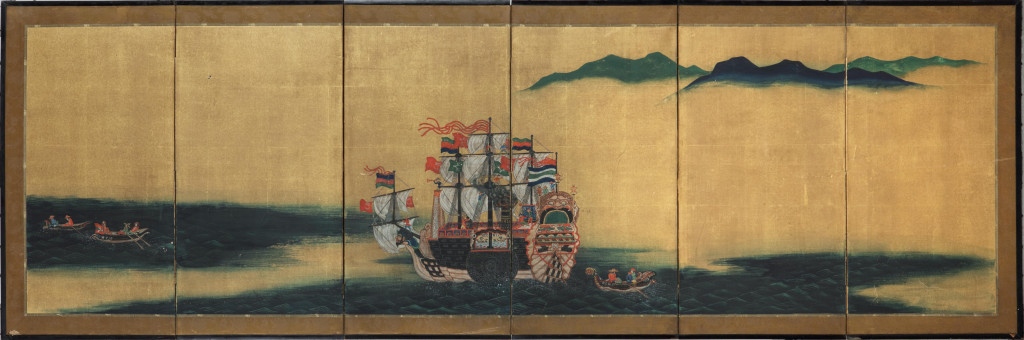
A rare and fine Japanese six-fold gold-leaf screen with the depiction of Commodore Matthew Perry’s flag ship the USS Mississippi
Early Bakumatsu period (1853-1867)
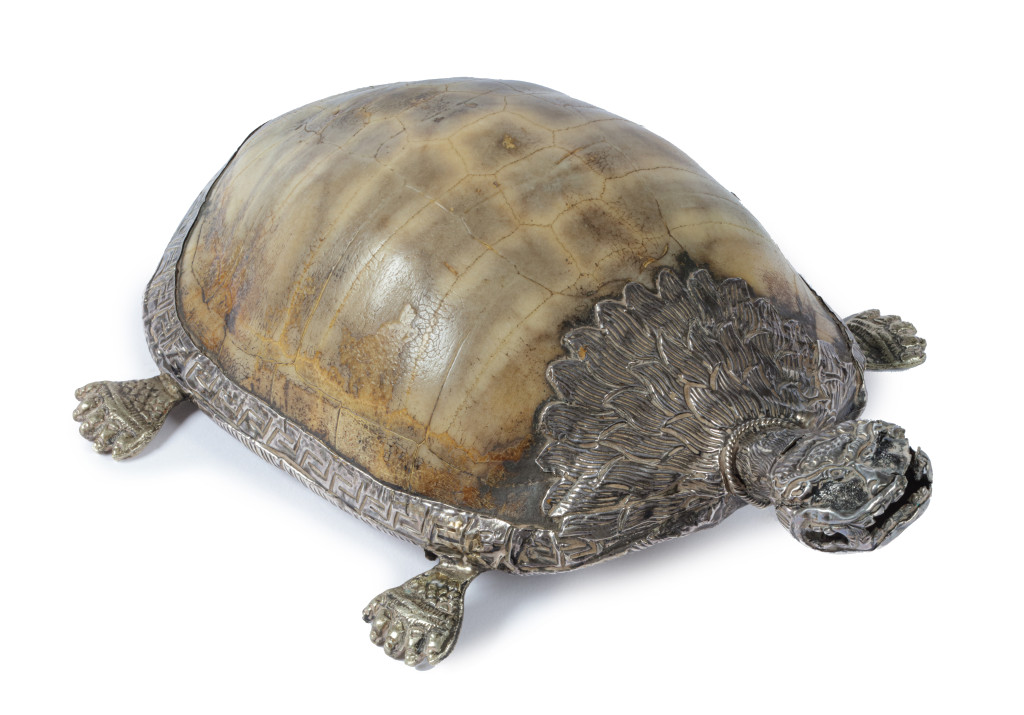
A Tibetan or Peranakan silver-mounted turtle-shell turtle
A Tibetan or Peranakan silver-mounted turtle-shell turtle.. Late 18th/early 19th century The polished tortoise or turtle shell mounted in silver, shaped to be a celestial turtle.
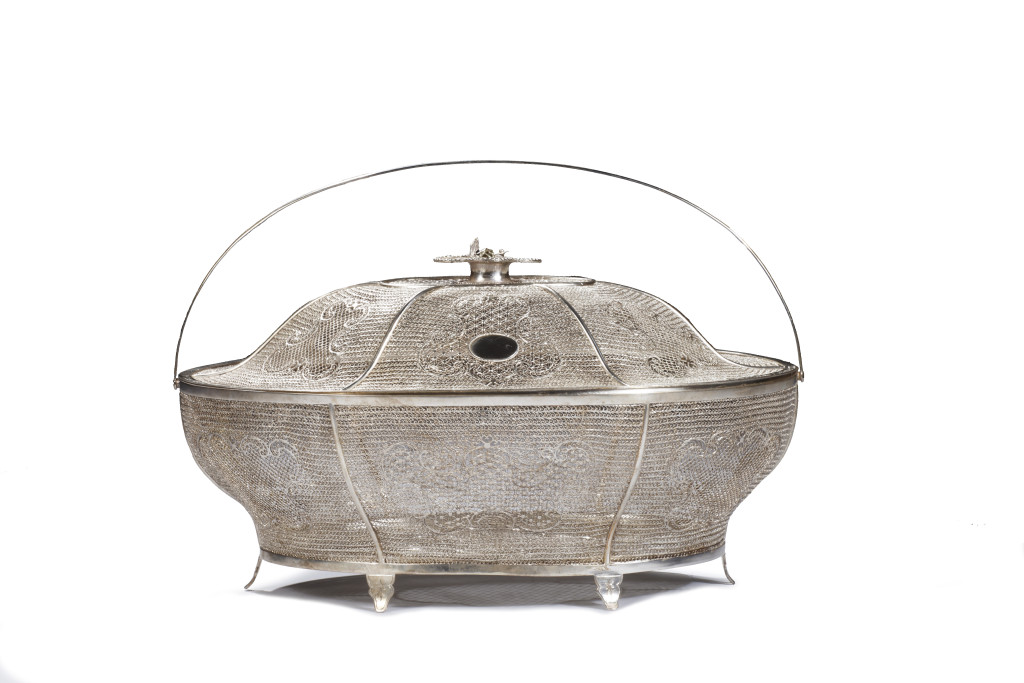
A refined Chinese silver filigree basket with cover
Late 18th/early 19th century