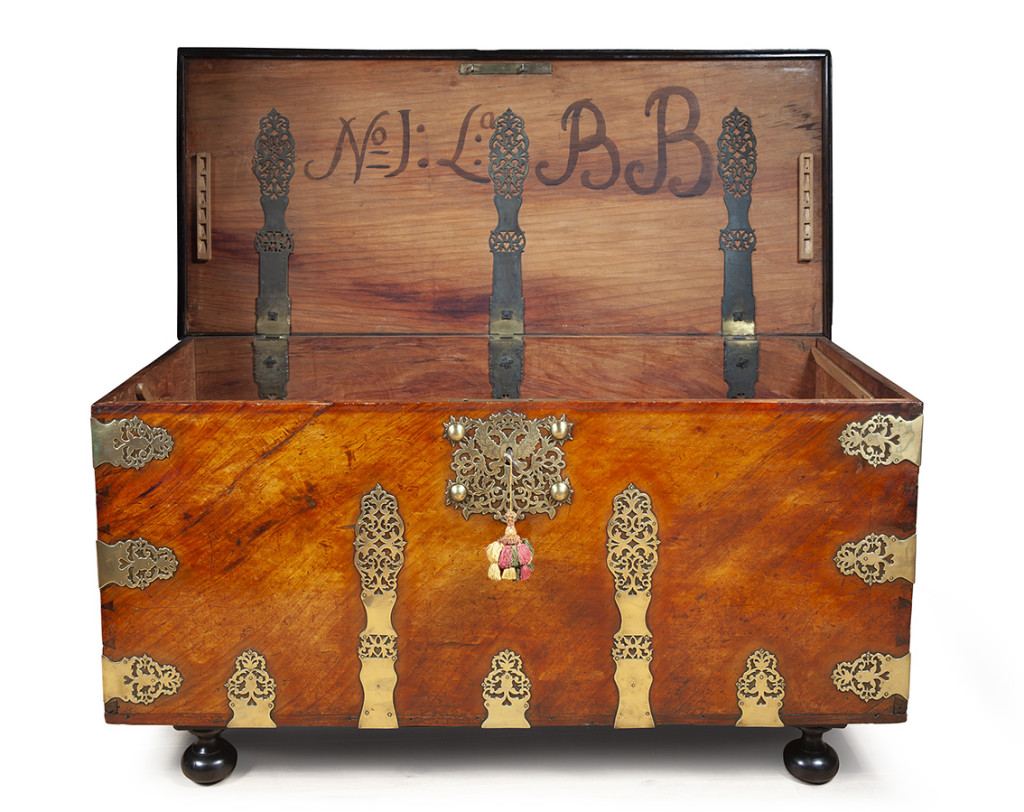
The Governor's Chest.
A Dutch-colonial hardwood VOC chest with elaborate mounts
Jakarta (Batavia) or Sri Lanka, circa 1750
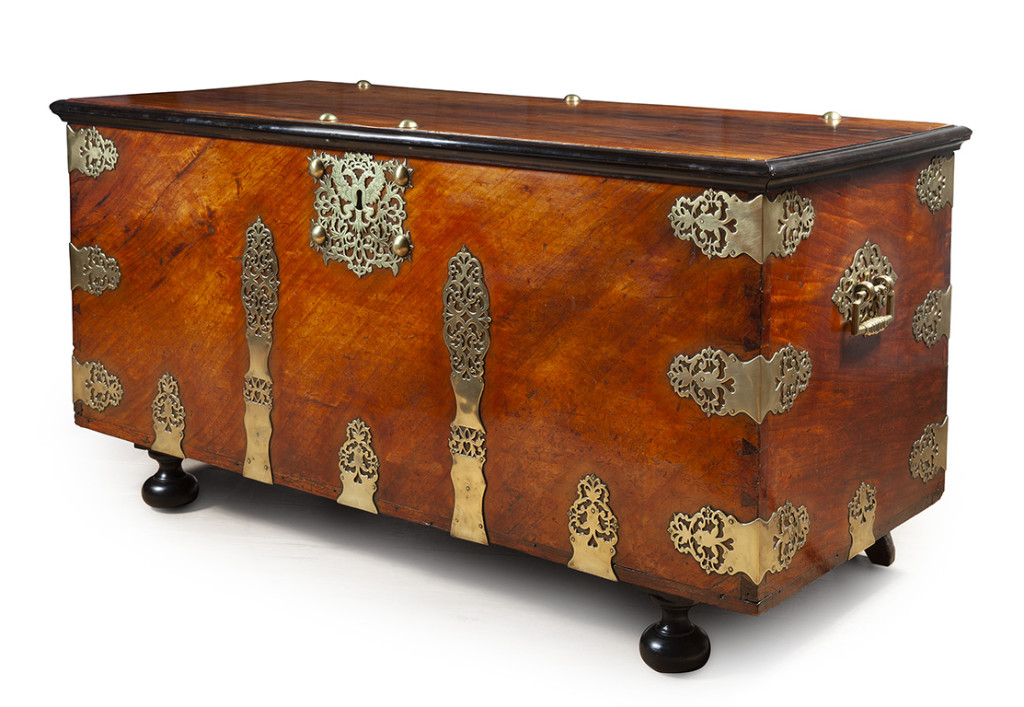
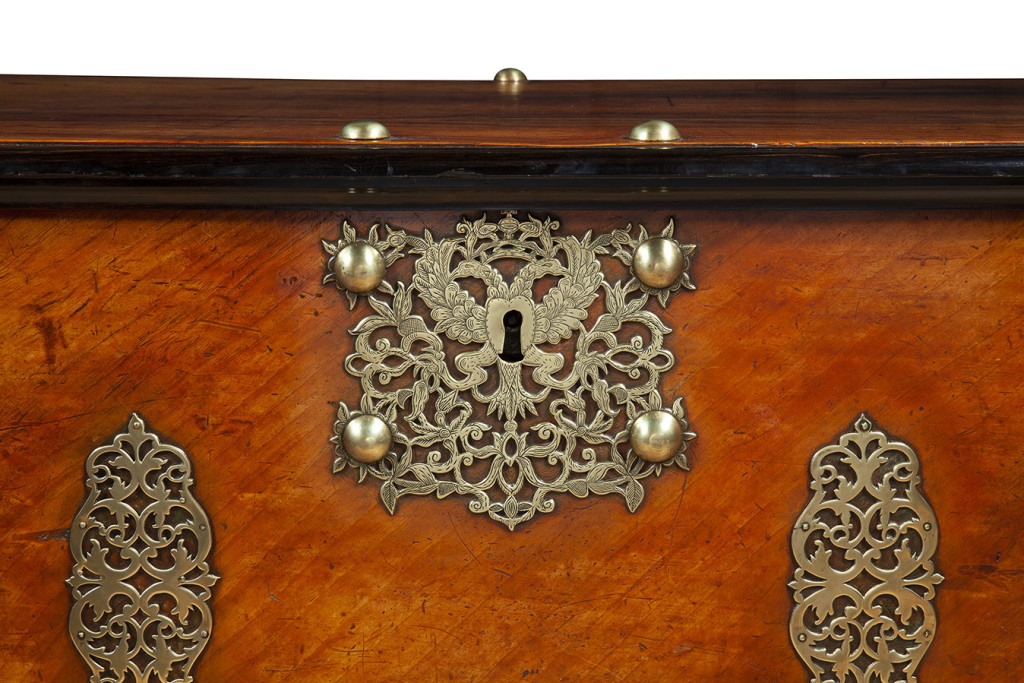
The chest is exuberantly mounted with brass mounts around the edges and large decorative nails to the top and front. It stands on two bulbous dark wood front feet and plain back feet. The lockplate, with key, depicts a double-headed eagle, and on the inside of the lid No J: L: a BB is written.
L. 165.5 x W. 83.5 x H. 54 cm (without feet)
H. 74 cm (with feet)
Provenance:
- The Deaconess Hospital (Diakonessenhuis), Utrecht
- Private collection, the Netherlands
The term Diakonessenhuis is a hospital originally founded or run by deaconesses, who are female members of a Christian community dedicated to service, especially in the field of healthcare. This chest was likely given to the hospital by the first owner or one of his descendants after staying there.
To avoid overloading sailing ships with chests of all sizes and forms, the Heeren XVII, the ultimate directors of the VOC, adopted a great number of resolutions regulating the form and sizes of the chests and the number each official was allowed to take. This chest is of a considerable size, indicating that it was made a Governor-General. On the inside of the lid is written No J: L: a BB, perhaps referring to a previous owner.
The chest was one of the most beloved furniture items of the VOC in Asia and on the Cape. The earliest chests were brought by the ships' staff and were made of European wood. Soon, the chests were made of indigenous wood, such as djati, better suited for the tropical climate. Later on, these chests were put on removable ball feet and used as dressers for the interior.
Jakarta (Batavia) or Sri Lanka, circa 1750
The chest is exuberantly mounted with brass mounts around the edges and large decorative nails to the top and front. It stands on two bulbous dark wood front feet and plain back feet. The lockplate, with key, depicts a double-headed eagle, and on the inside of the lid No J: L: a BB is written.
L. 165.5 x W. 83.5 x H. 54 cm (without feet)
H. 74 cm (with feet)
Provenance:
- The Deaconess Hospital (Diakonessenhuis), Utrecht
- Private collection, the Netherlands
The term Diakonessenhuis is a hospital originally founded or run by deaconesses, who are female members of a Christian community dedicated to service, especially in the field of healthcare. This chest was likely given to the hospital by the first owner or one of his descendants after staying there.
To avoid overloading sailing ships with chests of all sizes and forms, the Heeren XVII, the ultimate directors of the VOC, adopted a great number of resolutions regulating the form and sizes of the chests and the number each official was allowed to take. This chest is of a considerable size, indicating that it was made a Governor-General. On the inside of the lid is written No J: L: a BB, perhaps referring to a previous owner.
The chest was one of the most beloved furniture items of the VOC in Asia and on the Cape. The earliest chests were brought by the ships' staff and were made of European wood. Soon, the chests were made of indigenous wood, such as djati, better suited for the tropical climate. Later on, these chests were put on removable ball feet and used as dressers for the interior.
Part of the Indian Ocean and Indonesian Archipelago collections.