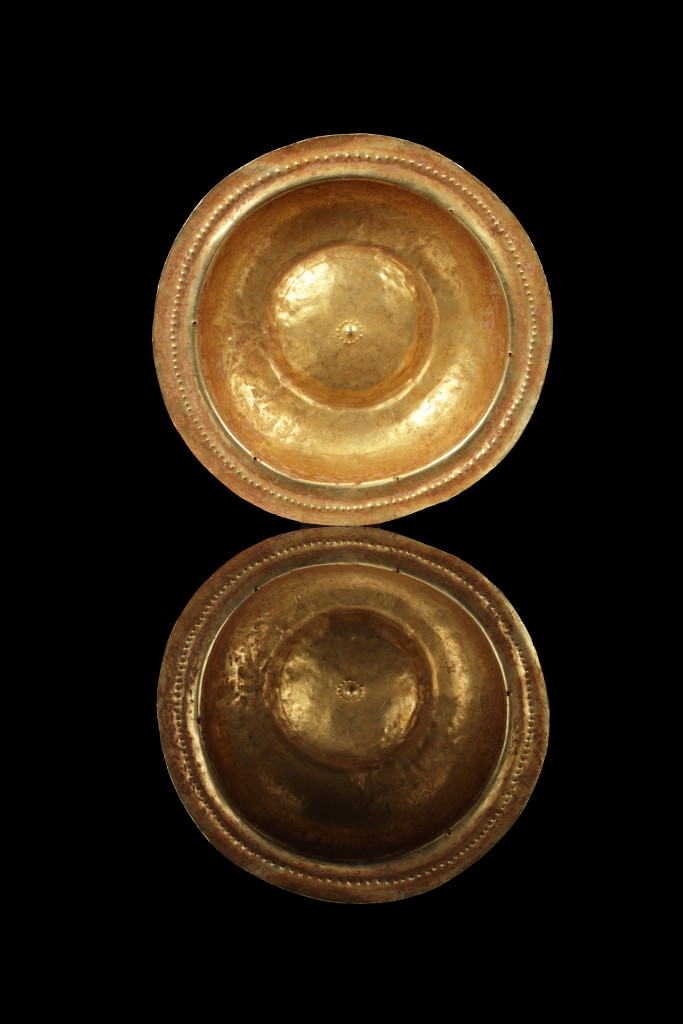
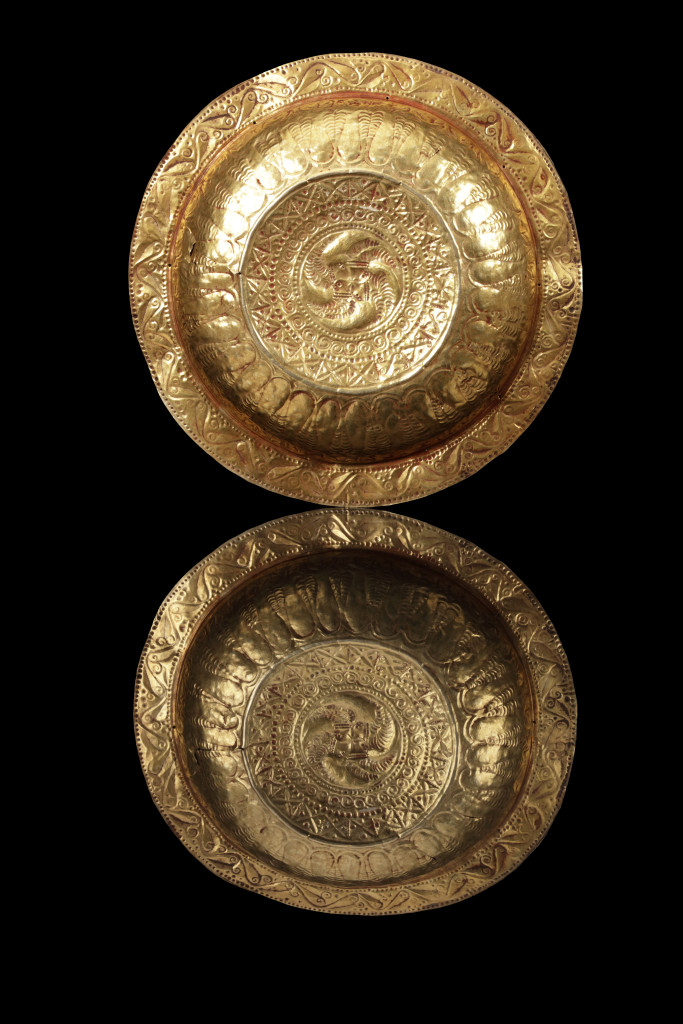
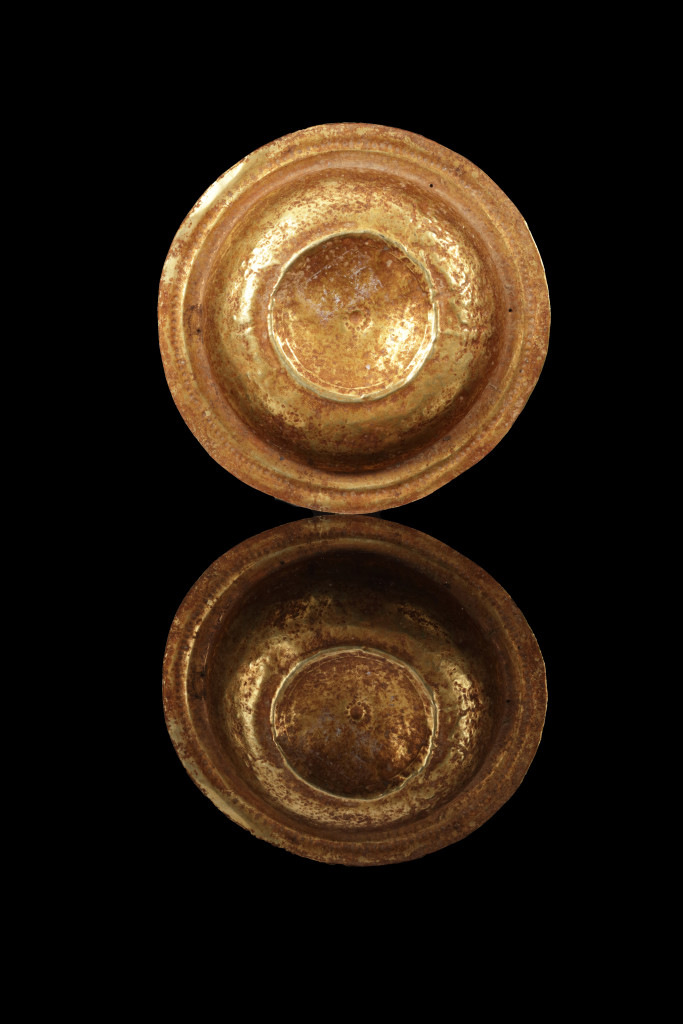
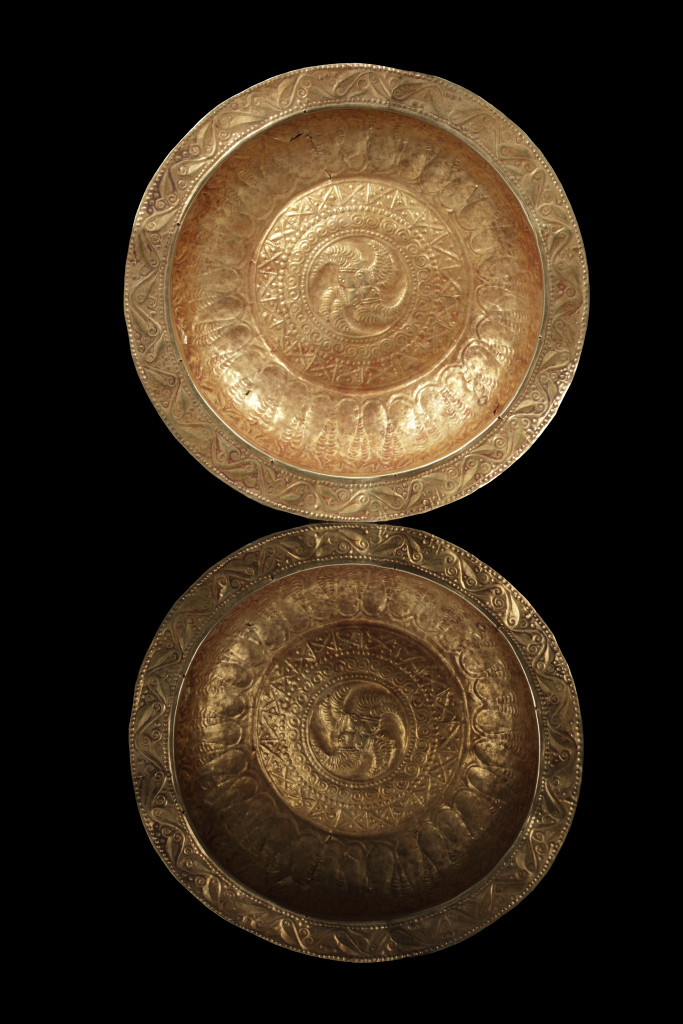
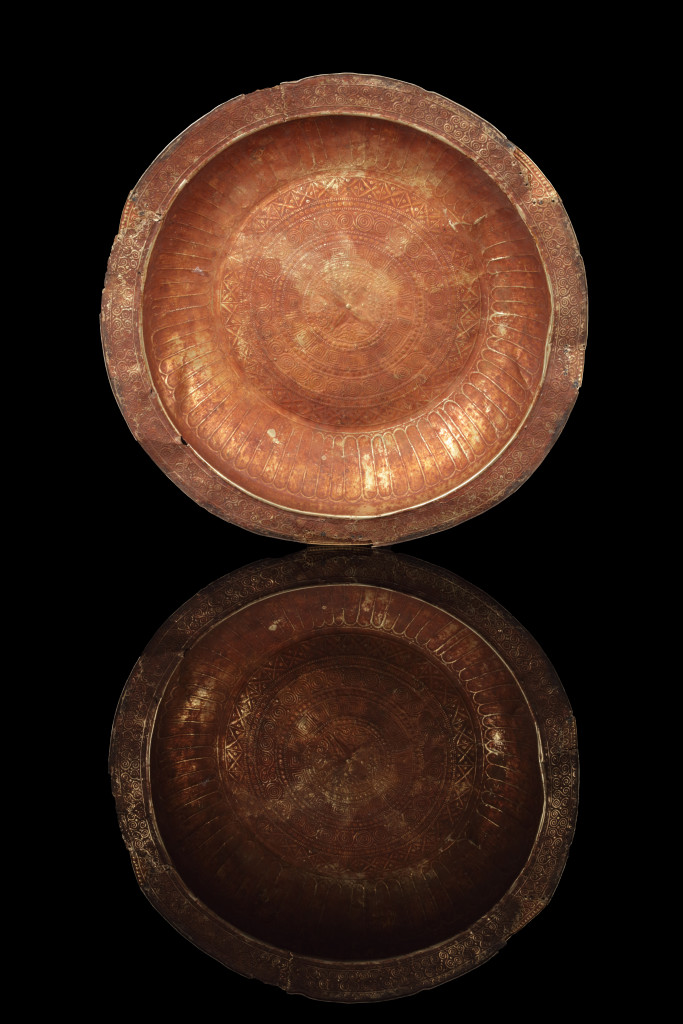
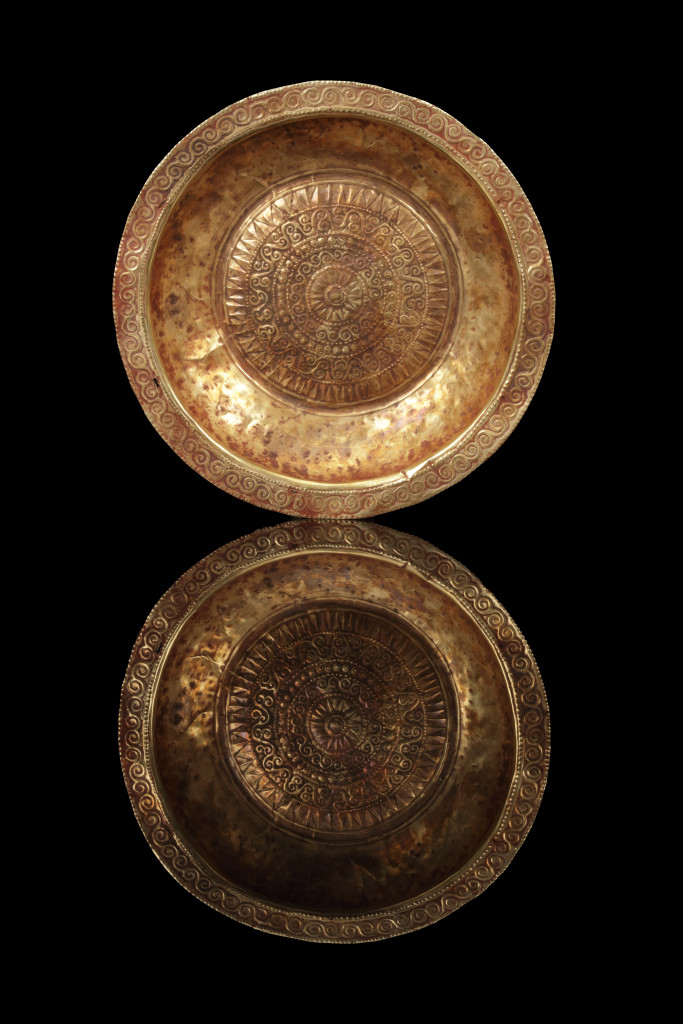
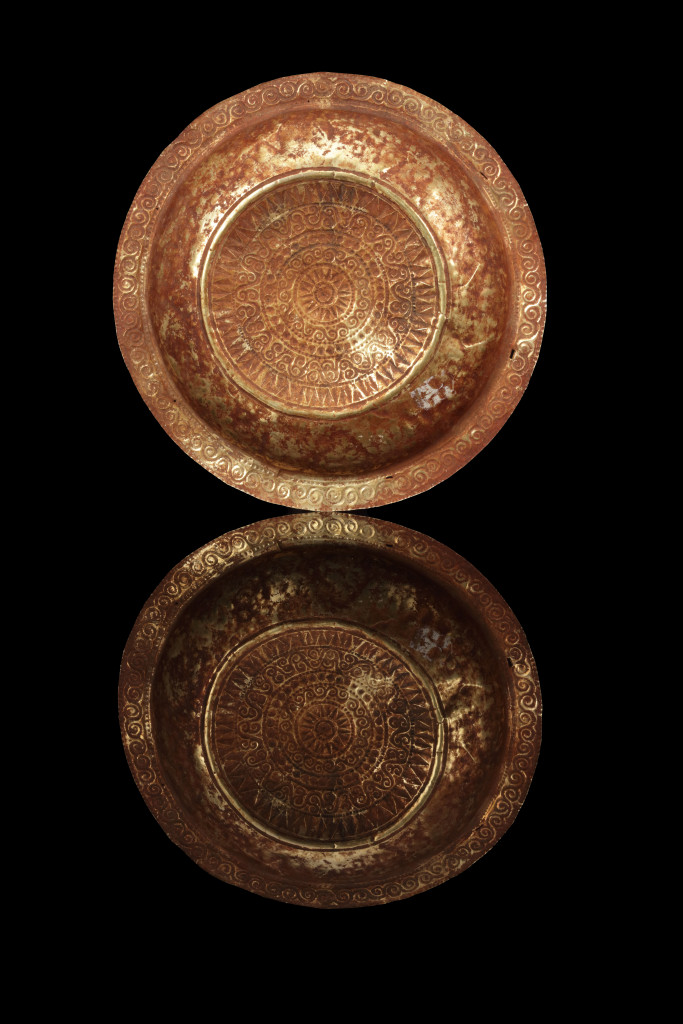
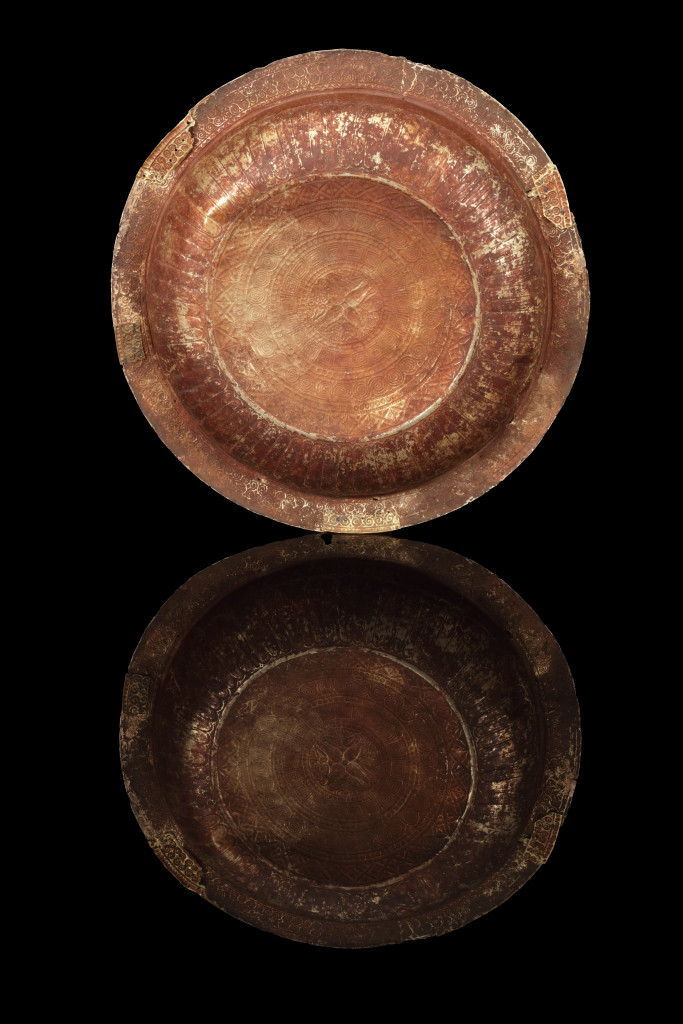
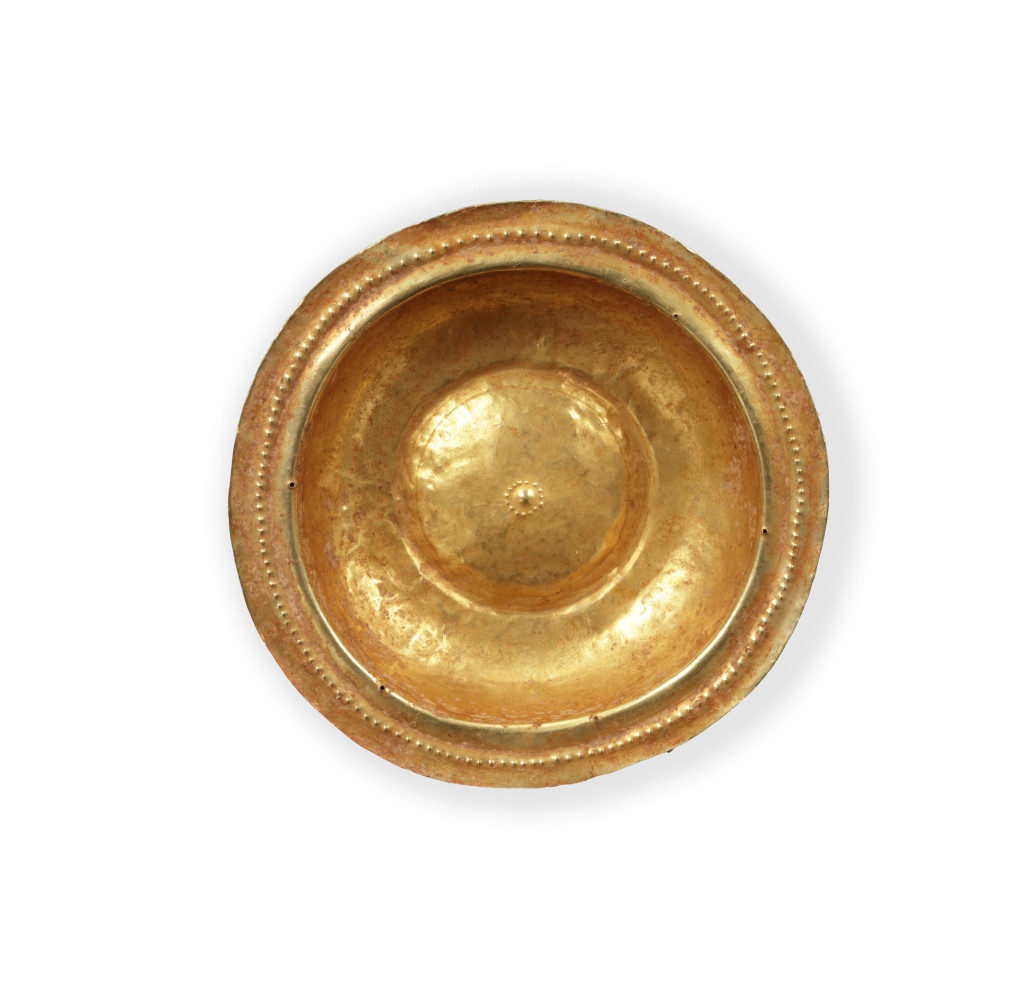
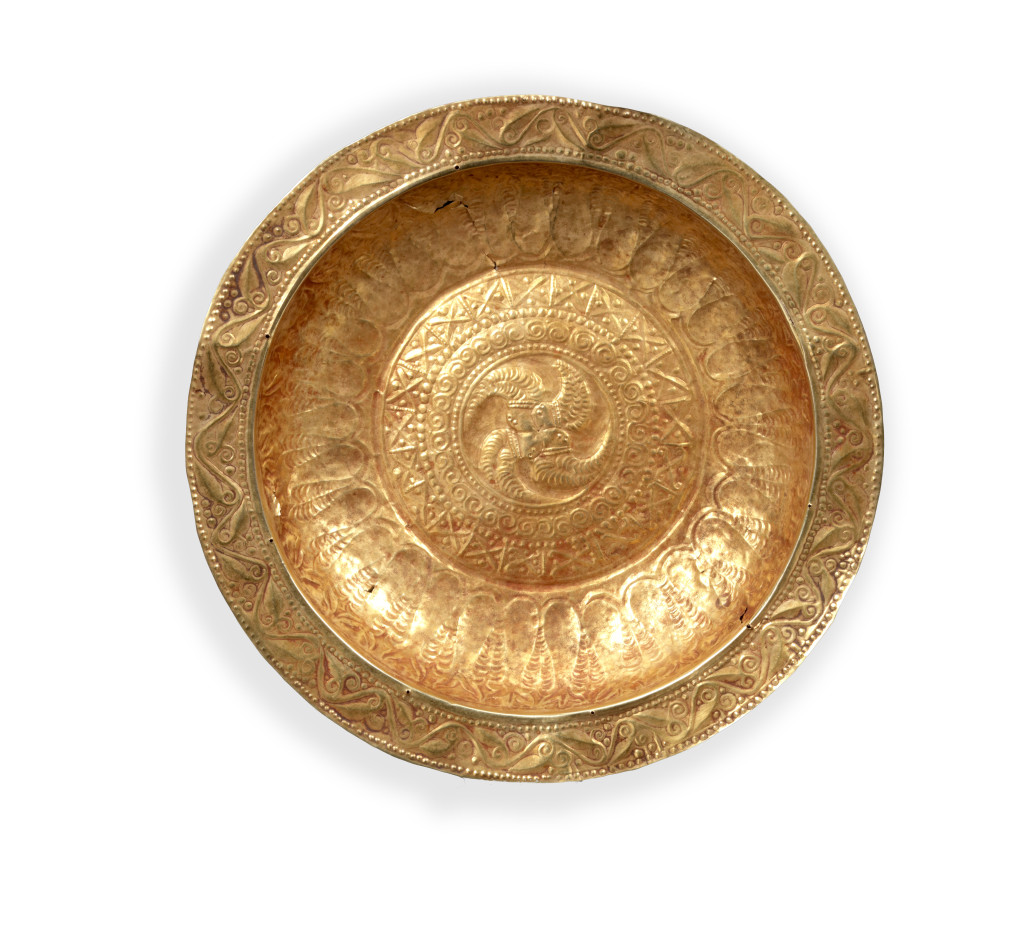
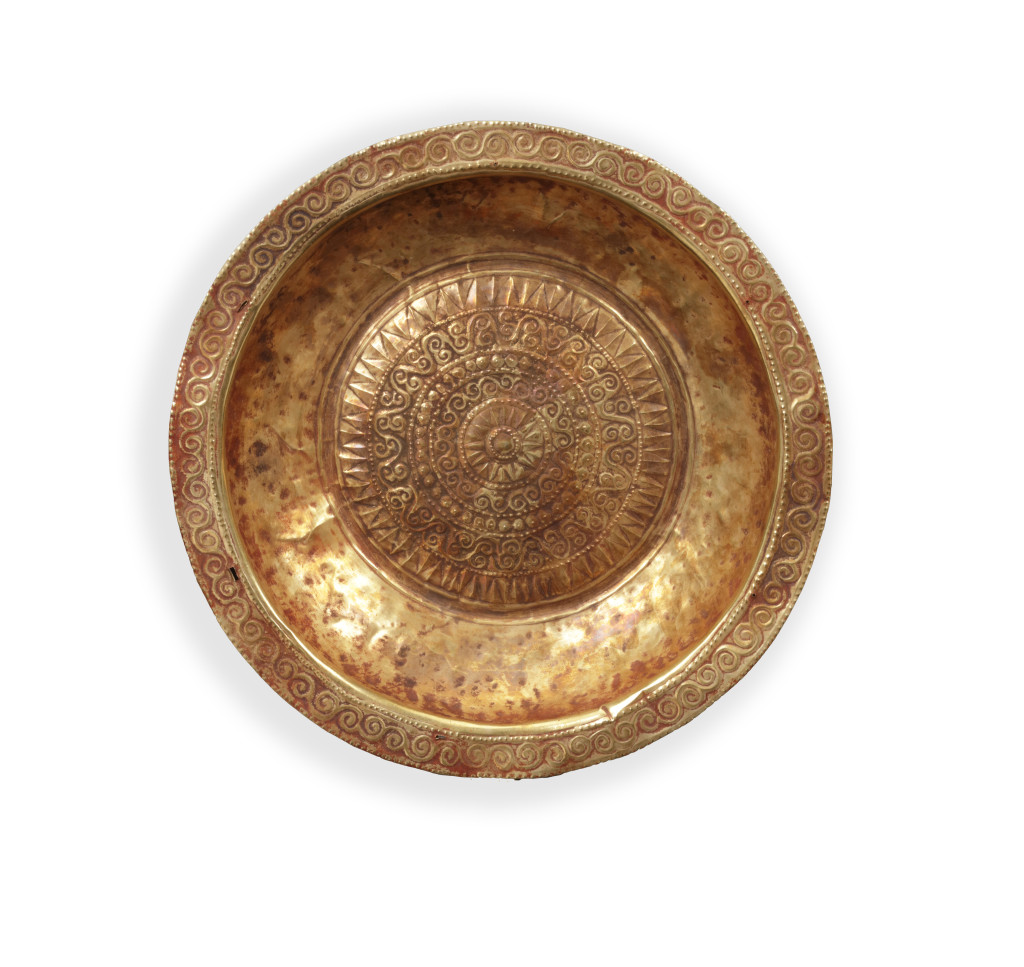
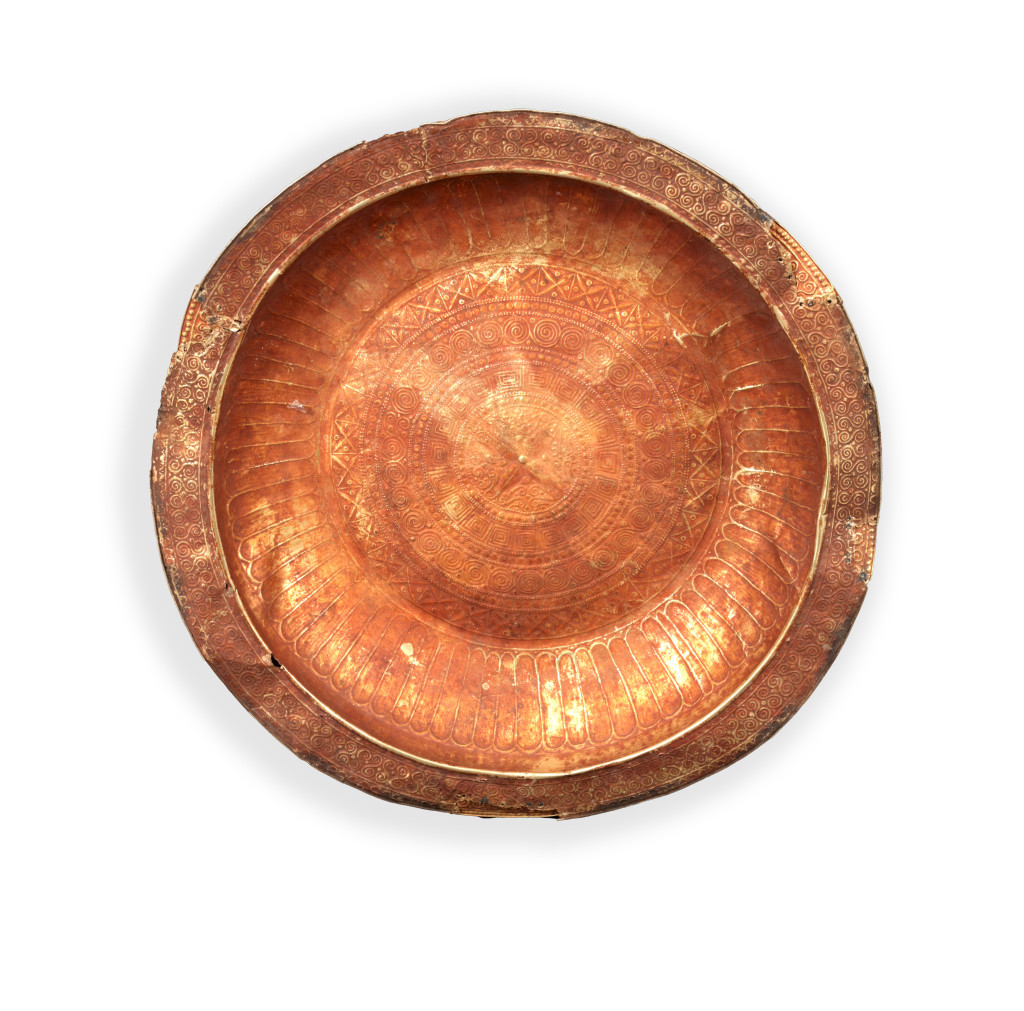
A collection of Tanimbar gold repoussé dishes
Each is delicately hammered in the repoussé technique, some with old repairs, all with a fine patina.
Diam. 33 x H. 5 cm / Diam. 22.6 x h. 3 cm
Diam. 21.5 x H. 3 cm / Diam. 12.7 x 2.3 cm
Diam. 33 x H. 5 cm (€ 28.000,-)
Diam. 22.6 x h. 3 cm (€ 12.500,-)
Diam. 21.5 x H. 3 cm (€ 12.500,-)
Diam. 12.7 x 2.3 cm (€ 11.500,-)
Provenance:
Collection of a notable from the Hague who stayed in the former Dutch East Indies around circa 1900; thence by descent
Purchased from the above by a distinguished Dutch collector (name is known to us) between 1970 and 1980
We are grateful to Mr. Jaap Polak for his assistance in determining the specifics and date of this finial above.
Part of the Indonesian Archipelago collection.
Related objects
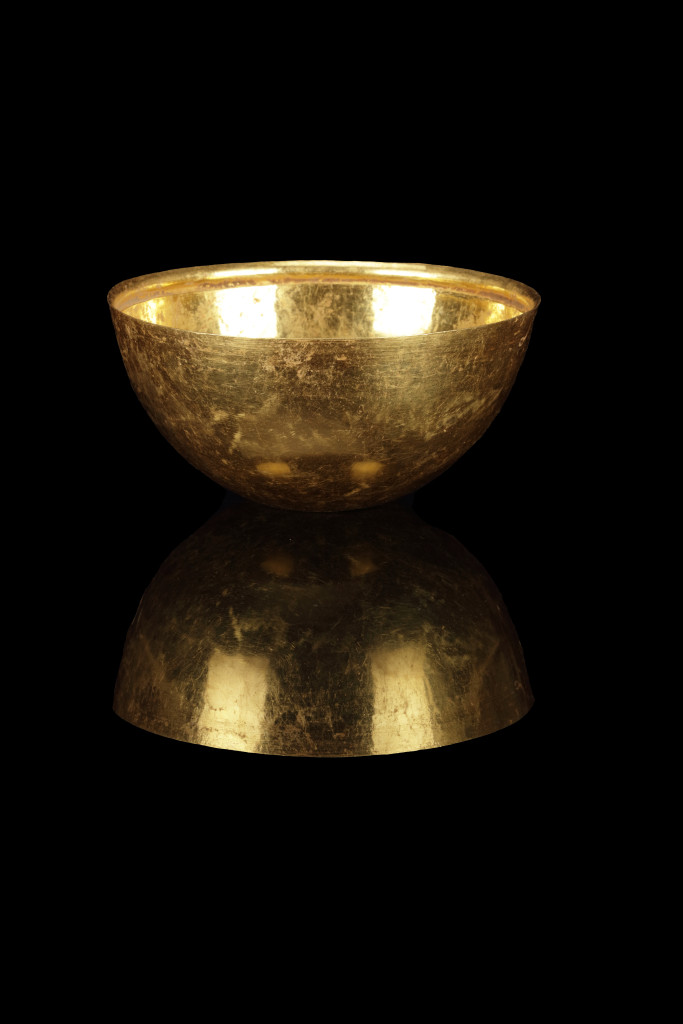
An ancient Javanese solid gold offering bowl
_Indonesia, Central Java, Central Javanese period, 9th-10th century CE_ _Diam. 11.5 x H. 5.8 cm / Weight: 219 grams_ Provenance: -Collection of a notable from the Hague, who stayed in the former Dutch East Indies around circa 1900; thence by descent -Purchased from the above by a distinguished Dutch collector (name is known to us) between 1970 and 1980 This object is registered at the Documentation Centre for Ancient Indonesian Art in Amsterdam. We are grateful to the Documentation Centre for Ancient Indonesian Art in Amsterdam and Mr. Jaap Polak for their assistance in determining the specifics and date of this finial above.
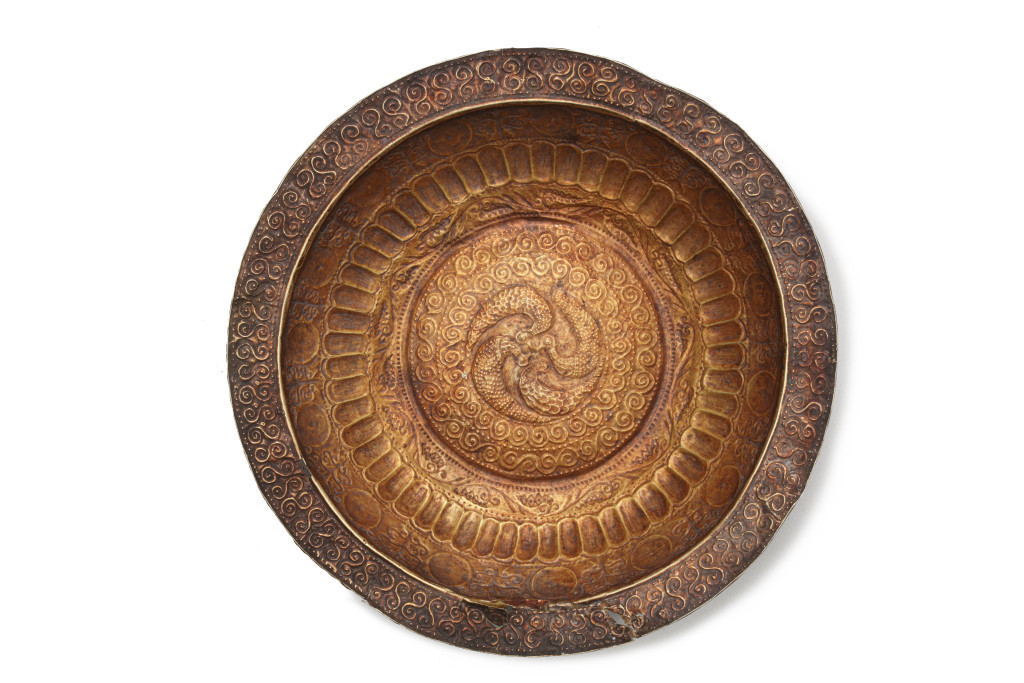
Three Indonesian gold repoussé dishes
Three Indonesian gold repoussé dishes
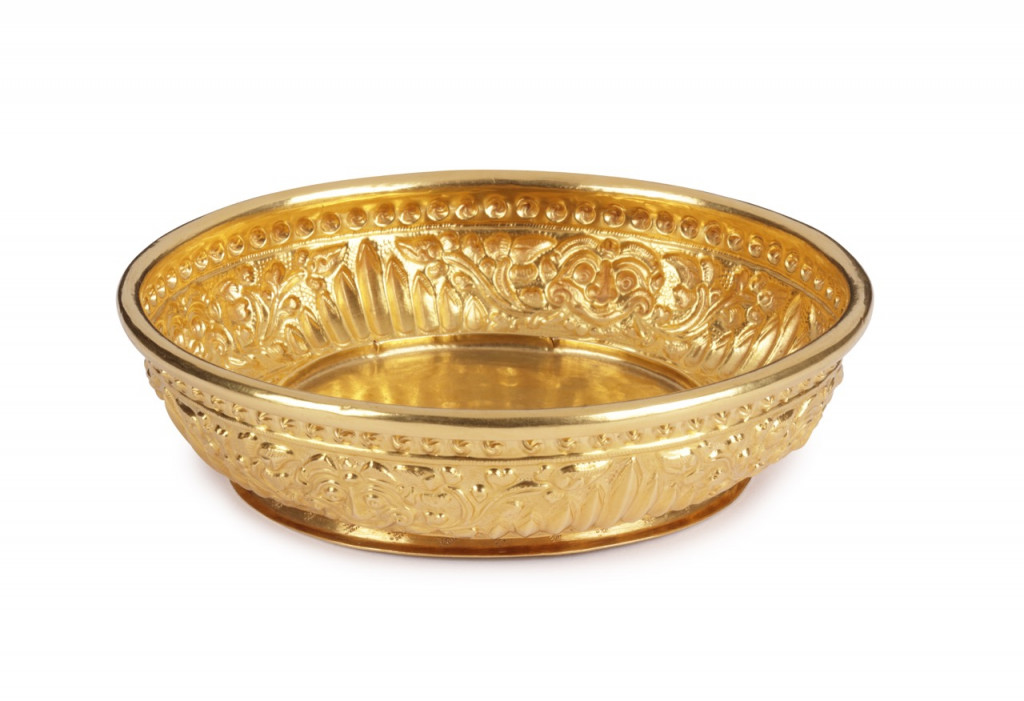
A fine Balinese gold offering dish or Bokor
A bokor is a round bowl with a low flaring rim, usually of silver, but in palaces gold bokor were not uncommon. They are still widely used in Bali, mostly made of much cheaper aluminium. They are commonly used as a base for large offerings (banten gebogan), tall, tower-shaped arrangements of fruits and cakes, carried to the temple and presented to gods and deified ancestors. A bokor is also used as a container for smaller offerings and gifts brought to places where a ritual is being held. Sometimes a bokor functions as a tray for the various boxes and containers of a betel or sirih set. The upright rim of this bokor is decorated with three bands of repoussé ornamentation. On the broad central band four groups of demonic kala faces alternate with groups of oval-shaped motifs.