A superb pair of royal Loro Blonyo wedding effigies
Solo (Surakarta) or Yogyakarta, circa 1900-1930
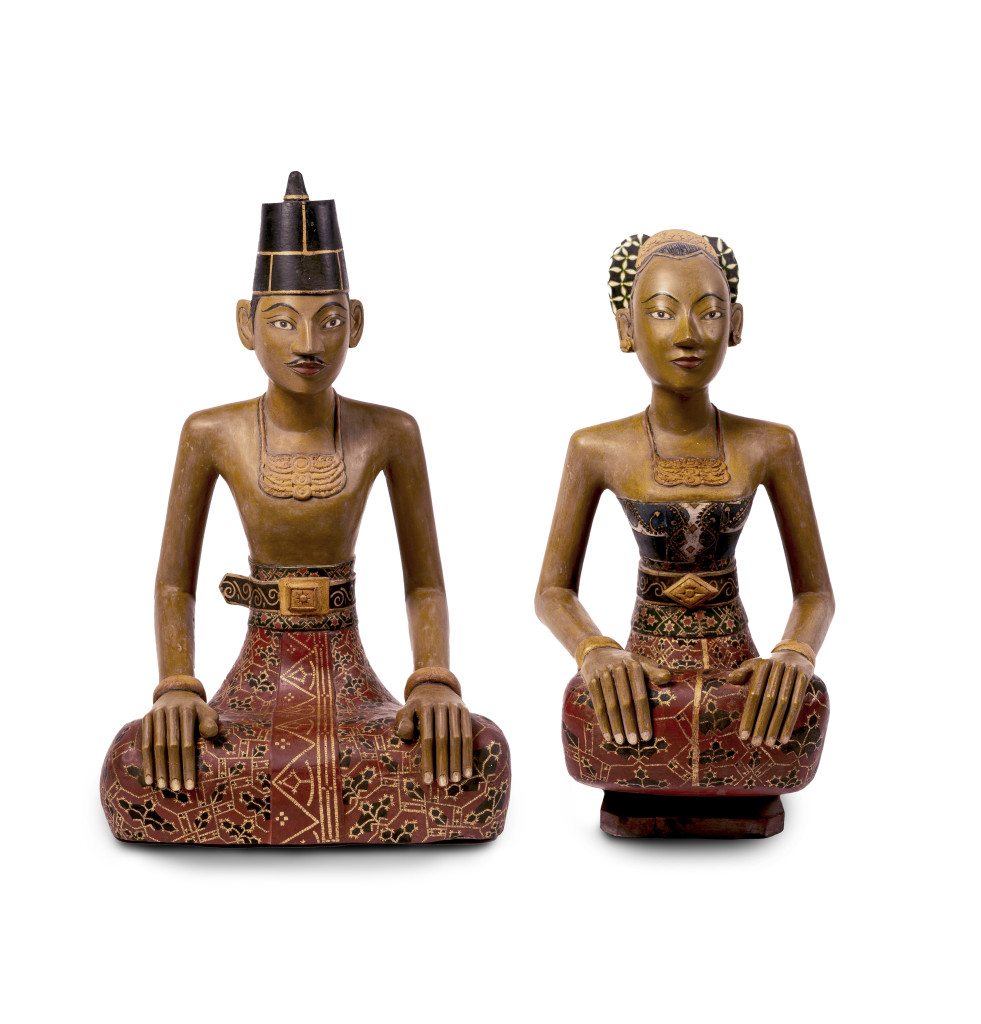
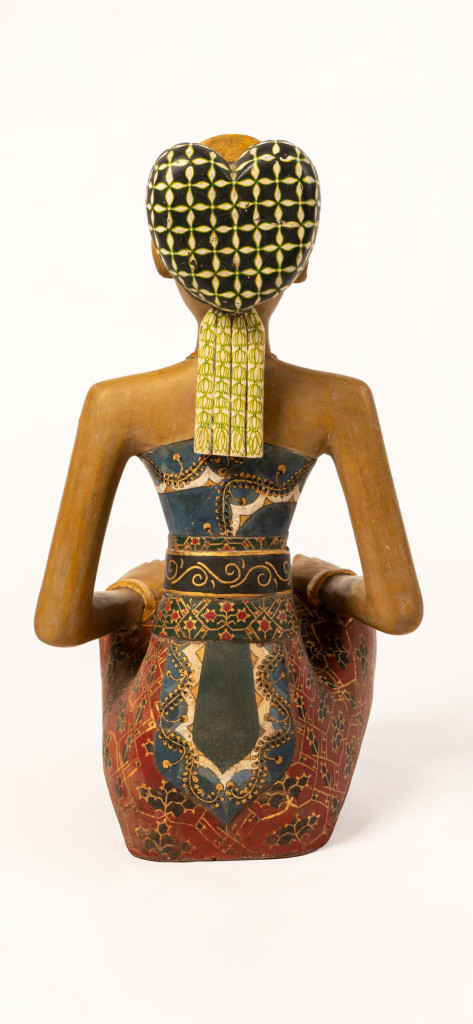
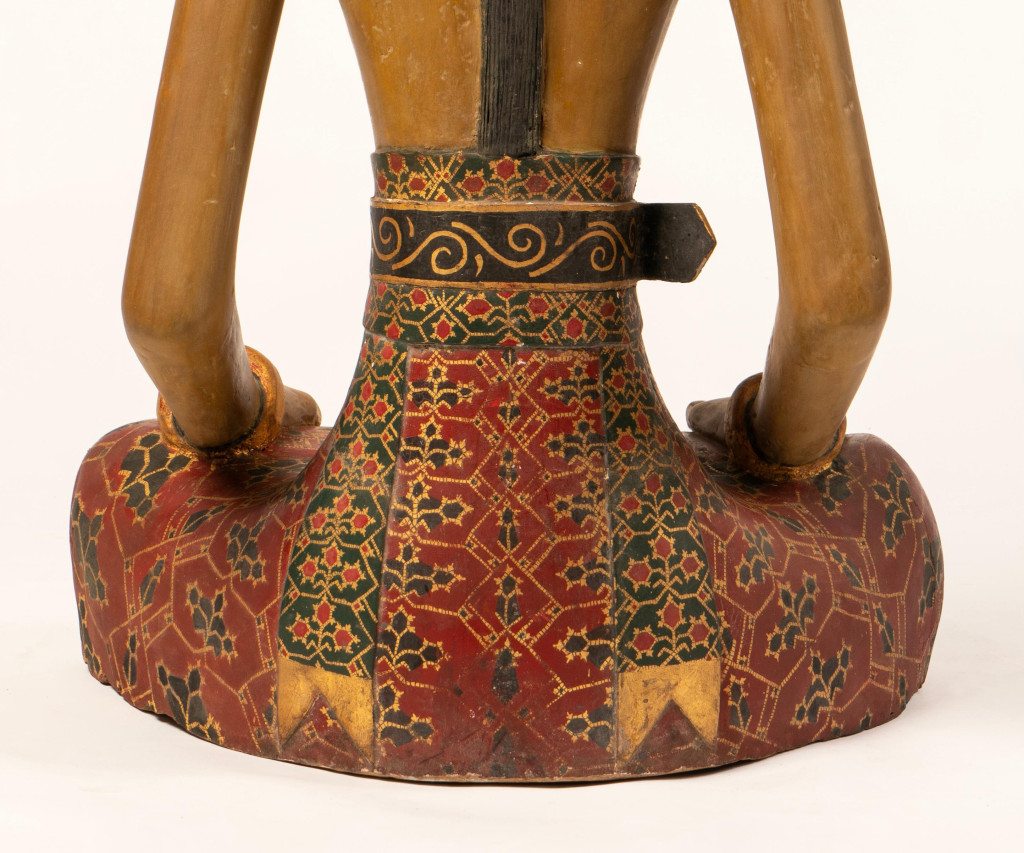
These figures are crafted from solid teak wood and hand-painted with natural polychrome pigments. The use of red cinnabar imported from China and gold leaf (available only to high-ranking nobles) signifies their noble origin. In the form of Mas Sadono, the male, who is seated cross-legged, wearing a red hip wrap with gold floral designs, a gold belt with a solid buckle, and a black conical headdress. His serene expression and Javanese aesthetic reflect traditional ideals of male beauty. The female, Dewi Sri, sits with her feet tucked beneath her, adorned with a similar hip wrap, a blue breast wrap, and delicate accessories including a kalung sungsun necklace and a gold comb. Her features embody Javanese ideals of femininity, with a high forehead and a gentle, downward gaze.
H. 63 cm (male)
H. 55 cm (female)
Provenance:
Noble collection, Surakarta (decommissioned and sold in the 1950s)
Collection Go Tik Swan, K.R.T. Hardjonagoro (1931-2008), Surakarta
Private collection, Surakarta
Private collection, the Netherlands
This exceptional pair of wedding effigies, known as Loro Blonyo, represents one of the highest forms of Central Javanese sculpture. They depict the idealized forms of a newlywed couple: Mas Sadono, an incarnation of the Hindu god Batara Wisnu, symbolizing nobility and kingship, and Dewi Sri, the beloved goddess of rice, associated with fertility and prosperity. Dressed in splendid royal court attire, these figures embody the elegance and cultural heritage of Central Java’s noble classes. The quality and style affirms they were commissioned by a noble family connected to either the royal families of Kraton Surakarta or Puro Mangkunegaran around the turn of the 20th century.
According to tradition, the use of Loro Blonyo effigies dates back to the reign of Sultan Agung Hanyokrosumo (1593–1645) of the Mataram Dynasty. These figures were placed on an altar within the Senthong Tengah—a sacred area in traditional palaces used for wedding ceremonies and rituals. The figures received offerings and prayers, symbolizing blessings for fertility and harmony within the marriage.
Only few other pairs of comparable quality are known, of which one can be found in the National Museum of Scotland in Edinborough (inv. no. A.1991.65). Three other pairs are in the collection of the Ethnographic Museum in Kraków (inv. no. 61771/2), the Museum voor Volkenkunde in Leiden (inv.no. 7082-S-450-1/2) and the Art Gallery of South Australia (inv.no. 20084S16A/B). However, none of the pairs surpass the quality of the present couple.
These figures are crafted from solid teak wood and hand-painted with natural polychrome pigments. The use of red cinnabar imported from China and gold leaf (available only to high-ranking nobles) signifies their noble origin. In the form of Mas Sadono, the male, who is seated cross-legged, wearing a red hip wrap with gold floral designs, a gold belt with a solid buckle, and a black conical headdress. His serene expression and Javanese aesthetic reflect traditional ideals of male beauty. The female, Dewi Sri, sits with her feet tucked beneath her, adorned with a similar hip wrap, a blue breast wrap, and delicate accessories including a kalung sungsun necklace and a gold comb. Her features embody Javanese ideals of femininity, with a high forehead and a gentle, downward gaze.
H. 63 cm (male)
H. 55 cm (female)
Provenance:
Noble collection, Surakarta (decommissioned and sold in the 1950s)
Collection Go Tik Swan, K.R.T. Hardjonagoro (1931-2008), Surakarta
Private collection, Surakarta
Private collection, the Netherlands
This exceptional pair of wedding effigies, known as Loro Blonyo, represents one of the highest forms of Central Javanese sculpture. They depict the idealized forms of a newlywed couple: Mas Sadono, an incarnation of the Hindu god Batara Wisnu, symbolizing nobility and kingship, and Dewi Sri, the beloved goddess of rice, associated with fertility and prosperity. Dressed in splendid royal court attire, these figures embody the elegance and cultural heritage of Central Java’s noble classes. The quality and style affirms they were commissioned by a noble family connected to either the royal families of Kraton Surakarta or Puro Mangkunegaran around the turn of the 20th century.
According to tradition, the use of Loro Blonyo effigies dates back to the reign of Sultan Agung Hanyokrosumo (1593–1645) of the Mataram Dynasty. These figures were placed on an altar within the Senthong Tengah—a sacred area in traditional palaces used for wedding ceremonies and rituals. The figures received offerings and prayers, symbolizing blessings for fertility and harmony within the marriage.
Only few other pairs of comparable quality are known, of which one can be found in the National Museum of Scotland in Edinborough (inv. no. A.1991.65). Three other pairs are in the collection of the Ethnographic Museum in Kraków (inv. no. 61771/2), the Museum voor Volkenkunde in Leiden (inv.no. 7082-S-450-1/2) and the Art Gallery of South Australia (inv.no. 20084S16A/B). However, none of the pairs surpass the quality of the present couple.