An extremely rare Kiribati warrior’s armour
Central Pacific Ocean, Micronesia, Kiribati (Gilbert Islands), 19th century or earlier
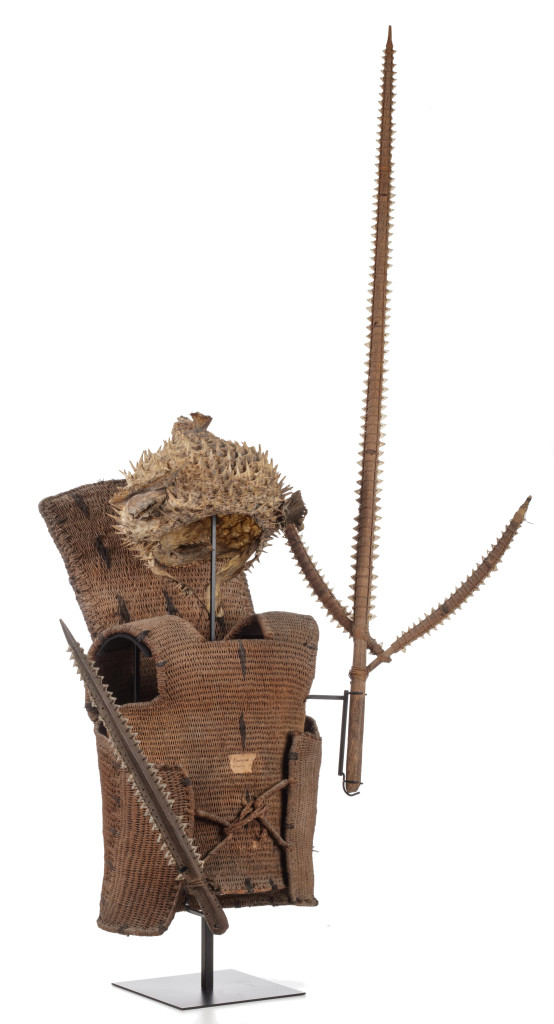
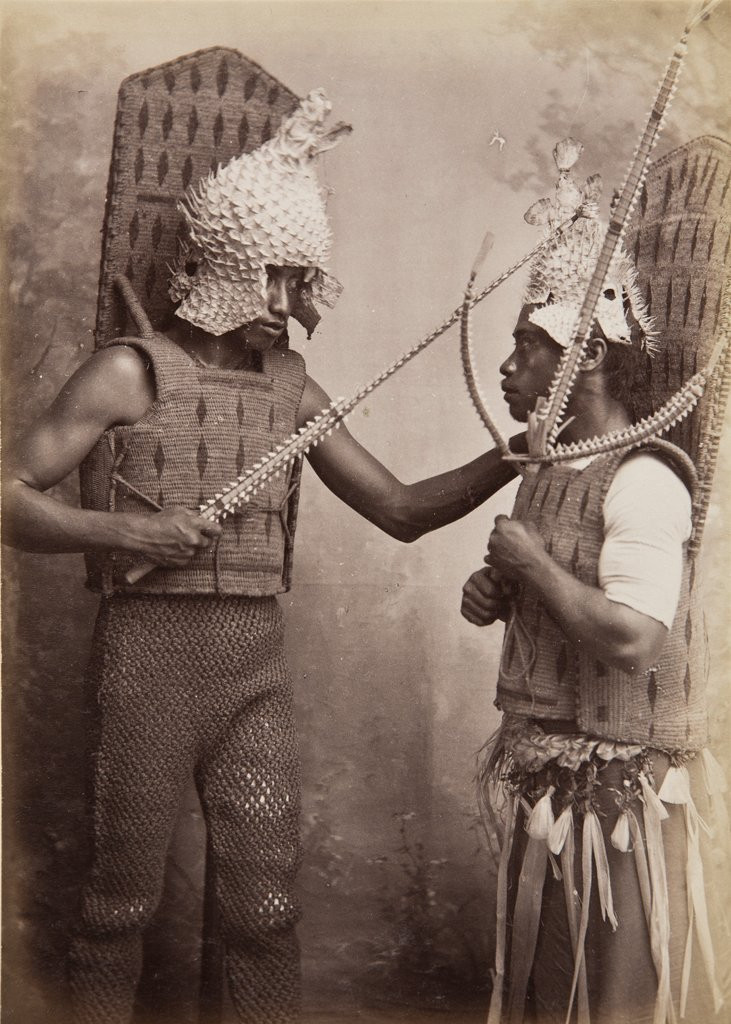
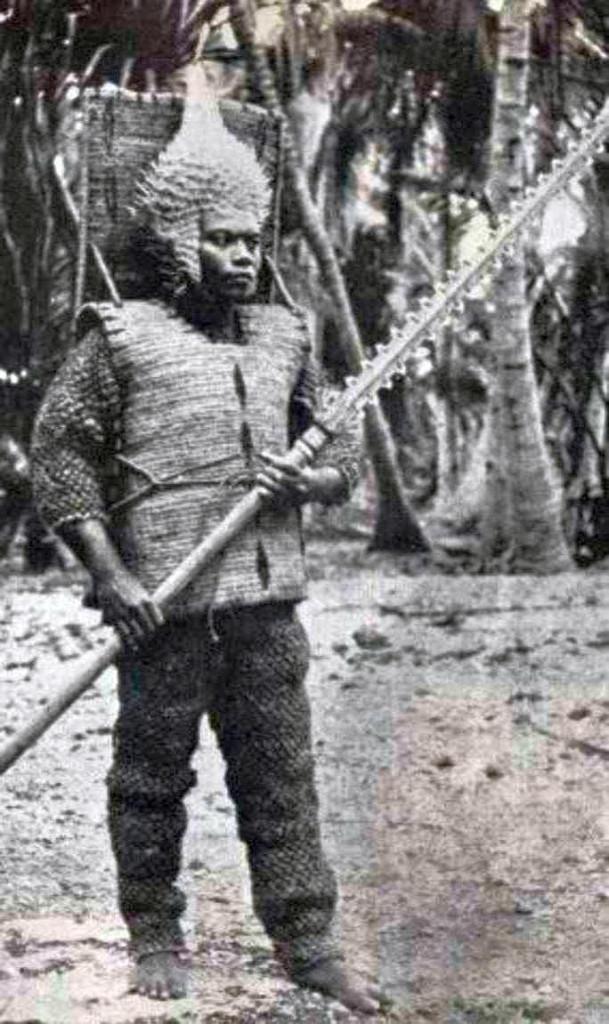
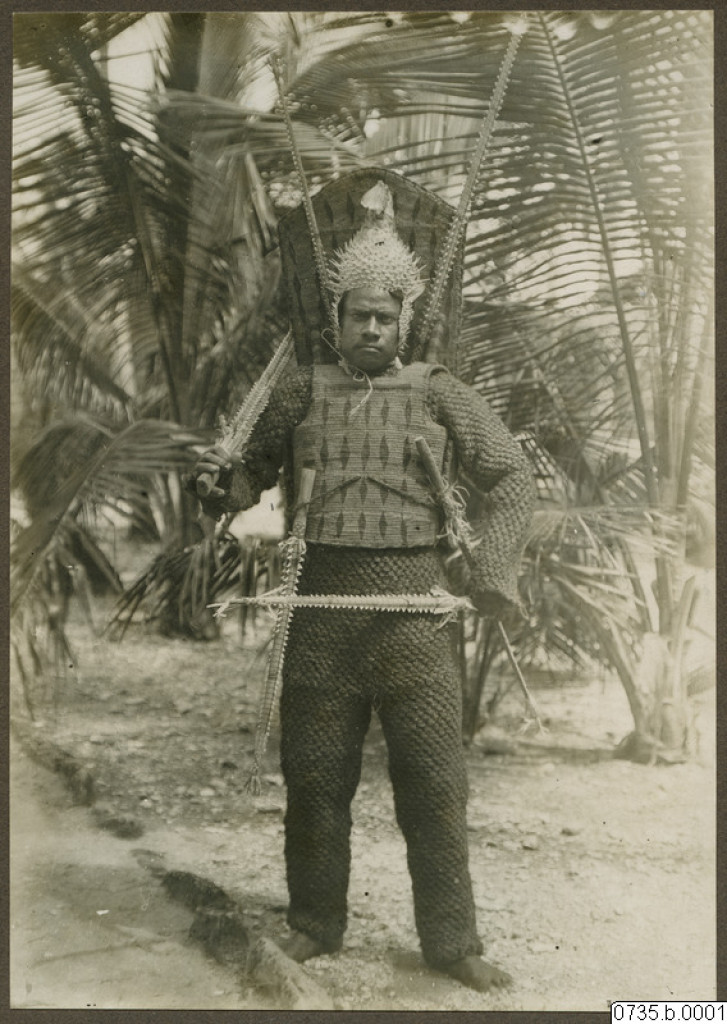
This Kiribati warrior armour comprises a te otanga cuirass, a superb bwai ni buoka helmet crafted from dried pufferfish skin, a trident sword and a dagger. Such combat armour symbolises Kiribati's island culture, with each component meticulously constructed from local natural materials. The bwai ni buoka helmet is a remarkable example of traditional craftsmanship, providing protection and intimidation in battle. Shark teeth and coconut fibres are skillfully integrated into the armour, reflecting the resourcefulness and artistry of Kiribati warriors. The front of the cuirass bears the remnants of an old collection label.
H. 73.5 cm (armour) / H.126 cm (trident sword)
Provenance:
Collection Jean Roudillon (1924-2020), a legendary French expert in the tribal arts from Africa, Oceania and the Americas
The armour was generally used when individuals or groups engaged in land disputes or claimed retribution. The Kiribati approach to war was refreshingly different from that of most peoples. The Kiribati people were used to living with limited resources, thus, waste was unacceptable. Ending a person's life was considered a waste of a valuable resource. As a result, the purpose of a Kiribati warrior's fight was not to kill but rather to wound. If one killed someone on the opposite side, one had to provide some payment. Often, this meant a gift of land - the very thing the battles were about in the first place.
Kiribati has remained relatively isolated for a long period in time. Chance visits by European ships occurred in the 17th and 18th centuries, mainly due to vessels attempting circumnavigations of the world or seeking sailing routes from the south to the north Pacific Ocean. Only in the 19th century did more foreigners settle on the islands. In 1886, an Anglo-German agreement partitioned the "unclaimed" central Pacific, leaving Nauru in the German sphere of influence while Ocean Island and the future Gilbert and Ellice Islands Colony wound up in the British sphere.
This Kiribati warrior armour comprises a te otanga cuirass, a superb bwai ni buoka helmet crafted from dried pufferfish skin, a trident sword and a dagger. Such combat armour symbolises Kiribati's island culture, with each component meticulously constructed from local natural materials. The bwai ni buoka helmet is a remarkable example of traditional craftsmanship, providing protection and intimidation in battle. Shark teeth and coconut fibres are skillfully integrated into the armour, reflecting the resourcefulness and artistry of Kiribati warriors. The front of the cuirass bears the remnants of an old collection label.
H. 73.5 cm (armour) / H.126 cm (trident sword)
Provenance:
Collection Jean Roudillon (1924-2020), a legendary French expert in the tribal arts from Africa, Oceania and the Americas
The armour was generally used when individuals or groups engaged in land disputes or claimed retribution. The Kiribati approach to war was refreshingly different from that of most peoples. The Kiribati people were used to living with limited resources, thus, waste was unacceptable. Ending a person's life was considered a waste of a valuable resource. As a result, the purpose of a Kiribati warrior's fight was not to kill but rather to wound. If one killed someone on the opposite side, one had to provide some payment. Often, this meant a gift of land - the very thing the battles were about in the first place.
Kiribati has remained relatively isolated for a long period in time. Chance visits by European ships occurred in the 17th and 18th centuries, mainly due to vessels attempting circumnavigations of the world or seeking sailing routes from the south to the north Pacific Ocean. Only in the 19th century did more foreigners settle on the islands. In 1886, an Anglo-German agreement partitioned the "unclaimed" central Pacific, leaving Nauru in the German sphere of influence while Ocean Island and the future Gilbert and Ellice Islands Colony wound up in the British sphere.
Related objects
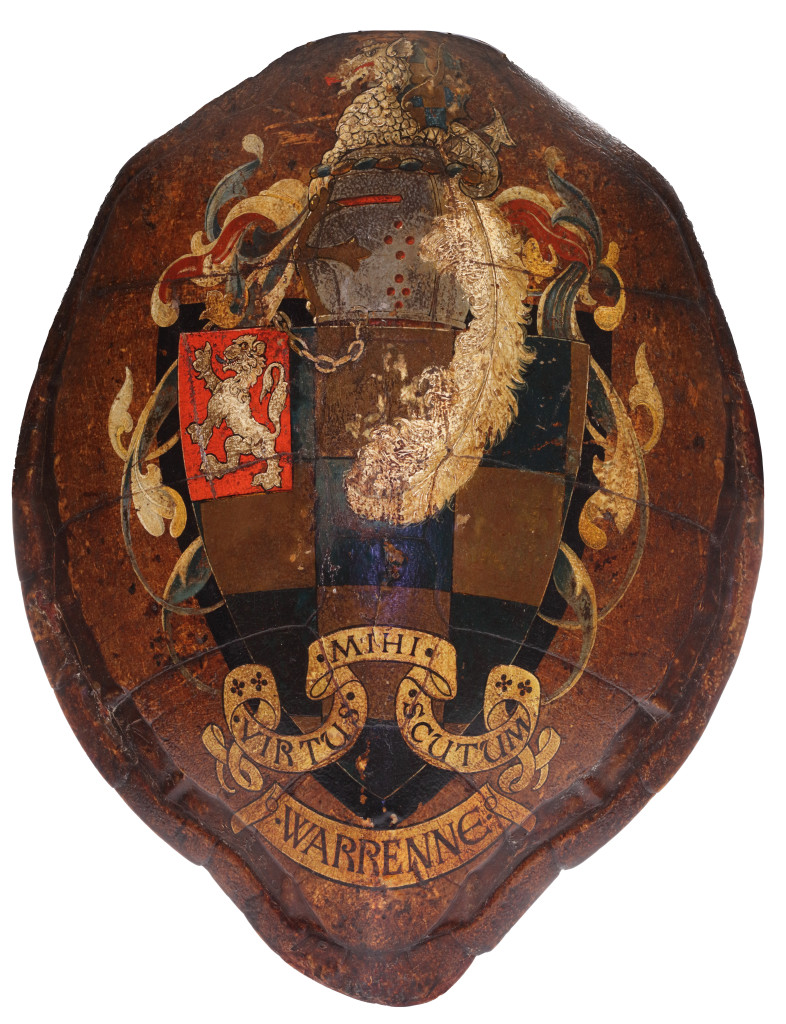
A rare pair of painted armorial Green Sea Turtle shells (Chelonia mydas), with the Tyerman and Warren coats-of-arms
_England, late 19th century _ _H. 91 x W. 72.5 cm (Tyerman)_ _H. 92 x W. 75.5 cm (Warren)_
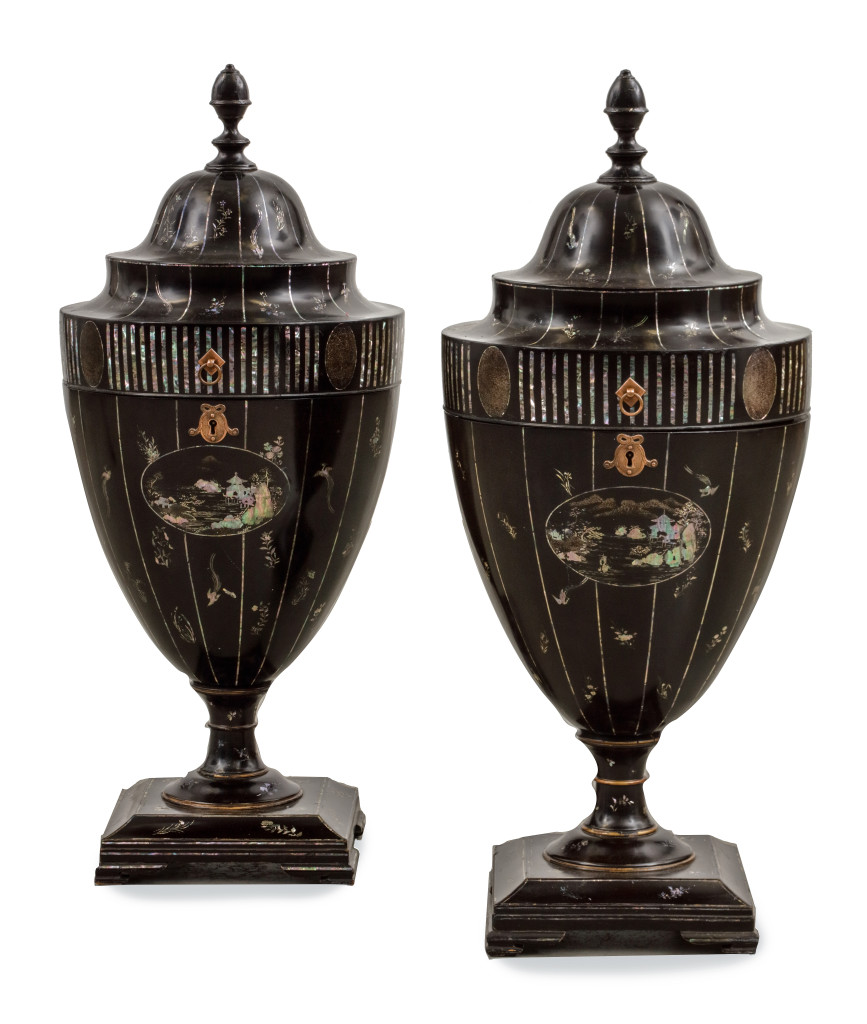
A rare pair of Kyoto-Nagasaki style lacquer and mother-of-pearl inlaid knife urns
Edo period, early 19th century
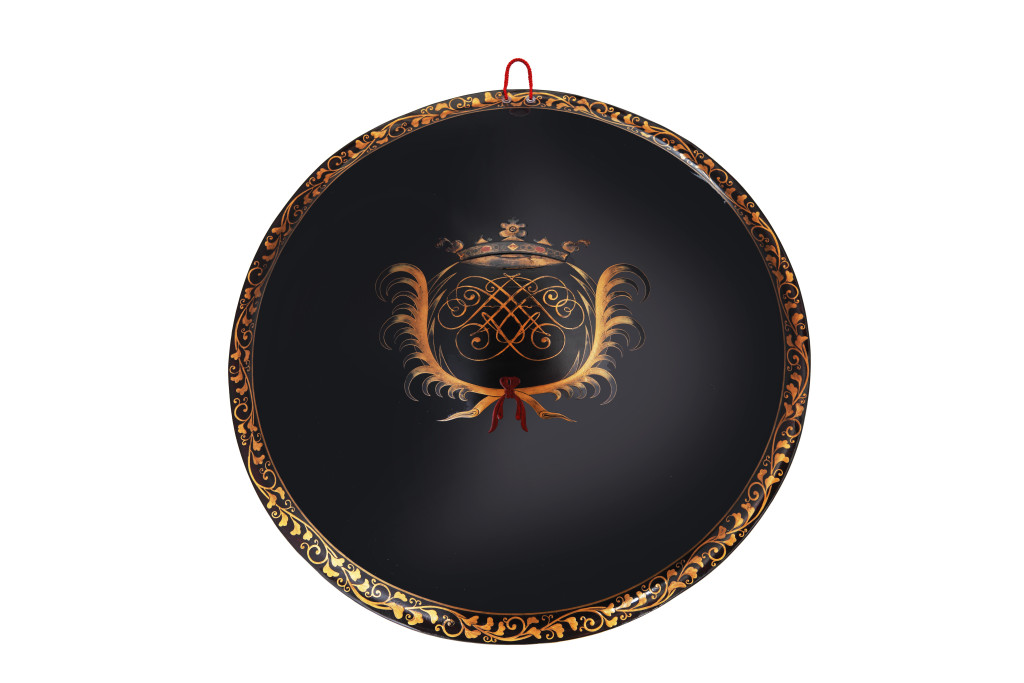
An extremely rare circular Japanese Armorial Lacquer Shield for the Dutch market with initials
17th century