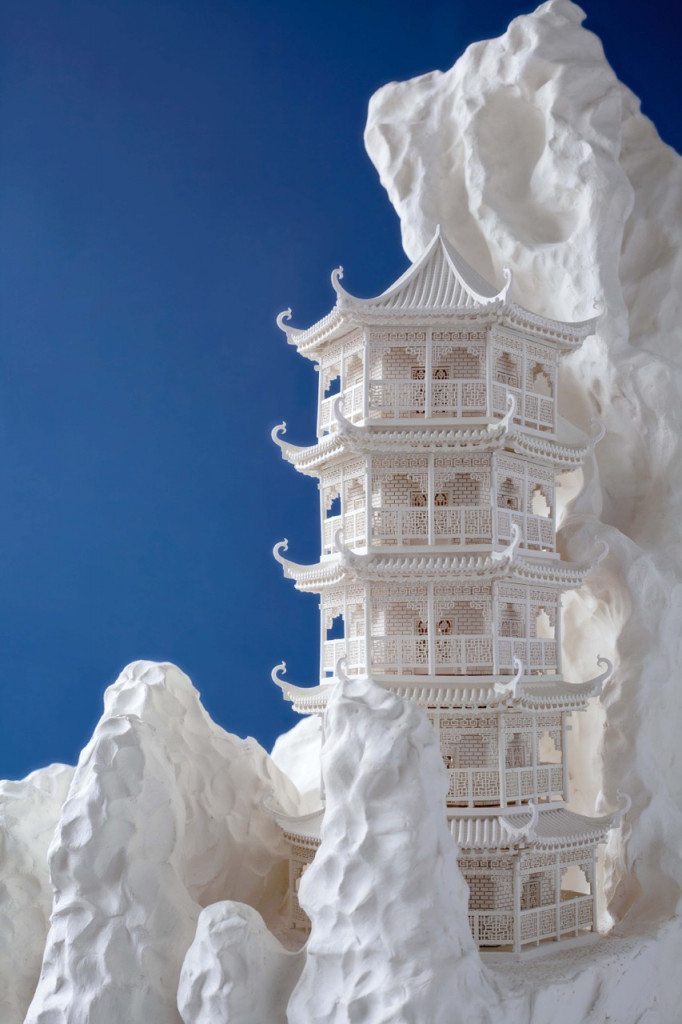
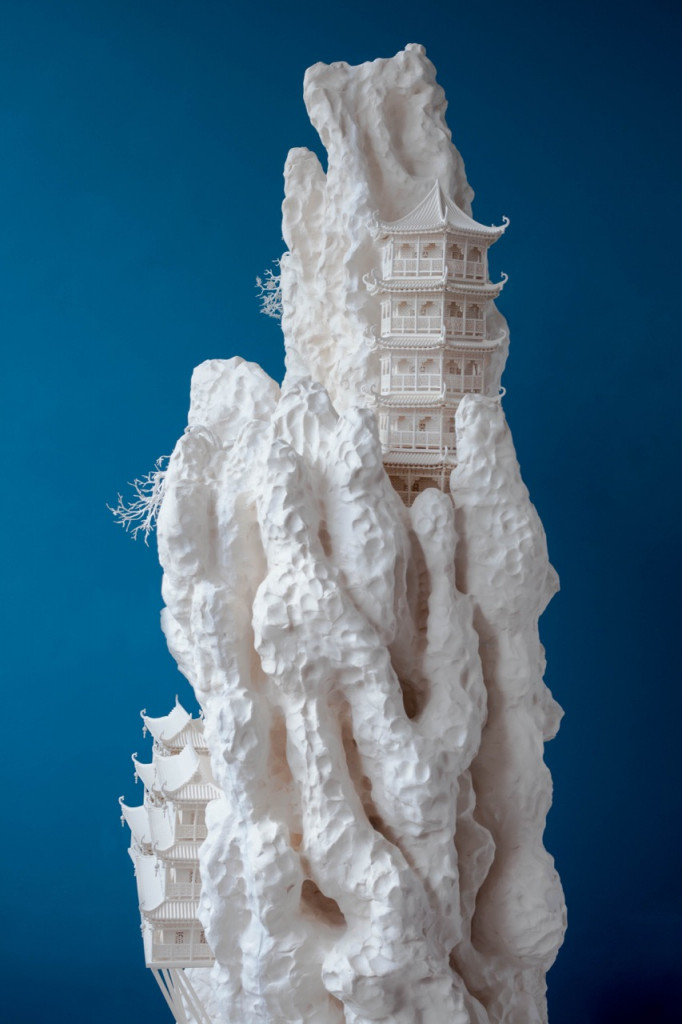
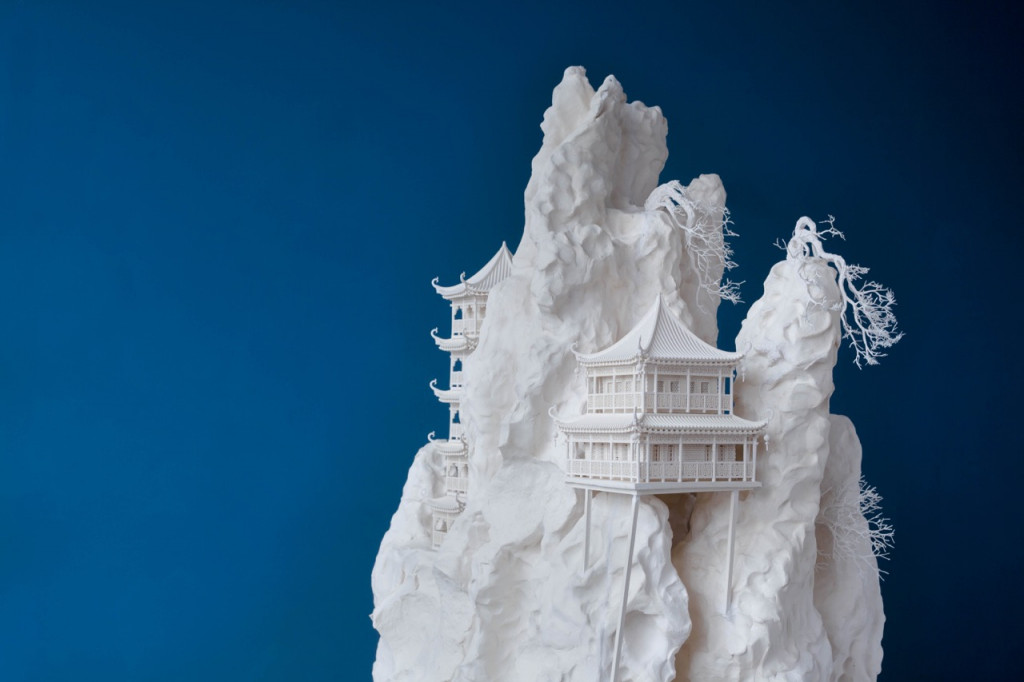
Piers Secunda (b. 1976) 'Painting of a Wuhan Mountain'
H. 144 x W. 68 x D.44 cm
Piers Secunda has been making objects out of commercial floor paint for 25 years now, rejecting the limitations of ‘painting’ imposed by the canvas. In the tradition of his studio practice the present Wuhan Mountain is made of commercial floor paint; hence the title ‘Painting of a Wuhan Mountain’. On a journey to China he was inspired by the fine ivory carvings produced in Canton, but also by the Wuhan landscape and its famous mountain temples. Scholars from the earliest Chinese dynasties walked through the landscape and when they came home, they painted the landscapes from their mind. This resulted in dreamy compositions with misty mountains and mysterious temples. Piers did just the same, but with industrial floor paint, sculptural techniques and on a monumental scale.
Part of the China collection.
Related objects
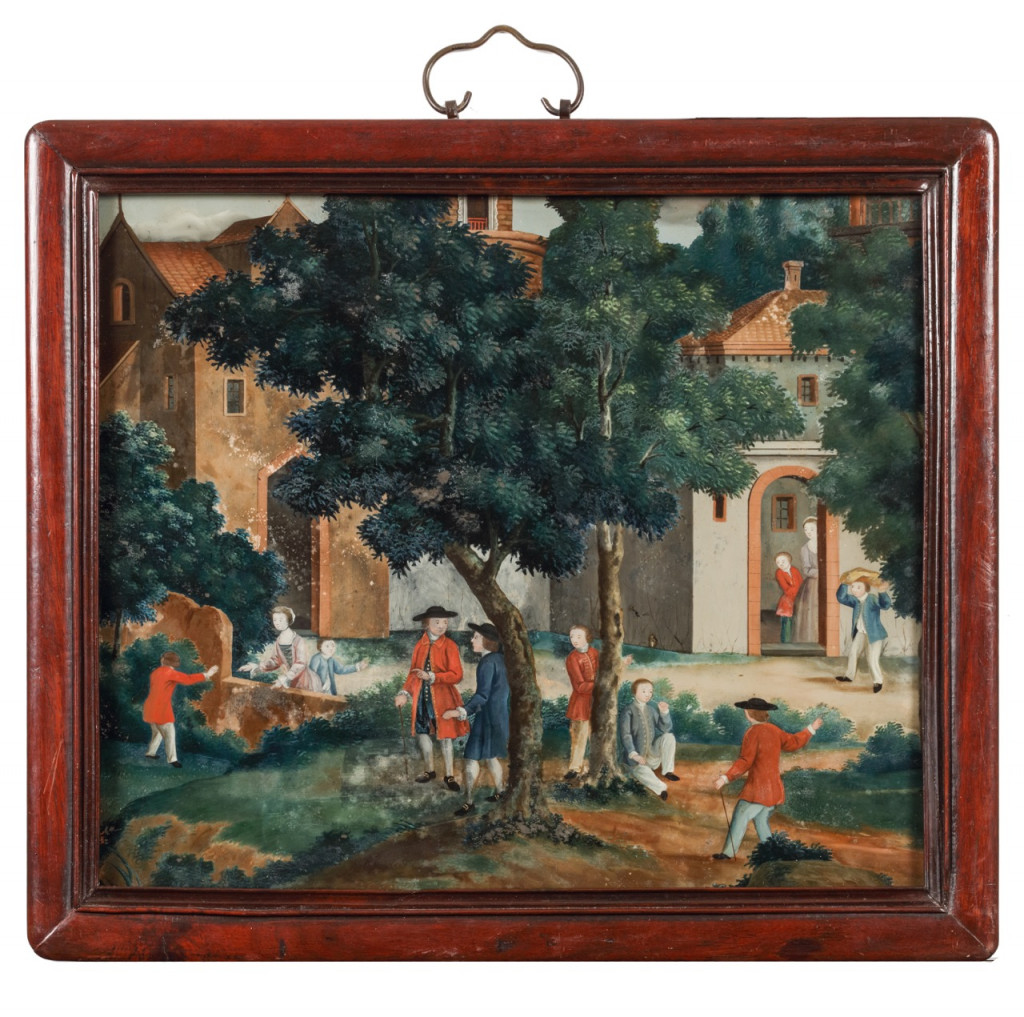
A Chinese export reverse-glass painting after an English print in original hardwood frame
Chinese reverse glass paintings for export are known since mid 18th century. By the 1780's the copying of European, mainly English, engravings came into vogue in Chinese paintings on glass, and often reverse glass paintings were mirrored or with silver backs. Particularly in England, they became very popular as over mantel mirrors in copied English frames. Because of their nature, many have been lost over time.
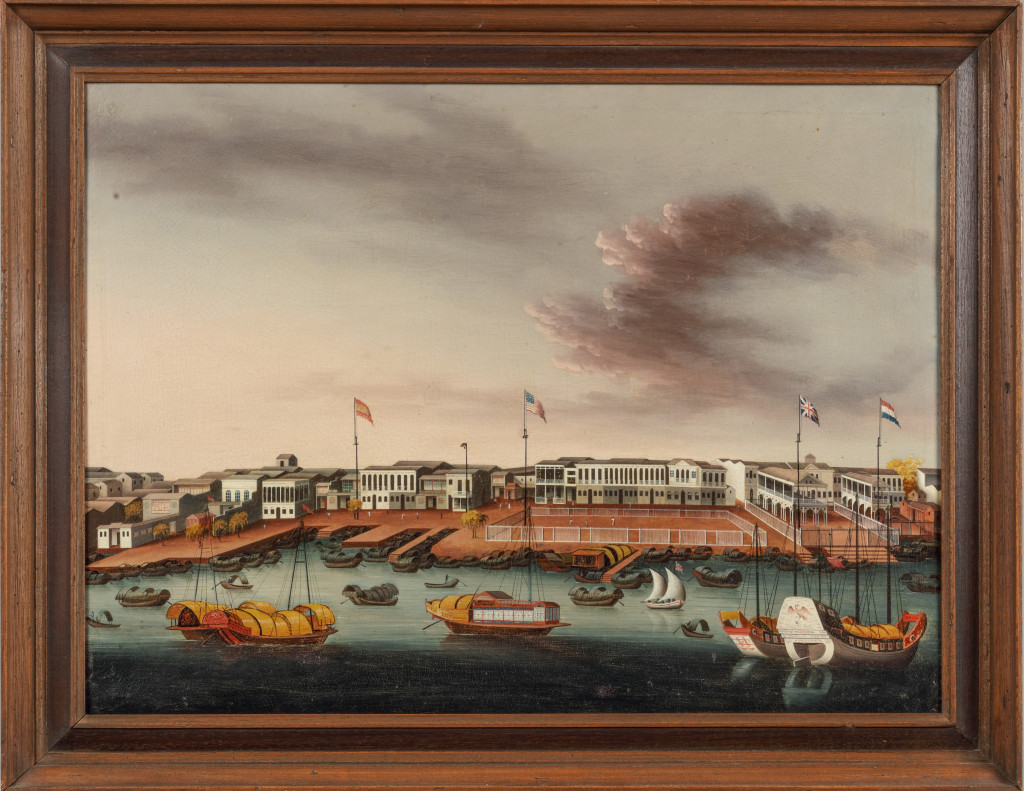
A Chinese export painting depicting the Western Hongs of Canton
Along the Canton waterfront, four flags are seen aloft, from left to right: the Spanish, the American, the British and the Dutch. The Stars and Stripes were first hoisted here in 1799, the Union Jack was added with the red saltire of St Patrick in 1801 and in 1803. The Spanish flag was replaced by the French Tricolor, which was taken down on the death of Jean Baptiste Piron, the French supercargo and 'Agent de la République' in October 1804, not to reappear on the Canton waterfront until the 1830s. So this picture must represent the situation of the Western Hongs in Canton between 1801 and 1803.
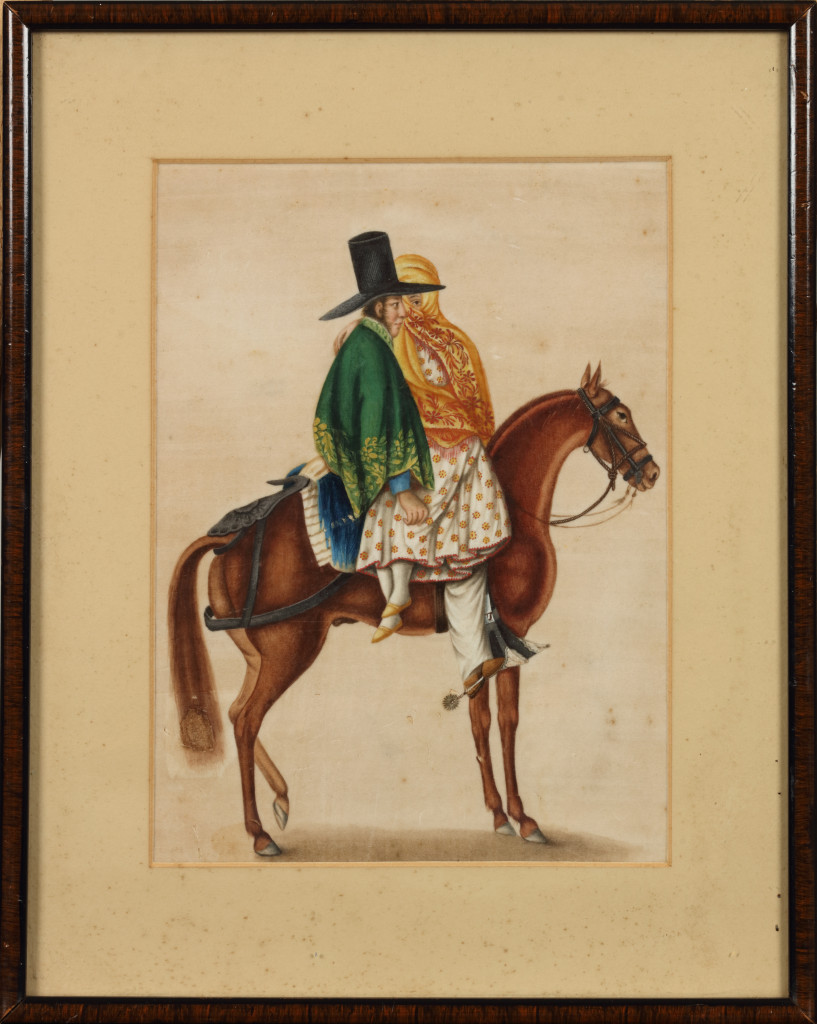
A Chinese export painting of a Peruvian couple on horseback
The present work is a rare survivor of the 18th and 19th-century maritime trade contacts between Canton, Manilla and Central and South America. The Manilla-Acapulco galleon trade brought Spanish fashion influence to the Philippines, as shown in the tipos del pais paintings by Jose Lozano, Justiniano Asuncion and Damian Domingo.