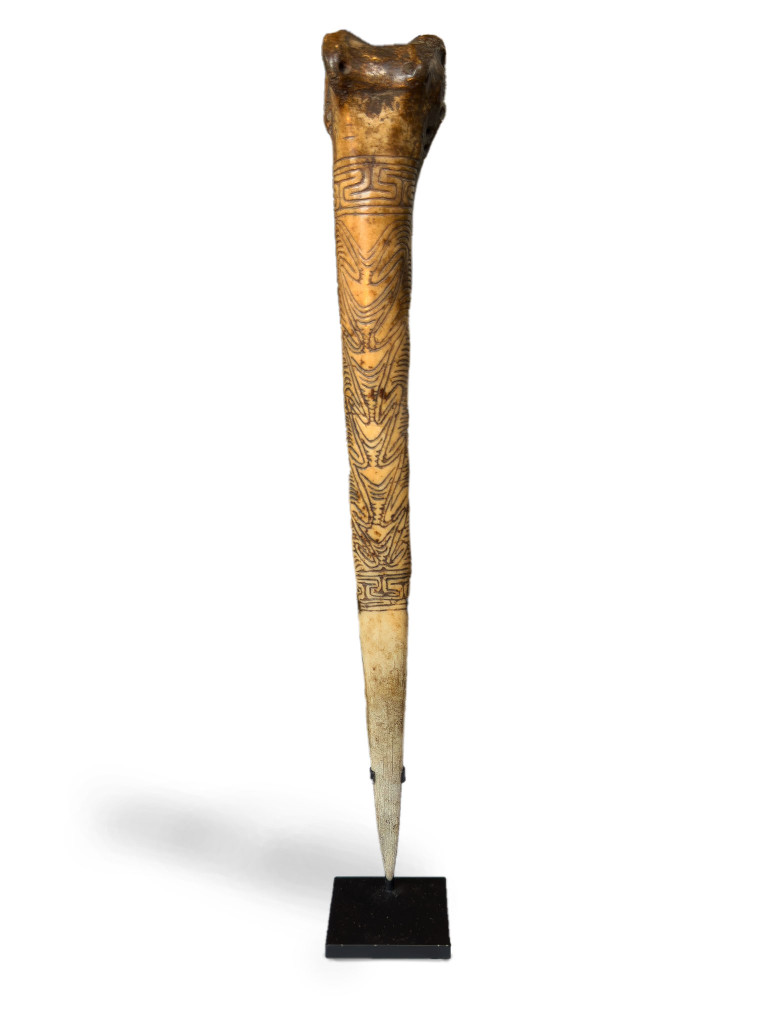
A Sepik cassowary bone dagger
The dagger has finely incised geometric patterns on the front, including maze-like motifs and zigzag lines, characteristic of the Abelam style. The upper section is slightly flared and transitions into a pointed tip. The back remains uncarved, with a consistent warm patina indicative of age and use and is numbered MB135 in ink near the base.
H. 16 cm
Provenance:
• Missiehuis Borgerhout, Belgium
• Private collection, the Netherlands
Bone daggers in the Sepik region are traditionally crafted from the thigh bone of the cassowary bird (moruk in Tok Pisin), a large, flightless bird native to Papua New Guinea. These daggers, often adorned with intricate ancestor and clan designs, reflect the cultural and symbolic significance of the weapon. Warriors carried these multipurpose tools in a woven band on the upper arm or on a cord around the neck for use in close-quarters combat, hunting, digging, ceremonial sacrifices, and as decoration during singsing (dancing) events. The blunt-edged, sharp-tipped daggers were primarily used for stabbing, often delivering a final blow to an enemy incapacitated by spears or arrows or in stealthy assassinations.
Daggers were also considered powerful supernatural objects, playing key roles in male initiation and other ceremonies. They were worn as personal ornaments, and those with blunt tips likely served ceremonial purposes. When the tip became too damaged, the dagger was often repurposed into a lime spatula or thatch-sewing tool. Although cassowary leg bones were the primary material, in rare cases, daggers were made from the femurs of ancestors or enemies.
For a comparable dagger in The Metropolitan Museum, New York, see inv. no. [1974.29.1H](https://www.metmuseum.org/art/collection/search/309918).
Part of the Indonesian Archipelago and Oceania collections.
Related objects
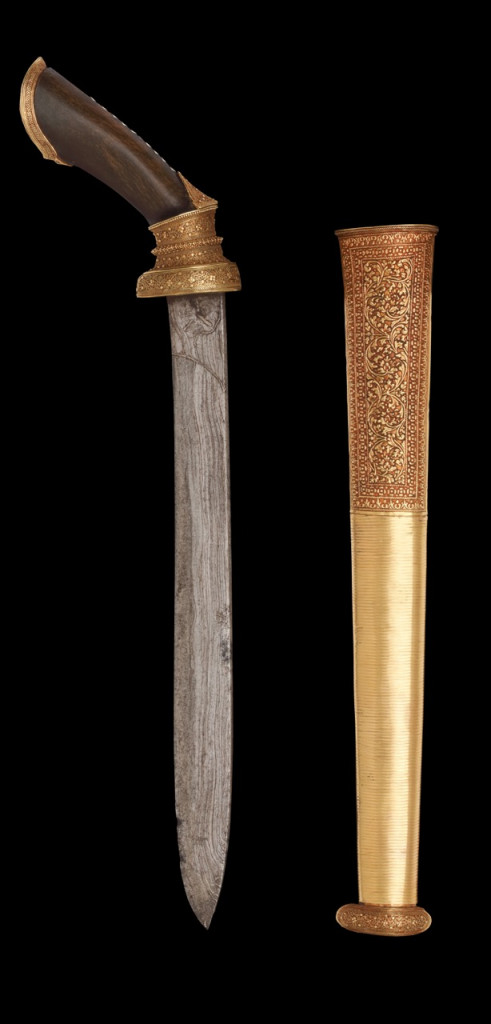
A superb Royal Buginese gold and horn badek dagger
With a Pamor Adeg Sapu Base in Ksatrya Pinayungan (nobleman under an umbrella), the Sarung with high grade gold Okir motif, with gold bands, and the Buntut in filigree gold, the horn hilt with silver inlays and more Okir motif gold filigree.
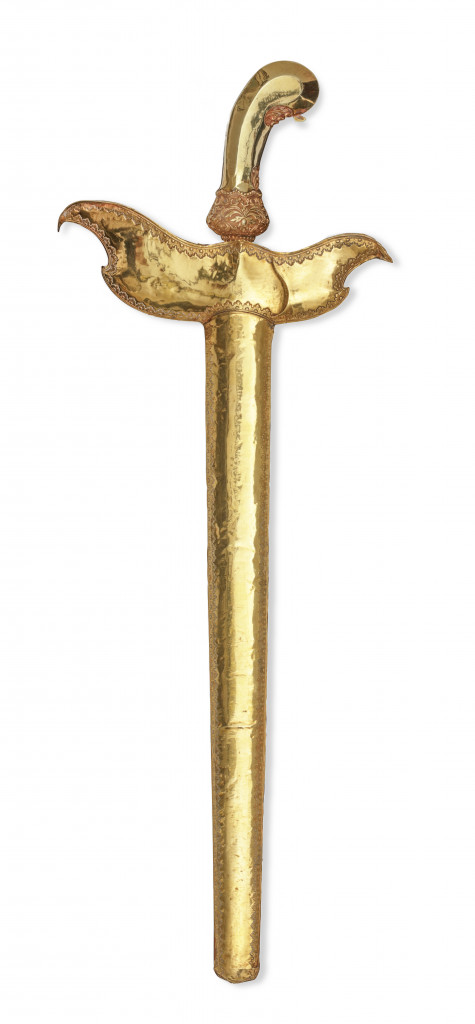
A superb Indonesian royal Cirebon gold keris dagger
Presented by the Sultan Anon VIII Raja Dulkarnain to Colonial Minister of Internal Affairs Mr. J.M. van Vleuten of the Former Dutch East Indies. With a Dapur Bima Rangsang, and Pamor Adeg Sapu (literally translating to broom hair), the wrangka Prahu Kandas and hilt Nunggak Semi with hidden patra or hidden faces and a mendak meniran, all in pure high-grade gold.
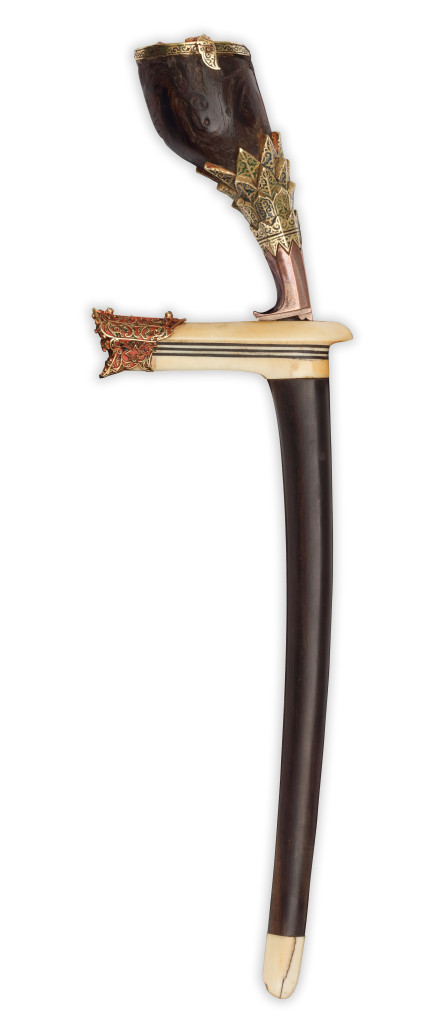
A very fine royal Acehnese seraki dagger
With a plain steel pamor, hippo and ebony scabbard with a 14 carat gold end with filigree, diamonds and gutta perza motif, and ivory buntut. It has a very fine hilt with gold enamel suasa four layered flower for the Sultan, with a grip of black coral or akabahar and gold filigree diamond-set hilt.