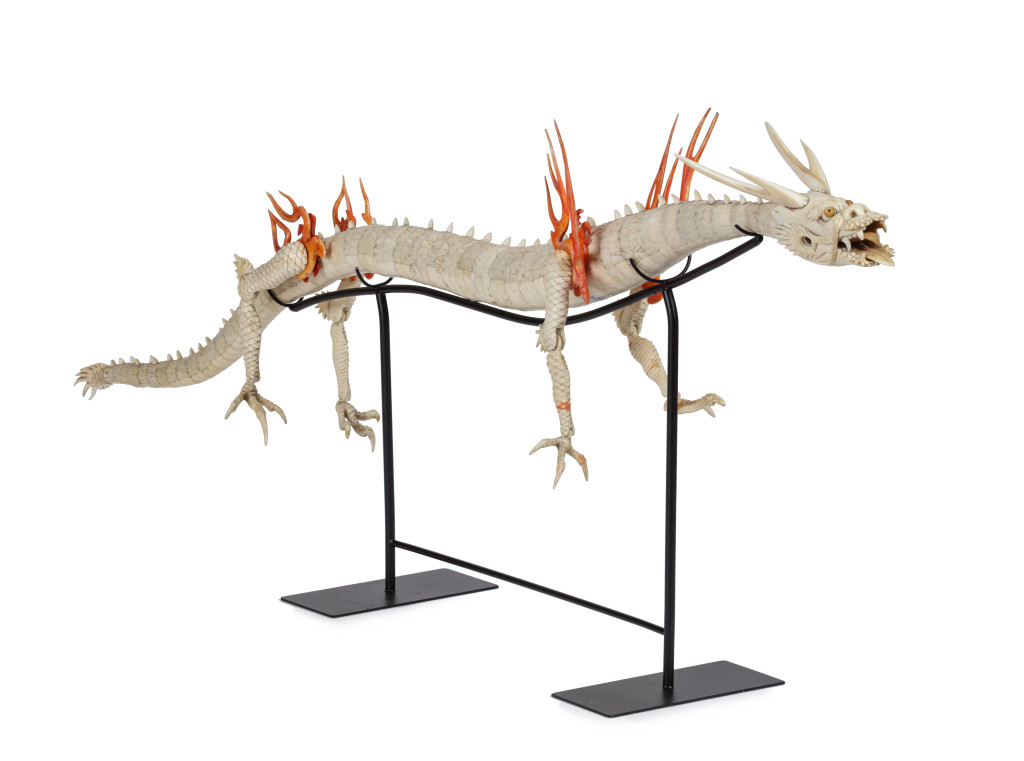
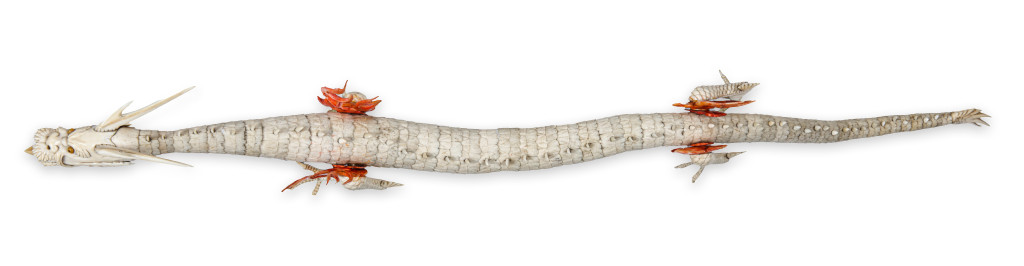
A fantastic Japanese fully articulated ivory and bone okimono of a dragon
Meiji period, 19th century
L. 83.5 cm
The fully articulated body consists of over one hundred movable segments. The body of the dragon (tatsu) is elongated and slender with many scales and sharp dorsal spikes. The four limbs have ivory flames emanating from them and the head is expressive, with sharp horns, glaring eyes of mother-of-pearl and an open mouth with a movable tongue.
L. 83.5 cm
The fully articulated body consists of over one hundred movable segments. The body of the dragon (tatsu) is elongated and slender with many scales and sharp dorsal spikes. The four limbs have ivory flames emanating from them and the head is expressive, with sharp horns, glaring eyes of mother-of-pearl and an open mouth with a movable tongue.
Related objects
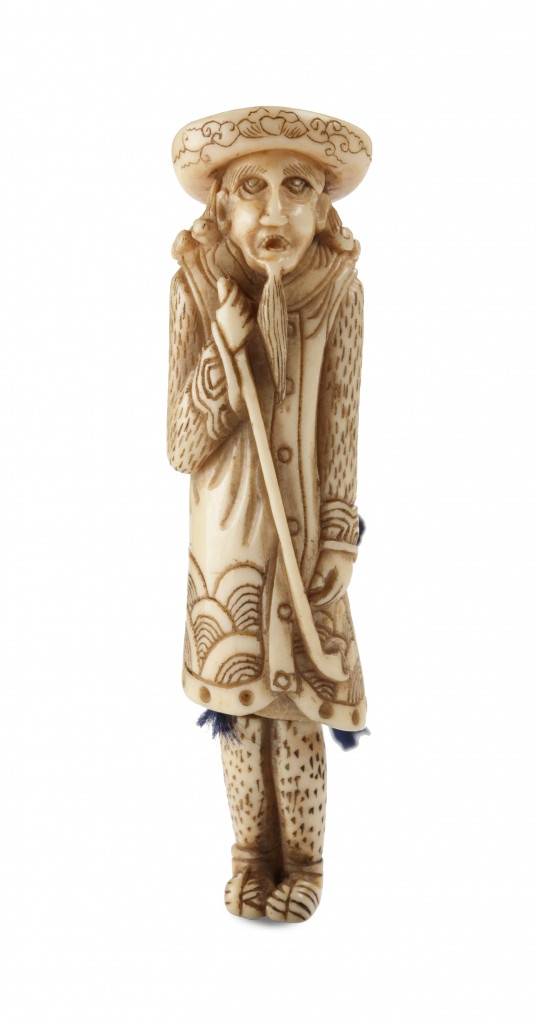
A bone netsuke of a Dutchman holding a pipe and having detachable legs
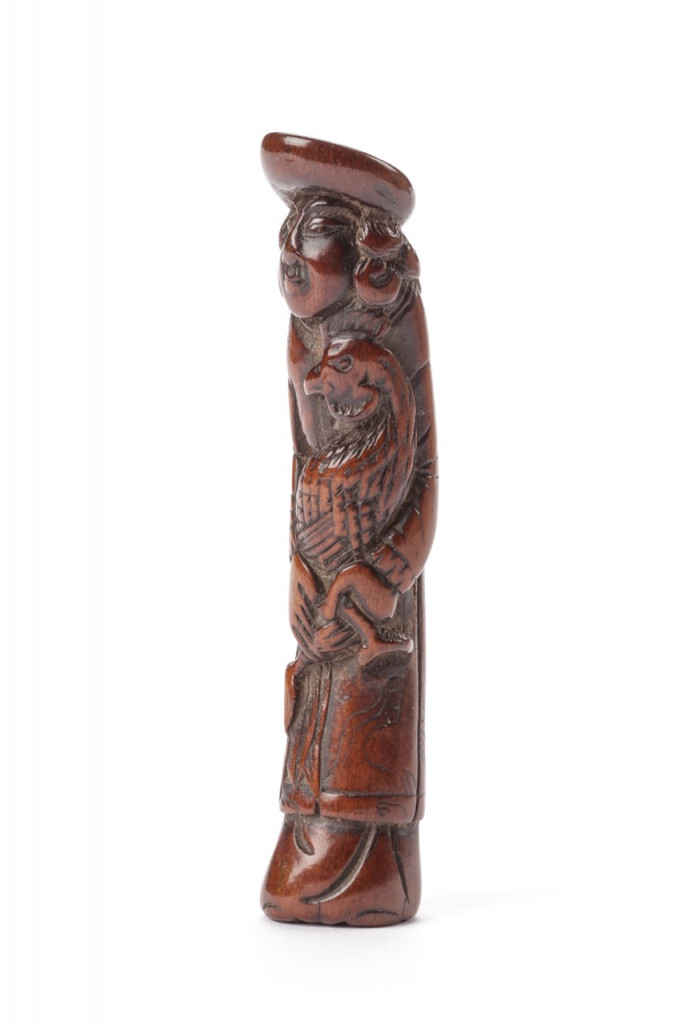
A rare bone netsuke of a Dutchman with a cockerel
Carved from a slender section of bone, most likely a walrus baculum, the Dutchman, with two asymmetrical himotoshi to the back, has an elongated body following the natural orientation of the material and is dressed in a Chinese robe with wave border.
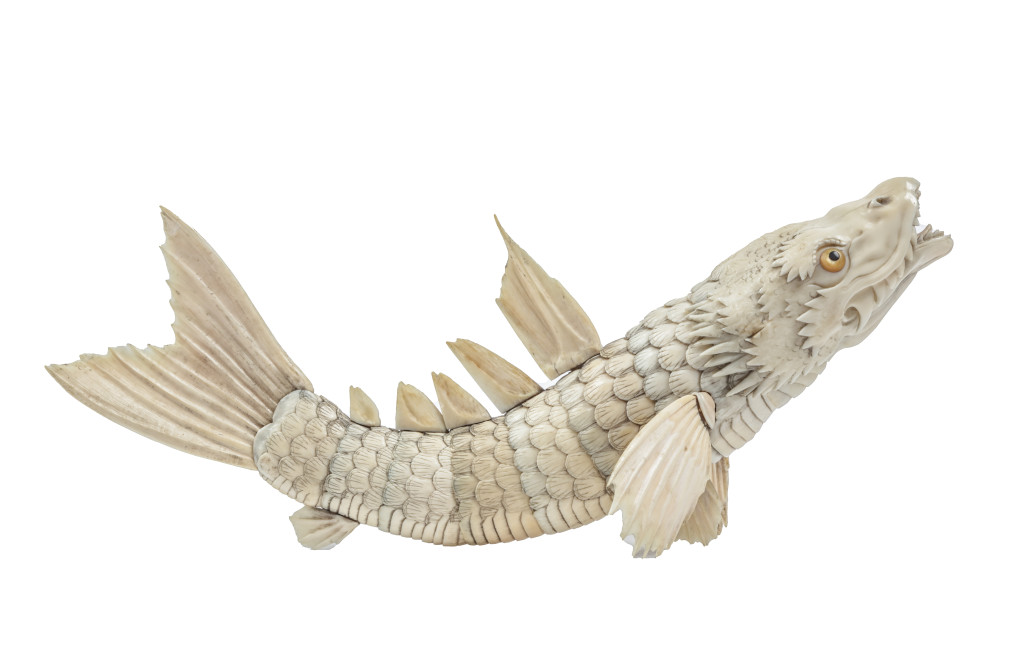
A Japanese ivory and bone fully articulating okimono of a dragonfish
With the end of feudal Japan and the onset of the Meiji Restoration in the mid-19th century, the samurai and upper class began transitioning away from their traditional armors and kimonos. Many craftsmen, who had previously worked on armor, started creating okimono (small ornamental objects meant for display) as a new livelihood. The carver of this particular dragonfish likely had a background in making armor, as evidenced by the exquisite workmanship