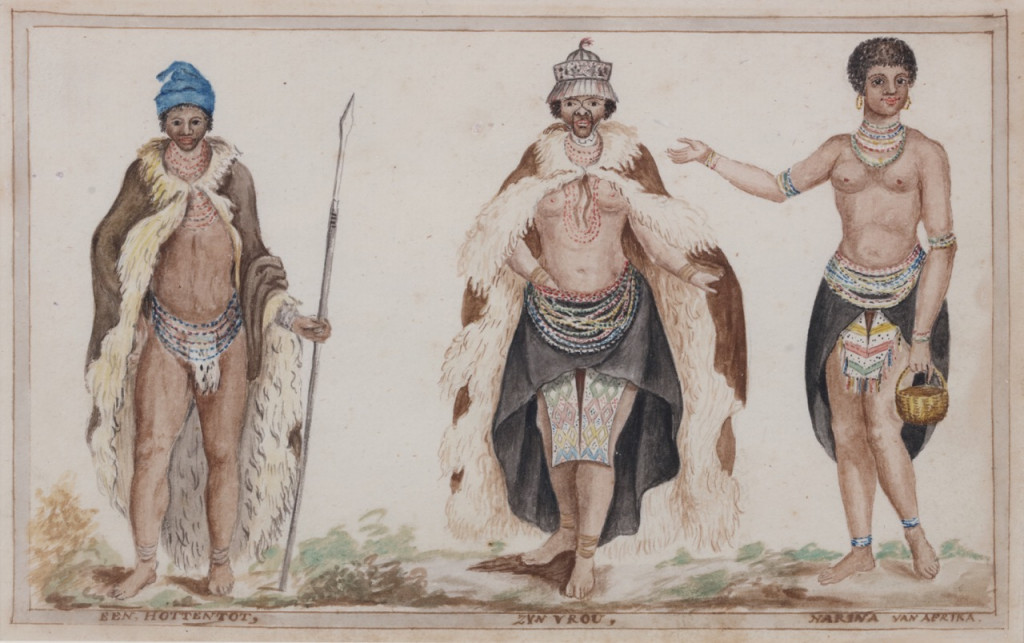
After François Levaillant (Paramaribo 1753 - La Noue, France, 1824)
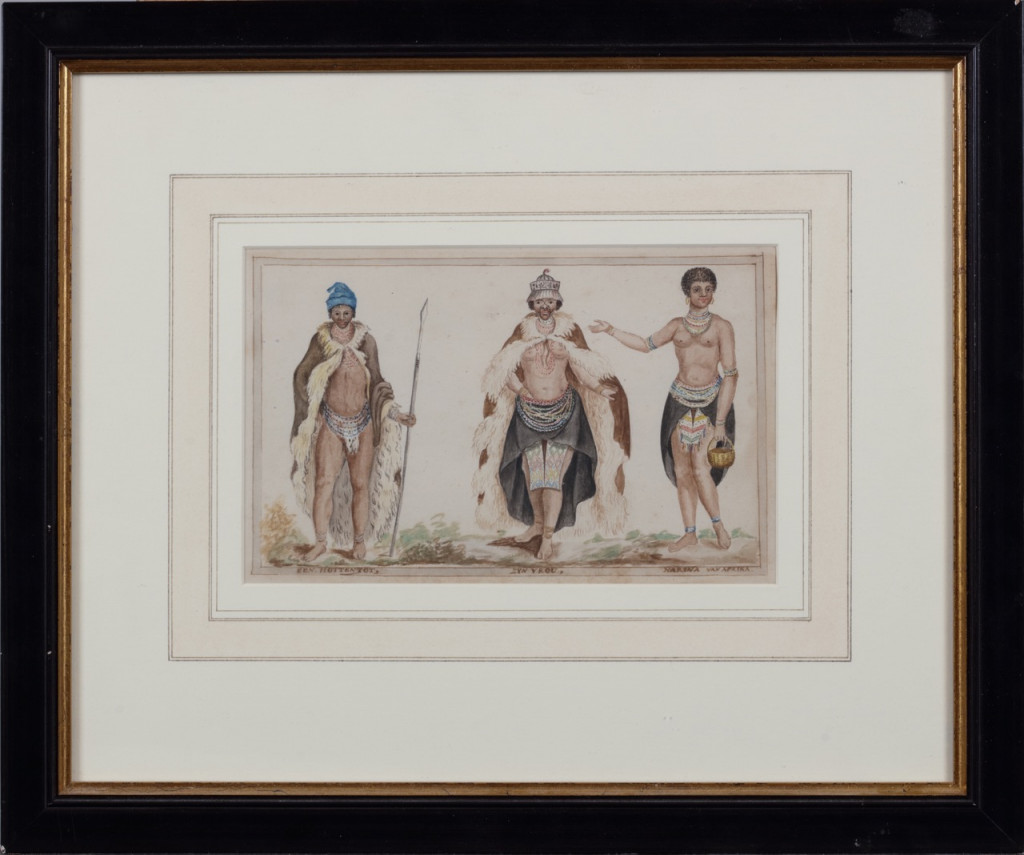
'een Hottentot, zyn vrou, Narina van Afrika'
Watercolour on paper, H. 14 x W. 22 cm
François Levaillant was a French author, explorer, naturalist, zoological collector, travel writer and noted ornithologist. In Surinam where he grew up, he developed an interest in the local fauna. In 1763 his family returned to France, where in 1773 he married Suzanne de Noor and after a short career in the army, worked with an apothecary, Becoeur, who had developed an arsenic-based soap to preserve birds, and in 1777 became a trader in taxidermy in Paris.
In 1780, at the age of 27, he went to the Cape, sponsered by Jacob Temminck with the understanding that he would strenghten Temminck's natural history collection. There Levaillant made three journey's into the hinterland of the Cape, collecting and describing over two thousand specimen of birds, insects, mammals and plants, which he took back to Europe, establishing his reputation within the scientific community. He published Voyage dans l'intérieur de l'Afrique (1790) and Seconde voyage dans l'intérieur de l'Afrique (1796), both of which were best-sellers across Europe. After this success he also published Histoire naturelle des oiseaux d'Afrique (1796-1808), and Histoire naturelle des oiseaux de paradis with famous drawings by Jacques Barraband. Levaillant had collected the skins of the birds which were stuffed and illustrated by Barraband and others. Levaillant was a famous collector of taxidermy, bringing the first giraffe skeleton to France. He sold a significant collection of African birds, insects and mammals to the Natural Museum in Paris, and a large collection of bird skins sent to Jacob Temminck is now in the collection of Museum Naturalis in Leiden.
Levaillant shared Rousseau's idea of the "Noble Savage", even naming one of his sons Jean-Jacques Rousseau Levaillant. He described the African people with sympathy and called his "Hottentot" companion, Kees, his brother, sharing his food and drinks with him, and considered him more loyal than many civilized humans. He also depicted and described the beauty of a young Gonaqua girl, naming her Narina after a flower, and his description of their flirtation influenced early novels of the relationships with indigenous people before such sympathetic relationships became less socially acceptable in later colonial times.
Watercolour on paper, H. 14 x W. 22 cm
François Levaillant was a French author, explorer, naturalist, zoological collector, travel writer and noted ornithologist. In Surinam where he grew up, he developed an interest in the local fauna. In 1763 his family returned to France, where in 1773 he married Suzanne de Noor and after a short career in the army, worked with an apothecary, Becoeur, who had developed an arsenic-based soap to preserve birds, and in 1777 became a trader in taxidermy in Paris.
In 1780, at the age of 27, he went to the Cape, sponsered by Jacob Temminck with the understanding that he would strenghten Temminck's natural history collection. There Levaillant made three journey's into the hinterland of the Cape, collecting and describing over two thousand specimen of birds, insects, mammals and plants, which he took back to Europe, establishing his reputation within the scientific community. He published Voyage dans l'intérieur de l'Afrique (1790) and Seconde voyage dans l'intérieur de l'Afrique (1796), both of which were best-sellers across Europe. After this success he also published Histoire naturelle des oiseaux d'Afrique (1796-1808), and Histoire naturelle des oiseaux de paradis with famous drawings by Jacques Barraband. Levaillant had collected the skins of the birds which were stuffed and illustrated by Barraband and others. Levaillant was a famous collector of taxidermy, bringing the first giraffe skeleton to France. He sold a significant collection of African birds, insects and mammals to the Natural Museum in Paris, and a large collection of bird skins sent to Jacob Temminck is now in the collection of Museum Naturalis in Leiden.
Levaillant shared Rousseau's idea of the "Noble Savage", even naming one of his sons Jean-Jacques Rousseau Levaillant. He described the African people with sympathy and called his "Hottentot" companion, Kees, his brother, sharing his food and drinks with him, and considered him more loyal than many civilized humans. He also depicted and described the beauty of a young Gonaqua girl, naming her Narina after a flower, and his description of their flirtation influenced early novels of the relationships with indigenous people before such sympathetic relationships became less socially acceptable in later colonial times.
Part of the Africa collection.
Related objects
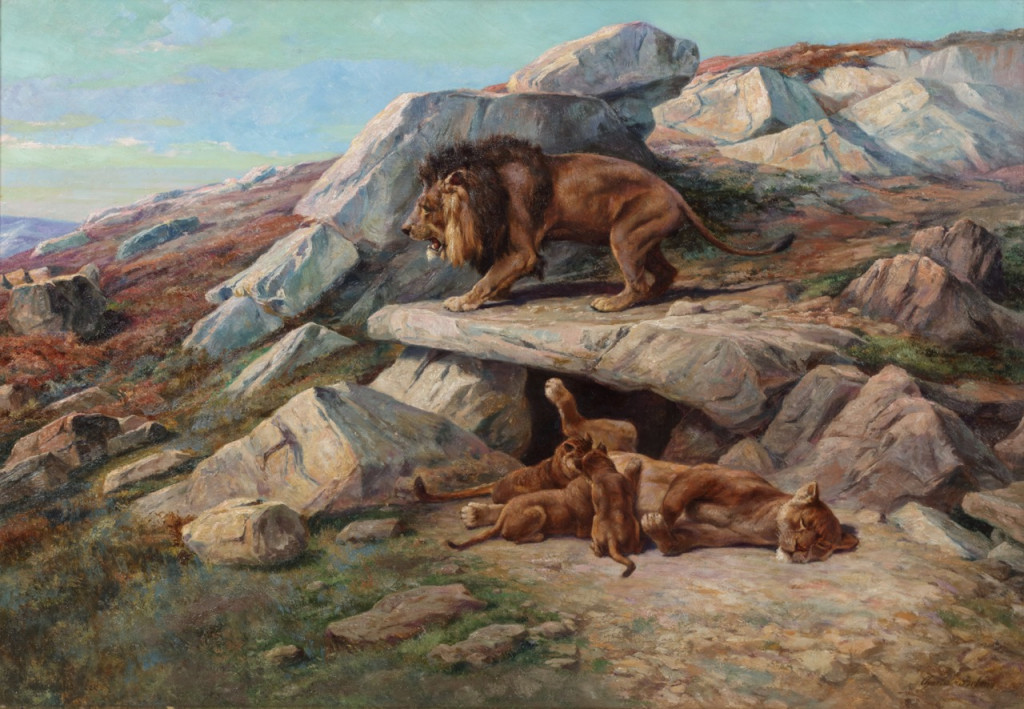
Charles H.D. Boland de Spa (1850-after 1903)
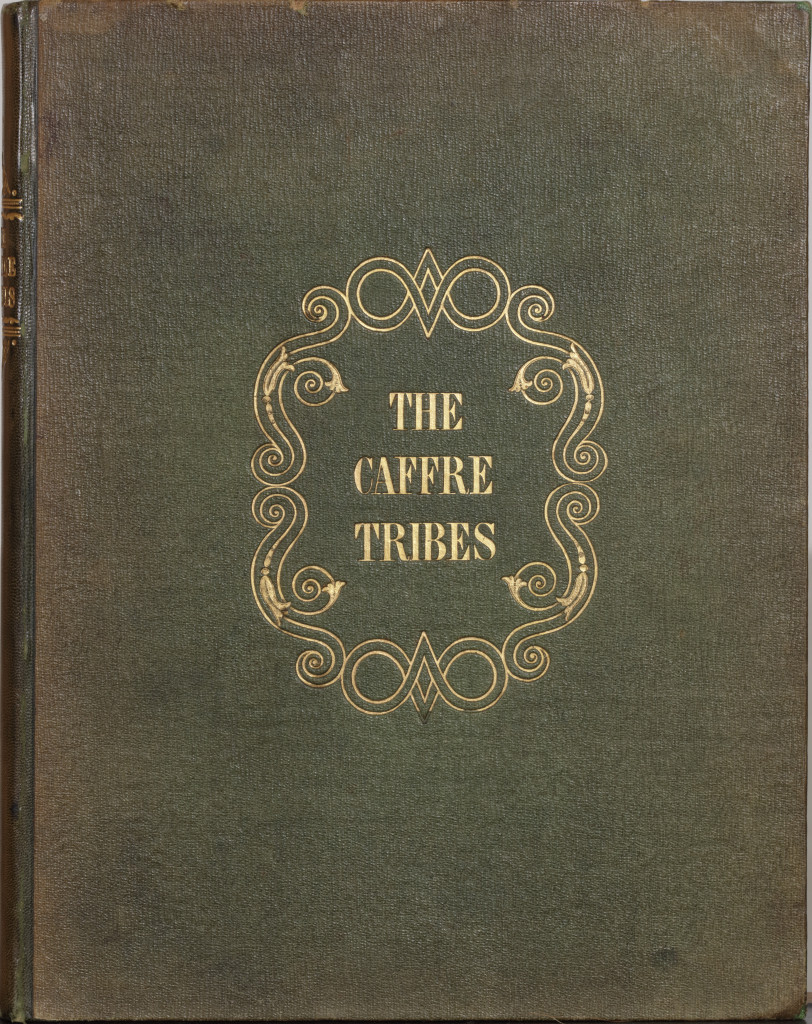
Nine framed pencil and watercolour sketches depicting various African tribes by J. White, Esq., together with a book containing 41 tinted lithograph plates, after these and other sketches by J. White, and 21 pages with descriptions of the various tribes o
Nine framed pencil and watercolour sketches depicting various African tribes by J. White, Esq., together with a book containing 41 tinted lithograph plates, after these and other sketches by J. White, and 21 pages with descriptions of the various tribes of South Africa
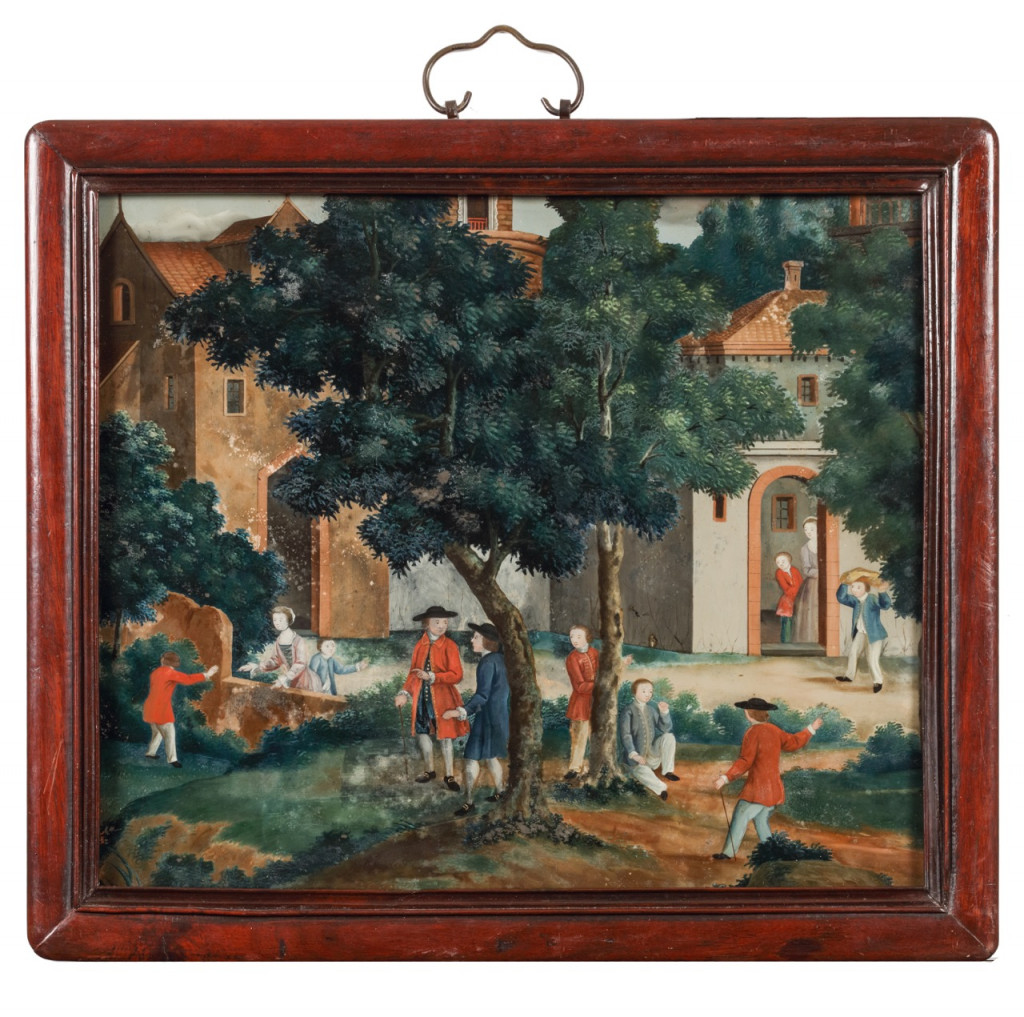
A Chinese export reverse-glass painting after an English print in original hardwood frame
Chinese reverse glass paintings for export are known since mid 18th century. By the 1780's the copying of European, mainly English, engravings came into vogue in Chinese paintings on glass, and often reverse glass paintings were mirrored or with silver backs. Particularly in England, they became very popular as over mantel mirrors in copied English frames. Because of their nature, many have been lost over time.