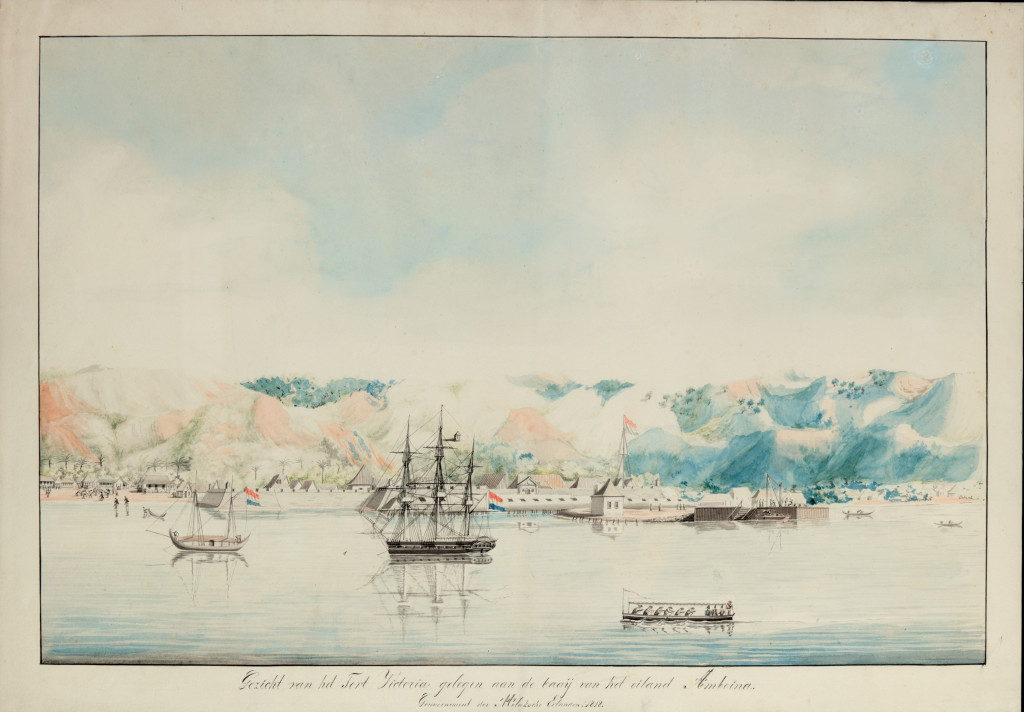
Attributed to Quirijn Maurits Rudolph Verhuell (1787-1860)
Watercolour on paper, 36.5 x 55.4 cm
In 1816 the Dutch navy returned to Indonesia to restore Dutch rule over Indonesia after seven years of English rule. This was not received with much joy on some of the islands of the Indonesian archipelago. In May 1817 the population of the island of Saparoea rose in revolt under their leader Thomas Matulesia. They killed the Dutch governor van den Berg, his wife and three of his four children. The six-year-old Jean Lubberts miraculously survived the massacre and lived in the jungle for six months with the help of the freed slave of his parents, Salomo Pattiwaal. In October 1817 a squadron of three ships, including the “Evertsen” under command of Maurits Ver Huell, with fresh troops arrived and suppressed the uprising. The twelfth of November the little boy Jean Lubberts was discovered in the jungle and taken aboard the “Evertsen”. Together with Matulesia and other leaders of the rebellion, they sailed to Ambon where Matulesia was tried and executed. In March 1818 Jean Lubberts sailed on the “Evertsen” from Ambon to Soerabaja where he was lodged with his grandmother. Of all these and other events Maurits Ver Huell (1787-1860), a naval officer, collector of naturalia and self-taught draughtsman, made many drawings and watercolours. He also described these events in his memoirs Herinneringen aan een reis naar Oost Indiën, published in 1835. Over a hundred of his watercolours were later donated to the Maritime Museum Rotterdam. For a watercolour of the island of Mauritius by Ver Huell see Uit Verre Streken, March 2015, no. 18. Just to the right of the ship (the “Evertsen”?), the well-known water gate of fort Nieuw Victoria can be seen and on the left some Dutch naval officers are being carried ashore.
Part of the Indonesian Archipelago collection.
Related objects
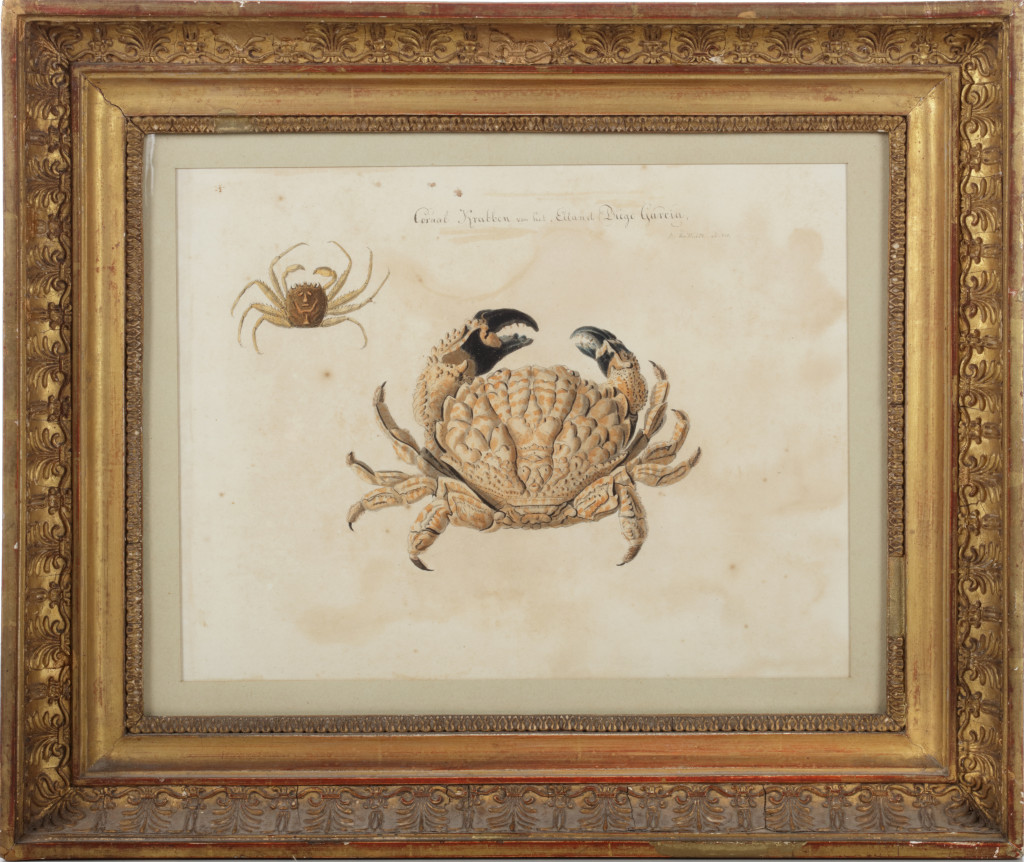
Quirijn Maurits Rudolph VerHuell (1787-1860)
VerHuell was a Dutch naval officer, author, painter, entomologist, and collector of natural history specimens. In 1802, at the age of fifteen, he enlisted in the Batavian Navy as a cadet under his uncle, Admiral Carel Hendrik VerHuell. He rapidly advanced in his career, attaining the rank of Second Lieutenant in 1807 and serving as Adjutant to Rear-Admiral Buyskes, who had been designated Governor-General of the Dutch East Indies by King Louis Bonaparte, the king of the Netherlands under the French occupation. Following the conclusion of the French occupation of Holland, VerHuell enlisted in the reinstated Dutch Navy as a captain lieutenant and, in 1815, was dispatched to the East Indies to succeed the English forces that had controlled the Dutch East Indies. In 1817, he participated in the quelling of the Saparua revolt led by Pattimura against the Dutch colonial administration. Following the defeat of the insurgents and the execution of their leaders, including Pattimura, VerHuell developed an affection for Pattimura’s daughter, Christina Martha; nevertheless, she viewed him and other Dutch individuals with disdain. Following the conclusion of the campaign, VerHuell's vessel, the Admiral Evertsen, required extensive repairs, allowing VerHuell to utilise his leisure time to explore the Indonesian archipelago and its natural marvels, producing several sketches and watercolours while collecting various zoological and botanical specimens.
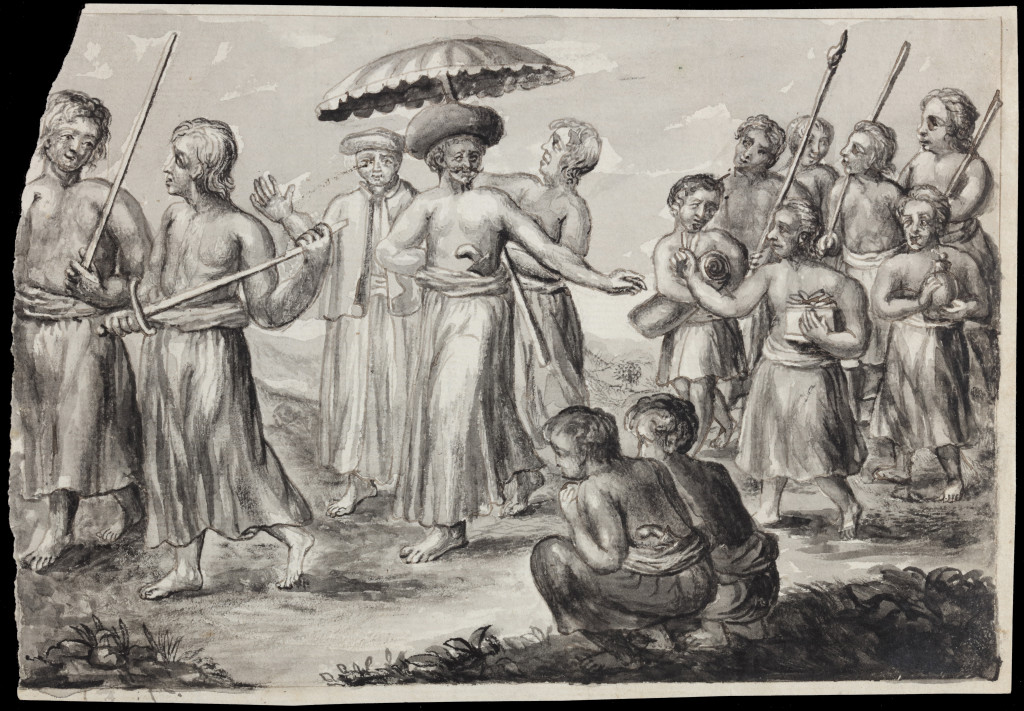
Attributed to Willem Lodewijksz
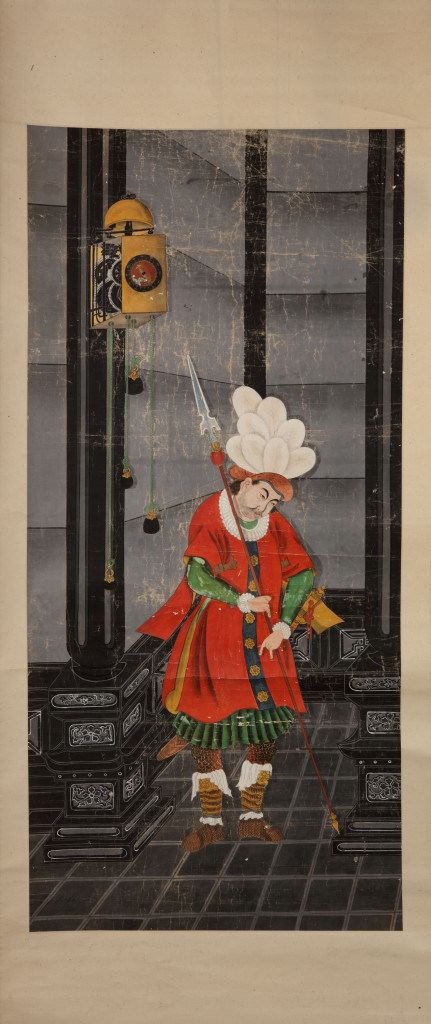
Attributed to Shiba Kokan (1747-1818)
Shiba Kokan (1747-1818) - Dutchman